


This was perhaps the most technically demanding surgery Prof. Wang Tingliang had ever performed.
The patient on the operating table had his entire right ear completely avulsed by violent trauma. Where the auricle once stood, there was now a large, irregular open wound—like a hole in the face—with exposed vessels that had contracted and closed, leaving no suitable vessels to reattach the severed ear that lay nearby.
When everyone thought the ear would be permanently lost, the surgical team from the Department of Plastic and Reconstructive Surgery at Shanghai Ninth People’s Hospital made a bold intraoperative decision: they would first "bank" the ear on the dorsum of the foot.
It is understood that globally, cases of ectopic auricular implantation and successful replantation are exceedingly rare, with no established protocols to follow—let alone a decision made intraoperatively. MedJ conducted an exclusive interview with the surgical team.
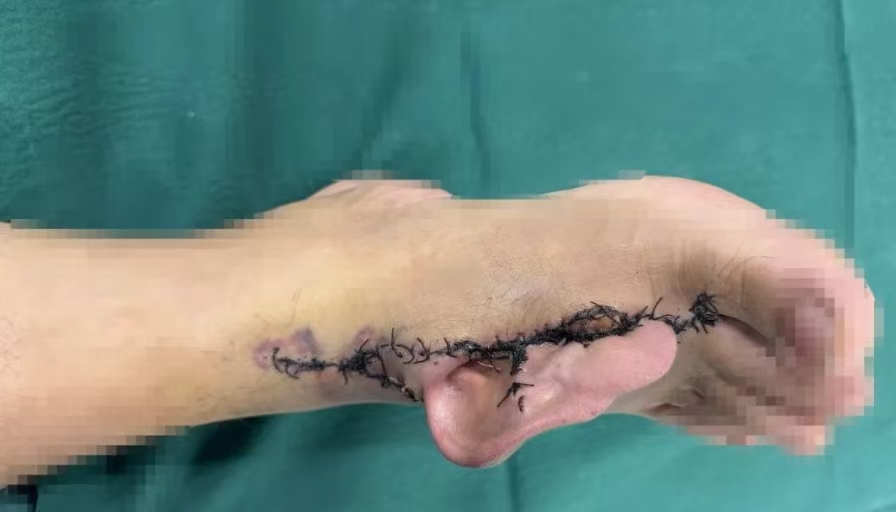
Fig.1.On postoperative day 9, the ear showed good viability on the foot dorsum and was scheduled for replantation to its original site.
Sudden Accident, Ear Avulsion
On June 11, Mr. Zhang sustained an accidental injury at work. Mechanical traction to one side of his face resulted in complete avulsion of his right ear.
"The patient’s injuries were extremely severe,"Prof. Wang told MedJ. "When he arrived at our hospital, he was in poor mental state, with extensive skin laceration at the auricular wound site. He was also in shock and remained dazed and disoriented throughout; we could only obtain some key information from his colleagues."
From the fragmented information, Prof. Wang learned that by the time Mr. Zhang arrived at Shanghai Ninth People’s Hospital, the ear had been detached for 20 hours—far exceeding the conventional 6-to-8-hour golden window for auricular replantation.
Fortunately, during transport, the ear had been kept in a water-isolated ice bath, and the detached auricle remained in standard, intact condition.
"In fact, the vast majority of hospitals do not have the surgical capability for auricular replantation. Even in the few institutions equipped with microsurgical facilities, most surgeons would directly abandon replantation in such cases of prolonged ischemia and severe wound destruction, and proceed with auricular reconstruction instead."
"However, considering that the patient is young and the detached ear was well preserved, we decided to make every effort to preserve the patient’s native auricle," said Prof. Wang.
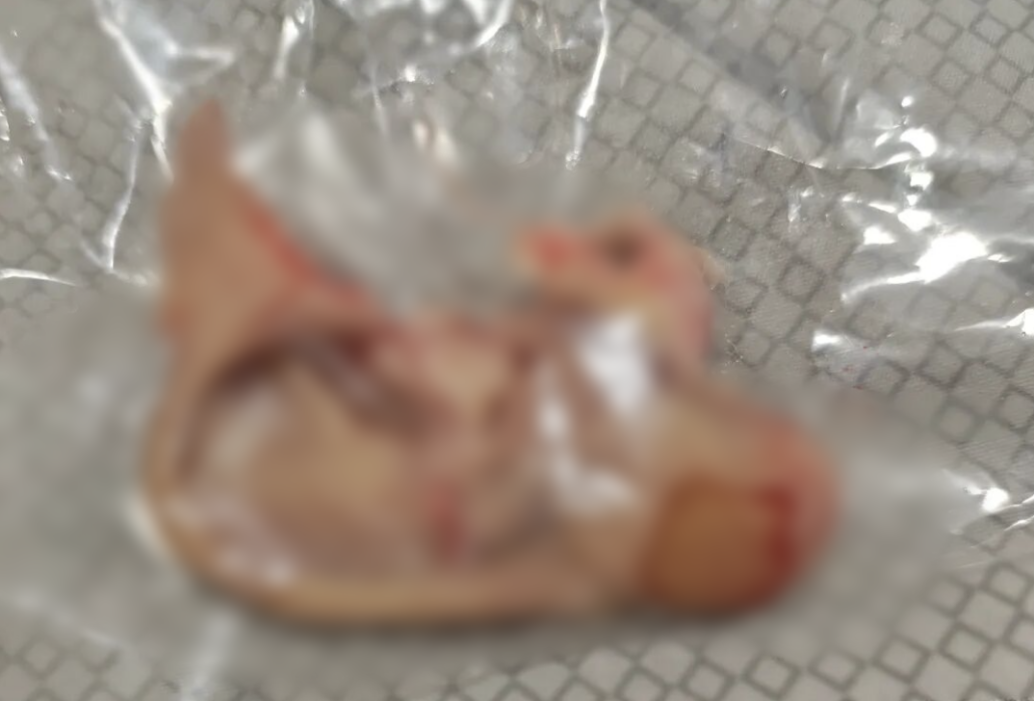
But once in the operating room, under the microscope, Prof. Wang and the team discovered that the situation was far worse than anticipated.
"Upon exploring the avulsion wound, we found that the arteries and veins supplying the auricle had ruptured at extremely low levels, and the severed ends had completely closed due to tissue retraction, leaving very little usable vessel length," Prof. Wang told MedJ.
In layman’s terms, Mr. Zhang’s "severed ear" itself was intact, but the facial wound site no longer had adequately conditioned vessels for in-situ auricular replantation.
Prof. Wang predicted that under these conditions, attempting in-situ replantation would most likely fail. But abandoning the ear would leave the patient with a permanent disability.
Mr. Zhang remained on the operating table. After rapid and careful deliberation, Prof. Wang and the team decided not to end the surgery, but to change the plan on the spot and perform "ectopic banking" of the ear.
3 Vessels, 11 Hours
The dorsum of the foot—this was the "new home" Prof. Wang chose for Mr. Zhang’s right ear.
Compared to locations such as the abdomen or arm, Prof. Wang told MedJ that, on one hand, the diameter and caliber of the arteries and veins on the dorsum of the foot closely match those of the delicate auricular vessels. On the other hand, the anatomical structures on the dorsum of the foot are relatively clear, allowing for rapid vessel dissection and minimizing the duration of ongoing auricular ischemia, thereby reducing the probability of tissue necrosis.
Prof. Wang also noted that among all candidate banking sites, the foot is the most concealable, and postoperative scarring would have virtually no impact on the patient’s appearance. "We wanted to minimize the impact of the trauma on his life."
But the surgical challenges were immense. Prof. Wang told MedJ that globally, very few such procedures have been performed, and there is no systematic or mature experience to draw upon. "In principle, this is nothing more than anatomical anastomosis of blood vessels. But when it comes to the actual surgical details, this is one of the most technically demanding procedures in microsurgery."
In this case, that translated into 3 vessels—and Prof. Wang and the team spent 11 hours anastomosing them.
Prof. Wang told MedJ that the greatest difficulty in this ectopic banking procedure was that the venous walls of the severed ear were extremely thin, and after ex-vivo ischemia, the lumens had collapsed, blurring the boundaries with surrounding connective tissue, making direct identification under the microscope extremely challenging.
The team therefore adopted a stepwise exploration strategy. "We first anastomosed the arterial branches of the severed ear, allowing arterial inflow to rapidly perfuse the auricle, causing the veins to engorge and expand, creating time and anatomical conditions for subsequent venous anastomosis," Prof. Wang told MedJ. After arterial reconstruction was completed, the previously pale and withered auricle rapidly regained a pinkish hue, and tissue perfusion was initially established.
In the subsequent venous anastomosis, the team employed a "dual venous anastomosis" approach. "Two veins—this further reinforces the venous outflow pathway and maximizes the prevention of insufficient blood supply to the severed ear," said Prof. Wang.
The greatest challenge came from the dominant drainage vein in the upper half of the severed ear.
According to Prof. Wang, this vessel had a diameter of approximately 0.2–0.3 mm—only about twice the thickness of a strand of hair. "It was even finer than our microsuturing instruments," he said. If the end-to-end anastomosis could not be performed flawlessly, even if the surgery was temporarily completed, the patient would be at high risk for thrombosis and subsequent ischemic necrosis of the severed ear on the dorsum of the foot.
Fortunately, under the meticulous efforts of Prof. Wang’s team, none of the feared complications occurred. By the end of the surgery, the single artery and two veins of Mr. Zhang’s severed ear had been flawlessly connected to the foot vessels, with highly satisfactory auricular perfusion and venous return.
Over the next 9 days, the medical and nursing team from the Department of Plastic and Reconstructive Surgery at Shanghai Ninth People’s Hospital provided 24-hour intensive monitoring of Mr. Zhang, continuously observing the color, temperature, and capillary refill of the banked ear, with dynamic surveillance of perfusion status.
"After 9 days of close observation, we determined that the ear had stabilized on the dorsum of the foot, with full tissue viability restored. It was time to proceed with the second-stage surgery and transfer it back to the face," said Prof. Wang.
The Banked Ear Finally "Comes Home"
On June 22, Mr. Zhang underwent the second-stage auricular replantation surgery.
As anticipated, during the second-stage procedure, Prof. Wang and the team again explored the cranial wound and found that the previously damaged superficial temporal artery and vein stumps had completely occluded and could not be used for reattaching the ear.
But this time, they came prepared.
In simple terms, as Prof. Wang told MedJ: "Since the vessels at the original auricular site were unusable, we would borrow vessels from elsewhere to reconnect the auricle."
During the surgery, the team selected the facial artery and vein—located away from the trauma zone—as the new recipient vessels. Anatomically, the facial artery and vein are situated near the midpoint of the mandibular margin, at a considerable distance from the original auricular site. In the first-stage surgery, the vessel stumps of the severed ear were barely long enough for in-situ reattachment, let alone routing to more distal vessels.
This time, however, the team was able to harvest, along with the "banked ear," a complete arteriovenous vascular pedicle measuring 12 to 14 cm from the foot, which was routed subcutaneously to the face and anastomosed to the facial artery and vein. "The facial vein is a single vein. During the surgery, we had to first converge the two auricular veins and then connect them as a single unit to the facial vein to complete venous outflow reconstruction," said Prof. Wang. "Although there were risks of vessel compression or injury during the procedure, thanks to the favorable conditions created by the Phase I surgery, the overall surgical difficulty of Phase II is fully within our control."
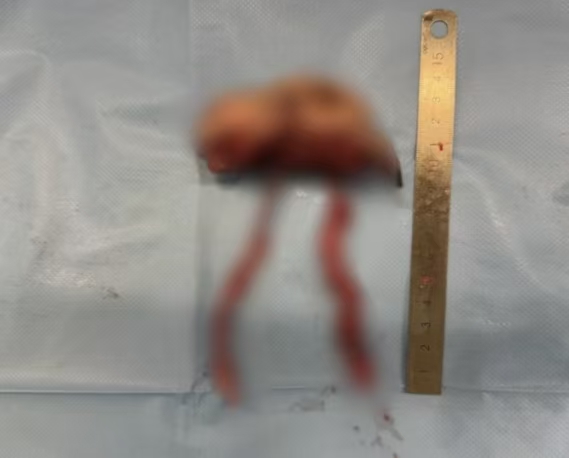
Fig.3.The surgeons dissected and isolated the dorsalis pedis artery and vein along with the great saphenous vein, measuring 12–14 cm in length, from the patient's foot dorsum to serve as the vascular pedicle.
After 9 hours, the surgery was completed, and the right ear, which had left its original position, finally "returned home." When blood filled the vessels and the replanted ear turned pink, Prof. Wang and all the medical staff present let out a long sigh of relief.
Postoperative follow-up on day 2 and day 7 showed that Mr. Zhang’s ear had patent perfusion and stable morphology, successfully passing the critical vascular risk period following microsurgery. As of June 29, the patient’s reconstructed ear remains viable, with ideal aesthetic recovery, all clinical indicators normalized, and no impact on hearing; discharge is imminent.
Prof. Wang stated that the underlying repair principle of this staged auricular banking and replantation procedure is not difficult to understand, but the entire treatment process represents a complex systemic undertaking.
It not only requires the surgical team to rapidly formulate a surgical plan without established reference experience, but also hinges on exceptional precision in supermicrovascular anastomosis. Additionally, it entails two separate surgical procedures and continuous, meticulous monitoring of blood circulation over several days; any procedural deviation could result in failure to preserve the ear.
Achieving these accomplishments, it is understood that, over the years, the Department of Plastic and Reconstructive Surgery at Shanghai Ninth People’s Hospital has leveraged its national-level platform to specialize in the meticulous reconstruction of various superficial organ amputations and avulsion injuries. In recent years, the department has successfully performed over 200 emergency ultra-microsurgical treatments for complex and critical trauma cases, filling a critical gap in emergency care for major trauma and combined injuries in Shanghai and surrounding regions.
Prof. Wang noted that the success of this surgery validates the significant value of individualized staged repair strategies in the management of extremely complex traumatic injuries.
"Cases of ectopically banking a severed auricle in another location and successfully replanting it are extremely rare. We plan to compile this treatment into a complete clinical case report for publication, to provide reference for more surgeons worldwide and help more patients," said Prof. Wang.

