


Recently, a research team led by Prof. Hongyan Tong at the First Affiliated Hospital of Zhejiang University School of Medicine conducted a single‑center case series study exploring the efficacy and safety of decitabine combined with the XPO1 inhibitor selinexor followed by sequential allogeneic hematopoietic stem cell transplantation (Allo‑HSCT) for TP53 biallelic‑inactivated myelodysplastic syndrome (MDS‑biTP53). The findings were published in Experimental Hematology & Oncology. In Episode 85 of the Investigator’s Perspective column, the first author, Prof. Yanling Ren, provided an in‑depth interpretation of the study’s design and clinical insights. This article summarizes the key points from the interview.
Expert Profile: Prof. Yanling Ren
• First Author, Department of Hematology, The First Affiliated Hospital, Zhejiang University School of Medicine
• Member of the research team led by Prof. Hongyan Tong
• Principal investigator of the single‑center case series on decitabine plus selinexor bridging to transplant for MDS‑biTP53
• The study was published in Experimental Hematology & Oncology
I. The Dilemma: Real‑World Challenges in Transplant Therapy for MDS‑biTP53
MDS‑biTP53 is an ultra‑high‑risk subtype of MDS with an extremely poor prognosis. These patients generally respond poorly to conventional regimens such as hypomethylating agents and BCL‑2 inhibitors. Even after Allo‑HSCT, previously reported 1‑year overall survival (OS) rates are only 20%–30%, with a median time to relapse of just 4–6 months post‑transplant.
In the interview, Prof. Yanling Ren summarized the clinical treatment challenges for this patient population as two key difficulties:
The first is “too late”: these patients experience rapid disease progression. The traditional bridging model requires clinicians to assess treatment response and achieve remission before proceeding to transplant, but many patients progress during the waiting period and lose the transplant opportunity entirely.
The second is “uncontrollable”: biallelic TP53‑inactivated clones are extremely difficult to eradicate. Even after transplant, early relapse rates remain high, and once relapse occurs, subsequent treatment options are very limited.
It is precisely under the dual pressure of “too late” and “uncontrollable” that a faster, more compact treatment strategy has become an urgent need.
II. Fighting Fire with Fire: The Design Logic of Zero‑Wait Direct Bridging to Transplant
The core innovation of this study lies in exploring a treatment rhythm optimization strategy for MDS‑biTP53 characterized by “short‑course bridging, rapid transition to transplant”. The regimen employs decitabine combined with selinexor for a 2‑week pre‑transplant cytoreduction (decitabine 20 mg/m² on days 1–5; selinexor 20 mg orally twice weekly). After cytoreduction, no separate observation window for efficacy assessment is set; instead, the patient proceeds directly to a decitabine‑based conditioning regimen (DAC‑BuCy or DAC‑BF), followed immediately by Allo‑HSCT.
Prof. Yanling Ren noted that this “zero‑wait” design is based on considerations of both disease biology and clinical real‑world risks:
Mechanistically, decitabine can induce mitotic catastrophe in TP53‑mutant cells through a p53‑independent pathway (a tumor cell clearance program triggered after failed cell division). Selinexor, as an XPO1 inhibitor, forces residual tumor suppressor proteins to be retained in the nucleus, partially restoring apoptotic pathways. Preclinical studies have confirmed that the two agents have synergistic tumor‑killing effects.
From a practical standpoint, Prof. Ren stated that the overall toxicity of this drug combination is relatively mild and does not impede subsequent transplantation, providing feasibility for the “fight fire with fire” treatment approach.
The core logic of the entire strategy is: use rapid disease control to secure the transplant window, and use transplantation to secure long‑term survival.
III. Early Signals: Efficacy and Safety Data from 8 Cases
The study included 8 adult patients with NGS‑confirmed MDS‑biTP53. The median age was 60 years, all were IPSS‑R/very high risk, and 5 had received prior hypomethylating agent therapy, with only 1 having achieved bone marrow complete remission (CR).
1. Efficacy: Encouraging Early Disease Control Signals
All patients achieved neutrophil engraftment (median 11 days). At the first assessment on day 30 post‑transplant, all patients achieved morphologic CR, and ddPCR testing showed TP53 mutation clone negativity. With a median follow‑up of 7.3 months (range 2.8–16.7 months), the last follow‑up OS was 87.5% (7/8), and relapse‑free survival (RFS) was 75% (6/8); median OS and RFS were not reached.
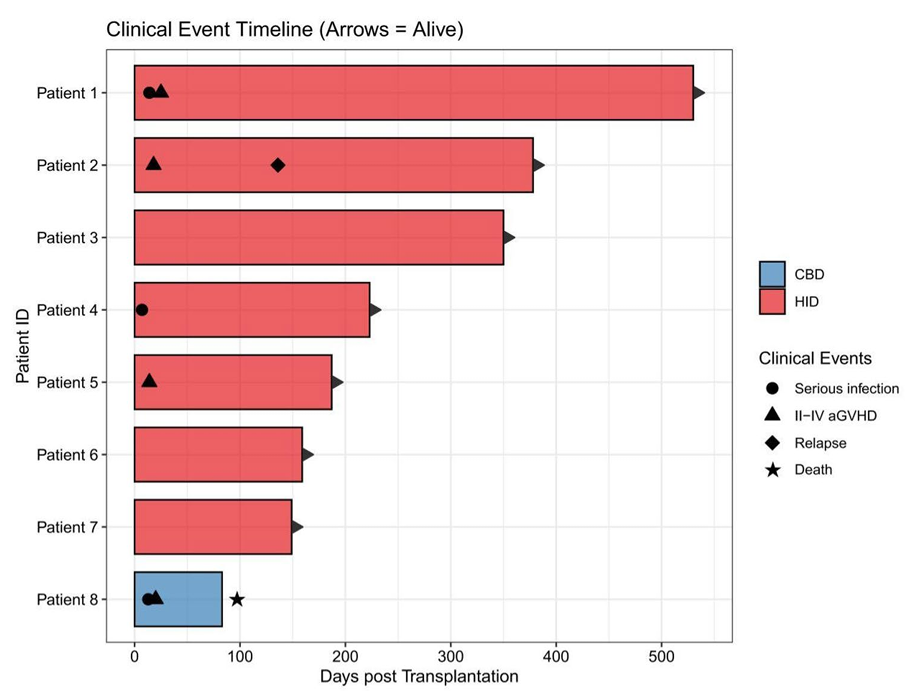 Fig. 1.Post-transplant survival outcomes for all patients
Regarding the interpretation of these data, Prof. Yanling Ren repeatedly emphasized the need to maintain objectivity and rationality. This is a single‑center exploratory case series with a small sample size and limited follow‑up duration. It cannot be directly compared with historical cohort data for efficacy superiority; it can only reflect early disease control effects, and 1‑ to 2‑year and longer‑term survival outcomes still require continued follow‑up.
2. Safety: Risks That Cannot Be Overlooked
The survival outcomes of this study were achieved under conditions of strictly selected patients and rigorous peri‑transplant management. While seeing efficacy signals, clinicians must also safeguard the safety baseline.
In this study, the incidence of grade III–IV acute graft‑versus‑host disease (aGVHD) was 25% (2 cases), and severe infectious events were also observed. One patient had carbapenem‑resistant Enterobacteriaceae (CRE) intestinal colonization prior to transplant. After conditioning‑induced intestinal mucosal injury, CRE entered the bloodstream, triggering septic shock, which, superimposed on intestinal GVHD, ultimately resulted in non‑relapse death (NRM).
Based on the clinical practice from this study, Prof. Yanling Ren proposed that clinical application of this sequential regimen requires heightened vigilance against three major categories of risk:
Infection risk: Prior treatment can cause myelosuppression. If drug‑resistant bacterial intestinal colonization is present, the gastrointestinal mucosal damage caused by selinexor may compromise the barrier, readily inducing translocation of drug‑resistant bacteria into the bloodstream. Therefore, active screening for drug‑resistant bacteria (e.g., anal swabs) should be routinely performed before transplant. When infection occurs, high suspicion for colonization‑derived bacteremia is warranted.
Acute GVHD, especially gastrointestinal GVHD: There is a vicious cycle between gastrointestinal GVHD and infection—gastrointestinal GVHD disrupts the intestinal mucosal barrier, exacerbating infection, while infection in turn aggravates GVHD and may even trigger vascular complications such as transplant‑associated thrombotic microangiopathy (TA‑TMA). Clinicians should capture early signs of GVHD, with particular attention to intestinal mucosal barrier protection in patients with bacterial colonization.
Organ function impairment: Although this pre‑transplant cytoreduction regimen is relatively mild overall, for older patients or those with poor baseline conditions, drug‑related nausea, vomiting, and gastrointestinal mucosal damage can impair nutritional status and reduce tolerance to the conditioning regimen.
To address these risks, Prof. Yanling Ren proposed a “forward‑shifting” and “whole‑course management” approach, divided into three phases:
Pre‑transplant: complete drug‑resistant bacterial screening, and thoroughly assess organ function and nutritional status;
During transplant: standardize infection prevention and provide meticulous mucosal care;
Post‑transplant: closely monitor early signs of GVHD, viral reactivation, and bacterial infection, with dynamic adjustment of immunosuppressants.
IV. Relapse Is Not the End: Insights from Molecular Monitoring and Preemptive Intervention
One case of post‑transplant relapse occurred in this study. Prof. Yanling Ren believes the treatment experience from this case offers important practical reference for frontline clinicians:
The patient was not identified when blood counts declined or morphologic relapse occurred. Instead, regular post‑transplant ddPCR monitoring enabled early detection of rising TP53 clone levels, prompting immediate molecular preemptive intervention: low‑dose decitabine combined with donor lymphocyte infusion (DLI). The patient achieved CR again and remained in remission at last follow‑up.
Prof. Yanling Ren summarized three key takeaways from this case:
First, dynamic monitoring of TP53 clones should be maintained throughout the transplant process. If intervention is delayed until hematologic or morphologic relapse, these patients’rapidly progressive disease will often have already missed the therapeutic window.
Second, post‑transplant relapse intervention may benefit from a combined drug‑immunotherapy approach. Here, low‑dose decitabine is not intended for direct tumor killing but rather to upregulate tumor antigens and remodel the microenvironment, thereby amplifying the graft‑versus‑leukemia (GVL) effect of DLI.
Third, even in this ultra‑high‑risk population with biallelic TP53 inactivation, post‑transplant relapse is not entirely without hope. The reconstituted immune system after transplant retains the potential to recognize tumor clones, and appropriate interventions may re‑activate GVL to control the disease.
At the same time, Prof. Ren emphasized that this is only a single successful case and cannot be generalized to all patients. Which patients are suitable for preemptive intervention, the optimal dose, and the optimal timing of intervention all require further research.
V. Future Directions: From Exploratory Starting Point to Clinical Verification
In Prof. Yanling Ren’s view, this 8‑case series is merely the starting point of exploration. The team plans to advance research in multiple dimensions: accumulate more cases and extend follow‑up duration; conduct standardized prospective studies to elevate the level of evidence; identify biomarkers associated with efficacy and relapse; and optimize the regimen to reduce GVHD‑ and infection‑related toxicity.
For clinical colleagues, Prof. Yanling Ren shared several practical recommendations:
Place importance on dynamic TP53 monitoring;
Do not obsessively pursue deep pre‑transplant remission; prioritize the transplant window while the patient’s performance status permits;
Maintain molecular‑level monitoring after transplant;
Rely on multidisciplinary collaboration to ensure the safety of complex high‑risk patients.
As Prof. Yanling Ren stated, these 8 cases represent just a small step forward, but every step requires rigorous design, solid data, and honest reporting—not overinterpreting the data is the greatest respect for patients.
Conclusion:
MDS‑biTP53 remains an extremely challenging ultra‑high‑risk disease in hematology. This single‑center exploratory study breaks away from traditional bridging therapy paradigms, adopting a “fight fire with fire” strategy—decitabine plus selinexor followed by direct transition to transplantation—and has delivered encouraging early efficacy signals. We look forward to larger prospective studies to further validate the efficacy and safety of this regimen, optimize treatment strategies suitable for Chinese patients, and overcome the treatment challenges of this ultra‑high‑risk disease, offering more patients with refractory high‑risk MDS a chance at survival.

