


At around 5:30 PM Beijing time on October 7th, the Karolinska Institute in Sweden announced that the 2024 Nobel Prize in Physiology or Medicine was awarded to Victor Ambros and Gary Ruvkun for their discovery of microRNA and its role in post-transcriptional gene regulation.
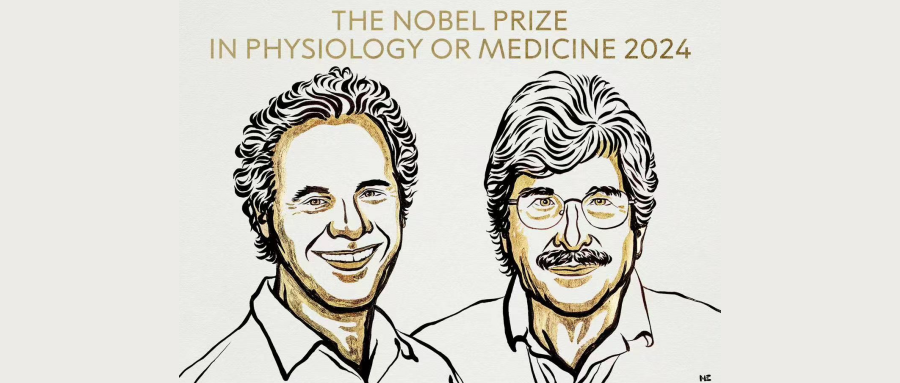
This discovery has opened up new fields of research and is of significant importance for the development of disease diagnostic tools and drug therapies. microRNA has been confirmed to be associated with heart disease, viral pathogenesis, and the regulation of neurological functions and diseases. Human therapies based on microRNA are currently in clinical trials for conditions such as heart disease, cancer, and neurodegenerative diseases.
In reality, although the two shared the award, their research areas are quite different. Ambros's career began with the study of the virus that causes polio; he is quiet and modest. In contrast, Ruvkun is a bit more flamboyant, with research interests that include fat metabolism, aging, the origin of life, and even the search for life on Mars.
The Story of Discovering microRNA
"From the Brink of Death to Gold Mining," Ambros once described the extraordinary research journey of microRNA in this way.
Born in 1953 into a farming family in New Hampshire, USA, Ambros was the eighth of nine children. His father, a Polish war refugee, had not received much formal education but could speak four or five languages and often read various books.
Encouraged by his father, Ambros developed an interest in science and earned a Bachelor of Science degree in Biology from the Massachusetts Institute of Technology in 1975. In 1979, under the guidance of David Baltimore at MIT, he obtained his Ph.D., researching the genome of the poliovirus.
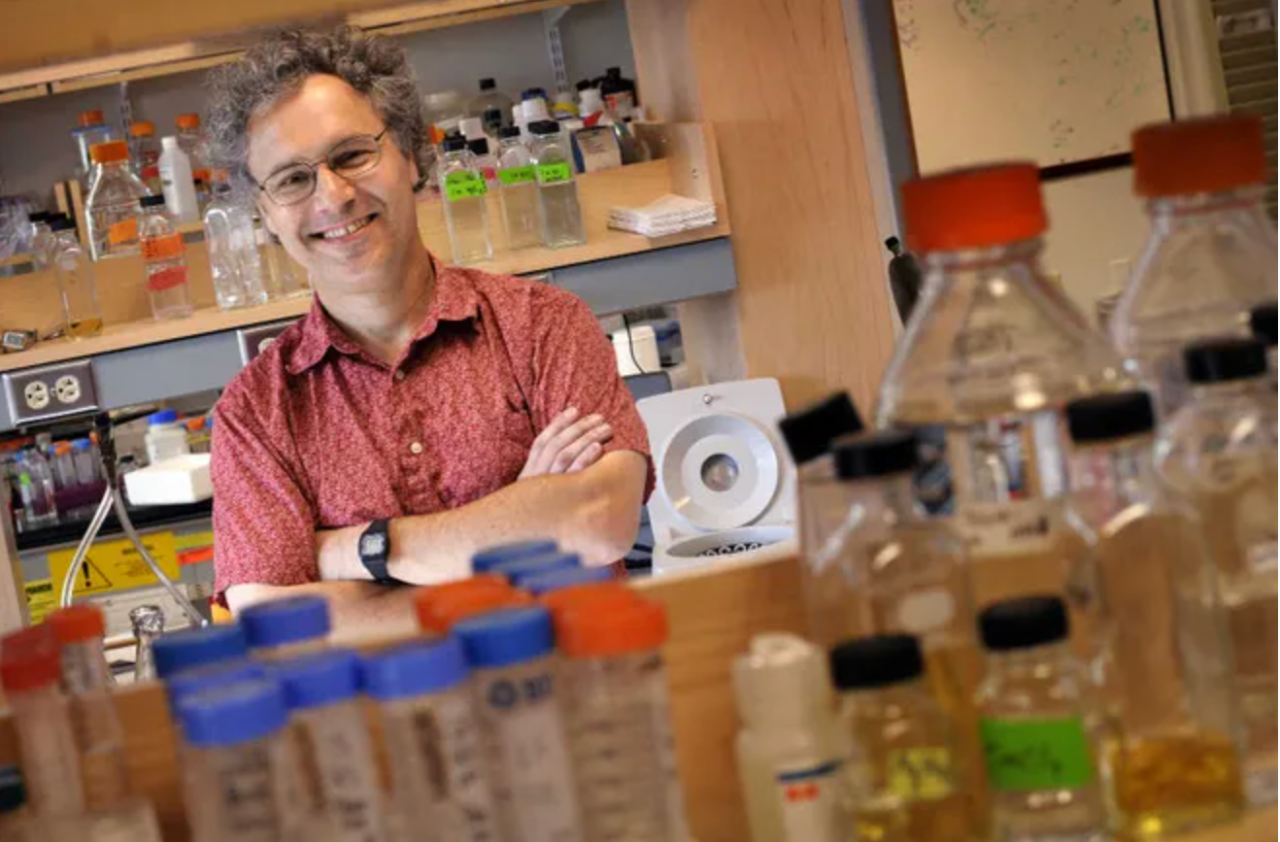
Ambros/Image source:Telegram&Gazette
After his doctoral graduation, Ambros stayed at MIT, conducting postdoctoral research in the lab of H. Robert Horvitz. It was also from this time that he began researching the genetic pathways that ensure the correct timing of development in the nematode Caenorhabditis elegans.
Notably, both of Ambros's educational and work experiences would later become associated with the Nobel Prize. In 1975, David Baltimore was awarded the Nobel Prize in Physiology or Medicine for discovering reverse transcriptase; in 2002, Robert Horvitz received the same award for discovering the genetic regulation of organ development and programmed cell death.
In the early 1980s, like Ambros, Ruvkun was a researcher in Robert Horvitz's lab at MIT, studying the genes that control the development of C. elegans. The two collaborated to isolate a gene named lin-14, which worked in concert with another gene called lin-4 to regulate the transformation of the worm during a critical developmental stage.

Ruvkun/Image source:YouTube
By 1984, Ambros had joined the faculty at Harvard University, and their collaboration continued as they sought to reveal how the two regulatory genes interacted with each other, leading to some astonishing discoveries.
In a landmark study in 1993, Ambros and Ruvkun published two consecutive papers in the journal Cell, reporting that this new type of "small antisense" lin-4 RNA could downregulate gene expression by directly binding to the lin-14 messenger RNA.
At the time, the scientific community paid little attention to the discovery of this first microRNA. In fact, these are small non-coding RNA molecules that are widespread in animals, plants, and humans, playing a key role in the regulation of gene expression.
Over the next seven years, despite extensive research by Ambros's lab trying to discover other small RNA gene products similar to lin-4 in close relatives of C. elegans, they found nothing. Soon after, Ambros was denied tenure at Harvard.
While Ambros doesn't want people to have an overly harsh view of Harvard, Nobel laureate David Baltimore has said that Harvard let go of a great scientist, "They lost a potential Nobel laureate... The nature of pioneering discoveries is that they are only considered pioneering in hindsight. You can't know in advance."
It wasn't until 2000 that Ambros's work, along with others, prevented microRNA from being forgotten in the annals of biologyy. He found that lin-4 not only regulated lin-14 but also regulated lin-28, indicating that microRNA plays a role at multiple sites across the C. elegans genome. Subsequently, botanists discovered antisense RNA in plants roughly the same length as lin-4, marking the first evidence of RNA-mediated gene silencing outside of worms.
Meanwhile, Ruvkun discovered a second microRNA, let-7, in C. elegans, the sequence of which was shown to be evolutionarily conserved across the animal kingdom. Thus, although the two jointly received the Nobel Prize in Physiology or Medicine this time, their contributions were different:
Ambros's lab discovered the first miRNA, while Ruvkun's lab determined how this miRNA regulates its target messenger. Through their collaboration, they demonstrated that miRNAs inactivate their targets through direct base pairing interactions.
Has produced tremendous value in clinical practice
The research achievements of Ambros and Ruvkun have not only propelled the development of science, but their clinical significance is rapidly emerging. To date, the human genome encodes over 1000 microRNAs, which are involved in a wide range of normal and disease-related activities.
For instance, dysregulated microRNA expression is associated with the occurrence of lymphoma, leukemia, and congenital heart disease. MicroRNA profiling has also been proven useful as a biomarker and prognostic indicator for diseases ranging from ovarian cancer to nicotine addiction. Numerous biotech companies have sprung up, hoping to harness the vast diagnostic and therapeutic potential of microRNAs.
In 2007, Ambros was elected as a member of the National Academy of Sciences in the United States, and since then he has received countless honors and awards, including the Lasker Basic Medical Research Award, the Canada Gairdner International Award, the Benjamin Franklin Medal, the American Genetics Society Medal, the Lewis S. Rosenstiel Award for Distinguished Work in Basic Medical Research, and the Newcomb Cleveland Award from the American Association for the Advancement of Science.
Regarding the opening up of such an exciting new field of scientific research as microRNA, Ambros said at the 2009 Dickson Prize in Medicine lecture at the University of Pittsburgh:
”"What I love most about science is that it is such a profound and intense human endeavor. The success of the scientific enterprise and individual scientists comes precisely from our collective efforts. Science is one of the greatest things we as a species have ever done."
Victor Ambros and Gary Ruvkun also jointly received the 2012 Paul Janssen Award for Biomedical Research.
According to records from Innovative Medicine, Gary Ruvkun said in his acceptance speech: "We have seen the field of microRNA grow from our first paper to thousands of papers, many of which focus on specific diseases and their treatments. As we had hoped, this research has completed a comprehensive transition from basic biology to medicine."
In addition to continuing to study the role of RNA in controlling gene expression, Ruvkun's team is also researching other mechanisms of development, metabolism, and lifespan in Caenorhabditis elegans, including genes involved in fat regulation and storage.
Furthermore, as a member of the National Academy of Sciences, Ruvkun also participated in leading the "Search for Extraterrestrial Genomes" project funded by NASA, which proposes to use DNA sequencing technology—commonly used for detecting and classifying life on Earth—as part of the search for life on Mars or other planets.
It is worth mentioning that the 2023 Nobel Prize in Physiology or Medicine was jointly awarded to scientists Katalin Karikó and Drew Weissman for their discoveries in nucleoside base modifications, which made the development of effective mRNA vaccines against COVID-19 possible.
The Nobel Prize in Physiology or Medicine for two consecutive years has focused on research related to genes, highlighting not only the central position of this field in basic life science research but also indicating its huge potential and practical impact in medical applications.

