


Recently, Nature Cancer published online the results of the DARVIN trial led by Prof. Fei Ma and Prof. Hongnan Mo of the National Cancer Center / Cancer Hospital, Chinese Academy of Medical Sciences (CICAMS). The study addresses a long-standing clinical dilemma: in HR-positive/HER2-negative (HR+/HER2-) advanced breast cancer patients with visceral crisis, chemotherapy is associated with organ damage and cumulative toxicity, and many patients are unwilling, unable, or contraindicated to receive it. The investigators asked whether a CDK4/6 inhibitor plus endocrine therapy could offer a new path that balances rapid disease control with long-term benefit in this population, while also piloting a “molecular crisis” framework using cell-free DNA (cfDNA) methylation to add a biological layer to the conventional clinical definition of visceral crisis [1].
 Fig. 1. Study Overview
Source: Nature Cancer, 2026
A Non-Randomized Design with External Validation
1.Enrolled Population
DARVIN was a multicenter, non-randomized Phase II trial conducted at seven centers in China. Eligible participants were women aged ≥18 years with HR+/HER2- advanced breast cancer and at least one RECIST 1.1-measurable lesion, who were unsuitable for chemotherapy because of patient preference, intolerance, or contraindication.
The study’s definition of visceral crisis required symptomatic brain or visceral metastases, plus at least one of the following:
- Carcinomatous meningitis or leptomeningeal metastasis;
- Pleural effusion, ascites, or abdominal pain attributed to liver/peritoneal metastasis, or dyspnea attributed to pleural effusion;
- Liver enzymes more than 2× the upper limit of normal, or bilirubin more than 1.5× the upper limit of normal;
- Pathologically confirmed bone-marrow metastasis, or hemoglobin <100 g/L.
Key exclusion criteria included primary endocrine resistance, more than three prior lines of endocrine therapy, prior CDK4/6 inhibitor use, and isolated bone-only metastasis.
2.Solution Design
In the treatment arm, patients received dalpiciclib 150 mg once daily on a 3-weeks-on, 1-week-off schedule, plus investigator’s choice of endocrine therapy. The primary endpoint was 6-month overall survival (OS). Secondary endpoints included OS, progression-free survival (PFS), time to treatment failure (TTF), 3-month treatment failure rate (TFR), duration of disease control (DDC), objective response rate (ORR), disease control rate (DCR), and safety.
The trial used a Simon two-stage design: if at least 9 of the first 18 patients survived beyond 6 months, an additional 35 were to be enrolled; if more than 27 of 53 crossed the 6-month threshold, the regimen would be considered worthy of further study. All 53 patients were included in the full-analysis and safety sets. At baseline, 88.7% had an ECOG performance status of 0-1, and 50.9% presented with effusions as their visceral crisis feature.
Efficacy, Tolerability, and Molecular Stratification
1.Crossing the Crisis Window: 6-Month OS of 92.5%
At a median follow-up of 19.4 months, 49 of 53 patients had survived beyond 6 months, giving a 6-month OS rate of 92.5% (95% CI: 81.8-97.9), exceeding the prespecified futility threshold of 44% and meeting the primary endpoint. The 12-month and 24-month OS rates were 81.1% and 70.8%, respectively, and median OS had not yet been reached.
ORR was 26.4% and DCR reached 79.2%. Median PFS, DDC, and TTF were 11.2, 14.1, and 10.2 months, respectively, suggesting that the regimen not only helped patients cross the early high-risk window but may also deliver durable disease control.
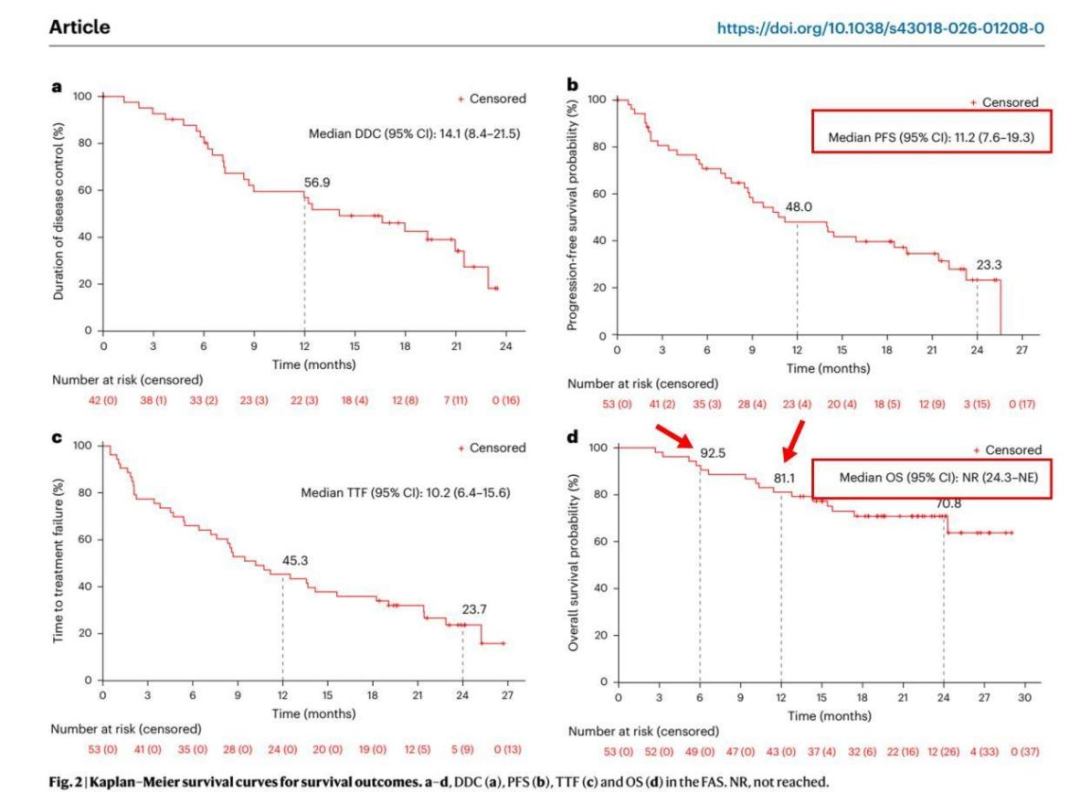 Fig. 2. DDC, PFS, TTF, and OS in the DARVIN full-analysis Set
Source: Nature Cancer, 2026
2.IPTW External Comparison: 6.6-Month PFS Extension Over Chemotherapy
The investigators built a 157-patient real-world external control of chemotherapy. After inverse probability of treatment weighting (IPTW) for age, ECOG status, disease status, number of metastatic sites, prior lines of therapy, and crisis type, baseline characteristics were well balanced.
After weighting, median PFS was 11.2 months in the dalpiciclib arm vs 4.6 months in the chemotherapy arm (HR=0.30, 95% CI: 0.18-0.50, P<0.0001). Median TTF was 10.2 months vs 4.2 months (HR=0.31, 95% CI: 0.19-0.51, P<0.0001), and median DDC was 14.1 months vs 5.1 months—indicating that the duration of stable disease control was approximately three times that of chemotherapy, with all three endpoints pointing in the same direction.
The authors note that IPTW cannot replace randomization and may still be subject to unmeasured confounding; on its own, it cannot establish replacement of chemotherapy. It does, however, strengthen the interpretability of the single-arm results.
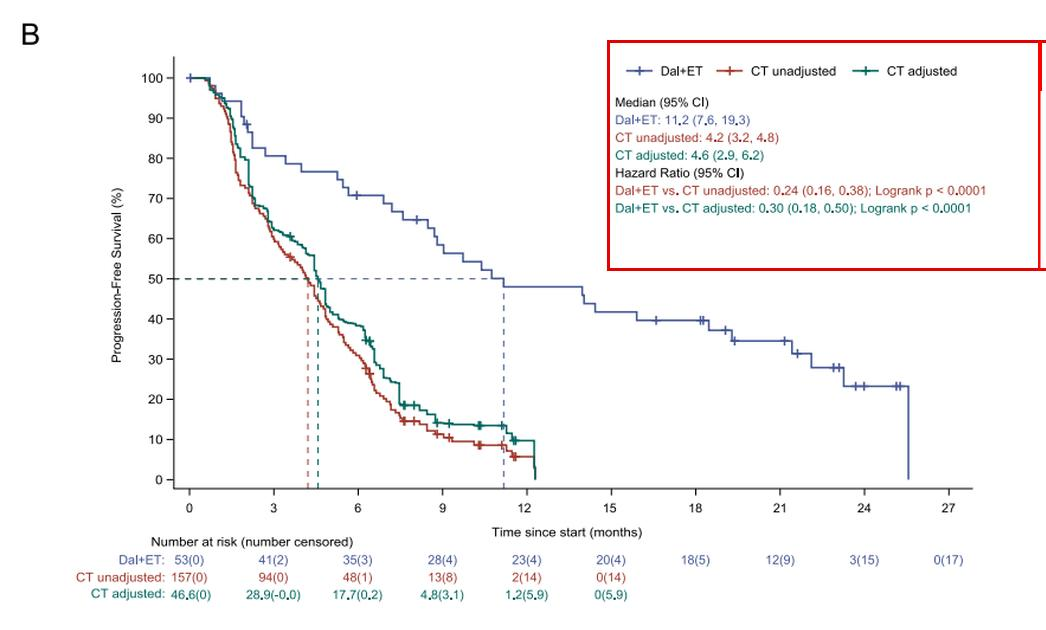 Fig. 3. IPTW-adjusted comparison of dalpiciclib plus endocrine therapy vs real-world chemotherapy for PFS
Source: Nature Cancer, 2026
3.Safety: Manageable High-Grade Hematologic Toxicity, No Discontinuations or Deaths from AEs
Grade 3 or higher treatment-emergent adverse events (TEAEs) occurred in 46 patients (86.8%), predominantly hematologic: neutrophil count decrease, white blood cell count decrease, and anemia in 77.4%, 54.7%, and 17.0% of patients, respectively. Grade 3 or higher AST and ALT elevations were 5.7% and 1.9%.
Dose adjustments for TEAEs occurred in 19 patients (35.8%). There were no treatment-related deaths, and no patient permanently discontinued treatment or died because of a TEAE. Toxicity was dominated by monitorable, dose-adjustable hematologic events, supporting long-term, continuous treatment in this organ-function-vulnerable population.
4.Translational Innovation: cfDNA Methylation Defines a “Molecular Crisis”
Conventional crisis definitions rely on symptoms, organ function, and imaging. DARVIN analyzed 221 plasma samples and found that baseline monocyte-derived cfDNA was significantly lower in crisis patients, while other cfDNA signals could not distinguish “visceral metastasis” from “visceral crisis,” suggesting that visceral crisis is accompanied by systemic immune changes.
The investigators defined baseline monocyte-derived cfDNA ≤0.0581 as “molecular crisis.”Patients meeting this threshold had significantly higher mortality risk (HR=4.79, 95% CI: 1.05-45.47, P=0.0394), and the result was consistent in a validation cohort without clinical crisis (HR=2.81, 95% CI: 1.52-5.19, P=0.0006), suggesting that visceral crisis may become amenable to quantitative biological stratification.
Study Highlights
1. Efficacy signal: a 6-month OS rate of 92.5%; after IPTW adjustment, PFS, TTF, and DDC all exceeded those of a 157-patient real-world chemotherapy cohort—new evidence challenging the assumption that visceral crisis necessarily requires chemotherapy.
2. Safety profile: high-grade toxicity was dominated by manageable hematologic events; serious non-hematologic toxicity was uncommon, and no patient permanently discontinued or died because of an AE.
3. Translational innovation: the first study to use cell-type-specific cfDNA methylation to define “molecular crisis,” linking baseline stratification with post-treatment dynamic prediction.
Clinical Implications
1. For HR+/HER2- advanced breast cancer patients with visceral crisis who are unwilling, unable, or contraindicated to receive chemotherapy, this regimen now has Phase II data with a real-world external control to support multidisciplinary discussion.
2. The study population skewed toward better-prognosis patients: 88.7% had ECOG 0-1, and 50.9% presented with effusions as their crisis feature. The results cannot be directly applied to patients with severe hepatic failure, very poor performance status, prior CDK4/6 inhibitor exposure, or those needing immediate organ-supportive care.
3. Efficacy assessment should not rely on ORR alone; symptoms, organ function, imaging, duration of disease control, and tolerability should be evaluated in parallel.
4. cfDNA methylation is not yet ready to guide routine decisions, but the “identify high risk at baseline—assess response after treatment” framework deserves further validation.
Closing Note
DARVIN offers a “low-toxicity and durable” Chinese path that directly challenges the clinical dogma that visceral crisis mandates chemotherapy. The study not only enables patients with vulnerable organ function to cross the high-mortality crisis window without the burden of chemotherapy and to achieve durable tumor control, but also redefines the efficacy bar in this population through a monitorable, recoverable safety profile.
Reference
[1] Mo H, Teng Y, Cai L, Li H, Wu X, Yao J, et al. Dalpiciclib plus endocrine therapy in women with HR+/HER2- advanced breast cancer and visceral crisis: a multicenter, nonrandomized, phase 2 DARVIN trial. Nat Cancer. Published online 21 July 2026.

