


The 7-year follow-up data from the CROWN study, presented at the 2026 American Society of Clinical Oncology (ASCO) Annual Meeting, showed that lorlatinib as first-line treatment for ALK-positive advanced non-small cell lung cancer (NSCLC) achieved a median progression-free survival (mPFS) that has not yet been reached, exceeding 84 months, with a 7-year PFS rate of 55% and a 94% reduction in intracranial progression risk [1]. These data further consolidate lorlatinib’s first-line position and drive the treatment goal for ALK-positive NSCLC from “delaying disease progression” toward “clinical cure.”
On this occasion, MedJ Oncology Channel invited Prof. Xiaofeng Li of Baotou Cancer Hospital, Prof. Cuiying Zhang of the Department of Medical Oncology, Inner Mongolia People’s Hospital, and Prof. Lei Xu of the Affiliated Hospital of Inner Mongolia Medical University to discuss, from the dimensions of CROWN 7-year data interpretation, ALK-TKI sequencing strategy, and long-term safety management, providing useful references for clinical practice.
About the Experts
Prof. Cuiying Zhang — Inner Mongolia People’s Hospital, Department of Medical Oncology

“Grassland Talent” of Inner Mongolia Autonomous Region
“People’s Good Doctor” of Inner Mongolia Autonomous Region
Council member, Chinese Society of Clinical Oncology (CSCO)
Member, CSCO Colorectal Cancer Committee
Member, CSCO Gastrointestinal Stromal Tumor Committee
Member, CSCO Rare Tumor Committee
Member, CSCO Urothelial Carcinoma Committee
Member, Chinese Medical Association Medical Oncology Committee
First and Second Term Chair, Inner Mongolia Medical Association Medical Oncology Branch
Chair, Inner Mongolia Anti-Cancer Association Biologic Immunotherapy Committee
Chair, Inner Mongolia Medical Doctor Association Colorectal Cancer Committee
Vice Chair, Lung Cancer Targeted Therapy Committee, China Medical Education Association
Standing Committee member, Lung Cancer Targeted Therapy Committee, Beijing Cancer Prevention and Treatment Medical Association
Vice Chair, Translational Medicine Committee, Beijing Cancer Prevention and Treatment Society
Member, Cancer Rehabilitation and Palliative Care Committee (CRPC), China Anti-Cancer Association
Member, Cancer Psychology Committee, China Anti-Cancer Association
Member, First Lung Cancer MDT Expert Committee, China Anti-Cancer Association
Member, First Committee, Chinese Medical Doctor Association Oncologist Branch
Standing Committee member, Precision Medicine and Tumor MDT Committee, Chinese Research Hospital Association
Prof. Xiaofeng Li — Baotou Cancer Hospital

Chief physician (Grade II), Department of Thoracic Medical Oncology, Baotou Cancer Hospital; master’s supervisor
Leading discipline leader of medical oncology in Inner Mongolia Autonomous Region
Outstanding contribution expert of Inner Mongolia Autonomous Region; “Grassland Talent” of Inner Mongolia; “Renowned Doctor” of Inner Mongolia Medical Doctor Association
Executive member, Geriatric Oncology Committee, Chinese Geriatric Society
Member, CSCO Integrated Chinese and Western Medicine Committee
Standing Committee member, Lung Cancer Committee, China Medical Education Association
Standing Committee member, Thoracic Tumor Intelligent Medicine Committee, China Medical Education Association
Standing Committee member, Lung Cancer Committee, Beijing Cancer Prevention and Treatment Medical Association
Standing Committee member, First Precision Medicine and Tumor MDT Committee, Chinese Research Hospital Association
Standing Committee member, First Lung Cancer Group of Precision Medicine and Tumor MDT Committee, Chinese Research Hospital Association
Member, First Peritoneal Tumor Committee, Colorectal Oncology Committee, Chinese Medical Doctor Association
Vice Chair, Medical Oncology, Thoracic Tumor, and Colorectal Tumor Committees, Inner Mongolia Medical Doctor Association
Standing Council member, Inner Mongolia Anti-Cancer Association
Vice Chair, Chemotherapy and Immunotherapy Committee, Inner Mongolia Anti-Cancer Association
Chair, Precision Medicine and Tumor MDT Committee, Inner Mongolia Anti-Cancer Association
Prof. Lei Xu — Affiliated Hospital of Inner Mongolia Medical University

Chief physician, Department of Pulmonary and Critical Care Medicine; MD; master’s supervisor
Deputy Director, Medical Affairs Department, Affiliated Hospital of Inner Mongolia Medical University
Secretary, Fourth General Branch of Internal Medicine
Vice Chair, Respiratory Physicians Branch, Inner Mongolia Medical Doctor Association
Vice Chair, Youth Committee, Respiratory Branch, Inner Mongolia Medical Association
Member, Respiratory Branch, Inner Mongolia Medical Association
Standing member, Interventional Minimally Invasive Respiratory Branch, China Medical Education Association
Joint training PhD, Johns Hopkins Hospital, United States
2022 “Inner Mongolia Good Doctor”
“Grassland Talent” Youth Innovation Talent, Inner Mongolia
Seven Years of Evidence: A New Milestone in Long-Term Survival for ALK-Positive NSCLC
The release of the CROWN 7-year follow-up data is unquestionably one of the most-watched highlights of this year’s ASCO. Prof. Xiaofeng Li noted that lorlatinib’s mPFS as first-line treatment has not yet been reached, exceeding 84 months, with a 7-year PFS rate as high as 55%. This means that more than half of treatment-naive ALK-positive advanced NSCLC patients receiving first-line lorlatinib had not progressed at 7 years, and represents the longest PFS ever reported for single-agent targeted therapy in advanced solid tumors.
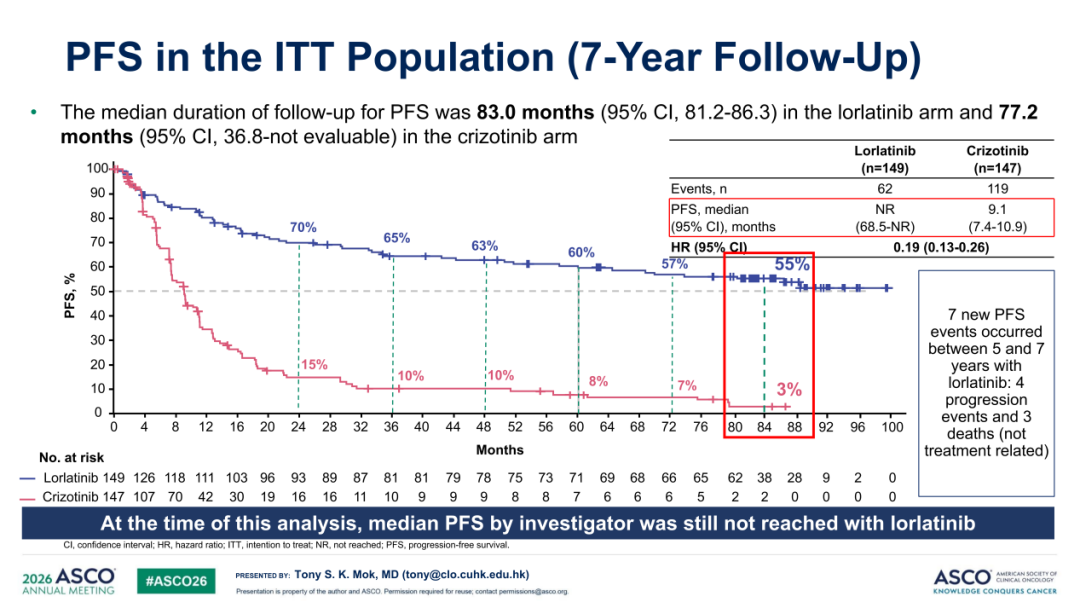 Fig. 1. PFS Kaplan-Meier Curve for the ITT Population at CROWN 7-Year Follow-up
Moreover, among patients who remained progression-free at 2 years of treatment, 79% remained progression-free at year 7. Prof. Li pointed out that this suggests the risk of disease progression with lorlatinib is concentrated in the early treatment period, and once patients smoothly pass the first 2-year window, the probability of subsequent long-term stability is very high.
Prof. Li further introduced a network meta-analysis presented at this year’s ASCO, covering 15 randomized controlled trials, 4,392 patients, and 9 ALK-TKIs [2]. The data showed lorlatinib ranked first with HR=0.19 and a SUCRA value of 0.91, meaning lorlatinib has a 91% probability of being the best PFS choice among the 9 agents.
In intracranial protection, lorlatinib’s performance is equally outstanding. Prof. Li emphasized that brain metastasis is one of the greatest survival threats for ALK-positive NSCLC patients. Real-world data show that, in patients receiving second-generation ALK-TKI as first-line therapy, the 5-year cumulative incidence of new brain metastases is approximately 20%, and once brain metastases occur, the risk of death increases approximately 3-fold [3,4]. The CROWN 7-year follow-up showed that the lorlatinib arm did not experience any new intracranial progression events after 30 months of treatment. Prof. Li noted that this means that, as long as patients smoothly pass the first 30 months, the risk of subsequent intracranial progression is extremely low. Earlier Asian-subgroup 5-year follow-up data also showed a 0% cumulative incidence of new brain metastases in patients without baseline brain metastases, and the 7-year follow-up further confirmed this finding, suggesting that the Asian subgroup likewise maintains a 0% rate of new brain metastases, achieving up to 7 years of sustained intracranial protection.
Prof. Li concluded that these data collectively indicate that long-term survival for ALK-positive advanced NSCLC is no longer an unattainable goal, but is gradually moving toward “clinical cure.” Lorlatinib’s potent and durable intracranial protection transforms brain metastasis from “passive response” to “active prevention,” avoiding the radiotherapy and potential neurocognitive damage caused by brain metastasis, and reducing treatment failure and hospitalization burden due to intracranial progression. For patients, this means higher quality of life and lower disease-related fear; for clinicians, the treatment strategy can shift from “always preparing to address brain metastasis” to “peacefully managing systemic disease,” propelling the full-course management of ALK-positive NSCLC into a new phase.
“Good Drug First” Reshapes the ALK-Positive NSCLC Treatment Landscape
With the release of the CROWN 7-year follow-up data, the treatment map of ALK-positive NSCLC has become clearer and more diverse. In first-line treatment decision-making, how to make the optimal choice among the growing array of ALK-TKIs has become a critical question that clinical practice urgently needs to address. Prof. Cuiying Zhang shared from a clinical-practice perspective the core dimensions of her first-line treatment decision-making.
First, long-term PFS data is the most central consideration. Lorlatinib’s 5-year PFS rate of 60%, 7-year PFS rate of 55%, and mPFS exceeding 84 months set it significantly apart from other ALK-TKIs. For treatment-naive patients, the length of first-line PFS determines how long patients can enjoy a “high-quality, low-treatment-intensity” life. Choosing lorlatinib means patients have a greater than 50% probability of not having to worry about disease progression for 7 years.
Brain metastasis prevention capability is equally among the key considerations. Brain metastasis affects not only prognosis but also severely affects quality of life and functional status. Lorlatinib previously achieved a 0% 5-year cumulative incidence of new brain metastases in Asian patients without baseline brain metastases [5], and the CROWN 7-year follow-up showed that the lorlatinib arm did not observe any new intracranial progression events after 30 months, transforming brain metastasis from “a risk requiring constant vigilance” into “an event that can almost be ignored,” further confirming lorlatinib’s irreplaceable advantages in brain metastasis prevention and control.
In addition, the safety profile and manageability, as well as the room for later-line treatment options, are also important decision-making references. Prof. Zhang noted that lorlatinib’s safety profile is dominated by hyperlipidemia and CNS reactions, both of which have well-established monitoring and intervention protocols, and dose adjustment does not affect efficacy. In later-line treatment reserves, lorlatinib as a third-generation TKI has resistance mechanisms primarily mediated by ALK-independent pathways, with multiple later-line treatment options; conversely, if a second-generation TKI is chosen first-line, approximately 20%-40% of patients develop refractory mutations such as G1202R after resistance [6,7]; although lorlatinib can be switched to in the later line, the patient has already lost the golden window of first-line treatment. The ctDNA analysis from the CROWN 7-year follow-up also showed that no new on-target ALK kinase domain secondary resistance mutations were detected after first-line lorlatinib treatment, suggesting that broad-spectrum coverage and effective suppression of on-target ALK resistance pathways can be achieved at the first-line stage, preventing the emergence of on-target ALK resistance mutations from the source and maximizing patient survival benefit.
Based on current evidence, Prof. Zhang clearly stated that the “3+X” sequencing strategy — using lorlatinib as the first-line starting point and selecting subsequent treatments based on resistance mechanisms after progression — is the preferred path to maximize cumulative survival benefit for ALK-positive patients. A prior treatment-sequencing prediction modeling study based on CROWN data also provided quantitative support for this strategy: with lorlatinib as the starting point, the “3+X” model achieves cumulative PFS of 12.3 years, whereas the “2→3”model only achieves 7.4 years — a gap of nearly 5 years [8].
In summary, the CROWN 7-year follow-up data provide key evidence-based support for the “good drug first” strategy with lorlatinib as first-line treatment, locking in a longer benefit window for patients in the first-line treatment stage and pushing the chronic-disease management of ALK-positive NSCLC from vision to reality.
Long-Term Stability: Building a New Safety Line for ALK-Positive NSCLC
As treatment duration extends, the focus of safety management changes accordingly. The CROWN 7-year follow-up identified no new safety signals; the rate of treatment-related permanent discontinuation was only 5%, and all discontinuation events occurred within the first 26 months. Prof. Lei Xu pointed out that, as long as patients can tolerate the initial treatment, adherence in subsequent long-term treatment is good, and the vast majority of patients can continue to benefit from treatment.
Regarding dose adjustment, Prof. Xu emphasized that this is an important means of achieving long-term individualized treatment with lorlatinib. The CROWN 7-year follow-up data show that 34% of patients reduced their dose during treatment, with a median time to first dose reduction of 25 weeks, but between patients with and without dose reduction within 26 weeks, the long-term efficacy of lorlatinib was similar. Regardless of whether the maintenance dose was 100 mg, 75 mg, or 50 mg, patient PFS and intracranial time-to-progression remained consistent, suggesting that even with dose reduction, lorlatinib’s efficacy is not significantly affected. Therefore, in clinical practice, on the premise of ensuring efficacy, physicians can actively and calmly perform scientific dose adjustments, maintaining high-dose intensity while controlling adverse reactions, thus maximizing the therapeutic benefit of lorlatinib.
In addition, a real-world study of low-dose lorlatinib [9] was also reported at this year’s ASCO. The study enrolled 32 metastatic ALK-positive NSCLC patients who had received at least one prior ALK-TKI, treated with low-dose lorlatinib 25 mg daily. At a median follow-up of 10.3 months, the objective response rate (ORR) was 42.9% and the disease control rate (DCR) was 71%. Among patients with baseline brain metastases, the intracranial response rate was 25%. Treatment-related adverse events were all grade 1-2, the most common being hyperlipidemia, with no grade 3 or above adverse events. Prof. Xu noted that this study further suggests that, in situations where standard dose is not accessible or tolerable, low-dose lorlatinib can still provide clinically meaningful efficacy and favorable safety.
In terms of hyperlipidemia management, Prof. Xu noted that CROWN study data show that, since the 5-year analysis, the frequency of grade 3-4 adverse events has not increased, most of which are due to elevated lipids; although lorlatinib has a high incidence of hyperlipidemia, no increase in cardiovascular adverse events has been observed compared with crizotinib. Real-world data at this year’s ASCO also showed that total cholesterol and LDL significantly increase within 2-12 weeks after lorlatinib treatment, with LDL increasing by approximately 32.9 mg/dL every 4 weeks in the first 3 months, and that hyperlipidemia is significantly associated with stroke or transient ischemic attack [10]. Other research has shown that patients initiating lipid-lowering therapy within 30 days of starting lorlatinib had a 39% reduction in 1-year all-cause mortality, a 49% reduction in venous thromboembolism risk, and a 38% reduction in hospitalization risk [11]. These data suggest that proactive and early lipid management strategies should be adopted in clinical practice. Prof. Xu shared specific clinical recommendations: before starting treatment, patients should be informed that this is a normal concomitant phenomenon of drug action; at treatment initiation, baseline lipid profile and cardiovascular risk should be assessed; after medication, regular monitoring should be performed; once hyperlipidemia occurs, graded lipid-lowering therapy should be initiated promptly; for mild to moderate elevation, statins can be considered first; for severe elevation, lorlatinib can be temporarily interrupted, and the original dose resumed after lipid improvement.
In terms of CNS adverse reaction management, CROWN 7-year follow-up data show that CNS adverse reactions are mainly cognitive, mood, and speech effects, mostly grade 1-2. Prof. Xu noted that, before treatment, patients and families should be informed of possible cognitive or mood changes, and encouraged to actively report, to avoid unnecessary panic. For patients with persistent symptoms, dose reduction can be considered: reducing lorlatinib from 100 mg to 75 mg or 50 mg can significantly improve neurological symptoms in most patients, with no significant decrease in efficacy.
Summary and Outlook
The CROWN 7-year follow-up data, with the breakthrough performance of mPFS exceeding 84 months and not yet reached, and 7-year PFS rate of 55%, have pushed the survival boundary of ALK-positive advanced NSCLC to unprecedented heights. Looking ahead, the long-term follow-up of the CROWN study continues, and with the deepening of the chronic-disease management model, ALK-positive NSCLC is gradually being transformed into a chronic disease that can be managed over the long term, allowing more patients to achieve long-term, high-quality survival and even clinical “cure,” leading lung cancer targeted therapy toward a brighter future.
References
[1] Mok T. Lorlatinib vs crizotinib as first-line treatment for advanced ALK+ non-small cell lung cancer: 7-year update from the phase 3 CROWN study. 2026 ASCO 8502.
[2] Yashasvi Srivastava, et al. Comparative effectiveness of ALK tyrosine kinase inhibitors in ALK-positive non–small cell lung cancer: A systematic review and network meta-analysis. 2025 ASCO e20753.
[3] Uprety D, et al. Brain metastases and mortality in patients with ALK+ metastatic non-small cell lung cancer treated with second-generation ALK tyrosine kinase inhibitors as first-line targeted therapies: An observational cohort study. Lung Cancer. 2025;201:108436.
[4] Liu G, et al. Real-world incidence, prevalence, and clinical impact of brain metastases in patients with ALK-positive metastatic non-small cell lung cancer treated with first-line ALK tyrosine kinase inhibitors. Lung Cancer. 2026 Feb;212:108858.
[5] Solomon BJ, et al. Lorlatinib Versus Crizotinib in Patients With Advanced ALK-Positive Non-Small Cell Lung Cancer: 5-Year Outcomes From the Phase III CROWN Study. J Clin Oncol. 2024;42(29):3400-3409.
[6] Fukui T, et al. Review of Therapeutic Strategies for Anaplastic Lymphoma Kinase-Rearranged Non-Small Cell Lung Cancer. Cancers (Basel). 2022 Feb 24;14(5):1184.
[7] Tabbò F, et al. Resistance to anaplastic lymphoma kinase inhibitors: knowing the enemy is half the battle won. Transl Lung Cancer Res. 2020 Dec;9(6):2545-2556.
[8] H Le, et al. Optimizing Treatment Sequencing to Maximize Survival in ALK+ Advanced Non-Small Cell Lung Cancer: A Modeling Study. 2025 WCLC P3.12.19.
[9] Gedela S, et al. Clinical outcomes with low-dose lorlatinib in ALK mutation-positive metastatic lung adenocarcinoma: Experience from a tertiary care center in a developing country. 2026 ASCO e20764.
[10] Paydary P, et al. Real-world patterns of hyperlipidemia and cardiometabolic toxicity in patients with ALK-fusion-positive NSCLC treated with lorlatinib. 2026 ASCO e20724.
[11] Gopu SS, et al. Early lipid-lowering therapy after lorlatinib and clinical outcomes in non-small cell lung cancer: a propensity-matched real-world analysis.

