


From May 29 to June 2, 2026, the American Society of Clinical Oncology (ASCO) Annual Meeting was held in Chicago. At this year’s congress, the much-anticipated CROWN study presented its 7-year long-term follow-up data as an oral presentation, once again drawing significant attention from the global oncology community. The data showed that first-line lorlatinib in ALK-positive advanced non-small cell lung cancer (NSCLC) achieved a median progression-free survival (mPFS) exceeding 84 months that has not yet been reached, with a 7-year PFS rate of 55%, once again setting a new PFS record for single-agent targeted therapy in advanced solid tumors. On this occasion, MedJ’s Oncology Channel invited Prof. Li Jiang from Affiliated Hospital of North Sichuan Medical College to provide an in-depth interpretation of the groundbreaking CROWN study data and its clinical value.
Q1: The 2026 ASCO-released 7-year follow-up data from CROWN show that first-line lorlatinib in ALK-positive advanced NSCLC achieved an mPFS exceeding 84 months, with PFS still not reached and a 7-year PFS rate of 55%. In comparison, the median overall survival (mOS) of second-generation ALK-TKIs was 81.1 months. Notably, among patients progression-free at 2 years, the 7-year PFS rate reached 79%. First-line lorlatinib monotherapy’s mPFS has now surpassed the mOS of other drugs. Prof. Jiang, what impact does this update have on clinical management of ALK+ NSCLC?
Prof. Li Jiang: In my many years of practice, I have rarely had the opportunity to use the term "historic leap," but it is not an overstatement for the CROWN study. In the past, evaluating a targeted therapy meant looking at how many months PFS could be extended — one year, two years — and that was already remarkable. The CROWN study shows that the PFS of a third-generation ALK-TKI as monotherapy is actually longer than the overall survival from start to finish of a second-generation ALK-TKI. This breaks the record for single-agent targeted therapy in advanced solid tumors, and it may be very difficult to surpass in the years to come.
Another set of data is particularly noteworthy: among patients who had no progression in the first two years of treatment, the probability of remaining progression-free at 7 years is 79%. This means that once patients smoothly navigate the initial two-year period, the disease enters a very stable plateau phase, with further risk reduction. This is completely different from the TKIs we have encountered before. Previous second-generation TKIs or other agents such as EGFR-TKIs typically peaked at around 2–3 years, after which the survival curve declined year by year, rather than presenting a high plateau. This is the essential difference in treatment quality between the two generations of drugs.
From the 5-year follow-up to the 7-year follow-up, only 7 new PFS events occurred in the lorlatinib arm during these two years, including 4 cases of disease progression and 3 deaths unrelated to treatment. Over a two-year follow-up window, only 7 events occurred among 149 patients, meaning that the vast majority of patients remained stable throughout those two years — this low event rate is the most intuitive manifestation of the "high plateau phase".
The significance of lorlatinib goes beyond delaying disease progression; it gives clinicians solid grounds to tell patients with advanced lung cancer that more than half of patients can achieve effective disease control for 7 years or even longer with a single drug. The current treatment goal can indeed be directed toward "clinical cure".
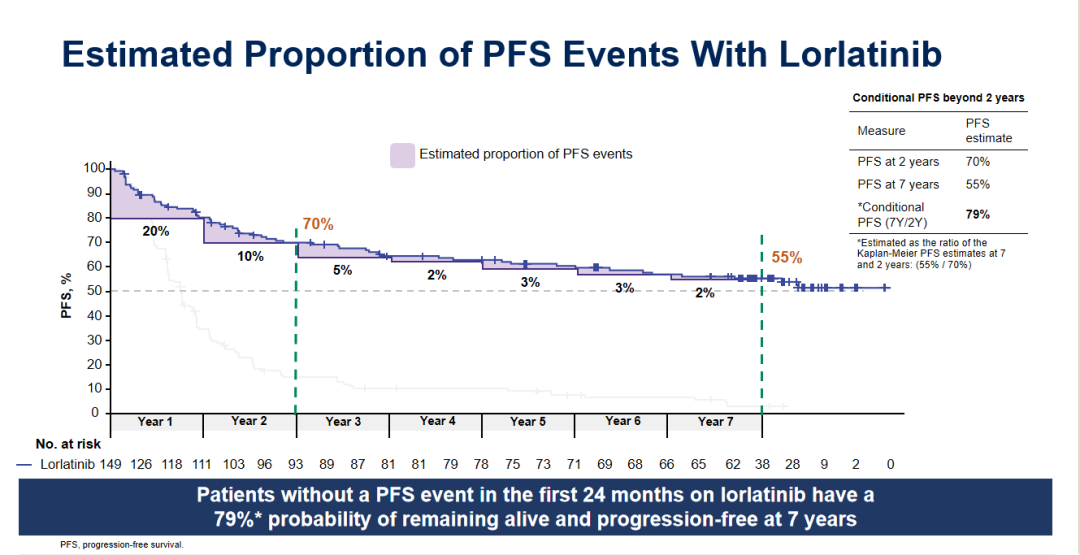
Fig. 1. Estimated proportion of PFS events in the lorlatinib arm
Q2: Brain metastasis is a core obstacle affecting long-term survival in ALK-positive patients. Data show that after second-generation TKI therapy, approximately 20% of patients without baseline brain metastases will develop new brain metastases within 5 years. The 7-year CROWN data show that lorlatinib reduces the risk of intracranial progression by 94%, and in the Asian population, the vision of long-term zero new brain metastases in patients without baseline brain metastases is gradually becoming a reality. Prof. Jiang, how does this difference between "active prevention" and "passive response" influence clinical decision-making for pulmonologists?
Prof. Jiang: This is also a frequently asked question in outpatient settings, especially for pulmonologists who are the first clinical contact for patients. In the past, when patients asked whether they would develop brain metastases in the future, we could only tell them that if it unfortunately happened, there were treatment options available — but this was essentially a passive backup strategy, and clinicians themselves lacked full confidence.
Now the situation has changed. The 7-year follow-up data from the CROWN study provide robust evidence, showing us the feasibility of helping patients avoid the risk of brain metastases at the source. Data show that the 5-year new brain metastasis rate in patients treated with second-generation ALK-TKIs is close to 20%, whereas after 16 months of lorlatinib treatment, no further intracranial progression events were observed in patients without baseline brain metastases, with a 7-year cumulative brain metastasis incidence of only 4%. In the Asian population, there is a particularly strong trend toward long-term zero new brain metastases. This difference is not a random phenomenon, nor is it a matter of luck — it is the inevitable result determined by the drug’s molecular structure. Lorlatinib’s unique macrocyclic amide structure endows it with efficient blood-brain barrier penetration, maintaining effective therapeutic drug concentrations intracranially, truly achieving "prevention before the event" for brain metastases.
This data has a fundamental impact on clinical decision-making logic. For patients pursuing long-term high-quality survival, the comparative dimension of clinical decisions is no longer limited to the numerical difference in PFS between two drugs, but focuses on who can safeguard the patient’s brain function for the next decade. Choosing a therapeutic agent that can prevent brain metastases at the source is the most responsible first-line treatment decision a pulmonologist can make for their patients.
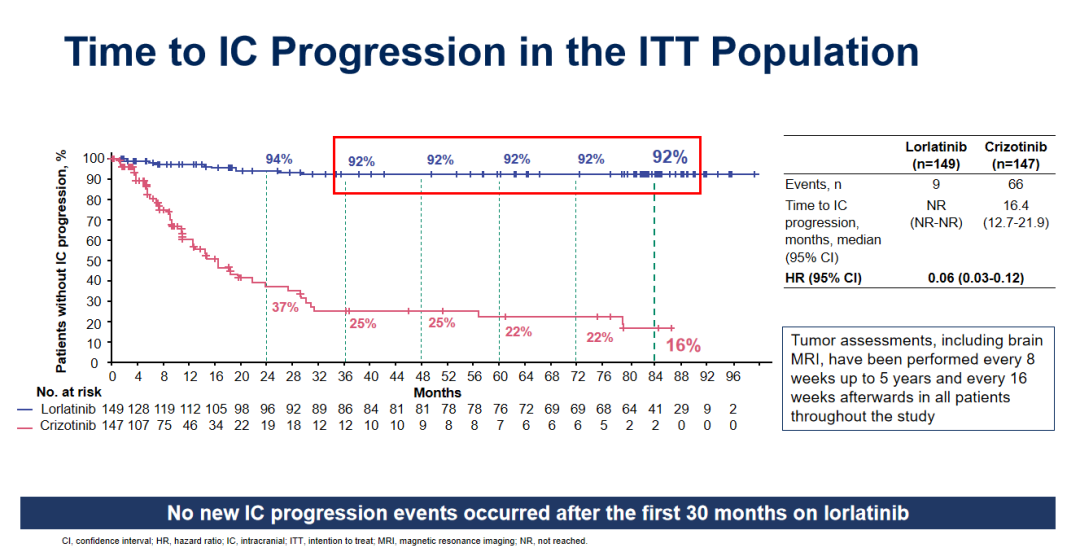
Fig. 2. 7-year intracranial progression-free rate in the lorlatinib arm (ITT population)
Q3: The 7-year follow-up ctDNA analysis from the CROWN study shows that no new on-target ALK resistance mutations were detected after first-line lorlatinib treatment. In contrast, under the "2+3" sequential model, the rate of complex ALK compound mutations can reach 30%. Prof. Jiang, how does this difference in resistance mechanisms influence our thinking about first-line treatment strategy?
Prof. Jiang: For a long time, clinicians were generally concerned that using the most potent drug first-line would leave them "with no drug to use" upon resistance, so they tended to reserve the most potent drug for later lines as a backup strategy. However, the 7-year follow-up ctDNA analysis results from the CROWN study have completely dispelled this concern at the mechanistic level.
The reason why the sequential model of second-generation ALK-TKI followed by third-generation drug results in approximately 30% compound mutations lies fundamentally in the fact that second-generation drugs have a relatively narrow kinase inhibition spectrum and limited binding affinity to the ALK kinase domain. When tumor cells are exposed to drug pressure, they continuously undergo mutations, gradually selecting for refractory mutations such as G1202R, which further evolve into more complex compound mutations. Once such compound mutations form, they may confer high-level resistance to all currently approved ALK-TKIs, making it extremely difficult to find effective subsequent treatment options.
Lorlatinib’s molecular structure determines its distinctly different resistance profile. Its macrocyclic amide structure is less affected by steric hindrance and can almost completely embed into the center of the ATP-binding pocket, maintaining potent inhibitory activity against the vast majority of ALK resistance mutations, including G1202R, G1269A, and others. This structural advantage has been fully validated in clinical data. During the 7-year follow-up period, no new on-target ALK resistance mutations were detected in patients receiving first-line lorlatinib. In essence, lorlatinib does not wait for resistance to occur and then respond — it directly cuts off the evolutionary pathway of resistant clones at the source.
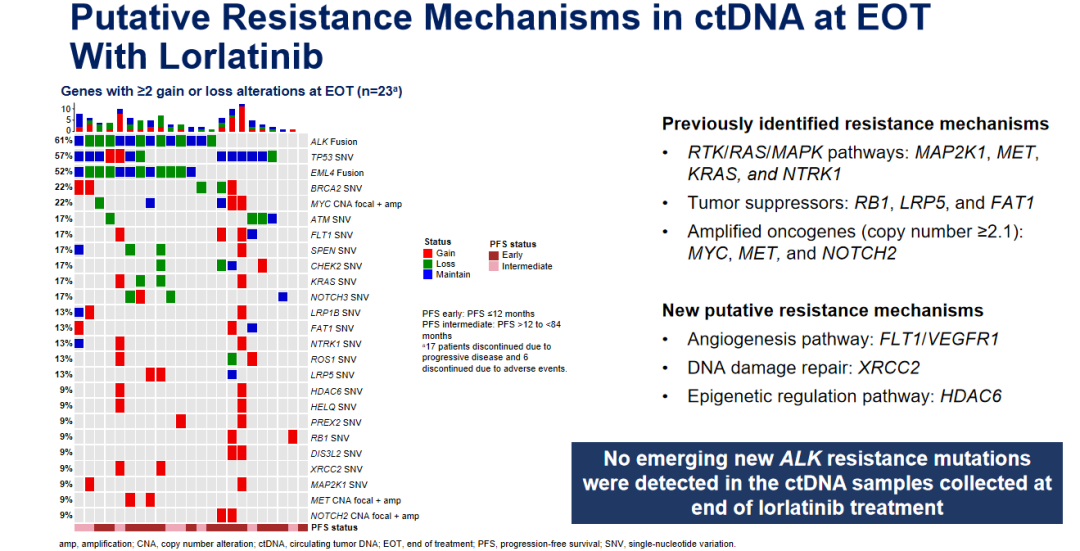
Fig. 3. Landscape of potential resistance mechanisms at end of lorlatinib treatment by ctDNA — no new ALK resistance mutations detected
The conclusion is thus clear: the sequential model of second-generation followed by third-generation first creates the problem of compound mutations and then attempts to solve it; first-line lorlatinib, on the other hand, directly prevents the problem from occurring. This essential mechanistic difference provides the most solid scientific basis for the "best drug first" strategy and should fundamentally change the clinical medication mindset for first-line treatment of ALK-positive advanced NSCLC.
Q4: In the pursuit of long-term treatment, safety is the cornerstone of treatment continuity. The 7-year follow-up of the CROWN study shows that the treatment-related adverse event (TRAE) discontinuation rate for lorlatinib is only 5%, with no new events after 26 months. Some second-generation TKIs also have their own specific adverse reactions. Prof. Jiang, how do you view the safety management strategy for lorlatinib?
Prof. Jiang: This question touches on the core contradiction of long-term treatment — in the pursuit of longer survival, we cannot sacrifice patients’ quality of life. Therefore, when evaluating a drug’s safety, the key lies in whether its adverse reactions are "predictable, monitorable, and manageable". Every ALK-TKI has its own unique adverse reaction profile, and lorlatinib is no exception, with its main manifestations being hyperlipidemia, weight gain, and certain central nervous system reactions.
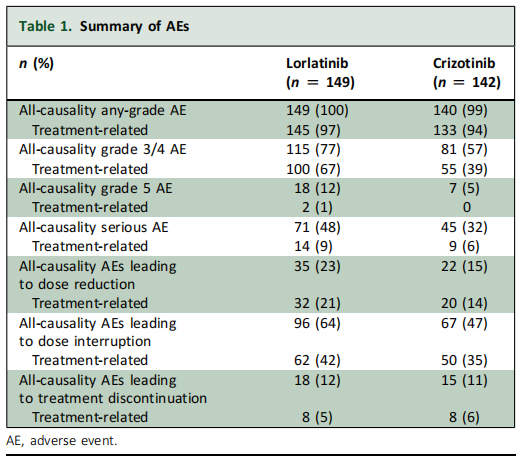
Based on the 7-year follow-up data from the CROWN study, lorlatinib’s safety profile provides considerable confidence for clinical practice. The incidence of Grade 3/4 adverse events remained consistent at both the 5- and 7-year follow-ups, with no evidence of cumulative toxicity—indicating that lorlatinib does not exhibit progressively increasing toxicity with prolonged treatment duration. Although hyperlipidemia is the most frequently observed adverse reaction, it can be effectively managed through pre-treatment patient education, routine monitoring during early treatment, and timely lipid-lowering interventions; current data also show no increased risk of cardiovascular events attributable to this condition. Regarding discontinuation rates, the rate of permanent discontinuation due to treatment-related adverse events was only 5%, and all such discontinuations occurred within the first 26 months of treatment—suggesting that, after patients pass the initial adjustment period, overall tolerability stabilizes, and adverse event–related discontinuations become exceedingly rare thereafter [1].
Table 1. Summary of adverse events in both arms during 7-year follow-up (TRAE discontinuation rate: 5% in lorlatinib arm vs. 6% in crizotinib arm)
Moreover, the dose adjustment strategy for lorlatinib has become relatively mature. Approximately 34% of patients achieved effective adverse reaction management through 1–2 dose adjustments, and Landmark analysis showed that dose adjustment does not affect long-term efficacy. In comparison, some second-generation TKIs also have their own management challenges, such as liver function impairment and interstitial lung disease.
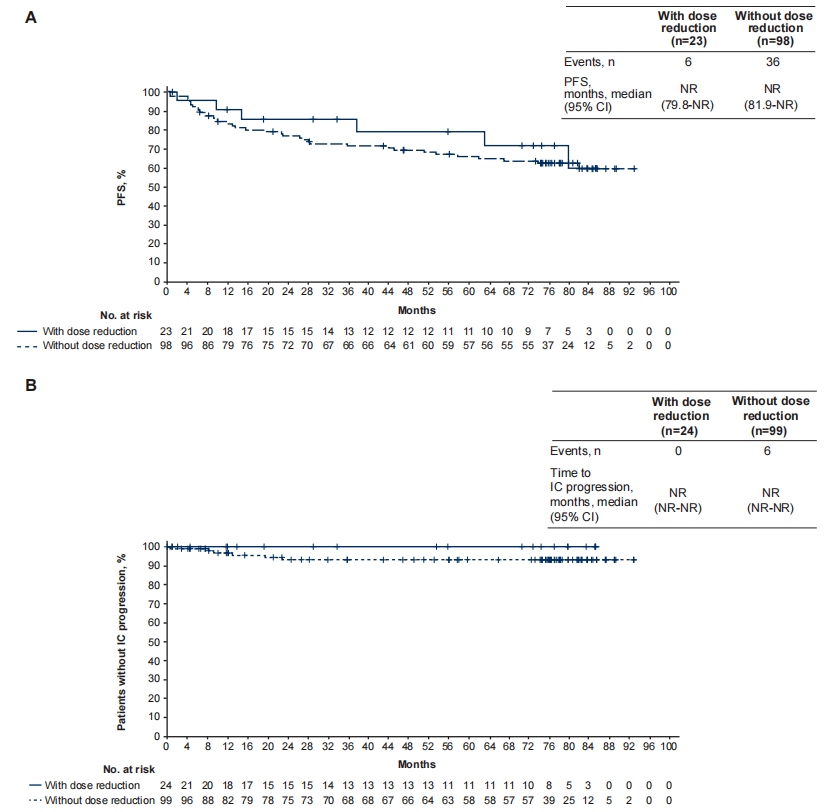
Fig. 4. PFS and intracranial time-to-progression in patients with vs. without lorlatinib dose reduction within 26 weeks (investigator assessment)
In summary, for clinicians, the goal is always to help patients "live longer" and "live better." The 7-year follow-up data from the CROWN study not only confirm lorlatinib’s long-term efficacy but also clarify its clear, predictable, and manageable adverse reaction profile. This mature safety management approach provides a solid guarantee for patients to receive continuous treatment for up to 7 or even 10 years.
References
[1] Mok T, Solomon BJ, Felip E, et al. Lorlatinib vs crizotinib as first-line treatment for advanced ALK+ non-small cell lung cancer: 7-year update from the phase 3 CROWN study. J Clin Oncol. 2026;44(suppl 16):abstr 8502.
[2] Liu G, Abrahami D, Ramachandran P, et al. Real-world incidence, prevalence, and clinical impact of brain metastases in patients with ALK-positive metastatic non-small cell lung cancer treated with first-line ALK tyrosine kinase inhibitors. Lung Cancer. 2026;212:108858.
[3] Schneider JL, Lin JJ, Shaw AT. ALK-positive lung cancer: a moving target. Nat Cancer. 2023;4(3):330-343.

