


The 2026 American Society of Clinical Oncology (ASCO) Annual Meeting has concluded, gathering the latest advances in global oncology. At this year’s meeting, the 7-year follow-up data from the CROWN study took center stage, once again setting new survival benchmarks for ALK-positive advanced non-small cell lung cancer (NSCLC). The data show that the third-generation ALK tyrosine kinase inhibitor (ALK-TKI) lorlatinib, used as first-line therapy, has a median progression-free survival (PFS) that has not yet been reached, exceeding 84 months, with a 7-year PFS rate of 55% — more than half of patients remaining progression-free at 7 years. On this occasion, MedJ Oncology Channel invited Prof. Ziping Wang of Peking University Cancer Hospital to interpret, on the basis of the latest CROWN evidence, how these data reshape clinical understanding,and to discuss how, in this new “long-survival” era, refined full-course management can help patients achieve long-term survival with high quality.
About the Expert — Prof. Ziping Wang

Director, First Department of Thoracic Medical Oncology, Peking University Cancer Hospital (Beijing Cancer Hospital); chief physician, professor, doctoral supervisor
President, Oncology Branch, Chinese Medical Ethnicity and Medicine Association
Honorary Chair, Chemotherapy Committee, China Medical Education Association
Chair, Tumor Microenvironment Subcommittee, Beijing Cancer Prevention and Treatment Research Society
Vice Chair, Geriatric Oncology Committee, Chinese Geriatric Society
Transcending Boundaries, Restructuring Cognition: Ultra-Long-Term Survival Breaks Down the Barriers of “Terminal Illness”
Q1. ASCO 2026 has just released data from multiple studies, with the CROWN 7-year follow-up drawing particular attention. The data show that median PFS in the lorlatinib arm has not yet been reached and the 7-year PFS rate is 55%. Does such ultra-long-term PFS benefit change our clinical understanding of ALK-positive advanced lung cancer?
Prof. Wang:
The efficacy of targeted therapy in advanced NSCLC has typically been measured in months. The lorlatinib data — median PFS not yet reached and a 7-year PFS rate of 55% — break that frame of reference. It means that more than half of patients remain progression-free 7 years after starting first-line lorlatinib, and the survival expectation for advanced lung cancer has crossed 5 years, 7 years, and may extend toward 10 years. This magnitude of shift will lead the field to look at ALK-positive advanced NSCLC differently; its survival curve is approaching the pattern of a chronic disease.
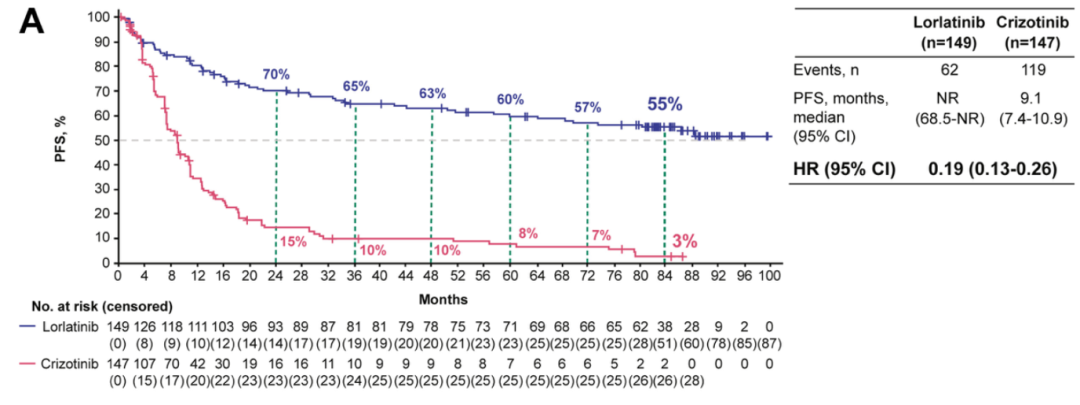 Fig. 1. CROWN Study 7-Year PFS Kaplan-Meier Curve
The 7-year PFS rate of 55% points to a deeper biological fact: ALK-driven tumors have a defined genomic vulnerability, namely sustained dependence on ALK signaling. When the third-generation ALK-TKI lorlatinib, with its efficient blood-brain barrier penetration and broad coverage of multiple ALK resistance mutations, exerts sustained and deep signaling blockade on this target, tumor cells struggle to escape through secondary ALK-pathway mutations. Circulating tumor DNA (ctDNA) analysis from this 7-year follow-up also confirmed that no new on-target ALK resistance mutations were detected at the end of lorlatinib treatment. This deep suppression of resistance mutations is an important contributor to moving ALK-positive NSCLC from “a malignancy with a good treatment response” toward “a chronic disease approaching clinical cure.”
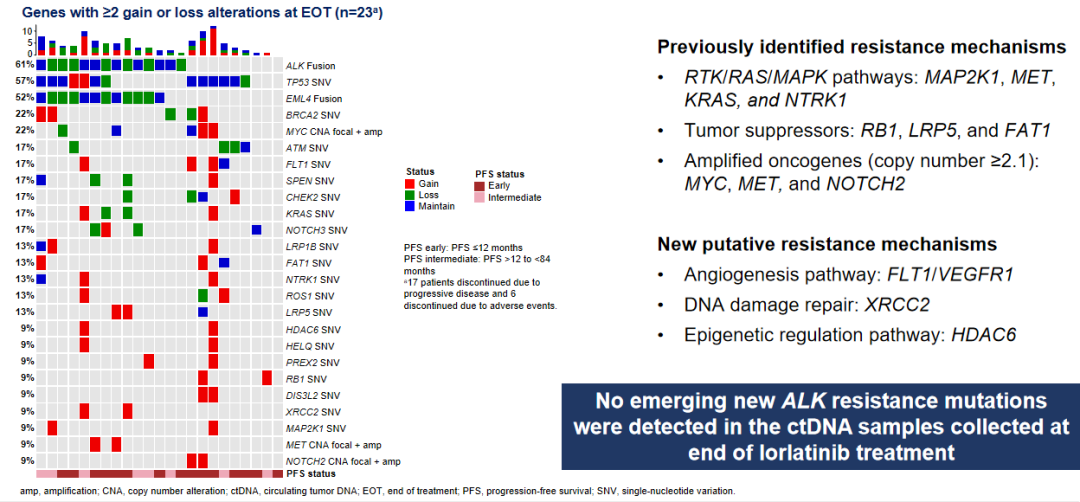 Fig. 2. Resistance Mechanism Analysis in ctDNA at the End of Lorlatinib Treatment
The deep impact of 7-year PFS benefit on clinical practice is first reflected in the doctor-patient conversation. Previously, when facing an ALK-positive advanced NSCLC patient, the central question in the conversation was “how to control the tumor.” Today, with the 7-year 55% progression-free data, the conversation has shifted to “how to plan the next 7 years or more of life.” Superficially, this is an extension of treatment expectation; in essence, it is a reshaping of the patient’s life, career, and family planning. When making first-line treatment decisions, clinicians should focus on whether the regimen can deliver the longest possible progression-free survival, robust intracranial protection, and deep suppression of on-target ALK resistance mutations, and place a potent agent firmly in the front line.
In summary, when treatment can deliver more than 7 years of sustained disease control, the endpoint of PFS itself is being redefined — no longer merely an outcome metric, but a direct expression of the patient’s real quality of life. With 55% of patients remaining progression-free 7 years after first-line therapy, “clinical cure” in advanced NSCLC is moving from theory toward reality. The CROWN 7-year follow-up tells us: the treatment goal for ALK-positive advanced NSCLC is no longer simply to delay death, but to pursue long-term, high-quality living.
Impregnable Defense, Decisive First Battle: Establishing the Intracranial Barrier as the Foundation for Survival
Q2. In patients with no baseline brain metastases, the 7-year intracranial progression-free rate in the lorlatinib arm was 96%. In those with baseline brain metastases, the 7-year intracranial progression-free rate was 83%. Do these two findings suggest that lorlatinib should be the first choice regardless of whether brain metastases are present at diagnosis?
Prof. Wang:
The CROWN 7-year follow-up data show that, in patients without baseline brain metastases, the 7-year intracranial progression-free rate with lorlatinib was 96%, and in those with baseline brain metastases it was 83%. These two findings, addressing “prevention” and “treatment” respectively, point to a single conclusion: regardless of whether brain metastases are present at diagnosis, lorlatinib provides long-term, robust protection of the central nervous system. In patients without brain metastases, lorlatinib effectively prevents the occurrence of brain metastases; in those with brain metastases, intracranial lesions are also stably controlled over the long term. This full-coverage intracranial protection is unique among ALK-TKIs and provides the most direct evidence supporting lorlatinib as the preferred choice.
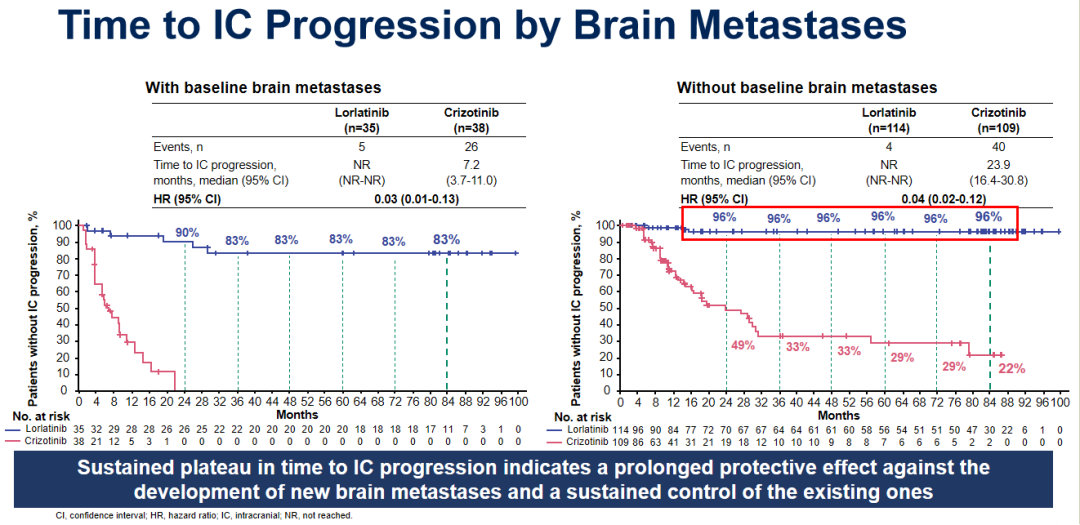 Fig. 3. Time to Intracranial Progression by Baseline Brain Metastasis Status
On one hand, in the clinical management of brain metastases, “prevention” is more valuable than “treatment.” Once brain metastases occur, patients not only face whole-brain radiotherapy or surgery, but also potentially irreversible damage to neurocognitive function and a significant decline in quality of life. For patients without baseline brain metastases, a 96% 7-year intracranial progression-free rate means the vast majority can prevent brain metastases from occurring. If a less effective agent is chosen first and brain metastases develop during treatment, even subsequent “rescue” switching to lorlatinib often cannot reverse neurological damage already sustained. In this sense, choosing lorlatinib first-line is, in essence, the active protection of long-term neurocognitive function.
On the other hand, the 7-year intracranial progression-free rate of 83% in patients with baseline brain metastases is equally compelling. Brain metastases are highly aggressive and notoriously difficult to treat. CROWN confirms that, even in this most challenging population, lorlatinib can deliver intracranial stability lasting up to 7 years for the vast majority. If an ALK-TKI with limited intracranial activity is chosen first-line, brain metastases may progress within months, by which point the patient has missed the optimal treatment window. For patients with baseline brain metastases, there is no room for trial and error — the first battle is also the decisive one, and the agent with the strongest intracranial efficacy and the most robust evidence must be selected.
Finally, a long-standing controversy in first-line ALK-positive NSCLC has been whether to reserve lorlatinib for later lines to avoid running out of options. The 7-year intracranial data provide a clear answer: this “reserve” logic no longer holds in the face of lorlatinib. In brain-metastasis management, using a less intracranially active agent first and switching to lorlatinib after brain metastases occur means the patient has already suffered neurological damage; in systemic efficacy, using another TKI first and switching to lorlatinib at progression means the patient has missed the chance of 7-year long-term progression-free survival. The decision logic of trading brain-metastasis injury and irrecoverable progression-free time for “preserving a later line” does not stand against the CROWN 7-year data. From every angle — progression-free survival, intracranial protection, and long-term chronic-disease management — lorlatinib should be the preferred first-line choice for ALK-positive advanced NSCLC.
Dance with Ease, Reduce Dose Without Compromising Efficacy: Comprehensive Management Ensures High-Quality Long-Term Survival
Q3. The 7-year follow-up showed that permanent discontinuation due to treatment-related adverse events (TRAEs) was only 5% in the lorlatinib arm, with no new discontinuation events after 26 months; 34% of patients underwent dose reduction, but long-term efficacy was similar to that of patients without dose reduction. Could you discuss the long-term safety and manageability of lorlatinib?
Prof. Wang:
In the 7-year follow-up, the permanent discontinuation rate due to TRAEs in the lorlatinib arm was only 5%, and all discontinuation events occurred within the first 26 months of treatment, with no new events thereafter. These data convey two key messages: first, the vast majority of patients can tolerate lorlatinib over the long term; second, once the early 26-month adaptation period is past, the safety risk in subsequent treatment is extremely low, and patients no longer need to worry about being forced to stop treatment because of adverse events. A 5% permanent discontinuation rate is at the lower end of long-term targeted therapy, providing a solid safety foundation for the chronic-disease management of ALK-positive advanced NSCLC.
In the CROWN study, 34% of patients underwent dose reduction, but efficacy in terms of PFS and intracranial time-to-progression (TTP) was comparable between patients with and without dose reduction. Dose reductions were mainly used to manage common adverse events such as dyslipidemia and weight gain, with a median time to dose adjustment of 25 weeks. This means that, when patients develop adverse events, clinicians can proactively and preparedly adjust the dose, without worrying that dose reduction will compromise long-term efficacy. This “dose-reduction-without-efficacy-loss” feature gives clinicians substantial management flexibility and reinforces the confidence of both physicians and patients in long-term use.
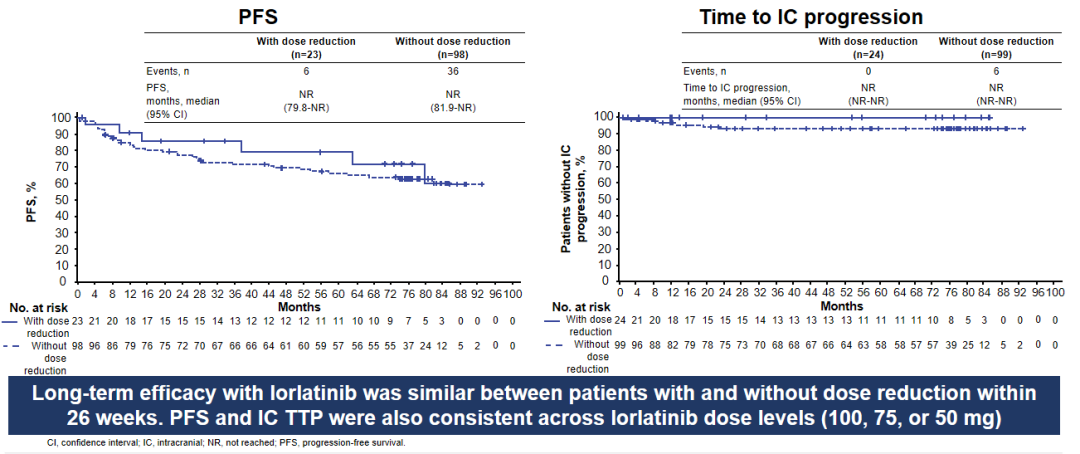 Fig. 4. Efficacy Comparison Between Patients With and Without Dose Reduction Within 26 Weeks
As follow-up has extended from 5 to 7 years, the safety profile of lorlatinib has been further validated. All treatment-related discontinuation events were concentrated in the first 26 months, suggesting that the early phase is the “critical window” for safety management, during which clinicians should establish a high-frequency proactive monitoring plan. Once patients move past this window, subsequent treatment enters a long-term stable phase.
The CROWN 7-year safety data have pushed ALK-positive advanced NSCLC treatment into an era of chronic-disease management. In this model, long-term treatment success depends not only on the efficacy of the drug itself, but also on the active management of adverse events and good communication between physicians and patients. Clinicians should establish a systematic proactive monitoring plan from the start of treatment, including regular assessment of lipid profile, body weight, neurocognitive function, and other core indicators. At the same time, patients should be informed of the early possible adverse events and coping strategies, and encouraged to actively report symptomatic changes, rather than self-interrupting or discontinuing treatment because of discomfort. With scientific early management, appropriate dose adjustment, and active physician-patient collaboration, the long-term treatment of ALK-positive advanced NSCLC can achieve the dual goals of “long-term control” and “high-quality life.”
Conclusion
The 7-year run of the CROWN study has, with solid evidence, declared a historic reshaping of the treatment landscape for ALK-positive advanced NSCLC. As understanding of the long-term safety and resistance mechanisms of targeted agents continues to deepen, the chronic-disease management of ALK-positive NSCLC will become more refined and individualized. With CROWN as a benchmark, precision therapy for lung cancer will continue to extend the boundaries of life, bringing benefit to more patients and propelling cancer treatment into a new era.
Reference
[1] Shaw AT, et al. Lorlatinib versus crizotinib as first-line treatment for advanced ALK-positive non-small cell lung cancer: 7-year update from the phase 3 CROWN study. Ann Oncol. Published online 29 May 2026.

