


The New England Journal of Medicine (NEJM) has published a study from China on chemogenetic neuromodulation for refractory epilepsy. The team at Xuanwu Hospital, Capital Medical University, led by Prof. Zhao Guoguang, used a gene therapy based on chemogenetic neuromodulation to treat refractory epilepsy. The effect was sustained on long-term follow-up, with patient 1 followed for 12 months and patients 2 and 3 for 8 months: patients 1 and 2 had no seizures at any point, while patient 3 had two breakthrough seizures during an unplanned interruption of clozapine, regained control quickly once the drug was resumed and had no further seizures [1].
 Fig. 1. Screenshot of the Original Report on Chemogenetic Neuromodulation for Refractory Epilepsy
Article Key Points
- Three patients with refractory epilepsy received an AAV vector carrying the inhibitory receptor hM4D
- Clozapine at 12.5 mg three times daily activated the receptor and suppressed abnormal discharges
- At week 12, mean seizure frequency had fallen by 92.6% compared with baseline
- Electroencephalographic sharp waves fell in all three patients, from 27, 124 and 348 to 5, 69 and 128 per hour
- Raw LSSS 2.0 scores fell from 13 to 2, from 9 to 0 and from 13 to 9
- Target coverage was 95.04%, 108.10% and 97.88%, with a mean infusion time of 119 minutes
- All adverse events were grade 1 or 2, and long-term safety follow-up is still under way
- This is the first human study of chemogenetic neuromodulation and a proof of concept in three patients
Why 30% of Patients with Epilepsy Cannot Be Treated
About 30% of patients are resistant to medication: however many antiepileptic drugs are taken, the abnormal discharges still come. Surgical resection of the focus is another option, but a focus in the hippocampus governs memory, and removing it may change the person. This is one of the most difficult dilemmas in medicine: the lesion cannot be resected and the drugs do not work.
The approach taken by the Xuanwu Hospital team is different in principle. It involves neither resection nor ablation, but installing a switch in the epileptic focus.
How the Switch Is Installed in the Brain
The mechanism breaks down into two steps.
First, install the switch. Through intracranial injection of a recombinant adeno-associated virus (AAV) vector, the investigational product GA002, an engineered inhibitory receptor (hM4D) is delivered to the neurons of the epileptic focus. The receptor acts as a remote-control receiver that recognises only an engineered key and not the body’s own signals.
Second, press the switch. Patients take a small oral dose of clozapine (12.5 mg per dose, three times a day). Once the drug reaches the brain it activates these receptors, quieting over-excited neurons: the membrane potential is hyperpolarised, the abnormal discharges are extinguished, and the seizure is suppressed.
In one sentence: the virus delivers the switch into the brain, and one drug is responsible for pressing it.
The surgery was also highly precise. Under MRI guidance, three stereotactic trajectories were designed along the head, body and tail of the hippocampus for precise infusion. Target coverage in the three patients reached 95.04%, 108.10% and 97.88% respectively, the mean infusion time was 119 minutes, and no reflux into the ventricle or the subarachnoid space was observed (Fig. 2A, 2B and 2C).
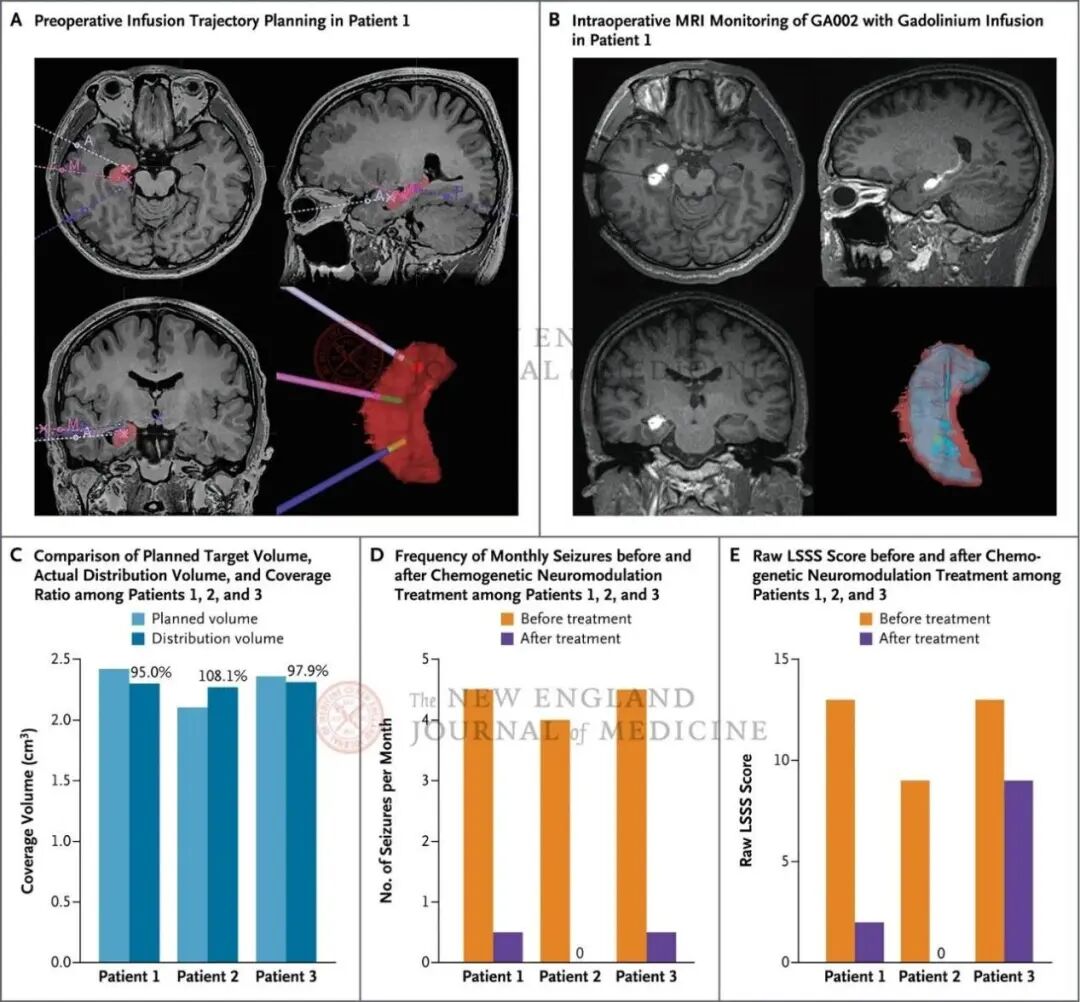 Fig. 2. Preliminary Clinical Outcomes at Week 12 in the Three Patients after Intracampal Delivery of GA002
How Effective Is It: The Data
Table 1. Monthly Seizure Frequency Before and After Treatment and Long-Term Follow-Up in the Three Patients (Panel 2D of Fig. 2).
|
Patient |
Monthly seizures before treatment |
Monthly seizures after treatment |
Long-term follow-up |
|
Patient 1 |
4.5 |
0.5 |
12 months, no seizures |
|
Patient 2 |
4.0 |
0 |
8 months, no seizures |
|
Patient 3 |
4.5 |
0.5 |
8 months, 2 seizures only during drug interruption |
At the end of week 12, several numbers define the result.
- Mean seizure frequency fell by 92.6%
- Sharp waves on electroencephalography fell markedly, from 27 to 5 per hour in patient 1, from 124 to 69 per hour in patient 2 and from 348 to 128 per hour in patient 3
- Raw Liverpool Seizure Severity Scale (LSSS 2.0) scores, on a scale of 0 to 40 where a higher score indicates more severe seizures, fell in all three patients: from 13 to 2 in patient 1, from 9 to 0 in patient 2 and from 13 to 9 in patient 3 (Fig. 2E)
- Cognitive testing was normal in all three patients, with no evidence of cognitive decline
The most persuasive detail concerns patient 3, who stopped clozapine without being told to and then had two seizures; once the drug was resumed, the seizures were brought under control again and no further seizures occurred. This supports the conclusion that the effect comes from the drug-activated switch.
On safety, all adverse events were grade 1 or 2. One case of asymptomatic transaminase elevation resolved spontaneously. No agranulocytosis, no worsening of seizures, no shedding of the viral vector and no other treatment-related effects were observed. Long-term safety follow-up in the three patients is still under way.
A Measured View: Preliminary Validation, Not a Cure
First, the sample is only three people. This is the first human study of this approach worldwide, and what it offers is a proof of concept: it shows that the route is workable, not that it is a mature therapy.
Second, long-term benefit and risk still need larger studies to define them.
Third, the approach currently addresses one specific form of epilepsy, mesial temporal lobe epilepsy with hippocampal sclerosis, and does not apply to all forms of epilepsy.
Even so, the significance is considerable. It is the first publication of complete human data on chemogenetic neuromodulation, and it closes the loop between installing a switch and pressing it, and it was done by a Chinese team, with Prof. Luo Minmin of the Beijing Institute for Brain Science acting as co-senior author. Between decades of treatment failure and the possibility of controlling seizures by installing a switch lies exactly this first step.
In Closing
For the general public, the greatest value of this report may not be that it can be used straight away, but that it shows medicine moving from fighting disease towards fine-tuning regulation: no longer cutting away the lesion wholesale, but learning to talk to the brain and giving it a reversible, controllable switch.
Reference
[1] Dai Y, Liu Q, Wang Y, et al. Chemogenetic Neuromodulation for Refractory Epilepsy. N Engl J Med 2026;395:1867-1869.

