


In a major breakthrough for cancer treatment, a Chinese research team has unveiled promising results from the first-in-human clinical trial of a dual-target CAR-T cell therapy for relapsed or refractory B-cell non-Hodgkin lymphoma (r/r B-NHL). Published in the prestigious journal Blood, the study highlights the safety and efficacy of prizloncabtagene autoleucel (Prizlon-cel), marking a significant step forward in addressing treatment resistance in lymphoma patients.
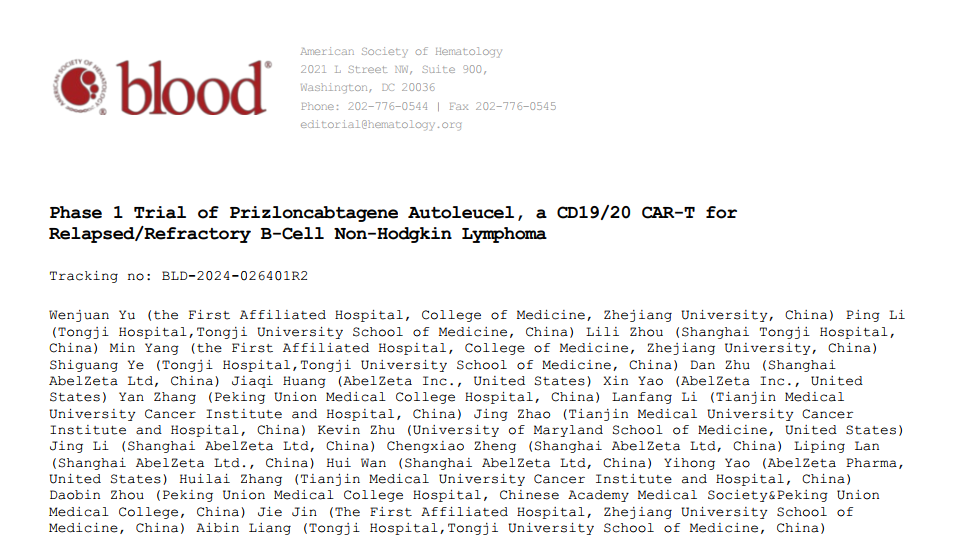
Figure 1. The Original Research Article
A New Approach to Overcome Treatment Resistance
CAR-T cell therapies, which reprogram a patient’s immune cells to attack cancer, have revolutionized the treatment of blood cancers. However, a key limitation of existing CD19-targeted CAR-T therapies is “antigen escape,” where cancer cells evade treatment by losing the CD19 protein. Led by Prof. Liang Aibin of Shanghai Tongji Hospital, the trial evaluated Prizlon-cel, a novel CAR-T therapy designed to target both CD19 and CD20 antigens—a strategy to overcome resistance and improve treatment outcomes.
Phase 1 Trial Shows Robust Efficacy and Manageable Safety
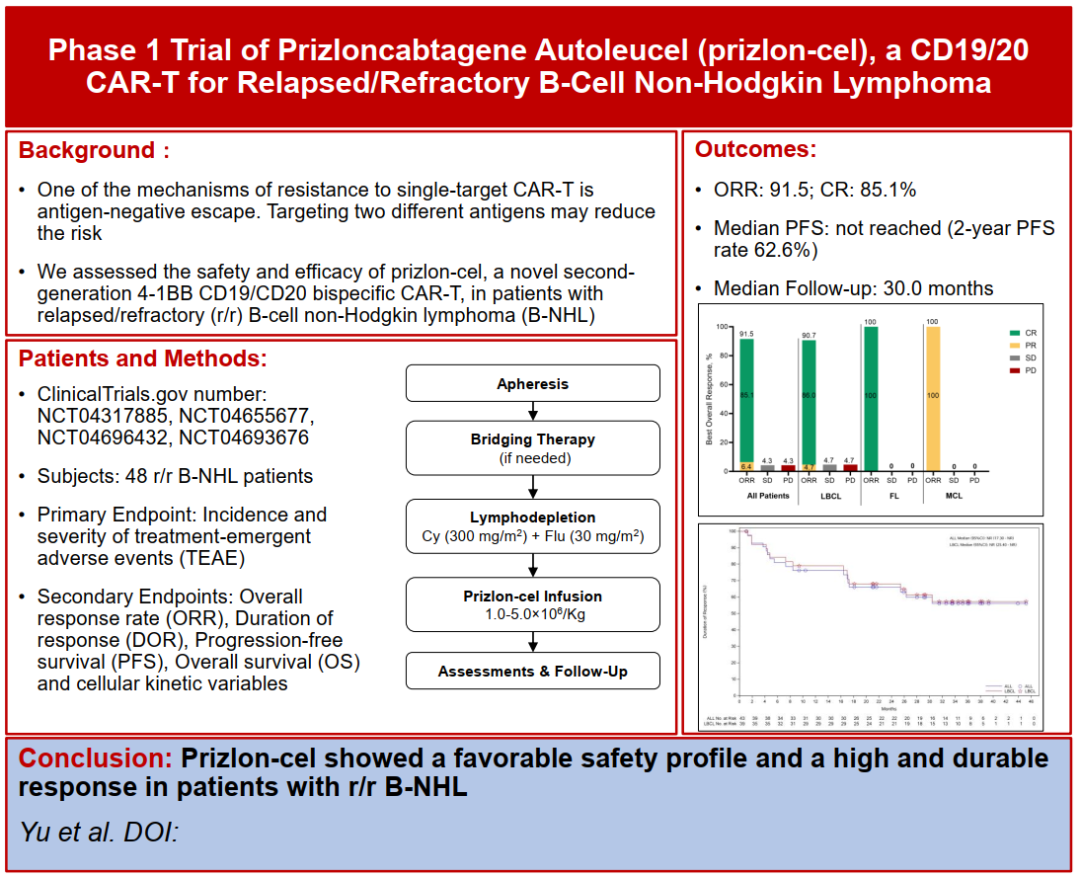
Figure 2. Phase 1 Trial of Prizloncabtagene Autoleucel (prizlon-cel)
The single-arm, multicenter trial enrolled patients with r/r B-NHL, including diffuse large B-cell lymphoma (LBCL), the most common subtype. Key results after a median follow-up of 30 months include:
High Response Rates: The overall response rate (ORR) reached 91.5%, with 85.1% of patients achieving a complete re-sponse (CR). In LBCL patients, ORR was 90.7% and CR 86.0%.
Durable Remissions: Median duration of response (DOR), progression-free survival (PFS), and overall survival (OS) remained unmet, with 2-year rates of 66.0% (DOR), 62.6% (PFS), and 76.5% (OS) across all patients.
Controlled Toxicity: While cytokine release syndrome (CRS), a common side effect of CAR-T therapy, occurred in 93.8% of patients, only one case was grade 3, and no severe (grade 4 or higher) events were reported. Neutropenia and other blood cell abnormalities were manageable with supportive care.
Expert Praise and Clinical Implications
“This trial represents a pivotal shift from theoretical concept to clinical reality,” said Prof. Wang Jianxiang of the Chinese Academy of Medical Sciences. “By targeting two antigens, Prizlon-cel addresses a critical unmet need for patients who fail traditional CAR-T therapies, offering new hope for long-term remission.”
Prof. Han Weidong of Beijing’s 301 Hospital noted the therapy’s potential to move beyond salvage treatment: “With response rates significantly higher than historical controls, Prizlon-cel could become a standard option earlier in the treatment journey, potentially improving survival for millions of lymphoma patients worldwide.”
Challenges and Future Directions
While the trial marks a major advance, researchers acknowledge limitations, including the small sample size and enrollment of patients who had not received prior CD19/CD20-targeted therapies. Future studies will expand to include patients with prior exposure to these treatments and evaluate efficacy across all lymphoma subtypes.
“Our goal is to validate Prizlon-cel’s utility in broader populations and refine its application,” said Prof. Liang. “This therapy exemplifies China’s commitment to driving innovation in cell therapy, combining scientific rigor with clinical pragmatism.”
China’s Rising Role in Global CAR-T Innovation
The study underscores China’s growing leadership in CAR-T research, with multiple homegrown therapies already approved for clinical use. As global demand for effective cancer treatments grows, collaborations like this highlight how Chinese advancements are shaping the future of immunotherapy, offering cost-effective and innovative solutions to unmet medical needs.
With plans for larger Phase 2 trials underway, Prizlon-cel could soon join the ranks of breakthrough therapies transforming lymphoma care, solidifying China’s position as a pioneer in precision oncology.

