


Early this year, a highly complex robotic operation was underway in the operating room of the First Affiliated Hospital of Sun Yat-sen University (FAH-SYSU) in Guangzhou.
Leading the surgery was Prof. Xiaoyu Yin, vice president of the hospital and discipline leader of biliary and pancreatic surgery. The patient was a 91-year-old man with cholangiocarcinoma. Standing beside the operating table were four special visitors: an expert team from the surgical center of Hôpital Privé Jean Mermoz in Lyon, France.
They had flown to Guangzhou specifically to observe how their Chinese counterparts perform robotic pancreaticoduodenectomy. This procedure is widely regarded as one of the most difficult operations in abdominal surgery and is often described as the “Mount Everest” of surgery.
After watching the procedure, the French experts used one phrase to describe it: beyond expectations. “In France, most hospitals still perform pancreaticoduodenectomy through open or laparoscopic surgery, whereas China has already accumulated substantial academic achievements in this field,” said digestive surgeon Dr. Raphaël Bourdariat.
Speaking to MedJ, Prof. Yin said with emotion, “In the past, we went abroad to learn. Now, more and more overseas experts are coming here specifically to learn from us.”
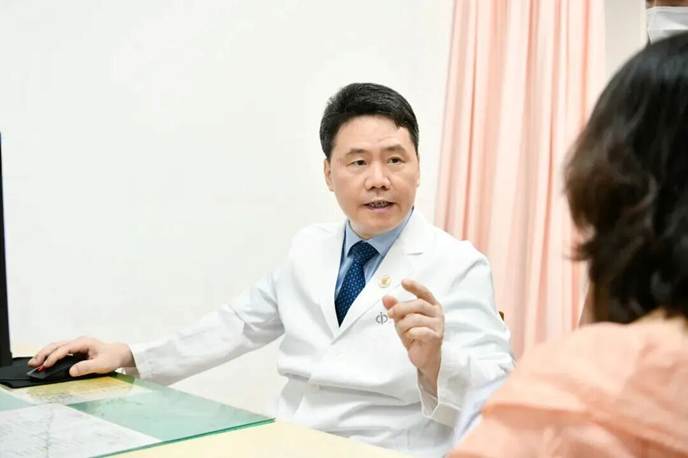
Prof. Xiaoyu Yin
What Did the French Surgeons Come to Learn?
What the French experts came to learn was China’s systematic experience in robotic biliary and pancreatic surgery.
According to Prof. Yin, since FAH-SYSU introduced a surgical robot in 2015, he has focused on expanding the use of robotics in hepatobiliary and pancreatic surgery, especially for difficult and complex cases.
To date, Prof. Yin’s team has completed more than 1,300 robotic hepatobiliary and pancreatic procedures, including nearly 900 pancreatic operations and nearly 450 pancreaticoduodenectomies.
For pancreaticoduodenectomy alone, the team’s conversion-to-open rate is just 1.6%, and the 30-day perioperative mortality rate is below 0.5%.
“Pancreaticoduodenectomy involves resection of six organs and three anastomoses. With the robot, our median blood loss is only 50 mL. In the past, that would have been almost unimaginable,” Prof. Yin said.
By comparison, Hôpital Privé Jean Mermoz performs about 140 pancreatic operations each year, of which roughly 30 are robotic. Even in Europe, that volume places it among the high-volume pancreatic centers.
The gap becomes obvious when the two sides are placed side by side.
Pancreaticoduodenectomy is so difficult because it requires removal of six structures—the pancreatic head, duodenum, common bile duct, gallbladder, and part of the stomach and small intestine—followed by reconstruction of the digestive tract by connecting the pancreatic remnant, bile duct stump, and stomach to the jejunum.
The surgical field is extensive and the number of anastomoses is large. Any one of these anastomoses can become the source of a postoperative complication. If something goes wrong, a leak may develop, pancreatic juice or bile may spill, and a fatal infection can follow.
According to the literature, postoperative complication rates for this procedure range from 30% to 70% across different teams.
Compared with traditional open surgery, robot-assisted pancreaticoduodenectomy offers several key advantages: smaller trauma, less bleeding, a clearer field of view, and greater precision.
The robotic arms can filter out the tiny tremors of the human hand and complete highly precise vascular suturing and digestive tract reconstruction in deep, narrow spaces. These advantages translate directly into lower postoperative complication rates and faster recovery.
“In the hands of an experienced robotic surgeon, there are not many remaining contraindications in hepatobiliary and pancreatic surgery. Only a small proportion of patients—such as those with huge tumors or extensive invasion of surrounding vessels or organs—still require open surgery,” Prof. Yin said, adding that 90% of his procedures are now performed robotically.
In November 2025, Prof. Yin was invited to deliver an oral presentation at the 16th Clinical Robotic Surgery Association World Congress and participated in drafting the CRSA international guidelines on remote robotic surgery.
Building on this foundation, Prof. Yin and his team have also published multiple original research papers, forming a “China solution” that international peers can learn from.
The Operation That Astonished the Visiting Experts
The operation the French experts witnessed that day was far more difficult than a routine case.
The patient, Mr. Tang, was 91 years old. At the end of 2025, he sought medical care because his entire body had turned yellow and was diagnosed with distal cholangiocarcinoma. The tumor had blocked the common bile duct, and his total bilirubin level peaked at more than 300 μmol/L—over ten times the normal upper limit of about 17.1 μmol/L.
Without surgery, liver failure, infection, and continued tumor progression meant that his life had entered a countdown.
The family had also asked about conservative options. Mr. Tang’s granddaughter said, “My grandfather was severely jaundiced, and we had heard there was a stent that could be used for drainage.”
Prof. Yin explained that a biliary stent can open a passage through the blocked segment and drain bile to relieve jaundice, but it only addresses the symptoms, not the cause. The tumor remains in place, and over time duodenal contents can reflux into the bile duct and cause ascending infection, or sludge can accumulate and block the stent. Recurrent fever and intermittent jaundice are common. “If we wanted a curative treatment, pancreaticoduodenectomy was the only option,” he said.
Yet Mr. Tang’s age, malnutrition, and history of cerebral hemorrhage made many hospitals hesitant. After asking around, the family eventually found Prof. Yin. “We asked AI, and it said the top biliary and pancreatic surgery team in Guangdong was at FAH-SYSU, so we decided to come here and try,” his granddaughter said.
In the past, many doctors believed that very elderly patients over 85 should not undergo such major surgery.
Prof. Yin saw it differently: “Age is not the forbidden zone; function is the threshold. Although this patient is 91, he has exercised consistently for years and has a strong physical foundation. His physiological age is much younger than his disease age.”
Even more importantly, both the patient and the family strongly wanted the tumor removed. “Only when the patient and the family have confidence can we have the confidence to take on such a complex and high-risk procedure. This kind of operation is only possible through the joint effort of doctors and patients,” Prof. Yin said.
After admission, the team spent nearly two weeks on preoperative preparation.
The geriatrics team handled nutritional assessment and support. The anesthesiology team repeatedly evaluated cardiopulmonary function and developed an anesthesia plan specifically for a super-elderly patient. Because the patient had long been taking aspirin and had a history of cerebral hemorrhage, Prof. Yin also worked with neurologists to devise a perioperative anticoagulation strategy, including when to stop medication and whether bridging therapy would be necessary, so as to balance bleeding risk against thrombosis risk.
During the preoperative image review, Prof. Yin identified another hidden danger: the tumor lay very close to the portal vein. “The preoperative scans did not show definite invasion, but we had already prepared a plan for side-wall portal vein resection and reconstruction. Only by turning every risk into a plan can you step onto the operating table with confidence,” he said.
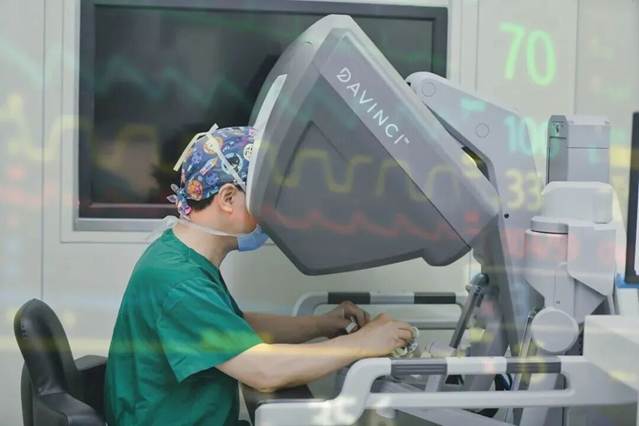
Prof. Xiaoyu Yin during surgery
As expected, the surgery revealed that the tumor was adherent to the portal vein, making en bloc resection of the invaded vascular segment and reconstruction unavoidable. The portal vein is the main channel that returns intestinal blood to the liver. Resection and reconstruction require temporary interruption of blood flow, so every step must be both fast and exact—prolonged hepatic ischemia can have serious consequences.
Because the team had prepared in advance, the operation progressed in an orderly fashion. Seven hours later, the surgery was completed successfully with very little blood loss. At 10:30 that night, Mr. Tang made a video call to his family from the ICU.
China’s Medical Standards Will Continue to Rise
After surgery, Mr. Tang did not develop severe complications such as pancreatic fistula, infection, or bleeding. He did, however, experience delayed gastric emptying—a common problem after pancreaticoduodenectomy in which gastric motility recovers slowly and oral intake remains difficult.
For a 91-year-old patient, prolonged inadequate intake means poor nutritional support, which directly affects tolerance for subsequent chemotherapy and can trigger a vicious cycle.
Prof. Yin and his team did not rush to follow a fixed protocol.
“Many people understand ERAS, or enhanced recovery after surgery, as a checklist: when to get out of bed, when to drink water, when to remove tubes. But the ERAS we believe in is dynamic. Its core is not speed, but stability—helping each patient recover at the pace most suitable for them while keeping safety first,” Prof. Yin said.
According to the team, they combined enteral and parenteral nutrition to guarantee daily energy and protein intake, while also using prokinetic medication and traditional Chinese medicine acupuncture to support the gradual return of gastrointestinal function.
More than a month later, Mr. Tang was discharged smoothly.
On April 8, accompanied by his family, he returned for follow-up. “The doctor said the follow-up results look very good. I feel better day by day,” Mr. Tang said happily.
He is now receiving regular postoperative adjuvant chemotherapy, and all follow-up indicators are normal.
Prof. Yin said the French experts expressed both astonishment and admiration after observing the operation. “To dare to perform such a complex procedure on a patient of such advanced age—and to add vascular resection and reconstruction on the spot during the operation—was beyond expectations,” they told him.
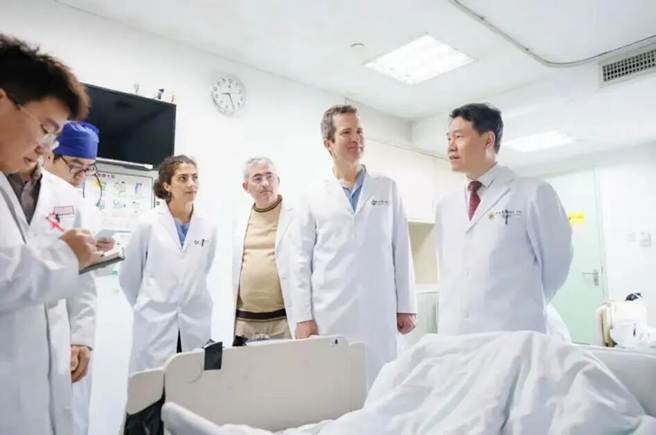
Prof. Xiaoyu Yin joins ward rounds with the visiting French experts
Prof. Yin also reflected, “When I had just graduated and started as a doctor, pancreaticoduodenectomy often ran from nine in the morning until nine at night, and required an abdominal incision as long as 20 centimeters. Technological progress has now made these complex procedures minimally invasive and precise, and patients are the ultimate beneficiaries.”
That, he said, is exactly why the French surgeons traveled such a long way to see the procedure for themselves.
“In the past, we went abroad to learn; now, more and more overseas experts are coming here specifically to learn from us,” Prof. Yin said. “I believe the phenomenon of the West coming to the East to learn will become more common and gradually turn into a new trend.”

