


Low-dose computed tomography (LDCT) screening has been used for years, but whether current high-risk definitions, including age 50-75 years, smoking of at least 20 pack-years, and occupational exposure, fit the Chinese population remains debated. Previous health examination data from West China Hospital suggested that 75.6% of lung cancers occurred in people classified as non-high-risk, but large, prospective, multicentre data have been limited.
A team led by Academician Nanshan Zhong and Profs. Jianxing He and Wenhua Liang, collaborating with 23 hospitals across 16 Chinese provinces, has now published a prospective multicentre cohort in the Journal of the National Cancer Center. The study included 10,560 patients with incidentally detected 5-30 mm pulmonary nodules and described their epidemiological characteristics, malignancy rates, and risk factors, providing real-world evidence relevant to screening strategies and unnecessary treatment.
 Fig. 1. Screenshot of the Published Study
Article Key Points
- The prospective observational cohort included 10,560 patients and 13,331 incidental target nodules across 23 hospitals
- Women accounted for 56.56%, and 71.34% of participants had no smoking history
- At nodule detection, 67.28% were asymptomatic; cough accounted for 68.21% of symptomatic cases
- Most nodules were solitary, measured 5-10 mm, and were non-solid
- Malignancy was identified in 17.33% of target nodules; 97.32% of malignant nodules were adenocarcinomas
- Among pathologically confirmed cancers, 90.35% were AJCC eighth-edition stage 0-I
- Only 30.05% met 2018 Chinese high-risk screening criteria
- Among 2,123 patients with lung cancer, 73.20% were classified as non-high-risk
- Solid nodules had a 15.33% surgical rate but a 37.21% benign proportion after surgery
- The cohort supports broader risk assessment but does not establish a new population screening strategy
Study Design
This prospective, multicentre, observational cohort enrolled adults aged 18 years or older with non-calcified pulmonary nodules measuring 5-30 mm that were detected incidentally by LDCT or conventional CT. Eligible nodules included solid nodules (SNs), mixed ground-glass nodules (mGGNs), and pure ground-glass nodules (pGGNs). Follow-up lasted 2-3 years. Recruitment was not restricted by clinical department or high-risk status, allowing the cohort to reflect the composition of patients encountered with pulmonary nodules in real-world practice.
The final population comprised 10,560 patients with 13,331 target nodules. Investigators collected demographic characteristics, smoking history, occupational exposure, family history of cancer, clinical symptoms, and imaging features. Nodules were classified as benign or malignant through surgical pathology or follow-up outcomes. Univariable and multivariable logistic regression were used to identify independent factors associated with lung cancer.
Population Characteristics and Exposure History
Three features distinguished the cohort from the traditional profile of lung cancer as a disease predominantly affecting older men who smoke. Women accounted for 56.56% of participants and had a median age of 53 years, younger than the median of 55 years in men. Overall, 71.34% had no smoking history. Among women, 97.07% were non-smokers and only 2.93% smoked; 37.82% of men were also non-smokers. In addition, 67.28% had no symptoms when their nodules were detected. Cough was the most common complaint, accounting for 68.21% of symptomatic cases.
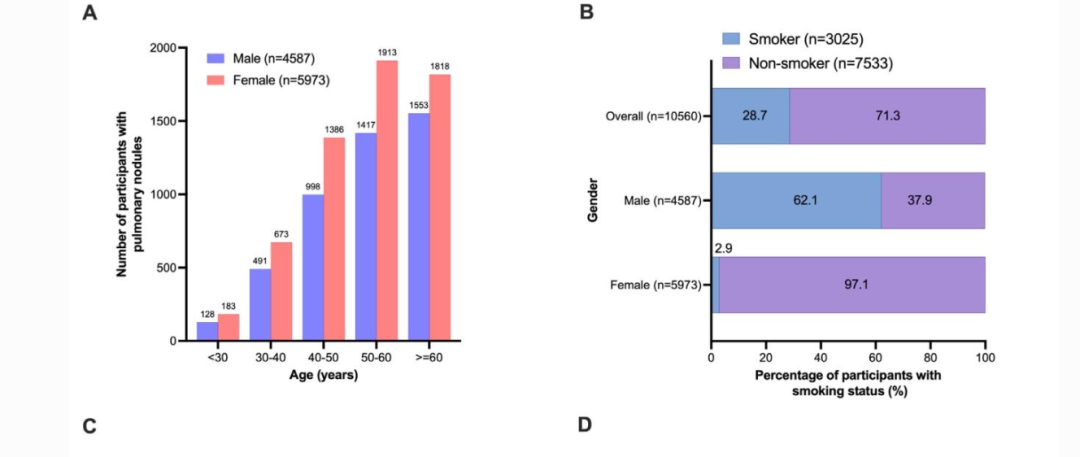 Fig. 2. Sex Distribution and Smoking History by Sex
A history of second-hand smoke exposure was reported by 71.10% of participants, with no marked difference between women and men. Occupational exposure was present in 31.35% and was approximately 2.2 times as common in men as in women (45.05% versus 20.84%, P<0.001). Overall occupational exposure increased with age, although among participants younger than 30 years women had a higher exposure rate than men (20.82% versus 16.43%).
Comorbidities were present in 46.78%, and 39.02% had a history of disease or symptoms. Women had higher rates of family history of cancer (23.85%) and lung cancer in first-degree relatives (14.40%) than men. Among women with a personal history of cancer, thyroid cancer was the most common previous malignancy. The authors suggest that these observations may indicate a genetic contribution to pulmonary nodule development in women, although the analysis does not establish causation.
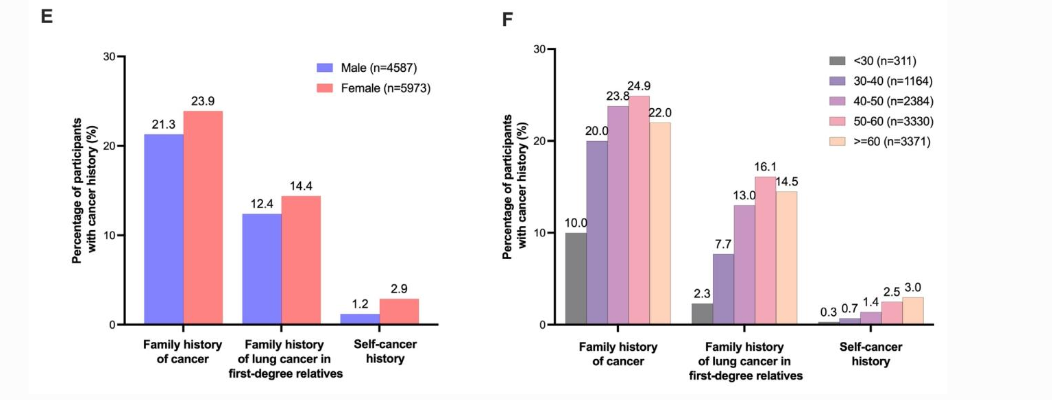 Fig. 3. Smoking, Occupational Exposure, and Cancer History by Age and Sex
Nodule Morphology and Pathological Findings
Most participants had a single nodule (81.24%). Nodules measuring 5-10 mm accounted for 78.22%, and 62.49% were non-solid: pGGNs accounted for 38.46%, mGGNs for 24.03%, and SNs for 37.48%. The right upper lobe was the most common location (29.76%), followed by the left upper lobe (21.66%).
Malignancy was identified in 17.33% of the 13,331 target nodules. Among 2,310 pathologically confirmed malignant nodules, 97.32% were lung adenocarcinomas: 48.96% were invasive adenocarcinoma, 33.85% minimally invasive adenocarcinoma, and 10.69% adenocarcinoma in situ. Squamous cell carcinoma accounted for 1.26% and small cell carcinoma for 0.13%. According to the eighth edition of the AJCC staging system, 90.35% were stage 0-I, with stage IA1 the largest category at 40.39%.
Among benign nodules, inflammation accounted for 43.81%, atypical adenomatous hyperplasia for 12.57%, tuberculosis for 9.43%, and hamartoma for 8.06%. Malignant nodules were most commonly mGGNs (42.68%) and pGGNs (36.45%), whereas benign nodules were more often SNs (50.84%).
Size distributions differed by nodule type. Among malignant SNs, 31.40% measured 20-30 mm and 51.61% measured 10-20 mm. Malignant mGGNs were predominantly 10-20 mm (46.91%), whereas 63.49% of malignant pGGNs measured only 5-10 mm at initial detection. Of 262 nodules that disappeared during follow-up, 79.39% (n=208) measured 5-10 mm and 40.84% (n=107) were SNs.
Risk Factors by Nodule Type
Multivariable regression identified different risk-factor patterns across nodule types. Female sex and multiple target nodules were shared risk factors for ground-glass nodules. Lobulation, vacuole sign, and pleural retraction were specific to mGGNs, while spiculation was specific to pGGNs. For SNs, nodule size, age, spiculation, and lobulation were associated with lung cancer.
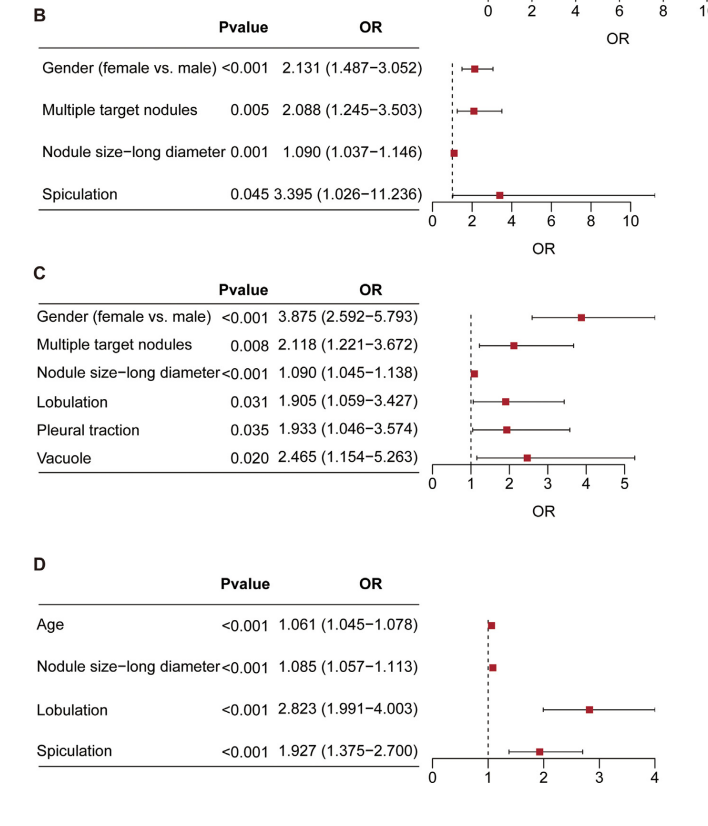 Fig. 4. Multivariable Forest Plots for Pure, Mixed, and Solid Nodules
Most Lung Cancers Occurred Outside Current High-Risk Criteria
Under the 2018 Chinese expert consensus definition of high risk, only 30.05% of the cohort met the criteria. The lung cancer detection rate was 17.93% in the high-risk group and 21.04% in the non-high-risk group. Of 2,123 patients with lung cancer, 73.20% were classified as non-high-risk under the current definition.
The investigators argue that applying existing high-risk criteria too narrowly would fail to identify most of the incidental lung cancers observed in this cohort. They propose that risk assessment should extend beyond smoking and occupational exposure to include younger women, second-hand smoke, family history of cancer, cooking-oil fumes, environmental exposures, and nodule morphology. These observations support reassessment of risk stratification, but they do not by themselves define which additional groups should undergo population screening.
Surgical Outcomes by Nodule Size and Type
The study also examined surgery and pathological outcomes by nodule size and type. Nodules measuring 20-30 mm had the highest surgical rate, 70.72%, with benign pathology in 15.05% of resected cases. Among 5-10 mm nodules, only 12.66% underwent surgery, but 20.15% of those resected were benign.
By nodule type, mGGNs had the highest surgical rate at 33.62% and the lowest benign proportion after surgery at 8.45%. For pGGNs, the corresponding proportions were 19.02% and 13.64%. SNs had a surgical rate of 15.33% but the highest benign proportion after surgery, 37.21%.
Table 1. Surgery Rates and Benign Pathology by Nodule Size and Type.
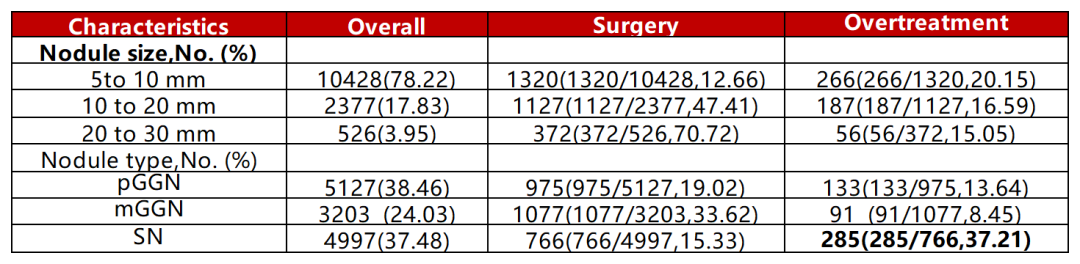
By nodule type, mGGNs had the highest surgery rate (33.62%), with a postoperative benign proportion of only 8.45%, indicating the highest diagnostic yield; pGGNs had a surgery rate of 19.02% and a benign proportion of 13.64%; solid nodules had a surgery rate of only 15.33%, but the postoperative benign proportion was as high as 37.21%. The researchers believe this suggests that surgical decision-making for small solid nodules still needs to be more cautious, and incorporating blood-based biomarkers such as ctDNA methylation to aid judgment may help reduce unnecessary surgeries.
Summary
This prospective study showed that the population with incidentally detected pulmonary nodules in China was predominantly composed of young, female, nonsmoking, and asymptomatic individuals; nearly 90% of malignant nodules were early-stage lung adenocarcinoma. Meanwhile, the “non-high-risk” population as defined by current criteria accounted for 73.2% of all lung cancer cases.
The study suggests that lung cancer screening strategies need to move beyond the single framework of smoking history and age, incorporating secondhand smoke exposure, family history, nodule morphological characteristics, and other factors into risk assessment. At the same time, the relatively high postoperative benign proportion for small solid nodules indicates that more precise approaches are still needed to balance early diagnosis with overtreatment.
Reference
[1] Liang W, Zhou Y, Hu C, et al. Epidemiological characteristics and risk factors of lung cancer in a population with incidental pulmonary nodules in China: a prospective multicenter study of 10,560 cases. Journal of the National Cancer Center. 2026;6:379-390.

