


A patient who lost all four limbs in an accident has successfully controlled a computer through "thought" with the help of brain-machine interface (BMI) technology.
On June 14, the official website of the Chinese Academy of Sciences reported this achievement, revealing that a Chinese scientific team has conducted the country’s first prospective clinical trial using invasive brain-machine interfaces, making China the second country globally to enter the clinical trial stage in this field.
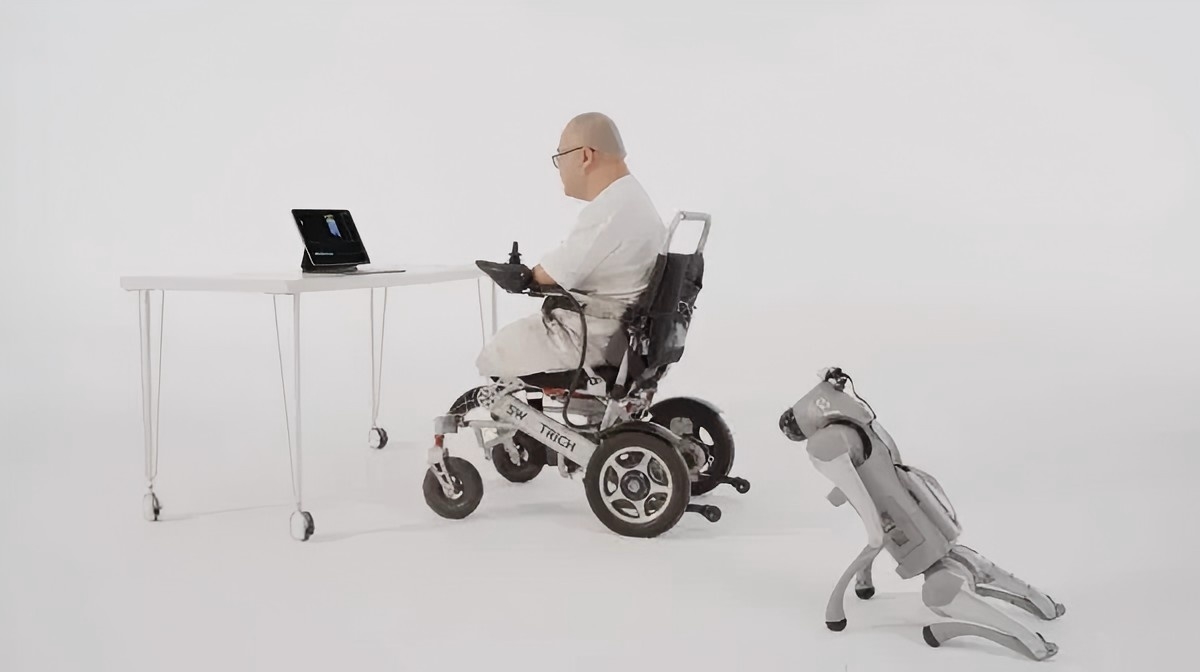
Outlook on Participants' Future Lives (Image source: Chinese Academy of Sciences official website)
His research was led by the team from the Brain Science and Intelligent Technology Excellence Innovation Center of the Chinese Academy of Sciences, in collaboration with Huashan Hospital, Fudan University, and related enterprises. It marks the first significant achievement from the Shanghai Brain-Machine Interface Clinical Trial and Translation Key Laboratory, which was established in December 2024.
A brain-machine interface, as a communication and control system, collects signals from the brain's neural activity through electrodes, then decodes and converts these signals into corresponding actions. BMIs can be either non-invasive or invasive, with invasive BMIs believed to have broader clinical application potential.The trial’s subject is a 37-year-old male who had lost all four limbs due to a high-voltage electrical accident. In March of this year, he underwent the implantation of the BMI.
For maximum safety and effectiveness, Huashan Hospital’s Neurosurgery Team, led by Dr. Lu Junfeng, used functional magnetic resonance imaging (fMRI) combined with CT imaging to reconstruct a 3D model of the patient’s brain and the detailed functional map of his motor cortex.
On the day of surgery, the team used a high-precision navigation system to implant a small brain-machine interface chip, which is only 26mm in diameter and 6mm thick (about the size of a coin) into the designated area of the patient’s motor cortex. The entire surgery, which required precise millimeter-level accuracy, took about 20-30 minutes.
Dr. Zhao Zhengtuo, a researcher at the Brain Intelligence Excellence Center of the Chinese Academy of Sciences, explained that their electrodes are thin, flexible, and only about 1% the size of a human hair. These electrodes are so soft that brain cells barely feel the presence of the foreign object, minimizing damage to the brain tissue.
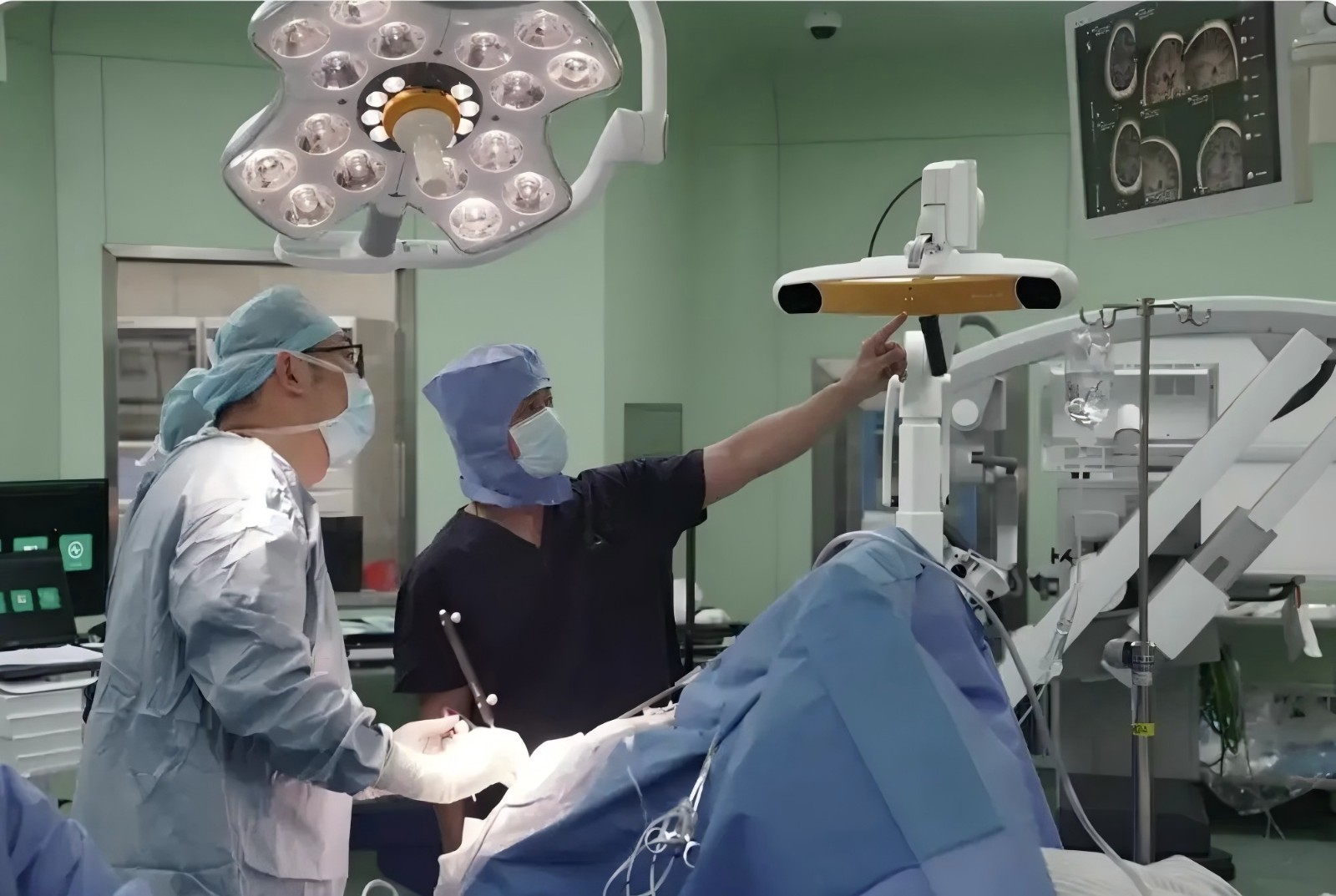
Surgical Scene from Clinical Trial (Image Credit: People's Daily)
Two months after the surgery, the patient has not experienced any infections or electrode failures. After only 2-3 weeks of training, he was able to use his “thoughts” to control a computer, playing chess, racing games, and sending messages, reaching a level comparable to normal people controlling a computer touchpad.

