


At 81, an age when most people enjoy their retirement, Guangwei Li is still waiting for an answer.
This answer lies in a study he has pursued for nearly four decades—the "Daqing Study," which began in a mining area in Daqing. "This is something I must do; I absolutely have to know the result," the old man said firmly.
Time goes back to the 1980s. At that time, the prevalence of diabetes in China was less than 1%, and hyperglycemia was regarded as a trivial "minor ailment" by the public. In the Daqing Oil Field, Guangwei Li, a young endocrinologist from China-Japan Friendship Hospital in Beijing, followed his mentor, Prof. Pan Xiaoren, and launched the world's first lifestyle intervention cohort targeting people with prediabetes.
No one expected that this local study, which started in a mining area, would repeatedly produce key evidence that rewrote international guidelines over the next four decades, and would also be pushed to the forefront of controversy over whether it was "only effective for Chinese people."
Last December, The Lancet Diabetes & Endocrinology, a top international journal, published a multinational data analysis jointly completed by scholars from China, the United States, and Germany. For the first time, it confirmed in two different ethnic groups, Chinese and American, that glycemic reversal to normal through lifestyle intervention in people with prediabetes can yield definite long-term cardiovascular protective benefits.
Years of controversy were thus settled. As the main executor and full-process participant of the "Daqing Study," Li also won the inaugural "Mount Tai Award" for Public Service.
Through Li's narration, we can see how three generations of Chinese diabetes researchers, through 40 years of continuous follow-up and collaboration with multinational research teams, developed an original public health study from a local trial into a medical model benefiting the world. Now a professor at Fuwai Hospital, Chinese Academy of Medical Sciences, he still stands at the forefront of this long road.
A “Chinese Answer” That Rewrote International Guidelines
The foundation of the Daqing Study was laid by a 6-year lifestyle intervention trial from 1986 to 1992.
The team selected people with impaired glucose tolerance in the Daqing Oil Field and intervened through dietary and exercise guidance, pioneering the global confirmation that diabetes can be effectively blocked by lifestyle. This conclusion was more than ten years earlier than similar studies in the United States and about 7 years earlier than Finland.
In 1995, the Daqing Study announced to the world that "diabetes is preventable"; in 1997, this discovery was published in Diabetes Care, a journal of the American Diabetes Association (ADA), spreading worldwide.
Since then, it has been known as one of the three major milestones in the primary prevention of type 2 diabetes, alongside the Finnish DPS and the US DPP studies.
However, the real challenge followed. For decades thereafter, European and American follow-ups failed to replicate the complete results of "cardiovascular protection" from the Daqing Study, and the international academic community long doubted the universality of its conclusions.
Among them, the Diabetes Prevention Program Outcomes Study (DPPOS), a US study that included more than 3,000 people with a 25-year follow-up, never observed a reduction in the risk of cardiovascular events. The US team initially attributed this to the widespread use of lipid-lowering drugs in the later stage of the intervention, which masked the value of lifestyle intervention itself.
After reviewing all follow-up data from Daqing, Li's team overturned this explanation. The team grouped by different intervention durations of 2, 4, and 6 years, analyzing the association between the number of years maintaining a non-diabetic state and the long-term cardiovascular risk tracked for more than 20 years.
They found that people with prediabetes need to maintain normal blood glucose for at least 4 years to reap long-term health rewards. If they slide into diabetes within just two or three years, the early intervention leaves almost no long-term benefit.
The key to breaking the shackles of "effective only in the Chinese population" came from a new analytical approach proposed by a German scholar: instead of simply analyzing whether diabetes prevention reduces the risk of cardiovascular disease, they shifted to analyzing the impact of glycemic reversal from prediabetes to normal on long-term cardiovascular outcomes.
The US team re-examined their own cohort along this line of thought and found that people whose blood glucose returned to normal had a approximately 40% reduction in the risk of heart failure and cardiovascular death. They then invited Li's team to verify the Daqing data using the same model, and the two sets of results were highly consistent.
Li told MedJ that the Sino-US joint study published in December 2025 is a major breakthrough in research on whether strict glycemic management in high-risk populations can reduce the risk of cardiovascular disease and death. This is the first time in the world that it has been confirmed in different ethnic groups that the protective effect of lifestyle intervention can extend to heart failure and cardiovascular death.
The study also outlined the differences between Chinese and American populations: people in China are generally slimmer, and as long as they do not progress to diabetes, they can reap health benefits; while the threshold is higher for the American population, requiring a complete return to normal blood glucose to see a reduction in risk.
"As early as 1986, China completed this core intervention trial, starting significantly ahead of Europe and the United States," Li admitted. Finland's similar study has not yet released complete long-term follow-up data, and now that the US study has completed verification, China's leading position in this field has been established.
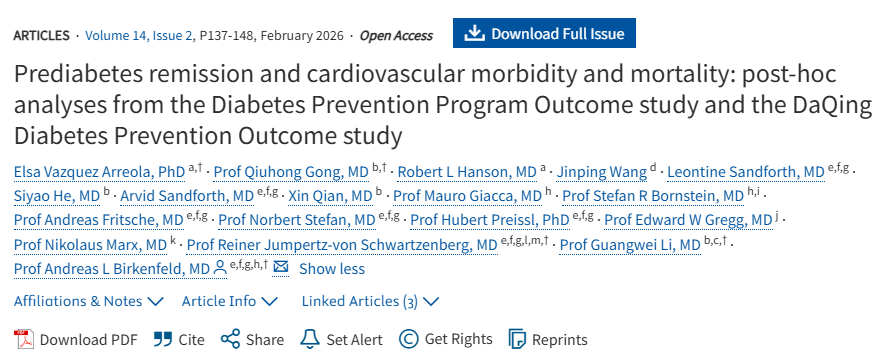
Fig.1. In December 2025, The Lancet Diabetes & Endocrinology published the Sino-US joint study.
Relying on this joint data, the next step for the Sino-US team is to use the 40-year follow-up resources of Daqing to jointly analyze the association between long-term glycemic stability and cancer incidence, and continue to explore the deeper health significance of lifestyle intervention for the human body.
In the context of current domestic chronic disease prevention and control, this intervention standard has strong practical significance.
In recent years, Li's team has observed that the onset of diabetes in China shows distinct age stratification, with a prominent trend of younger age, especially a marked increase in prevalence among the middle-aged group of 40 to 50 years old.
"The young and middle-aged are the core labor force of society. The high incidence of metabolic diseases in this population not only increases the burden on medical insurance but also continuously consumes social productivity." In his view, this means that the focus of diabetes prevention must be shifted forward—establishing awareness of health management from adolescence and school stages.
Almost Gave Up
Now, the public knows the major results of the Daqing Study, but few know that at the 20th year of follow-up, the team was once on the verge of giving up.
Li recalled that although the data curve already showed a trend of benefit from the intervention, due to limited sample size, it failed to meet the statistical positive criteria for a long time, and the project once faced termination.
Fortunately, after repeated judgments by statistical experts at home and abroad, they believed that the curve trend was clear and worthy of extending the observation for a few more years. The team gritted their teeth and persisted for another three years before finally obtaining the positive result that shocked the international academic community.
Every time he looks back on the original intention of the study, Li always thinks of his mentor, Prof. Pan Xiaoren.
When the project was launched in the 1980s, the team's goal was not to publish high-impact papers or apply for professional titles, but to provide the World Health Organization with a decision-making basis for diabetes prevention and control that could be implemented globally. It was the purity of Prof. Pan's focus on public health needs that supported the team through decades of tedious and lengthy follow-up.
In fact, in today's scientific research environment, long-term cohorts like the Daqing Study do not have much room for survival. Current various scientific research projects prefer "short, flat, and fast" topics that can produce results in one or two years, while long-term population follow-up faces dual shortages of funds and talent, and researchers willing to devote themselves to decades of deep cultivation are increasingly scarce.
The ups and downs of this long-term cohort have also given Li a deeper reflection on the balance between clinical practice and scientific research. He does not agree with two extremes: one is completely denying scientific research, and the other is treating papers and SCI impact factors as a necessary threshold for promotion.
In his view, front-line physicians who have saturated clinical work and solid diagnostic skills do not need to sacrifice their time seeing patients to force themselves to do scientific research; primary hospitals lack resources such as laboratories, projects, and mentors. If doctors can focus on doing clinical work well and solving patients' pain points, they are also excellent doctors.
"The current evaluation system excessively quantifies papers, causing many young doctors with excellent clinical abilities to be blocked from promotion and even choosing to lie flat passively." Li believes that the medical community should have diversified evaluation standards, accommodating both talents who are deeply engaged in clinical practice and experts who focus on scientific research.
But at the same time, he also emphasized that the role of scientific research in promoting medical development is irreplaceable.
"Clinical practice mainly answers 'how to treat' at present, but scientific research can explain the laws of disease etiology and future treatment trends." Li gave examples, saying that whether it is the "intervention duration threshold required for effective intervention" derived from the Daqing Study or the "population benefit differences" confirmed by the Sino-US joint study, these key conclusions that rewrite guidelines can only be unearthed through long-term targeted follow-up and rigorous statistical analysis.
In his eyes, valuable scientific research is not limited to exploring the underlying mechanisms of diseases, but also serves the implementation of chronic disease prevention and control for the public.
Based on the mature intervention plan accumulated by the Daqing Study, how to break through the constraints of limited offline manpower and cover a massive high-risk population at low cost is a key topic that the team has focused on in recent years.
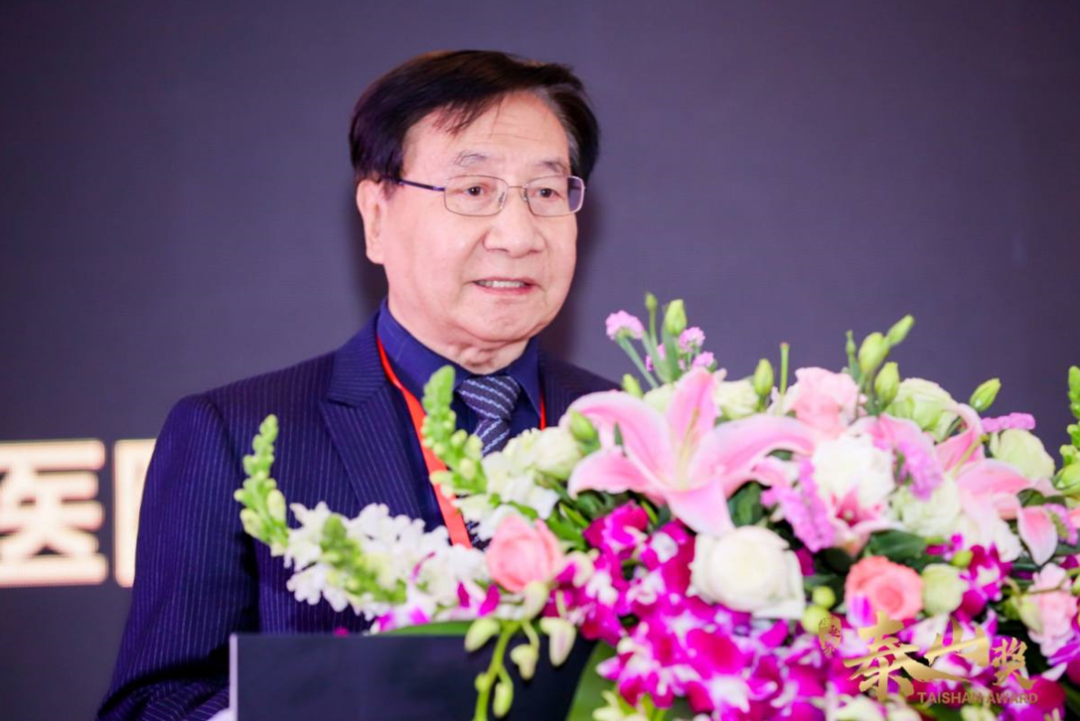
Fig. 2. Prof. Guangwei Li speaking at the "Mount Tai Award" event.
To this end, the team, in conjunction with the School of Public Health, Chinese Academy of Medical Sciences, launched an intervention study incorporating AI and wearable devices, including more than 2,000 people in Daqing. Currently, the project has entered its second year of follow-up, and all results are expected to be announced next year.
Although digital tools can greatly reduce labor input and broaden the coverage of intervention, Li also admitted that technology can never replace the value of face-to-face communication.
Combining the experience of the Daqing Study and the US DPP trial, the first year of intervention requires at least 10 offline communications. Relying solely on WeChat pushes and phone reminders makes it difficult for patients to establish stable diet and exercise habits.
"Overseas digital intervention trials of the same kind have mixed success and failure. The common shortcoming of failed cases is the lack of interpersonal communication and care." He said that there is no unified standard in the industry to define the best timing for the intervention of digital tools, which is exactly the direction that the team will focus on exploring in the next stage.
81 Years Old, Still Moving Forward
This year, at 81, Li's clinical career is nearing its end, but his two core tasks show no sign of slowing down.
One is to wrap up the 40-year complete follow-up of the Daqing Study and advance the world's first diabetes offspring cohort; the other is to operate a purely public welfare online consultation platform for young physicians nationwide.
In 2025, the team officially launched the Daqing Diabetes Offspring Cohort Study, which is also the world's first intergenerational follow-up project focusing on the offspring of people with prediabetes, extending the perspective of the study from a single subject to the entire family. The study continuously tracks the children, spouses of the children, and the third generation of the initial participants. Currently, the follow-up of the second-generation population has been completed by about 70% to 80%, and the third-generation follow-up is still steadily advancing.
"When the study was launched in 1986, the average age of the initial subjects was 45 years old, and their children were about 25 years old. “Forty years later, the offspring cohort is now generally aged 60 and above, and cardiovascular endpoint events—such as myocardial infarction and cerebral infarction—have emerged en masse,” said Guangwei Li. “This timing affords us a unique opportunity to directly compare the incidence of chronic diseases between families that received early interventions and those that did not.”
In his view, regardless of whether the study ultimately yields positive or negative results, it has important public health significance.
"If the lifestyle intervention of the parents in the early years can reduce the risk of disease in the offspring, it means that the 'family-integrated intervention' model has promotion value. One person adheres to healthy habits, and the whole family shares the health benefits; if there is no such intergenerational protective effect, it suggests that the offspring population still needs to independently carry out intensive intervention," he said.
In addition, the 40-year follow-up of the Daqing Study will also completely depict the long-term benefit curve of the 6-year short-term intervention, quantifying exactly how many years this protective effect can last, and clarifying the law of risk evolution after 15, 20, and 30 years. "This is something I must do; I absolutely have to know the result," Li said with an exceptionally firm tone.
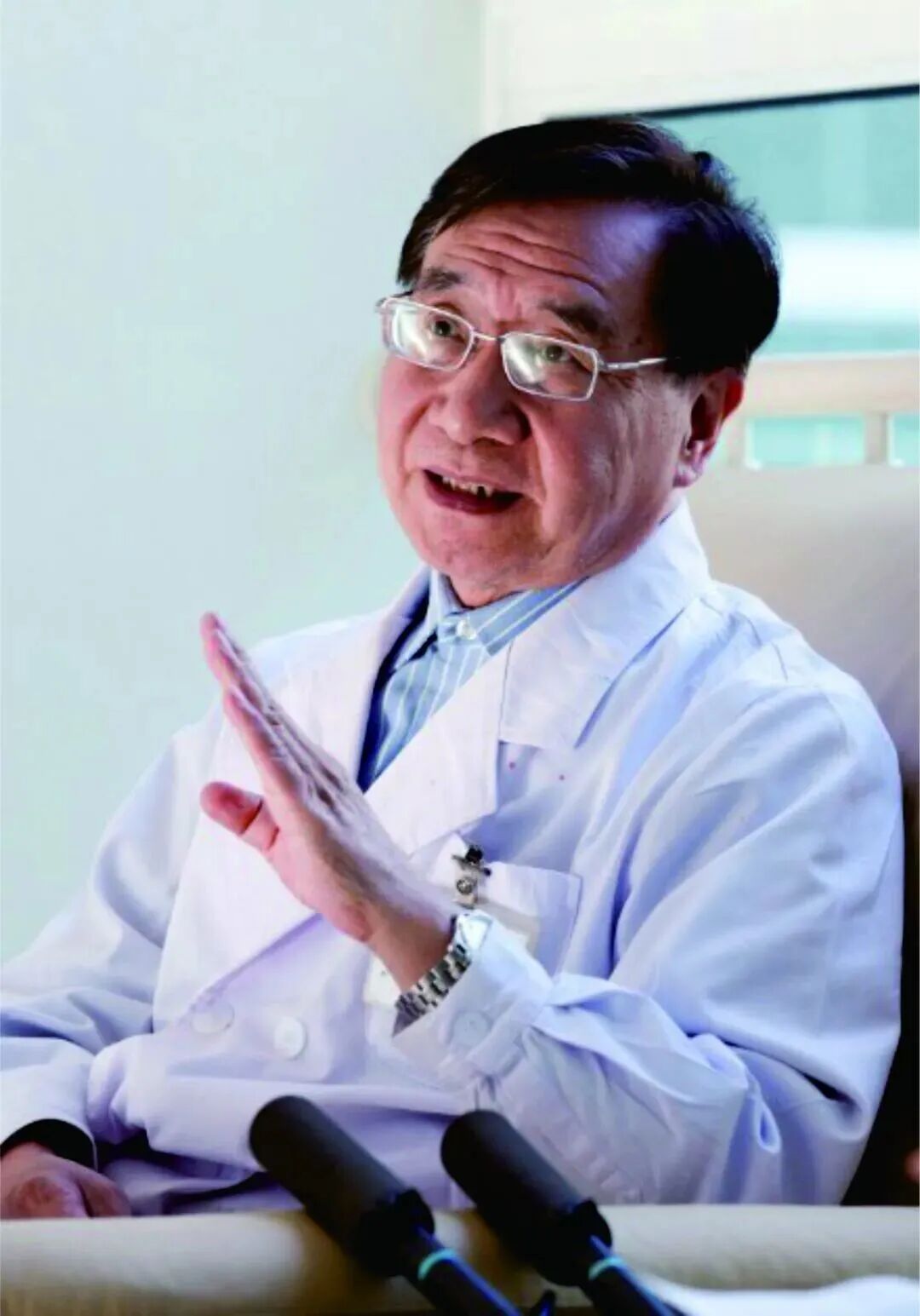
Fig. 3. Prof. Guangwei Li
"Helping young people learn to see patients" is another goal he set for himself.
He told Medicine World that over the past year, he and Professor Xu Zhangrong of the PLA 306 Hospital have collaborated with more than ten senior endocrinology experts across China to jointly establish the “Pure Heart, Snow-White” online consultation platform for young physicians.
The platform focuses only on the analysis and commentary of typical clinical cases to improve the clinical practical skills of young doctors. Activities are regularly carried out every month, dissecting and analyzing 2 typical or difficult cases each time. So far, eight sessions have been held, with 6,000 to 7,000 participants in a single online learning session.
The establishment of this platform stems from Li's field observations over the years of going to the grassroots level: many young physicians lack mentorship from senior physicians and often repeat diagnosis and treatment mistakes explicitly avoided in textbooks, unnecessarily prolonging their personal growth cycle. This consultation platform is mainly oriented to clinical front-line doctors in county-level and municipal hospitals, and everyone exchanges and broadens clinical thinking in case discussions.
Starting from the Daqing Oil Field in 1986 with hundreds of subjects with impaired glucose tolerance, to tracking three generations of people today and completing Sino-US cross-border joint verification, over four decades, the Daqing Study has gradually produced China's own answer for chronic disease prevention.
In a scientific research environment pursuing short-term output, the Daqing Study has proved through decades of lonely follow-up that long-term public health research based on the health needs of the Chinese people can fully produce original results that change global diagnosis and treatment ideas.
And Li's decades of persistence also illustrate that an excellent doctor and researcher must not only be able to calm down and do long-term scientific research, but also bend down to pass on the clinical experience accumulated over many years to a new generation of doctors.

