


At the 29th Chinese Society of Clinical Oncology (CSCO) Annual Meeting, held in Jinan, China, from September 17–19, 2026, Prof. Franco Cavalli, founder of the International Extranodal Lymphoma Study Group (IELSG), and Prof. Donglu Zhao of the Harbin Institute of Hematology and Oncology joined a MedJ “China–World Top Talk” session themed “Lymphoma · Inheritance & Innovation: From 30-Year IELSG Global Collaboration to China’s CAR-T Leadership, Synchronization and Relay on the East–West Lymphoma Cure Journey.” The discussion explored three decades of international collaboration in lymphoma research and China’s growing leadership in CAR-T innovation.
Article Key Points
- Cavalli founded IELSG in 1996, enabling 30 years of international lymphoma collaboration
- Certain LBCL subtypes, NK/T-cell lymphoma, and PTCL occur more frequently in China than in Western populations
- China’s CAR-T program achieved full domestic industrial-scale production with accumulating real-world data
- Most Chinese CAR-T studies are single-center and retrospective; Phase III RCT evidence remains limited
- Future priorities include precision risk stratification, combination therapy strategies, and international collaboration
Three Decades of International Collaboration
Opening the conversation, Cavalli described international multicenter collaboration as a “powerful weapon” in advancing lymphoma care. He noted that pooling large patient cohorts not only accelerates research but also broadens scientific thinking.
Reviewing IELSG’s 30-year history, he emphasized that the most successful clinical trials in oncology have historically been cross-national and multicenter, with local expertise from different countries adding unique value. He added that, for cancer patients awaiting better treatments, time itself is a form of efficacy, and international cooperation can significantly shorten the cycle from data to clinical impact.
Expert Profile: Prof. Franco Cavalli
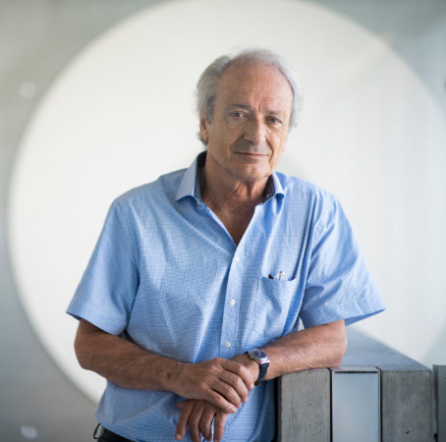
- Former President, Union for International Cancer Control (UICC)
- Member, Swiss Academy of Medical Sciences
- Scientific Director, Oncology Institute of Southern Switzerland (IOSI), Bellinzona
- Former President, Swiss Group for Clinical Cancer Research (SAKK)
- Chair, Academic Committee, European School of Oncology (ESO) and World Oncology Forum (WOF)
- President, International Conference on Malignant Lymphoma (ICML)
- President, International Extranodal Lymphoma Study Group (IELSG)
- Author of more than 600 publications and contributor to multiple oncology textbooks
- Recipient of more than 20 international oncology awards
- Recipient of the American Association for Cancer Research (AACR) Lifetime Achievement Award in Cancer Research
Donglu Zhao, speaking from a Chinese perspective, traced 30 years of evolution from following to leading. He recalled that in the early years, Chinese scholars had limited experience in designing international clinical trials and initially participated in IELSG studies led by Cavalli. Through this collaboration, Chinese researchers gradually learned how to design trials and engage with international peers, evolving from participating sites into independent principal investigators (PIs) of international studies.
Zhao also noted that Chinese scholars increasingly recognized the unique characteristics of China’s lymphoma population. He observed that certain large B-cell lymphoma (LBCL) subtypes, extranodal natural killer/T-cell lymphoma (nasal type), and peripheral T-cell lymphoma (PTCL) occur more frequently in China than in Western countries. Even within the same subtypes, age of onset and biological features differ between Chinese and Western patients.
He therefore argued that Chinese participation in international trials must carefully consider local population characteristics and include subgroup analyses to genuinely guide treatment for Chinese and Asian patients. He further observed that differences in baseline health, tolerance for intensive therapy, and supportive care mean that older patients in particular require individualized treatment planning. These localization factors, he added, represent both a practical challenge and a unique contribution that Chinese data can make to global evidence.
Expert Profile: Prof. Donglu Zhao
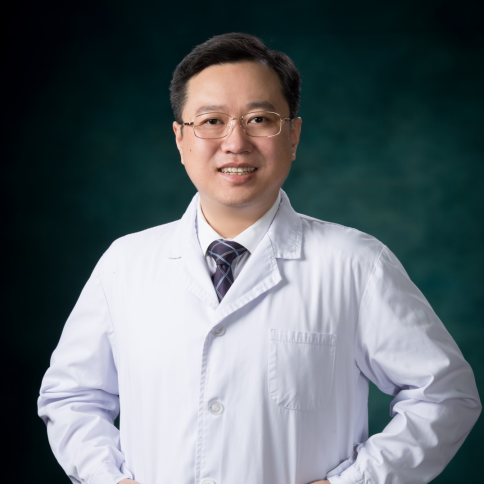
- Assistant Director, Harbin Institute of Hematology and Oncology; Director, Second Ward of Hematology (Lymphatic System Diseases)
- Vice Chair and Secretary-General, Lymphoma Expert Committee, Chinese Society of Clinical Oncology (CSCO)
- Vice Group Leader, Lymphocytic Disease Study Group, Hematology Branch, Chinese Medical Association
- Member, CSCO Leukemia Expert Committee, Myeloma Expert Committee, and Antitumor Drug Safety Committee
- Member, National Health Commission Oncology Expert Committee on Capacity Building and Continuing Education
- Standing Committee Member, China Anti-Cancer Association Lymphoma Committee; Vice Chair, Lymphoma Integrated Rehabilitation Committee and Hematologic Oncology Integrated Rehabilitation Committee
- Member, China Anti-Cancer Association Hematologic Oncology and Oncologic Hematology Committees
- Standing Committee Member, Chinese Geriatrics Society Hematology Branch
- Member, Lymphoma Study Group, Chinese Medical Association of Medicine Hematology Branch
- Member, Heilongjiang Provincial Medical Association Lymphoma and Hematology Committees
- Standing Committee Member, Heilongjiang Provincial Medical Doctor Association Lymphoma and Myeloma Committees
- Standing Committee Member, Heilongjiang Provincial Anti-Cancer Association Hematologic Oncology Committee
- Vice Chair, Heilongjiang Provincial International Medical Exchange Promotion Association Lymphoma and Immunotherapy Committee
- Visiting Scholar, MD Anderson Cancer Center, USA (2014-2015)
China’s CAR-T Progress and Open Questions
From a European and global perspective, Cavalli offered a positive assessment of China’s contributions to CAR-T research. He acknowledged that early CAR-T experience originated in the United States, but noted that China has developed the field faster and more broadly, and is playing an increasingly important role.
Cavalli specifically suggested that, in his view, the early solid clinical data on CAR-T for multiple myeloma came from China. He observed that Chinese hematologists placed early confidence in CAR-T therapy, applied it widely in patients, and were therefore among the first to accumulate substantial real-world data.
Cavalli further noted that, for CAR-T to advance to the next phase, new treatment modalities are needed. He pointed to combining standard lymphodepletion conditioning with immunomodulatory factors such as interleukin-based regimens as one of the most promising directions for further improving CAR-T efficacy, and highlighted that this approach was pioneered by Chinese researchers.
Zhao then systematically outlined both the strengths and limitations of China’s CAR-T efforts. On the strengths side, he said, China has achieved full domestic industrial-scale production of CAR-T, covering vector preparation, viral packaging, cell manufacturing, and quality control, with related products approved for marketing. He added that this domestic capability provides a foundation for broader future access.
He also noted that Chinese researchers have undertaken substantial work on new targets such as CD22 and CD20, dual-target CAR-T, universal CAR-T, and in vivo CAR-T. At this year’s American Society of Hematology (ASH) annual meeting, oral presentations on in vivo CAR-T and dual-target CAR-T from Chinese research groups reflected China’s parallel progress with global frontiers. With China’s large lymphoma patient population, Zhao said, Chinese scholars have accumulated rich experience in patient management, risk stratification, and adverse-event handling, experience that can also contribute to global practice.
On limitations, Zhao was direct. He said that most current Chinese CAR-T clinical studies are single-center and retrospective, with a lack of Phase III prospective, multicenter controlled evidence. He noted that key questions on resistance mechanisms, which patients are best suited to CAR-T, and how to optimize combination strategies remain unresolved, and that translation from preclinical research to clinical application remains slow.
He also observed that CAR-T remains expensive for Chinese patients and will require multi-layered payment systems, including medical insurance and social security, to enable broader access.
Toward “Curing the Majority”: A Continuing Relay
Looking ahead five to ten years, Cavalli said he believes lymphoma is on the cusp of another leap. He observed that physicians today have at least four or five treatment modalities, including chemotherapy, immunotherapy, new targeted agents, and various T-cell therapies, and that the next key step is learning how to combine them scientifically.
He added that this combination exploration is inseparable from international collaboration. “I firmly believe we are about to cure the vast majority of patients with aggressive lymphoma,”Cavalli said.
Zhao framed the future around precision stratification and quality of survival. He proposed two priorities: first, more accurate risk stratification, with low-risk patients potentially receiving standard therapy or even de-escalated treatment while high-risk patients receive intensified strategies aimed at long-term survival; second, integrating new tools such as molecular diagnostics into stratification frameworks to make treatment decisions more precise.
He noted that CSCO has long been committed to international exchange and cooperation, and expressed hope of continued close collaboration with Cavalli and his team to advance global lymphoma care, enabling more patients not just to survive, but to live better.
Closing Note
Three decades on, IELSG under Cavalli’s leadership laid the foundation for international collaboration and evidence generation in lymphoma. The relay has now passed to a new generation of Chinese scholars, whose work on China’s CAR-T industrial chain and real-world data is contributing fresh momentum to the global pursuit of cures for lymphoma. From following international protocols to serving as independent PIs, and from learning Western standards to contributing Chinese evidence, the East-West dialogue on curing lymphoma represents both the continuation of a 30-year friendship and the opening of a new chapter in precision care.

