


This week, we selected 10 clinical research articles, 3 review articles, and 11 basic research articles, covering both basic and clinical aspects of CAR-T cell therapy in hematological malignancies, solid tumors, and autoimmune diseases.
The weekly report is divided into four sections: Part I: Highlight Articles; Part II: Clinical and Translational Research, including novel drug clinical trials, investigator-initiated trials (prospective/retrospective), translational research (bedside to bench), case reports and case series, and establishment of clinical prediction models; Part III: Review Articles, covering various aspects of CAR-T cell therapy; Part IV: Basic and Translational Research, including basic research, translational research (bench to bedside), technical updates, and preclinical studies aimed at optimizing CAR-T cell therapy and developing novel T cell therapies.
Part I: Highlight Articles
Identifying and reprogramming softness-driven cancer stem-like cells overcomes CAR-T cell resistance in solid tumours
Journal & IF:Nat Biomed Eng (26.3)
Corresponding Author & Institution:Prof. Yingxiao Wang / Prof. Shu Chien / Prof. Longwei Liu (University of Southern California / University of California, San Diego)
DOI:10.1038/s41551-026-01722-7
Abstract:Solid tumors exhibit significant mechanical heterogeneity, but how such mechanical signals affect tumor cell susceptibility to T cell therapy remains unclear. This study found that tumor cells cultured on soft substrates are less sensitive to chimeric antigen receptor T (CAR-T) cell-mediated killing, with elevated extracellular ATP levels and sustained calcium signaling activation. To elucidate the molecular mechanisms underlying this resistance, the researchers attempted to screen for tumor cells responsive to soft mechanical signals. They constructed a doxycycline-regulated, calcium signaling-activated transcriptional mechanical recording system that integrates calcium signaling activity induced by soft substrates over a defined recording period and converts the cells’ past signaling activation history into stable fluorescent signals that persist for several days. Unlike conventional real-time calcium indicators that only capture transient calcium signals at the moment of imaging, this mechanical recording system preserves selectable transcriptional markers, enabling specific labeling and profiling of cells based on their prior mechanical sensing activity. Transcriptomic analysis revealed that cells carrying this recording marker activated stemness-related programs across multiple tumor cell lines and patient-derived primary tumor samples, characterized by epithelial-mesenchymal transition, hypoxia response, oncogenic signaling pathway activation, and upregulation of stemness markers. To achieve targeted killing of these resistant cells, the researchers modified the mechanical recording system by replacing the fluorescent reporter element with the clinically validated CD19 antigen, constructing a mechanical reprogramming system; after modification, tumor cells responsive to soft matrix signals could be recognized by CD19-targeting T cells. Both in vitro cellular experiments and animal models confirmed that this engineered system significantly enhanced the elimination efficiency of tumor stem-like cells, converting the therapeutic resistance conferred by the mechanical microenvironment into a therapeutic target.
Rapid Peak Cilta-cel Expansion is Associated with Delayed Neurotoxicity in Multiple Myeloma
Journal & IF:Blood (23.9)
Corresponding Author & Institution:Prof. Surbhi Sidana (Stanford University)
DOI:10.1182/blood.2025032844
Abstract:In patients with relapsed/refractory multiple myeloma (RRMM), the impact of CAR-T cell expansion and persistence on clinical outcomes and treatment-related complications remains incompletely understood, partly due to the lack of standardized methods for CAR-T cell quantification. This study evaluated CAR-T cell kinetics in RRMM patients treated with idecabtagene vicleucel (ide-cel) or ciltacabtagene autoleucel (cilta-cel), and their association with efficacy and toxicity. Using a unified flow cytometry platform (N=90; cilta-cel group n=54; ide-cel group n=36), we observed that cilta-cel had significantly higher CAR-T cell expansion than ide-cel (median 106 cells/μL vs 49 cells/μL). In the ide-cel cohort, peak CAR-T cell expansion correlated with clinical response; however, this association was not observed in the cilta-cel cohort. Instead, rapid over-expansion of cilta-cel was associated with an increased risk of delayed neurotoxicity (DNT)—a complication that may cause long-term functional impairment (median peak in patients with DNT: 1009 cells/μL vs 96 cells/μL in those without). To identify clinically accessible biomarkers for CAR-T cell expansion, we analyzed absolute lymphocyte count (ALC) as a surrogate biomarker in a larger multicenter cohort (N=532; cilta-cel group n=256; ide-cel group n=276). Elevated peak ALC was significantly associated with the occurrence of DNT, particularly Parkinsonism following cilta-cel treatment. Peak ALC ≥3000 cells/μL—or ALC ≥2500 cells/μL after a single-day doubling—predicted an elevated risk of DNT (sensitivity 81%, specificity 59%). In summary, this study identified differential expansion-toxicity associations between cilta-cel and ide-cel, established ALC as a practical and universally available surrogate marker for CAR-T cell expansion, and determined quantitative thresholds for early identification of patients at high risk for DNT, providing a basis for developing preventive strategies to mitigate complications after cilta-cel treatment.
Concurrent administration of BCMA and GPRC5D chimeric antigen receptor (CAR) T cells in advanced multiple myeloma
Journal & IF:Blood (23.9)
Corresponding Author & Institution:Prof. Sham Mailankody (Memorial Sloan Kettering Cancer Center)
DOI:10.1182/blood.2025032122
Abstract:B-cell maturation antigen (BCMA)- and G protein-coupled receptor class C group 5 member D (GPRC5D)-targeted therapies have demonstrated excellent efficacy in relapsed or refractory myeloma, with multiple novel immunotherapies now approved. Preclinical studies have shown heterogeneous expression of BCMA and GPRC5D on malignant plasma cells. This study conducted a Phase I dose-escalation trial evaluating the BCMA CAR-T cell therapy MCARH125 alone or in combination with the GPRC5D CAR-T cell therapy MCARH109 in patients with heavily pretreated relapsed or refractory multiple myeloma. Patients were treated at 3 dose levels, with the primary endpoint being demonstration of the safety of concurrent infusion. The trial is registered on ClinicalTrials.gov (NCT05431608) and enrollment is complete. A total of 15 patients were enrolled across 3 dose levels; 6 received MCARH125 monotherapy and 9 received concurrent MCARH125 and MCARH109 infusion. One patient each in the MCARH125 monotherapy and concurrent infusion groups developed immune effector cell-associated hemophagocytic syndrome (IEC-HS). No grade 3 or higher cytokine release syndrome (CRS) or immune effector cell-associated neurotoxicity syndrome (ICANS) events occurred. The overall response rate in the concurrent infusion group was 78%, with a median progression-free survival (PFS) of 18.2 months. Correlation analyses suggested that even with dual-antigen targeting, antigen loss may remain an important resistance mechanism; this study is the first to demonstrate that expansion of one CAR cell population suppresses expansion of the other CAR cell population—despite receiving the same dose of BCMA CAR-T cells, patients in the dual CAR treatment group had significantly lower BCMA-CAR expansion than those in the BCMA-CAR monotherapy group.
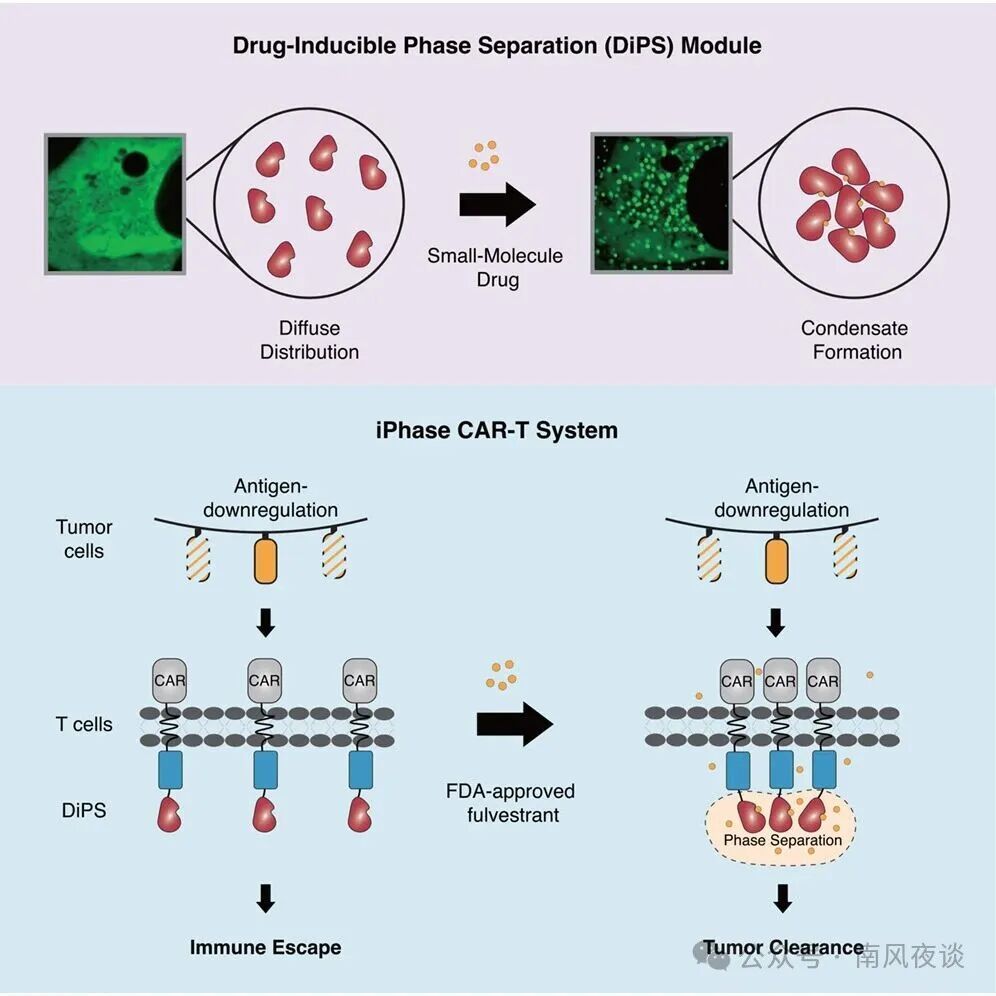
FDA-approved fulvestrant-induced CAR phase separation enables precise control of CAR T antitumor function
Journal & IF:Cell Stem Cell (23.3)
Corresponding Author & Institution:Prof. Haopeng Wang / Prof. Guangya Zhu (ShanghaiTech University, Changping Laboratory / Lingang Laboratory)
DOI:10.1016/j.stem.2026.06.005
Abstract:Chimeric antigen receptor (CAR-T) cell therapy still faces many challenges, such as tumor relapse due to antigen loss and insufficient CAR-T cell expansion in vivo. Moderate tonic signaling (spontaneous CAR signaling) is essential for maintaining CAR-T cell activity and antitumor function, requiring precise regulation of signal intensity to prevent cellular dysfunction or exhaustion. CAR phase separation promotes CAR molecular clustering and enhances sustained signaling, thereby improving cytotoxicity and antigen sensitivity, but persistent high-intensity signaling may induce adverse reactions such as cytokine storms and neurotoxicity. To address this limitation, the researchers constructed a drug-inducible phase-separation CAR (iPhase-CAR) system, consisting of the FDA-approved drug fulvestrant and a modified estrogen receptor α (ERα) mutant as the drug-induced phase separation (DiPS) functional module. After integrating the DiPS module into the CAR molecule, drug-induced clustering of CAR molecules on the T cell membrane surface was achieved. iPhase-CAR-T cells exhibited enhanced antitumor capacity. This system enables quantitative and reversible enhancement of CAR-T cell effector functions, with regulation initiated only upon administration of this FDA-approved drug, achieving precise control over therapeutic efficacy.
Part II: Clinical Research Progress
Genetic mutations and epigenetic silencing mediate antigen-negative relapse of T-lymphoid malignancies after CD7 CAR-T therapy
Journal & IF:Blood Cancer Discov (12.2)
Corresponding Author & Institution:Prof. Yongxian Hu / Prof. He Huang / Prof. Shanshan Pei (Bone Marrow Transplantation Center, The First Affiliated Hospital, Zhejiang University School of Medicine)
DOI:10.1158/2643-3230.BCD-25-0489
Abstract:CD7 is a highly promising target for chimeric antigen receptor T-cell (CAR-T) therapy in T-lymphoid malignancies, but relapse due to antigen loss has become a major clinical challenge. This study conducted systematic genetic and epigenetic variation analyses on paired samples (pre-treatment and post-relapse) from 10 patients with T-cell lymphoma/leukemia who received CD7 CAR-T therapy. Three mechanisms causing CD7 antigen loss were identified: First, 2 of 10 patients had frameshift insertion mutations (Patient 4, c.164dupG:p.R55fs) or deletion mutations (Patient 7, c.122delG:p.G41Efs19), resulting in truncation of the CD7 transmembrane domain; second, 7 of 10 patients without CD7 gene mutations had CD7 promoter hypermethylation; third, the remaining 1 patient (Patient 2) had concurrent promoter hypermethylation and multiple in-frame mutations predicted to interfere with CD7 protein function. In summary, these results confirm that under the selective pressure of CD7 CAR-T therapy, clonal heterogeneity and epigenetic plasticity jointly drive antigen-negative relapse of T-lymphoid malignancies.
Secondary peripheral T-cell lymphoma in a patient with DLBCL harboring BLM mutation following CD19/CD22 bispecific CAR-T cell therapy
Journal & IF:J Immunother Cancer (11.7)
Corresponding Author & Institution:Prof. Liang Wang / Prof. Qinlong Zheng (Department of Hematology, Beijing Tongren Hospital / Beijing Gaobo Boren Hospital)
DOI:10.1136/jitc-2026-014873
Abstract:This article reports a patient with relapsed/refractory B-cell lymphoma carrying a pathogenic germline BLM p.L107Ffs36 variant who developed secondary peripheral T-cell lymphoma (PTCL) derived from the infused CAR-T cells after receiving CD19/CD22-4-1BB-CD3ζ lentiviral bispecific CAR-T cell infusion. Comprehensive genomic and molecular testing confirmed that the PTCL clone originated from the infused CAR-T cell product; tumorigenesis was a multi-step oncogenic process involving pre-existing driver mutations (BLM), somatic TET2 mutations (p.R1261H, p.E1755), and genomic instability. The study detected clonal integration of the CAR vector within tumor-associated genes such as NF1, CBX5, and RNF213, which can serve as clonal expansion markers, but no functional evidence confirmed direct oncogenic effects of vector integration. The authors suggest that the disease spectrum of this case lies between clonal lymphoproliferative disease and typical peripheral T-cell lymphoma, and relevant nomenclature is still being refined. This case indicates that patients with suspected relapse after CAR-T therapy require repeat biopsy, and also highlights the limitation that conventional cell product quality control measures cannot detect pre-cancerous clones.
Evidence for early, clinically silent medial temporal lobe inflammation after CAR-T cell therapy
Journal & IF:Eur J Cancer (7.9)
Corresponding Author & Institution:Prof. Dimitrios Mougiakakos (Department of Hematology, Oncology, Cell Therapy and Radiation Therapy, Otto von Guericke University Magdeburg, Germany)
DOI:10.1002/hem3.70362
Abstract: Objective:Immune effector cell-associated neurotoxicity syndrome (ICANS) is the most common neurological complication after chimeric antigen receptor (CAR-T) cell therapy. Even in patients without clinically apparent neurotoxicity, the potential for long-term cognitive impairment remains controversial. CAR-T-related neurotoxicity frequently involves the medial temporal lobe (MTL), but conventional structural magnetic resonance imaging (MRI) often shows no abnormalities. There is an urgent need for subclinical neurotoxicity biomarkers that can predict long-term cognitive outcomes. Methods:This study established an imaging protocol for patients with B-cell malignancies receiving CAR-T therapy, using 3T and 7T MRI to complete MTL perfusion imaging and functional connectivity imaging; longitudinal follow-up data from 4 patients were analyzed. Results:Two of 4 patients developed ICANS (grade 1 and grade 3, respectively), both accompanied by mild grade 1 cytokine release syndrome (CRS). All patients had normal structural MRI of the MTL at baseline and during follow-up; CAR-T cell expansion varied significantly across patients. Regardless of ICANS, CRS, or CAR-T expansion levels, all patients showed increased MTL perfusion and enhanced brain functional connectivity, with changes most prominent on days 10–14 post-treatment. Conclusion:These results confirm that patients develop early, clinically asymptomatic MTL inflammation after CAR-T therapy, which may have potential effects on long-term cognitive function, requiring further validation in larger studies.
Expansion and safety profile of CD28-costimulated anti-CD19 CAR T cells in B-cell lymphoma versus autoimmune disease
Journal & IF:Hemasphere (11.3)
Corresponding Author & Institution:Prof. Dimitrios Mougiakakos (Otto von Guericke University Magdeburg, Germany)
DOI:10.1002/hem3.70426
Abstract:This single-center comparative study compared the expansion characteristics and safety of CD28-costimulated anti-CD19 CAR-T in B-cell non-Hodgkin lymphoma (axi-cel, n=20) versus autoimmune diseases (miv-cel, n=6, including myasthenia gravis and immune thrombocytopenia). Autoimmune disease patients had higher peak CAR-T expansion, larger area under the curve, delayed time to peak expansion, predominant CD4⁺ CAR-T expansion, and no significant difference in cell persistence duration between the two groups; lymphoma patients had a higher proportion of effector memory phenotype and stronger cell activation. In terms of safety, autoimmune disease patients had lower CRS incidence, no grade 3 or higher CRS or ICANS, less use of tocilizumab and corticosteroids, better hematopoietic reconstitution, and lower CAR-related hematotoxicity scores. For long-term immune reconstitution, autoimmune disease patients had better B-cell and immunoglobulin recovery, with no significant impact on protective antibody titers and no statistical difference in infection rates. The study confirms that disease background directly affects CAR-T expansion, toxicity, and immune reconstitution, with autoimmune disease patients showing better tolerability to this class of CAR-T than lymphoma patients; however, this study has limitations including small sample size, single-center design, and limited follow-up, requiring validation in larger multicenter cohorts to provide clinical evidence for CAR-T use in refractory autoimmune diseases.
Impact of prior CAR T-cell treatment on graft-vs-host disease and non-relapse mortality after allogeneic transplantation
Journal & IF:Transplant Cell Ther (4.7)
Corresponding Author & Institution:Prof. Monzr M. Al Malki (City of Hope National Medical Center)
DOI:10.1016/j.jtct.2026.06.052
Abstract: Background:Whether prior chimeric antigen receptor (CAR) T-cell therapy increases the risk of graft-versus-host disease (GVHD) or non-relapse mortality (NRM) after allogeneic hematopoietic cell transplantation (HCT) remains unclear. Objective:This study compared the incidence of NRM, acute GVHD, and chronic GVHD between patients who received CAR-T therapy prior to HCT and matched controls who did not receive CAR-T before transplantation. Design:This was a retrospective propensity score-matched case-control study, with the case group comprising patients who received CAR-T prior to transplantation and the control group comprising patients who did not receive CAR-T prior to transplantation, aiming to analyze the impact of prior CAR-T therapy on HCT outcomes. Results:Day 100 NRM was 6.2% in the case group vs 8.6% in the control group (P=0.82). Day 100 cumulative incidences of grade II–IV and grade III–IV acute GVHD were 43.1% and 20.0% in the case group, respectively, vs 44.8% and 12.1% in the control group (P=0.83 and 0.099, respectively). One-year cumulative incidences of any and moderate-severe chronic GVHD were 43.8% and 28.1% in the case group, respectively, vs 42.3% and 20.3% in the control group (P=0.87 and 0.23, respectively). After adjusting for Disease Risk Index (DRI), there were no statistically significant differences in overall survival or GVHD-free, relapse-free survival between the two groups (P=0.094 and 0.14, respectively); relapse cumulative incidence and disease-free survival also showed no statistical differences between groups. Patients with an interval of less than 3 months between CAR-T therapy and transplantation had better GVHD-free, relapse-free survival: 1-year survival rate 40% vs 24.4% in the group with interval >3 months (P=0.032), primarily due to a significantly lower incidence of severe acute GVHD, with day 100 grade III–IV acute GVHD incidence of only 5% vs 26.7% in the long-interval group (P=0.030). Conclusion:Prior CAR-T therapy does not increase the risk of GVHD or NRM, suggesting that CAR-T therapy does not adversely affect outcomes of subsequent allogeneic HCT.
Point-of-Care Manufacturing of Anti-CD19.1-Chimeric Antigen Receptor-T Cells Using CliniMACS Prodigy: Real-World Experience From Jordan
Journal & IF:JCO Glob Oncol (3.8)
Corresponding Author & Institution:Prof. Khalid Halahleh (Department of Internal Medicine, King Hussein Cancer Center, Amman, Jordan)
DOI:10.1200/GO-25-00648
Abstract: Background:Pharma-driven CAR-T cell manufacturing processes are complex and time-consuming. This study hypothesized that localized CAR-T cell manufacturing using the fully automated closed-system CliniMACS Prodigy platform (Miltenyi Biotec) in a developing country is feasible and reproducible for patients with relapsed/refractory non-Hodgkin lymphoma (rrNHL). Materials & Methods:The manufacturing process for anti-MB-19.1 CAR-T cell products was as follows: peripheral blood mononuclear cells were collected, and T cells were purified by positive selection using CD4 and CD8 magnetic beads; cells were transferred to the CliniMACS Prodigy reaction chamber and activated using the CD3/CD28 T cell activation reagent TransAct; transduction was performed using anti-MB-CD19.1 CAR lentiviral vectors, with cells harvested after 12 days of continuous culture. A total of 11 cell products were manufactured: 3 from healthy donors for process feasibility validation and 8 as Phase II clinical trial-grade products. Supporting quality control and release specifications were developed, testing cell identity, viability, purity, sterility, and cytotoxic potency. Results:The 11 anti-CD19.1 CAR-T cell products showed stable and reproducible key parameters. Process validation batch results: T cell expansion of 51-fold, stable transduction efficiency of 26%, cell viability of 98%, all meeting clinical production release specifications. Clinical-grade products showed T cell expansion of 35-fold, transduction efficiency of 44%, cell viability of 99.8%, with all quality control parameters meeting standards. The average time from blood collection to infusion was 15.25 days (range 15–17 days). Eight enrolled patients who received clinical-grade products achieved considerable objective response rates, with no new unknown safety risks identified. Conclusion:This study demonstrates the feasibility and process reproducibility of point-of-care manufacturing of anti-CD19.1 CAR-T cells in Jordan, a developing country.
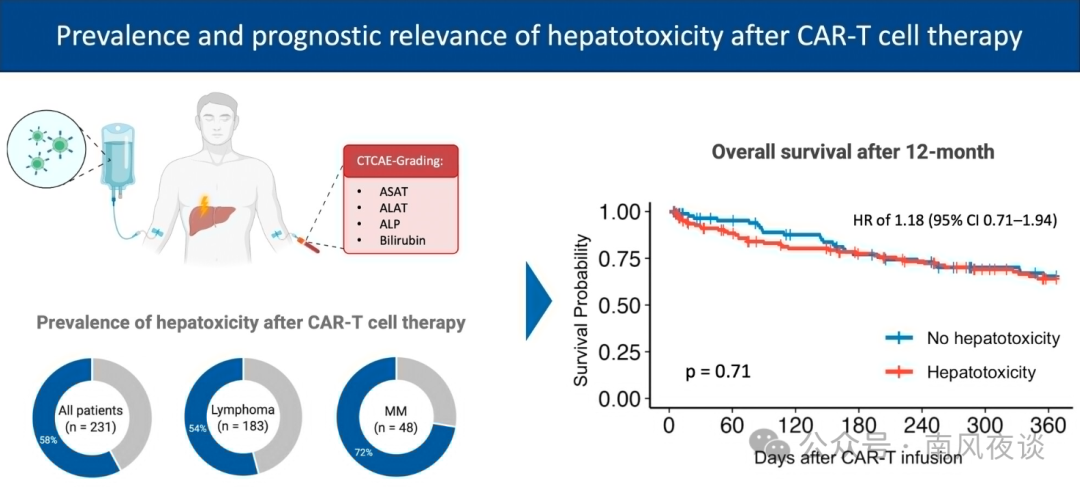
Real-world prevalence and prognostic significance of hepatotoxicity after chimeric antigen receptor T-cell therapy
Journal & IF:Br J Haematol (3.6)
Corresponding Author & Institution:Prof. Julius Hollnberger (University Hospital Cologne)
DOI:10.1111/bjh.70677
Abstract:In this real-world cohort of 231 patients receiving chimeric antigen receptor (CAR) T-cell therapy, 58% developed hepatotoxicity, predominantly manifesting as transient transaminase elevation; hepatotoxicity was not associated with impaired 12-month overall survival (adjusted hazard ratio [HR]=1.18, 95% confidence interval [CI]: 0.71–1.94).
Comparative effectiveness of chimeric antigen receptor (CAR) T-cell therapy versus historical controls in patients with relapse/refractory aggressive B-cell lymphoma: An indirect treatment comparison in the real-world setting
Journal & IF:Br J Haematol (3.6)
Corresponding Author & Institution:Prof. Pierre J. A. Villeneuve (The Ottawa Hospital, Ontario, Canada)
DOI:10.1111/bjh.70632
Abstract:Single-arm clinical trials have demonstrated that CAR-T cell therapy can significantly improve survival in patients with relapsed/refractory (R/R) aggressive B-cell lymphoma, but this therapy is associated with significant toxicity and extremely high treatment costs. This study aimed to evaluate the real-world clinical benefit of publicly funded CAR-T therapy for aggressive B-cell lymphoma patients in Ontario, Canada, compared with historical controls. This population-based retrospective cohort study included all treated patients with R/R aggressive B-cell lymphoma in Ontario from January 2013 to June 2023. The cohort was divided into two groups: patients receiving commercial CAR-T products from January 1, 2019, to June 30, 2023; and a historical control group receiving only standard conventional therapy from January 1, 2013, to December 31, 2018 (before CAR-T was publicly funded). Inverse probability of treatment weighting (IPTW) was used to balance baseline clinical characteristics between groups. The cohort included 314 CAR-T-treated patients and 106 historical controls. Median overall follow-up was 29.6 months (95% CI: 26.1–33.0); median overall survival was 15.1 months (95% CI: 11.1–26.3) in the CAR-T group vs 4.8 months (95% CI: 3.8–6.4) in the historical control group, with a hazard ratio of 0.50 (95% CI: 0.38–0.65). These results confirm that CAR-T cell therapy significantly improves survival outcomes in patients with R/R aggressive B-cell lymphoma in routine clinical practice.
Part III: Review Articles
Rewiring cellular immunotherapy: From CAR evolution to circuit innovations across diseases
Journal & IF:Biotechnol Adv (14.1)
Corresponding Author & Institution:Prof. Zhaogang Yang / Prof. Simiao Wang / Prof. Jing Xie (Jilin University / Chongqing University of Technology)
DOI:10.1016/j.biotechadv.2026.108980
Abstract:Chimeric antigen receptor (CAR)-based immunotherapy has evolved from early linear receptor designs to increasingly sophisticated biological signal processing systems. Conventional CAR-T cell therapy has achieved remarkable clinical efficacy, particularly in hematological malignancies, but challenges such as limited scalability, complex manufacturing processes, and treatment-related toxicities restrict its widespread adoption. To address these challenges, CAR genetic engineering has expanded beyond T cells to other immune cells including natural killer (NK) cells and macrophages, with increasingly diverse gene delivery and regulation approaches. Meanwhile, advances in synthetic biology have redefined CAR function: CARs are no longer static receptors but programmable immune circuits that can integrate multiple signal inputs, perform logic operations, and generate differentiated output responses based on the microenvironment. Such circuit-based designs enable precise regulation of immune activation, enhance the ability of cells to distinguish tumor tissue from normal tissue, and improve the sustained functionality of immune cells within heterogeneous and immunosuppressive tumor microenvironments. This review conceptualizes CAR immunotherapy as a biological signal processing system, systematically tracing its evolutionary trajectory from linear CAR structures to programmable immune circuits; summarizes various strategies for ex vivo and in situ reprogramming of immune cells; compares the advantages and disadvantages of viral and non-viral gene delivery platforms; and discusses core design principles for circuit-based CARs applicable to different disease contexts.
Guided immunotherapy for residual solid tumor: integrating platelets and CAR T cells to reduce post-surgical recurrence
Journal & IF:Biomark Res (14.6)
Corresponding Author & Institution:Prof. Michael R. Hamblin & Prof. Jalal Naghinezhad (Mazandaran University of Medical Sciences, Iran)
DOI:10.1186/s40364-026-00957-5
Abstract:Even after complete macroscopic resection of solid tumors, post-surgical recurrence remains a core obstacle to achieving long-term remission. Accumulating evidence indicates that surgery creates a brief but highly favorable biological window for tumor progression, characterized by inflammatory signaling pathway activation, coagulation system activation, vascular endothelial injury, and systemic immunosuppression. These physiological processes collectively construct a protective microenvironmental niche that allows minimal residual disease to escape immune surveillance and initiate distant metastatic proliferation. Although modern adjuvant therapies can improve patient outcomes, their efficacy is often limited by insufficient tumor targeting specificity, significant systemic toxicity, poor immune cell homing efficiency, and tumor heterogeneity. Therefore, there is an urgent clinical need for novel approaches that precisely target biological mechanisms to eliminate residual tumor cells during their most vulnerable phase. Platelets, traditionally viewed solely as hemostatic mediators, have now been shown to actively regulate tumor progression: platelets promote fibrin deposition, shield circulating tumor cells from immune killing, and remodel inflammatory networks, indirectly contributing to post-surgical tumor survival. Paradoxically, the natural tendency of platelets to home to wound sites also offers a highly promising therapeutic concept: leveraging platelet homing mechanisms to precisely deliver immunotherapy to fibrin-rich surgical wound sites with high recurrence risk. This review proposes a platelet-mediated CAR-T delivery platform that leverages the body’s own wound physiology to construct a precision immune delivery system. This approach combines platelet membrane coating or platelet-CAR-T conjugation techniques with thrombin-responsive biomaterial depots to enhance local retention of effector cells, increase effector-to-target cell ratios, and prolong functional persistence of cells. Simultaneously equipped with programmable safety elements such as affinity modulation, logic-gated activation, and inducible suicide switches, this system can mitigate thrombotic inflammation risks while ensuring efficacy; these regulatory mechanisms can restrict cell activation to target lesion sites and enable controllable termination of cellular function upon adverse events, collectively enhancing therapeutic safety. When combined with circulating biomarkers for minimal residual disease-positive patient selection, this system can form a feasible perioperative intervention strategy. Existing preclinical studies have demonstrated that platelet-mediated local delivery can reduce circulating tumor cell burden, and when combined with immune adjuvants can enhance antigen presentation, with recurrence suppression superior to systemic administration. Following rigorous safety validation, scalable manufacturing optimization, and biomarker-stratified clinical trials, platelet-targeted CAR-T therapy holds promise for remodeling the post-surgical microenvironment: transforming the "safe zone" that shelters tumor survival into a targeted region for long-term immune-mediated tumor clearance.
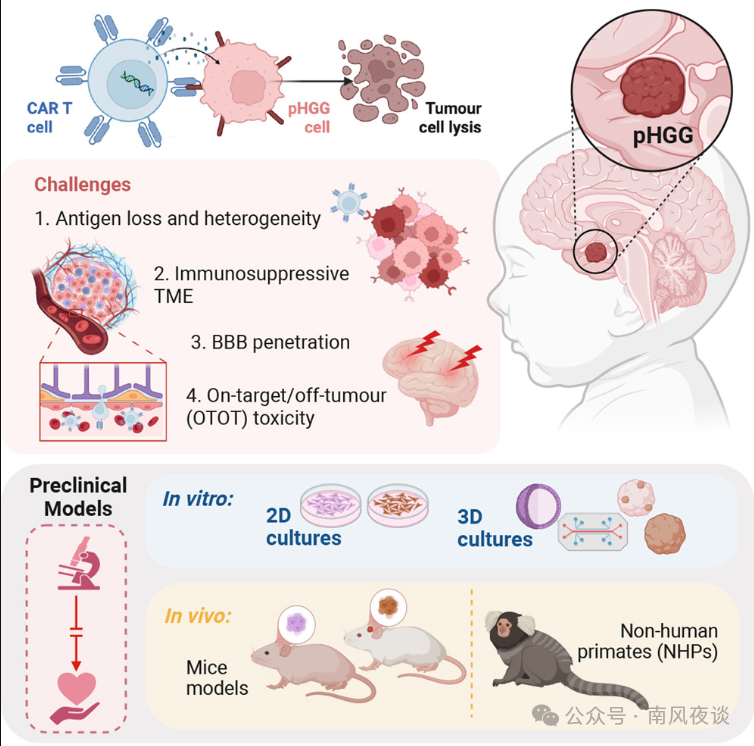
Are the Current Preclinical Models Adequate to Evaluate CAR-T Cell Therapy in Paediatric High-Grade Gliomas?
Journal & IF:Mol Ther (11.4)
Corresponding Author & Institution:Prof. Flávia Sousa (University of Groningen)
DOI:10.1016/j.ymthe.2026.06.043
Abstract:Paediatric high-grade gliomas (pHGGs) are highly aggressive paediatric brain tumors with a five-year survival rate below 20%. Unlike adult high-grade gliomas (aHGGs), pHGGs are primarily driven by histone mutations, developmental programming disturbances, and an immunosuppressive tumor microenvironment (TME). Although chimeric antigen receptor (CAR) T-cell therapy has revolutionized the treatment landscape for hematological malignancies, its application in pHGGs still faces numerous clinical translation challenges. This review aims to comprehensively summarize the biological characteristics of pHGGs, the mechanisms of CAR-T cell therapy, and existing preclinical models, with a focus on analyzing the gaps in clinical translation and strategies to bridge them. First, we summarize the molecular and cellular characteristics of pHGGs, emphasizing unique properties that influence tumor responsiveness to antigen-directed therapies; we also detail the mechanisms of CAR-T therapy, its success in treating hematological malignancies, and the unique challenges in treating central nervous system (CNS) tumors. Second, we provide a critical analysis of existing preclinical research platforms, ranging from conventional two-dimensional culture systems to advanced patient-derived three-dimensional culture systems and in vivo mouse models. Although these models can provide mechanistic insights and be used to evaluate CAR-T therapy efficacy, no single model can fully recapitulate the TME and developmental context of pHGGs, which is a major reason for the recurrent gap between preclinical efficacy and clinical reality. This review summarizes the current state of CAR-T therapy research in paediatric neuro-oncology, analyzes the limitations in clinical translation, and proposes strategies to advance research in this field.
Part IV: Basic and Translational Research
TLR9 Agonists Potentiate Adoptive T Cell Therapy in Cancer through a B Cell-CD2 Costimulatory Axis
Journal & IF:Cancer Res (22.6)
Corresponding Author & Institution:Prof. Chrystal M. Paulos (Emory University)
DOI:10.1158/0008-5472.CAN-26-0202
Abstract:Adoptive T cell transfer (ACT) therapy can offer curative potential for some cancer patients. Toll-like receptor (TLR) agonists can enhance ACT efficacy, and elucidating the molecular mechanisms underlying this enhancement will help develop optimal strategies to maximize the clinical benefit of TLR agonists. This study identified an innate-adaptive immune interaction loop: TLR9-activated B cells enhance CD8⁺ T cell survival and antitumor activity through CD2-dependent costimulation. Among multiple TLR agonists tested, type B CpG oligodeoxynucleotides specifically induced stronger effector differentiation, metabolic fitness, and tumor suppression in mouse and human CD8⁺ T cells. Blocking CD2 signaling completely abrogated the potentiating effect of TLR9 agonists, manifesting as decreased glycolytic capacity and diminished tumor suppression; whereas blocking other costimulatory molecules including CD86, CD80, CD28, and ICOS individually did not diminish the antitumor activity of CpG-pretreated T cells. Gain-of-function experiments confirmed that CD2 stimulation recapitulated the effects of TLR9 agonists, enhancing the effector function of tumor-infiltrating lymphocytes and CAR-T cells. Consistent with these findings, data from multiple human tumor patient cohorts showed that high CD2 expression in tumor tissues correlated with prolonged overall survival, validating the clinical significance of this signaling pathway. In summary, this study reveals a non-canonical B cell-CD2 costimulatory axis through which TLR9 agonists potentiate adoptive T cell therapy, providing a targetable molecular pathway to overcome resistance to cell therapy in solid tumors.
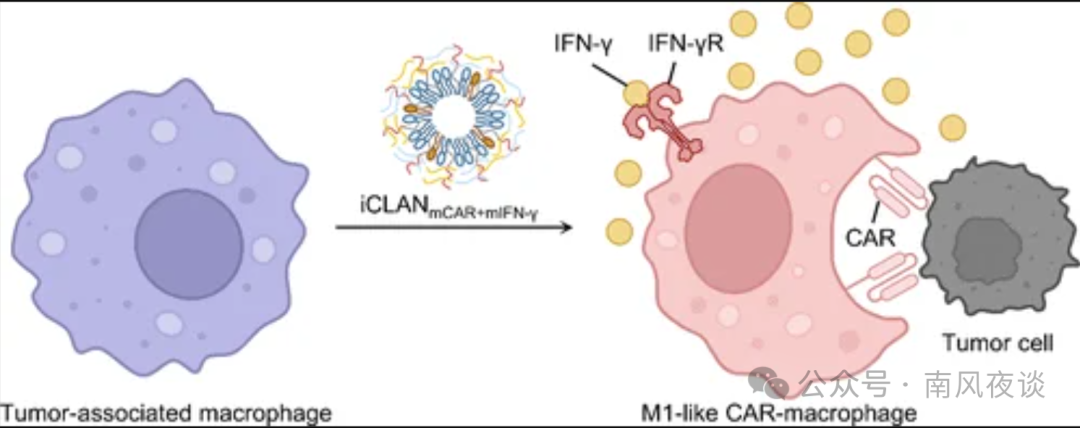
Engineering Interferon-γ-Enhanced Chimeric Antigen Receptor Macrophages via Lipid-Assisted Polymeric Nanoparticles for Cancer Immunotherapy
Journal & IF:ACS Nano (17.3)
Corresponding Author & Institution:Prof. Xianzhu Yang / Prof. Jun Wang / Prof. Congfei Xu (South China University of Technology)
DOI:10.1021/acsnano.5c21015
Abstract:CAR macrophages (CAR-M) possess tumor-penetrating ability and antigen-specific phagocytosis, showing great promise in solid tumor therapy. However, existing ex vivo CAR-M manufacturing approaches face limitations including weak macrophage proliferation ex vivo and complex genetic modification procedures. In situ generation of CAR-M in vivo could circumvent these challenges, but still encounters the problem of immunosuppressive tumor microenvironment-induced polarization of macrophages toward a pro-tumor M2-like phenotype. This study constructed macrophage-targeting ionizable cationic lipid-assisted polymeric nanoparticles (iCLANs) for simultaneous delivery of mRNA encoding interferon-γ (IFN-γ) and CAR molecules, designated iCLANₘCAR₊ₘIFN-γ, enabling in situ engineering of CAR-M with sustained M1 antitumor phenotype maintenance. iCLANₘCAR₊ₘIFN-γ can simultaneously express IFN-γ and CAR in tumor-associated macrophages, generating CAR-M that can sustain an antitumor phenotype and efficiently phagocytose tumor cells in an antigen-specific manner. In EGFRvIII-positive breast cancer and CD19-positive B-cell lymphoma animal models, intravenous administration of iCLANₘCAR₊ₘIFN-γ directly generated EGFRvIII-targeting CAR-M or CD19-targeting CAR-M within tumors, significantly inhibiting tumor growth and remodeling the immunosuppressive TME. This study provides an efficient novel strategy for in vivo construction of M1-type CAR-M for cancer therapy.
Chimeric allergen receptor regulatory T cells suppress birch pollen allergic airway inflammation
Journal & IF:J Exp Med (11.6)
Corresponding Author & Institution:Prof. Yannick D. Muller (Lausanne University Hospital)
DOI:10.1084/jem.20252201
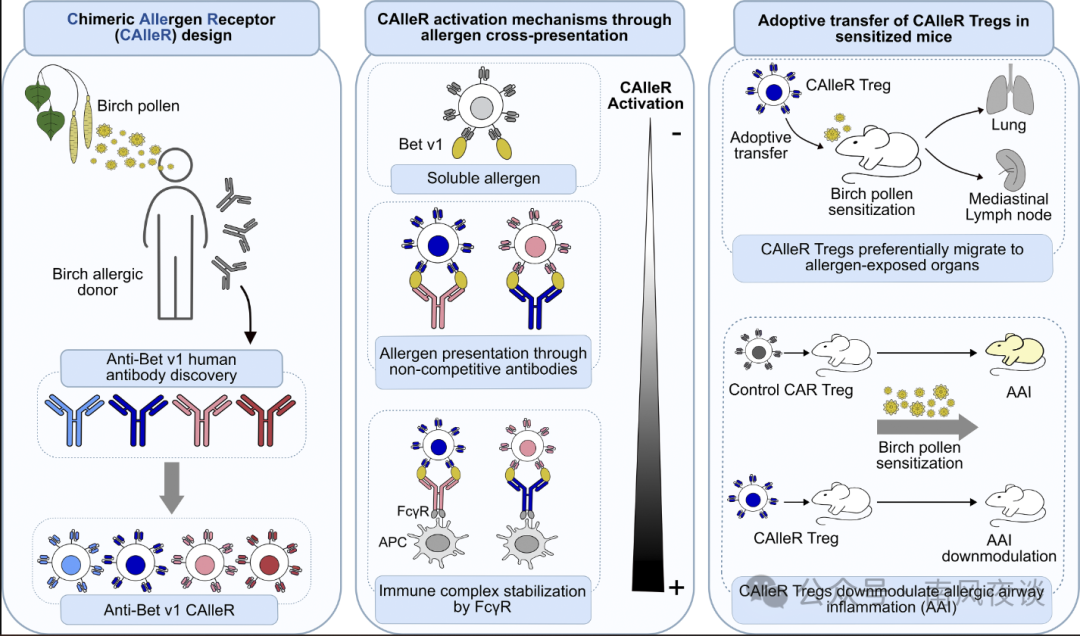
Abstract:Asthma is a life-threatening chronic respiratory disease affecting over 300 million people worldwide. Allergen-specific immunotherapy is currently the only therapy that can modify the disease course, but it is difficult to use in patients with severe asthma. This study constructed chimeric allergen receptor-modified regulatory T cells targeting the major birch pollen allergen Bet v1, designated CAlleR cells, and investigated their therapeutic potential. Four novel anti-Bet v1 antibodies were screened and used to construct CAlleRs with functional validation completed. In vitro experiments showed that CAlleR-modified regulatory T cells could be specifically activated and exert immunosuppressive effects; in a birch pollen-sensitized mouse model, these cells significantly alleviated airway hyperresponsiveness. Mechanistically, CAlleR regulatory T cells migrated to lung tissue and mediastinal lymph nodes, interacting with CD11c⁺ dendritic cells; non-competitive anti-Bet v1 antibodies could stabilize Bet v1 antigen and activate CAlleR regulatory T cells through cross-presentation pathways in an Fcγ receptor-dependent manner. These findings reveal a novel mechanism of action targeting soluble antigens and demonstrate the potential of CAlleR-modified regulatory T cells for prevention and treatment of severe allergic diseases.
Bridging preclinical development and clinical manufacturing: a translational GMP-Platform for lentiviral vector production in academic CAR T-Cell therapy
Journal & IF:J Transl Med (9.7)
Corresponding Author & Institution:Prof. José Antonio Pérez-Simón / Prof. Gloria Carmona-Sánchez / Prof. Estefanía García-Guerrero (Institute of Biomedicine of Seville (IBIS))
DOI:10.1186/s12967-026-08566-4
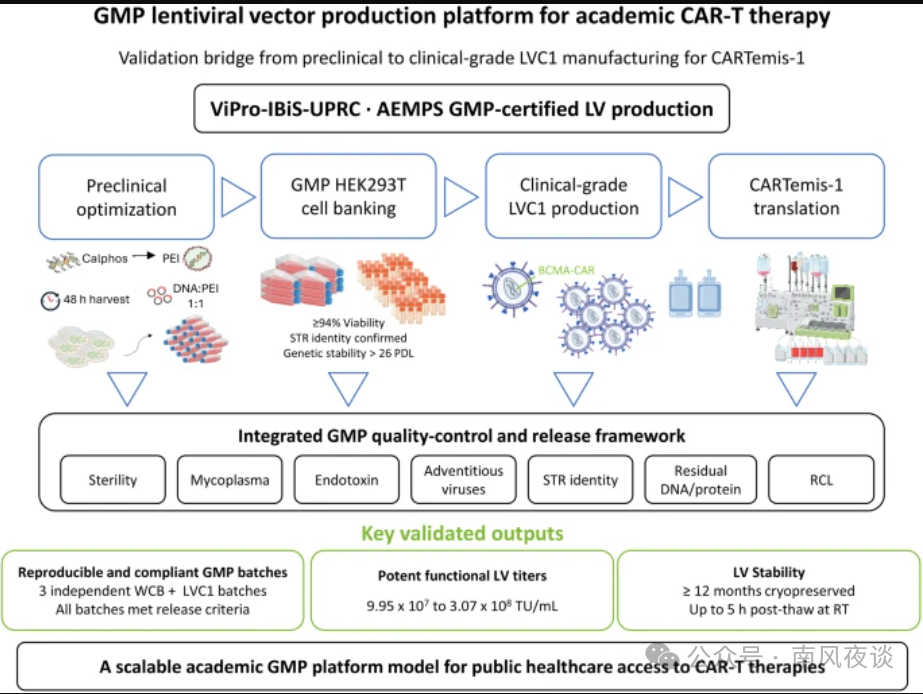
Abstract: Background:Good Manufacturing Practice (GMP) compliance for lentiviral vector (LV) production remains a critical bottleneck constraining the clinical translation of academically developed CAR-T cell therapies. To address this challenge, this study established and validated an integrated GMP sterile LV production platform (ViPro-IBiS-UPRC) within a public healthcare institution. Methods:A stepwise optimization approach was used to bridge preclinical development and GMP-scale manufacturing, including optimization of transfection conditions, vector harvest timing, and culture scale-up processes; subsequently, GMP-compliant production systems and comprehensive quality control (QC) standards were established and validated for HEK293T Lenti-X master and working cell banks (MCB/WCB) and LV manufacturing processes. Results:Cell banks showed viability ≥94% and stable expansion performance; DNA fingerprinting confirmed cell identity, with no contamination by microorganisms, adventitious viruses, or endogenous retroviruses detected. GMP-batch LV functional titers reached 9.95×10⁷–3.07×10⁸ TU/mL, all meeting release specifications: sterile, mycoplasma-free, low endotoxin, and replication-competent lentivirus-negative; residual host cell DNA and protein levels were within regulatory limits of all relevant countries. Cryostability testing confirmed that vectors maintained full functionality after 12 months of cryopreservation. This platform received LV GMP manufacturing authorization from the Spanish Agency for Medicines and Medical Devices (AEMPS) and is now being used to manufacture the BCMA-targeting CAR-T product CARTemis-1, which is currently in clinical trials for relapsed multiple myeloma. Conclusion:This study established an academically owned, scalable, GMP-compliant LV manufacturing platform enabling localized, low-cost, and compliant vector supply. This on-site manufacturing model can improve the accessibility of academically developed CAR-T therapies within public healthcare systems.
Engineered PD1-NKG2D Dual-CAR NK92 cells broaden antitumor target recognition in preclinical tumor models
Journal & IF:J Transl Med (9.7)
Corresponding Author & Institution:Prof. Wuling Zhu / Prof. Norfarazieda Hassan (Xinxiang Medical University / Universiti Sains Malaysia)
DOI:10.1186/s12967-026-08542-y
Abstract: Background:To address challenges such as the complex manufacturing process of CAR-T cells and the immunosuppressive tumor microenvironment (TME), CAR-NK cells offer greater potential as an off-the-shelf universal therapy. To broaden the spectrum of tumor recognition and reduce the risk of tumor immune escape from single-target approaches, this study constructed a single promoter-driven multicistronic CAR-NK92 system: utilizing the broad-spectrum recognition of stress ligands by NKG2D while combining PD1-CAR to reverse PD-L1-mediated inhibitory signals, significantly enhancing antitumor efficacy. Methods:A multicistronic vector co-expressing PD1-CAR and NKG2D-CAR under a single CMV promoter was constructed using P2A peptides and transfected into NK92 cells. PD-L1 and MICA/B expression levels were screened across multiple tumor cell lines; functional stability of PN-CAR-NK92 cells was validated in various models through in vitro cytotoxicity assays and cytokine secretion assays; in vivo translational efficacy was validated using the H1299 xenograft tumor model, with direct comparison between PN-CAR-NK92 cells and conventional NK92 cells. Results:The multicistronic structure enabled stable co-expression of both receptor modules, providing a structural basis for dual-target synergy. In vitro killing assays showed that PN-CAR-NK92 cells exhibited potent antitumor activity against tumor cell lines with varying PD-L1 and MICA/B expression levels; whereas single-target CAR-NK92 cells had restricted target recognition spectra. These results demonstrate that dual-target CAR engineering can broaden the antigen recognition repertoire, mitigating the limitations of single-target therapies that depend on a single antigen. In vivo H1299 xenograft models confirmed that PN-CAR-NK92 cells had significantly stronger tumor suppression effects compared with controls. Conclusion:Dual-target PD1/NKG2D CAR-NK92 cells can exert broad-spectrum antitumor effects against tumor cells with varying ligand expression levels, with potential to overcome the inherent limitations of single-target CAR therapies, representing a highly promising novel therapeutic strategy.
Reversible and irreversible BTK inhibition promotes stem-like functional multipotency, persistence, and antitumor efficacy of CD19-directed CAR T cells in mantle cell lymphoma
Journal & IF:Leukemia (8.8)
Corresponding Author & Institution:Prof. Michael L. Wang (MD Anderson Cancer Center)
DOI:10.1038/s41375-026-03032-y
Abstract:Mantle cell lymphoma (MCL) is prone to relapse after CAR-T therapy due to drug resistance and immune escape. The irreversible BTK inhibitor ibrutinib can enhance CAR-T efficacy, but the mechanisms of the reversible non-covalent BTK inhibitor pirtobrutinib (PBN) remain unclear. This study combined patient single-cell sequencing, in vitro cellular experiments, and CDX and PDX mouse models to investigate the regulatory effects of both classes of BTK inhibitors on CD19 CAR-T. Clinical samples showed that PBN upregulated stemness markers including CD62L and IL7R, enriching naïve-like and stem cell memory T (Tscm) cells. BTK inhibitor treatment during ex vivo CAR-T manufacturing upregulated stemness-related genes including TCF7 and LEF1, shifting cellular metabolism from glycolysis to oxidative phosphorylation with enhanced metabolic fitness; these CAR-T cells secreted more IFN-γ and TNF-α and showed significantly enhanced killing activity against primary tumor cells from CAR-T-relapsed patients. Co-culture systems mimicking the TME confirmed that low-concentration PBN alleviated tumor-induced immunosuppression. In vivo experiments showed that low-toxicity dose PBN combined with CAR-T significantly promoted in vivo expansion and long-term persistence of cells, effectively inhibiting the growth of drug-resistant MCL xenografts carrying ATM and TP53 mutations and prolonging mouse survival. In summary, both reversible and irreversible BTK inhibition can induce CAR-T cells to acquire stem-like multipotency features, improving metabolism, persistence, and antitumor activity, providing a highly effective combination therapeutic strategy for relapsed/refractory mantle cell lymphoma.
Intracranially injected chimeric antigen receptor T cells eradicate glioblastoma cells but have limited potential to persist in the brain in a syngeneic mouse model
Journal & IF:Cancer Immunol Immunother (5.8)
Corresponding Author & Institution:Prof. Noriyuki Kijima / Prof. Naoki Hosen (Graduate School of Medicine, Osaka University)
DOI:10.1007/s00262-026-04475-z
Abstract:Glioblastoma multiforme (GBM) is one of the most malignant primary intracranial tumors, with an urgent need for novel therapeutic approaches. Intracranial injection of chimeric antigen receptor (CAR) T-cell therapy has shown therapeutic efficacy against GBM, but whether intracranially infused CAR-T cells can persist long-term in the brain remains unclear. This study established a syngeneic mouse GBM model: mouse GL261 glioblastoma cells expressing human B7-H3 were injected intracranially into mice. After confirming successful tumor engraftment, CAR-T cells targeting human B7-H3 were injected orthotopically into the tumors. Compared with mice receiving control T cells, mice receiving B7-H3 CAR-T cells had significantly reduced tumor burden and prolonged survival. CAR-T cells were clearly detectable in brain tissue 1 week after infusion but completely disappeared 2 weeks after infusion. This syngeneic mouse model demonstrates that intracranially injected CAR-T cells can eliminate GBM but cannot persist long-term in the brain. This suggests that, as adopted in multiple clinical trials, intracranial CAR-T cell therapy may require repeated dosing; future efforts are urgently needed to develop strategies to enhance CAR-T cell persistence in the brain.

