


This week features 11 clinical research articles, 2 reviews, and 14 basic research articles, covering the basic and clinical aspects of CAR-T cell therapy in hematologic diseases, solid tumors, and autoimmune diseases.
The weekly report is divided into four sections: the first is Highlight Articles, featuring the most noteworthy articles in the CAR-T field this week; the second is Clinical and Translational Research, including new drug clinical trials, investigator-initiated clinical trials (prospective/retrospective), translational work, case reports and case series, and clinical prediction models; the third is Review Articles, including comprehensive reviews of various aspects of CAR-T cell therapy; the fourth is Basic and Translational Research, including foundational, translational, technical update, and preclinical research aimed at optimizing CAR-T cell therapy and developing new T-cell therapies.
Part I. Highlight Articles
GPC3-Specific dnTGFβRII-Armored CAR T Cells for Hepatocellular Carcinoma
Journal & IF: Nature (26.3)
Corresponding author & affiliation: Tingbo Liang (Zhejiang University School of Medicine Affiliated First Hospital)
DOI: 10.1038/s41586-026-10786-z
Abstract: Glypican-3 (GPC3) is highly expressed in hepatocellular carcinoma (HCC) and is a highly promising target for chimeric antigen receptor (CAR-T) cell therapy; however, prior clinical efficacy has been limited, presumed to be related to high concentrations of transforming growth factor-β (TGFβ) in the tumor microenvironment. To this end, this study constructed CAR-T cells expressing a dominant-negative TGFβ type II receptor, and preclinical studies confirmed significantly enhanced antitumor activity. This article reports the first-in-human clinical trial results evaluating the safety and efficacy of C-CAR031 in advanced HCC patients who had failed multiple lines of therapy. A total of 36 patients were infused with CAR-T cells across 4 dose groups, with dosing ranging from 0.75×10⁶ to 4.0×10⁶ cells per kilogram of body weight. Cytokine release syndrome (CRS) occurred in 34 patients, including 2 cases of grade 3; grade 3 or higher non-hematologic adverse events (AEs) occurred in 9 patients. Tumor lesion shrinkage was observed in 32 patients, with a median maximum reduction from baseline of 41.6% (range 3.4%-94.4%); objective response rate (ORR) was 44.4%, and median duration of response (DOR) was 4.4 months (95% CI: 2.9-7.4 months). Median progression-free survival (PFS) was 4.2 months (95% CI: 2.9-4.8 months) and median overall survival (OS) was 14.2 months (95% CI: 10.1 months-not evaluable). High-throughput sequencing and functional validation of tumor samples suggested that GPC3 antigen loss and TGFβ upregulation may mediate resistance to C-CAR031. In summary, this study demonstrates that C-CAR031 has manageable safety and shows considerable antitumor activity in heavily pretreated advanced HCC patients.
Allogeneic CD70-Targeted Chimeric Antigen Receptor T-Cell Therapy for Advanced Renal Cell Carcinoma: Results From the Phase I TRAVERSE Trial
Journal & IF: J Clin Oncol (44.7)
Corresponding author & affiliation: Samer A. Srour (The University of Texas MD Anderson Cancer Center)
DOI: 10.1200/JCO-26-00388
Abstract: Purpose: Patients with clear cell renal cell carcinoma (ccRCC) who have failed immune checkpoint inhibitors (ICIs) and targeted therapy still lack effective treatment options. ALLO-316 is an allogeneic chimeric antigen receptor (CAR) T-cell product that targets CD70-expressing ccRCC; the product can target and eliminate CD70-positive alloreactive T cells in patients, thereby circumventing immune rejection. Methods: This was a Phase Ia/Ib TRAVERSE trial (registration number: NCT04696731) enrolling patients with advanced ccRCC who had failed immune checkpoint inhibitors and vascular endothelial growth factor receptor-targeted therapy, using a modified 3+3 design; patients first received lymphodepleting conditioning and then ALLO-316 infusion. Phase Ia explored ALLO-316 dose levels and fludarabine + cyclophosphamide (FC)-based lymphodepletion regimens with or without anti-CD52 monoclonal antibody ALLO-647; Phase Ib expanded enrollment to validate the dose and regimen selected in Phase Ia. Primary endpoints were dose-limiting toxicity (DLT) and adverse events (AEs). Results: A total of 51 patients were enrolled (23 in Phase Ib) with a median of 4 prior lines of therapy and a median follow-up of 28.8 months. Two patients receiving ALLO-647 experienced DLTs — one grade 3 autoimmune hepatitis and one grade 5 cardiogenic shock. Rates of grade ≥3 cytokine release syndrome, immune effector cell-associated neurotoxicity syndrome, and immune effector cell-associated hemophagocytic lymphohistiocytosis-like syndrome were 2.0%, 0%, and 6.0%, respectively. The vast majority of grade ≥3 AEs were hematologic toxicities: neutropenia 62.0%, white blood cell count decrease 54.0%, anemia 36.0%. Phase Ib patients received FC conditioning and were infused with 80×10⁶ CAR-T cells; overall ORR was 17.4%, with Phase Ib ORR at 25.0%; Phase Ib patients with tumor CD70 expression proportion score ≥50% had an ORR of 31.3%. Conclusion: ALLO-316 has manageable safety and meaningful antitumor activity in CD70-positive ccRCC. The TRAVERSE trial demonstrates the theoretical feasibility of allogeneic CAR-T cell therapy for solid tumors.
IL7-Receptor-Targeted CAR T-Cell Therapy for T-Cell Acute Lymphoblastic Leukemia
Journal & IF: Nat Commun (18.1)
Corresponding author & affiliation: Prasad S. Adusumilli (Memorial Sloan Kettering Cancer Center)
DOI: 10.1038/s41467-026-75675-5
Abstract: T-cell acute lymphoblastic leukemia (T-ALL) cells highly express the interleukin-7 receptor (IL7R), which can mediate chemotherapy resistance and disease relapse. Based on this, this study constructed CAR-T cells carrying low- and high-affinity single-chain variable regions targeting IL7Rα (CD127). The study validated the antitumor effects of CD127 CAR-T against T-ALL at three levels: in vitro cell experiments, female T-ALL tumor-bearing mouse models, and killing of primary leukemia blasts after transfection of patient autologous T cells with CD127 CAR. Results showed that low-affinity CAR-T cells had superior antitumor activity compared with high-affinity CAR-T cells; however, after clearing CD127-high leukemia blasts, CAR-T cell fratricide occurred. CRISPR-Cas9 knockout of CD127 eliminated fratricide but caused persistent lymphopenia in vivo. To address fratricide, this study compared two approaches: short-term (<7 day) co-culture (with or without the tyrosine kinase inhibitor dasatinib) and a 10-day natural selection method. Results showed that dasatinib combined with co-culture could improve CAR-T cell yield, cell viability, and preserve cytotoxic function. In vivo animal studies confirmed that dasatinib could transiently and reversibly inhibit CAR-T cell activity. Based on these translational data, the team is launching a clinical trial using low-affinity CD127 CAR-T cells in adult and pediatric patients with relapsed/refractory T-cell acute lymphoblastic leukemia.
Part II. Clinical Research Progress
Non-Armored GCC-Targeting CAR-T Cell Therapy Demonstrates Significant Efficacy in Patients With Advanced Colorectal Cancer
Journal & IF: Clin Cancer Res (10.9)
Corresponding author & affiliation: Hu Liu (Shenzhen Third People’s Hospital)
DOI: 10.1158/1078-0432.CCR-26-0854
Abstract: Purpose: This Phase I clinical trial evaluated the safety, in vivo expansion kinetics, and preliminary efficacy of non-armored, nanobody-derived CAR-T cells targeting guanylyl cyclase C (GCC) in metastatic colorectal cancer patients who had received multiple prior lines of therapy. Methods: This single-arm, open-label Phase I trial enrolled 24 metastatic colorectal cancer patients who had received at least 2 prior lines, infused with GCC-targeting CAR-T cells across 4 dose levels (0.5×10⁵, 1×10⁶, 2×10⁶, and 3×10⁶ CAR-T cells/kg). Primary endpoint was safety; secondary endpoints included antitumor activity and pharmacokinetic profile. Results: All patients experienced grade ≥3 hematologic toxicity, 75% experienced CRS, and these AEs were generally manageable. Two treatment-related deaths occurred: one from immune effector cell-associated hemophagocytic lymphohistiocytosis-like syndrome, and one from intestinal fistula caused by rapid regression of a tumor adherent to the bowel wall. Overall ORR was 33% and disease control rate (DCR) was 63%. Best response: 8 partial response (PR), 7 stable disease (SD), 5 progressive disease (PD). Median progression-free survival (mPFS) was 57 days, median overall survival (mOS) was 190 days. Higher in vivo CAR-T expansion correlated with better disease control. The study confirmed proof-of-concept activity, but durability was limited and toxicity management remains challenging. Conclusion: GCC-targeting CAR-T cells showed encouraging antitumor activity in heavily pretreated colorectal cancer patients, supporting GCC as a clinically actionable target. Further development requires optimization of dose, patient selection, and toxicity management.
Safety and Clinical Outcomes of a First-in-Human Trial of Point-of-Care Manufactured Trispecific CAR T Cells Targeting CD19, CD20, and CD22
Journal & IF: Blood Cancer Discov (12.2)
Corresponding author & affiliation: Sumithira Vasu (The Ohio State University)
DOI: 10.1158/2643-3230.BCD-26-0186
Abstract: Disease relapse after CD19-targeted CAR-T cell therapy is the main cause of treatment failure, with common triggers including CD19 antigen loss, unstable expression, and insufficient target coverage. To overcome single-antigen escape, this study developed a trispecific CAR-T cell targeting CD19, CD20, and CD22 with an OX40 costimulatory domain, and conducted clinical evaluation. Preclinical studies showed potent, antigen-specific cytotoxicity in vitro and in vivo lymphoma models. A first-in-human Phase I trial was conducted in patients with relapsed/refractory B-cell malignancies. Sixteen patients received trispecific CAR-T cell infusion, with median vein-to-vein time of 7 days and infusion dose of 0.5-2×10⁶ cells/kg. No severe CRS or neurotoxicity occurred. Overall ORR was 50%, with complete response rate of 83% in lymphoma patients. One-year OS was 61%, with durable responses observed in lymphoma patients. In vivo CAR-T expansion did not correlate with infusion dose or response; however, T-cell exhaustion in the apheresis product significantly correlated with disease progression. In summary, this trispecific CAR-T cell has favorable safety, potential antitumor activity in lymphoma, and offers a new approach to overcoming single-antigen escape-induced CAR-T relapse.
Enabling Access to Talicabtagene Autoleucel in Relapsed/Refractory B-Cell Malignancies; Multicenter Real-World Evidence on Delivery, Efficacy and Safety
Journal & IF: Blood Cancer J (13.8)
Corresponding author & affiliation: Hasmukh Jain / Rahul Purwar (Homi Bhabha National Institute, Mumbai, India / Indian Institute of Technology Bombay)
DOI: 10.1038/s41408-026-01569-w
Abstract: Talicabtagene autoleucel (tali-cel) is India’s first approved humanized CD19-targeted CAR-T cell therapy for relapsed/refractory (r/r) B-cell acute lymphoblastic leukemia (B-ALL) and B-cell non-Hodgkin lymphoma (B-NHL). This study evaluated the clinical implementation of tali-cel through a Central Coordination Unit (CCU) integrating clinical care and manufacturing. From November 15, 2023 to January 31, 2025, 105 r/r B-ALL patients and 145 r/r B-NHL patients undergoing apheresis at 56 treatment centers were enrolled. The CCU ensured timely delivery of tali-cel: manufacturing slot was assigned within one week of clinical request, with median vein-to-vein time (apheresis to CAR-T reinfusion) of 29 days (range 16-102 days), unaffected by patient geography. In r/r B-ALL patients (median follow-up 14 months), median OS was not reached, PFS was 18 months (range 9 months-not reached); 12-month OS and PFS rates were 64% (95% CI: 53%-72%) and 55% (95% CI: 45%-65%), respectively. In r/r B-NHL patients (median follow-up 13 months), median PFS was 11 months (range 7-16 months), median OS was not reached; 12-month OS and PFS rates were 63% (95% CI: 54%-71%) and 47% (95% CI: 38%-56%), respectively. No patients received consolidative stem cell transplant. Safety: grade 3/4 CRS, ICANS, and IEC-HS in r/r B-ALL were 6%, 4%, and 23%; in r/r B-NHL were 6%, 3%, and 18%. The study confirms successful multicenter scale-up of tali-cel and provides a reference for improving global CAR-T cell therapy accessibility.
Risk of Thrombosis and Bleeding Following CAR T-Cell Therapy: Insights From the Dutch “Follow that CAR!” Registry
Journal & IF: Hemasphere (11.3)
Corresponding author & affiliation: Mandy N. Lauw (Department of Hematology, Erasmus MC,
Rotterdam, the Netherlands)
DOI: 10.1002/hem3.70433
Abstract: CAR-T cell therapy has significantly improved outcomes for relapsed/refractory aggressive large B-cell lymphoma (R/R LBCL) patients. Although thrombotic and bleeding complications are increasingly reported, their clinical significance and risk factors remain unclear due to study heterogeneity. This study analyzed 250 adult R/R LBCL patients who received axicabtagene ciloleucel (axi-cel) in the Dutch “Follow that CAR!” multicenter registry, examining thrombosis and bleeding incidence in a more homogeneous real-world multicenter cohort. The impact of thrombosis and bleeding as time-varying covariates on overall survival was assessed, along with their associations with CRS, ICANS, anticoagulation, and laboratory parameters. The 1-year cumulative incidence of thrombosis and bleeding was 6.3% and 11.0%, respectively; median time to event was 28 days post-infusion. Bleeding was significantly associated with reduced OS (HR 3.77, 95% CI 1.96-7.27). Pre-CAR-T CAR-Hematotoxicity score ≥2 (HR 3.62, 95% CI 1.23-10.69), therapeutic anticoagulation at infusion (HR 3.74, 95% CI 1.33-10.49), and grade ≥3 thrombocytopenia at infusion (platelets <50×10⁹/L, HR 3.55, 95% CI 1.12-11.26, P=0.03) were significantly associated with increased bleeding risk. This study confirms that bleeding risk after CAR-T is high and clinically meaningful. Future prospective studies are needed to validate these findings and guide management of modifiable risk factors including anticoagulant use and transfusion thresholds.
Comparison of Obecabtagene Autoleucel Versus an External Control Arm in Adult Patients With Relapsed/Refractory B-Cell Acute Lymphoblastic Leukemia
Journal & IF: Leukemia (8.8)
Corresponding author & affiliation: Max S. Topp (University Hospital Würzburg, Germany)
DOI: 10.1038/s41375-026-03045-7
Abstract: The single-arm Phase Ib/II FELIX study (NCT04404660) showed that obecabtagene autoleucel (obe-cel, a CD19-targeting autologous CAR-T cell therapy) achieved a high overall response rate with favorable safety in adult r/r B-ALL patients. To objectively interpret FELIX data, this study compared obe-cel efficacy and safety with a matched external control cohort from prior trials using propensity score matching. The external control used current standard non-CAR-T regimens including blinatumomab, inotuzumab ozogamicin, and conventional chemotherapy. Primary endpoint: ORR; secondary: OS; EFS and safety were exploratory. FELIX ITT population: 107 patients. Obe-cel achieved significantly higher ORR than the non-CAR-T control (67.3% vs 51.4%, OR 1.9, P=0.0257). Median OS was longer in the obe-cel arm regardless of whether HSCT was censored: with HSCT as a censoring event, 15.1 vs 7.0 months (P=0.0015); without HSCT censoring, 13.9 vs 7.8 months (P=0.0430). Obe-cel significantly extended EFS, with median EFS of 9.8 months vs 2.5 months in control (P<0.0001). Safety profiles were similar, with no significant differences in grade ≥3 AE rates. In summary, obe-cel significantly improved response rate and survival with manageable safety versus current standard non-CAR-T regimens, meeting an unmet need in adult r/r B-ALL.
Feasibility and Outcomes of Decentralized Point-of-Care CD19 CAR T Cell for Relapsed Large B Cell Lymphoma in Resource-Limited Settings
Journal & IF: Mol Ther Oncol (8.5)
Corresponding author & affiliation: Kitsada Wudhikarn (Faculty of Medicine, Chulalongkorn University)
DOI: 10.1016/j.omton.2026.201278
Abstract: CD19 CAR-T cell therapy has transformed R/R LBCL treatment, but access in low- and middle-income countries remains severely limited due to high cost, infrastructure requirements, and centralized manufacturing. This study established and applied a decentralized point-of-care (POC) CAR-T platform in Thailand using the automated closed-system CliniMACS Prodigy, integrating local manufacturing with clinical care. From 2020 to 2025, the platform treated 12 R/R LBCL patients (median age 45.8 years, median vein-to-vein time 12 days). Manufacturing succeeded in 11 patients; 1 received an out-of-specification dose. Final products had balanced CD4:CD8 ratios and were enriched for memory T-cell subsets. Safety: CRS in 5 patients (1 grade 3); 1 patient with grade 1 neurotoxicity. At 3 months, overall ORR was 58.3% with CR rate of 33.3%; 1-year EFS and OS rates were 58.3% and 90%, respectively. Median total cost was $111,231. The results confirm feasibility, efficacy, and lower cost of decentralized POC CAR-T, supporting scalable application in resource-limited settings.
HLH-Like Syndromes Associate With Increased Risk of Death and CD19-Negative Relapse Post-CAR T in Pediatric B-ALL
Journal & IF: Blood Adv (7.7)
Corresponding author & affiliation: Kevin O. McNerney (Feinberg School of Medicine, Northwestern University)
DOI: 10.1182/bloodadvances.2026020511
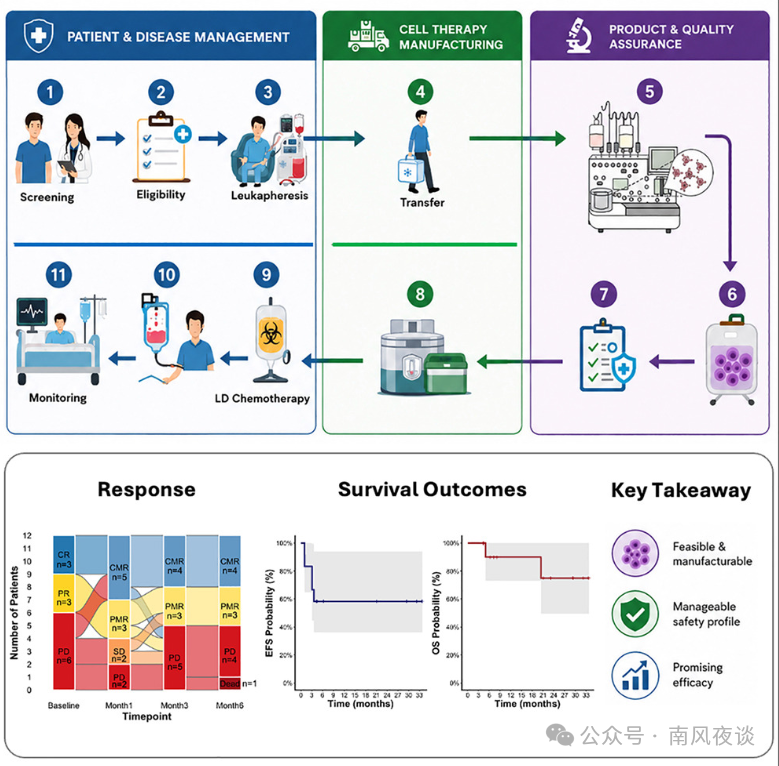
Abstract: We previously reported that B-ALL patients receiving tisagenlecleucel who developed hemophagocytic lymphohistiocytosis-like toxicity (HLH-LT) had poor long-term prognosis. The field subsequently established a consensus definition — immune effector cell-associated HLH-like syndrome (IEC-HS). This multicenter retrospective study analyzed pediatric and young adult B-ALL patients receiving tisagenlecleucel from 2018-2023, examining HLH-like syndrome incidence, diagnostic overlap, clinical phenotypes, and long-term prognosis. Among 154 tisagenlecleucel-treated patients, 14.9% met IEC-HS criteria, 21.4% met HLH-LT criteria, 13% were clinically diagnosed with HLH, and 10% met all definitions. After adjusting for baseline tumor burden, all HLH-like syndromes were significantly associated with reduced OS and EFS (P<0.0001). Compared with patients without HLH-like syndrome, those with any HLH-like syndrome had 1-year non-response/relapse cumulative incidence of 60% (95% CI 43.1-76.9) vs 28.2% (95% CI 20.0-36.5), P<0.001; 1-year non-relapse mortality 11.4% (95% CI 0.7-22.1) vs 0% (95% CI 0-0), P<0.001. In the high baseline tumor burden subgroup, patients with HLH-like syndrome had 1-year CD19-negative relapse cumulative incidence of 65.2% (95% CI 44.7-85.8) vs 2% (95% CI 0-6.4) in those without, P<0.001. After adjusting for tumor burden, any HLH-like syndrome was an independent predictor of CD19-negative relapse (HR 8.10, 95% CI 3.6-18.4, P<0.001). In summary, HLH-like syndrome diagnostic criteria partially overlap, IEC-HS has clear prognostic value, and CD19-negative relapse and non-relapse mortality are key adverse long-term events.
A Novel Severe Toxicity-Free, and Progression-Free Survival Endpoint Predicts Outcomes After CD19 Chimeric Antigen Receptor-T Cell Therapy in Large B-Cell Lymphoma
Journal & IF: Bone Marrow Transplant (5.1)
Corresponding author & affiliation: Aleksandr Lazaryan (Moffitt Cancer Center)
DOI: 10.1038/s41409-026-02936-8
Abstract: CD19 CAR-T therapy has transformed R/R LBCL treatment, but toxicity and efficacy remain highly heterogeneous. To address this, this study developed a novel composite endpoint — 6-month severe-toxicity-free and progression-free survival (TPFS6), defined as: within 6 months of CAR-T therapy, absence of severe CRS, ICANS, PD/SD, and non-relapse mortality (NRM). In the study cohort, 37% of patients achieved TPFS6. TPFS6 failure events: severe CRS (6.8%), ICANS (30.3%), NRM (1.7%), and PD/SD (61.2%). Multivariate analysis identified female sex (P=0.01), ECOG <2 (P=0.05), lower LDH (P=0.004), and lower CRP (P=0.004) as independent predictors of TPFS6. At median follow-up of 36.2 months, estimated 2-year OS and PFS were 54.5% and 39.6%, respectively. Landmark analysis showed that patients achieving TPFS6 had significantly improved OS (HR=0.19, 95% CI: 0.11-0.35, P<0.001) and PFS (HR=0.33, 95% CI: 0.16-0.67, P=0.002). CAR-T product type was not significantly associated with OS but was associated with PFS (HR=3.09, 95% CI: 1.27-7.50, P=0.013). Even after excluding PD/SD, TPFS6 remained a prognostic indicator for OS and PFS, highlighting the impact of severe toxicity on long-term survival. In summary, TPFS6 is a clinically meaningful integrated efficacy-safety endpoint that can predict long-term outcomes after CAR-T therapy.
ASCT, CAR T-Cell, or Combined Consolidation for R/R PCNSL in Re-achieved CR: An Inverse Probability of Treatment Weighting-Adjusted Comparative Study
Journal & IF: Transplant Cell Ther (4.7)
Corresponding author & affiliation: Kai Hu / Xiaoyan Ke et al. (Beijing Gaobo Boren Hospital)
DOI: 10.1016/j.jtct.2026.07.016
Abstract: Background: CAR-T cell therapy has emerged as a potentially effective strategy for R/R primary CNS lymphoma (PCNSL). Recent studies suggest that ASCT combined with CAR-T may outperform CAR-T monotherapy, but direct comparative evidence is lacking. This study evaluated three consolidation strategies — ASCT, CAR-T, and ASCT+CAR-T — in R/R PCNSL patients in re-achieved CR. Methods: This retrospective study enrolled 112 R/R PCNSL patients receiving consolidation at Beijing Gaobo Hospital from April 2022 to November 2025; CAR-T patients were all enrolled in clinical trial ChiCTR2200058972. Results: Median age was 57 years (range 25-75); 14 patients (12.5%) had received ≥3 prior lines; 23.2% had IESLG score ≥3. Distribution: 38 CAR-T, 42 ASCT, 32 ASCT+CAR-T. At median follow-up 21.4 months, 2-year PFS and OS for the entire cohort were 70.7% and 82.5%, respectively. After stabilized inverse probability of treatment weighting (sIPTW), ASCT had significantly lower cumulative relapse incidence than CAR-T (sHR=0.236, P=0.034) and ASCT+CAR-T (sHR=0.121, P=0.009). Although ASCT showed a trend toward improved PFS versus CAR-T (HR=0.384, P=0.072), OS and 3-month CR rate did not differ significantly across groups. All regimens had manageable safety; main causes of death were disease progression (58.8%) and infection (41.2%). Conclusion: For R/R PCNSL patients in re-achieved CR, ASCT monotherapy reduced cumulative relapse incidence compared with CAR-T or ASCT+CAR-T. Given the retrospective design and potential residual confounders, these results require further prospective validation.
Part III. Review Articles
Nanomaterials Drive In Vivo CAR Immune Cells Engineering
Journal & IF: Adv Mater (29.1)
Corresponding author & affiliation: Weisheng Guo / Qi Lei / Xingjie Liang (Guangzhou Medical University / CAS Key Laboratory for Nano-Bio Effects and Safety)
DOI: 10.1002/adma.74058
Abstract: CAR immune cell therapy has become a cornerstone of modern cell therapy, with strong clinical efficacy in multiple malignancies and autoimmune diseases. However, complex and costly in vitro manufacturing processes with significant inter-individual variation limit broad clinical adoption. These bottlenecks have driven a paradigm shift toward in vivo CAR engineering, using nanocarriers to directly deliver genetic payloads to circulating or tissue-resident immune cells, dramatically simplifying manufacturing. This review first traces the development of CAR immune cell therapy and analyzes the core limitations of in vitro manufacturing; it then systematically reviews mainstream in vivo CAR delivery platforms, comparing delivery efficiency, cell targeting, and gene expression kinetics; and focuses on the mechanistic differences and applicable scope of transient versus durable expression strategies. The review further analyzes key challenges in the field, including receptor-mediated non-specific immune activation, nanocarrier immunogenicity hindering repeated dosing, and the delivery barrier created by the solid tumor microenvironment. The review concludes by discussing the inherent trade-off between persistence and biosafety across delivery platforms, and notes that clinical translation will require systematic optimization of delivery precision, immune compatibility, and expression controllability.
Subsequent CAR-T and Engineered Antibody for Relapsed/Refractory Multiple Myeloma Following BCMA-Targeted Treatment: A Systematic Review and Meta-Analysis
Journal & IF: Blood Cancer J (13.8)
Corresponding author & affiliation: Heng Mei (Union Hospital, Tongji Medical College, Huazhong University of Science and Technology)
DOI: 10.1038/s41408-026-01564-1
Abstract: Disease progression after B-cell maturation antigen (BCMA)-targeted therapy is a major challenge in R/R multiple myeloma (MM). This systematic review and meta-analysis included 34 studies (1,280 patients) published from 2020-2025, comparing salvage CAR-T therapy with engineered antibody drugs after BCMA-targeted therapy failure. Pooled ORR was 60%. CAR-T therapy had significantly higher ORR than antibody drugs (77% vs 52%, P<0.0001), with comparable CR rates. No significant differences in CRS or ICANS, but grade ≥3 cytopenias were more common with CAR-T. Notably, GPRC5D-targeting CAR-T had higher ORR than BCMA-targeting CAR-T products (86% vs 66%, P=0.0006). Patients with prior BCMA bispecific antibody exposure had lower response rates to subsequent therapy than those with prior BCMA CAR-T (71% vs 86%, P=0.0404). Cohorts with a median interval of ≥10 months from last BCMA therapy to subsequent therapy had significantly higher ORR than those with <10 months (70% vs 50%, P=0.0146). In summary, in the salvage setting after BCMA-targeted therapy failure, GPRC5D CAR-T is superior to engineered antibodies. This supports the early use of CAR-T as a subsequent-line option and highlights the critical role of target selection in optimizing sequential treatment strategies.
Part IV. Basic and Translational Research
Multimodal C9-66 CAR-T Cell Immunotherapy Improves Outcome in Preclinical Models of Pancreatic Cancer
Journal & IF: Gut (24.6)
Corresponding author & affiliation: Alexandra Aicher / Christopher Heeschen (China Medical University / Istituto Nazionale Oncologico Candiolo, IRCCS)
DOI: 10.1136/gutjnl-2025-337545
Abstract: Background: Pancreatic ductal adenocarcinoma (PDAC) is highly malignant, broadly resistant to current therapies, and remains the most lethal malignancy. Oncofetal chondroitin sulfate (ofCS) is a tumor-specific glycosaminoglycan widely expressed across solid tumors, with minimal expression in normal adult tissues. This study developed C9-series CAR-T cells targeting ofCS to address the poor antigen specificity and highly immunosuppressive tumor microenvironment (TME) of conventional therapies. Purpose: To optimize ofCS-targeting C9 CAR-T cell therapy for PDAC by integrating CAR structural optimization, metabolic enhancement, and TME reprogramming. Design: Humanized ofCS-specific single-chain antibody fragments were used to construct C9 CAR-T cells and charge-optimized C9-66 CAR-T cells. Antitumor efficacy, functional persistence, and metabolic homeostasis were evaluated in mouse and patient-derived pancreatic cancer models. Enhancement strategies included inosine-mediated metabolic reprogramming, Nr5a2 overexpression, and sequential GLP-1R modulation, CSF-1R blockade, and PD-1 inhibitor for stepwise TME remodeling. Results: C9 CAR-T cells potently killed tumor cells, delayed tumor progression, and extended survival in tumor-bearing animals. Compared with the original C9 CAR, the charge-engineered C9-66 CAR-T cells showed reduced in vivo exhaustion and more durable antitumor activity. Inosine enhanced cytokine secretion, promoted central memory T-cell differentiation, and alleviated exhaustion; Nr5a2 overexpression enhanced mitochondrial respiration and cytotoxicity. Sequential GLP-1R alternation combined with macrophage depletion and immune checkpoint blockade significantly enhanced intratumoral CAR-T activity and prolonged animal survival. Humanized C9-66 CAR-T cells specifically recognized ofCS and lysed patient-derived PDAC cells in vitro and in vivo. Conclusion: Metabolically optimized, TME-reprogrammed C9-66 CAR-T cells have tumor-targeting specificity and represent a clinically translatable immunotherapeutic strategy for PDAC and other ofCS-positive solid tumors.
In Situ Generation of EBNA1 CAR-T Cells Eradicates Antigen-Specific Auto-Immune B Cells for Multiple Sclerosis Treatment
Journal & IF: Acta Pharm Sin B (14.6)
Corresponding author & affiliation: Xinyi Jiang / Anning Li / Fei Yang / Chen Chen / Yudong Song (Shandong University)
DOI: 10.1016/j.apsb.2026.03.033
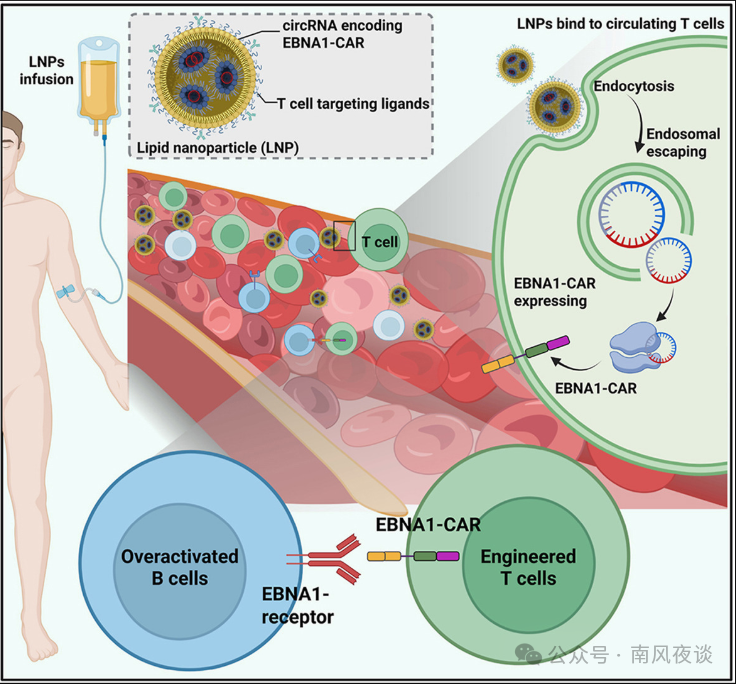
Abstract: Multiple sclerosis (MS) is a chronic inflammatory demyelinating disease of the central nervous system (CNS). EB virus (EBV)-induced B-cell overactivation can drive CNS inflammatory damage, which is considered a core mechanism in MS onset and progression. To specifically eliminate these pathogenic B cells, this study reports an in situ generation strategy for EBV nuclear antigen 1 (EBNA1)-specific CAR-T cells — using CD7-targeting lipid nanoparticles (CD7-LNP) loaded with circular RNA (circRNA) to transiently program T cells and achieve in vivo generation of EBNA1 CAR-T cells. The study confirmed that systemic injection of CD7-LNP efficiently delivered CAR circRNA to T lymphocytes, successfully generating functional EBNA1 CAR-T cells in vivo. In an MS mouse model, these in situ-generated CAR-T cells specifically eliminated EBNA1-specific B cells and significantly delayed MS progression. In summary, the EBNA1 CAR-T in situ generation strategy provides a new approach for MS treatment, effectively avoiding the risks of systemic immunosuppression, with promising clinical application potential warranting further clinical trial validation.
Low-Dose Docetaxel Reprograms CAR T Cells for Enhanced Solid Tumor Immunity
Journal & IF: J Exp Clin Cancer Res (14.3)
Corresponding author & affiliation: Guangxian Xu / Dan Jiang / Hangjiu Su (Guangdong Medical University / People’s Hospital of Guangxi Zhuang Autonomous Region)
DOI: 10.1186/s13046-026-03781-9
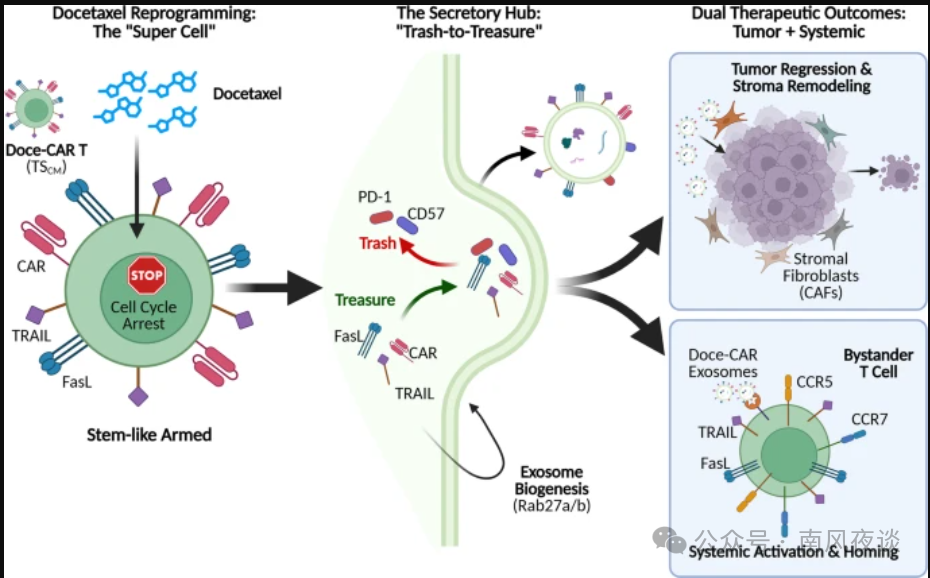
Abstract: Background: CAR-T cell therapy for solid tumors faces multiple barriers, including dense stromal barriers, rapid CAR-T exhaustion, and limited in vivo persistence. This study found that low-dose docetaxel can act as an immune-modulating primer, reprogramming CAR-T cells to overcome these barriers. Retrospective analysis of breast cancer patients showed that host lymphocyte reserve was key to docetaxel benefit, suggesting an immune-modulating mechanism beyond direct tumor killing. Methods: Sub-cytotoxic concentrations of docetaxel were used to treat human primary T cells and CAR-T cells; effects were assessed by phenotyping, transcriptomics, and functional assays. Secretory profiles and extracellular vesicle contents of treated cells were characterized, and antitumor efficacy was validated in 3D tumor spheroid and xenograft models. Results: Docetaxel priming induced a “metabolic-cycle decoupled” state in CAR-T cells — inhibiting proliferation while significantly enhancing cytotoxic potential and memory phenotype. This reprogramming was associated with Rab27-dependent upregulation of exosome biosynthesis, shedding of exhaustion markers (PD-1, CD57), and enrichment of cytotoxic ligands (FasL, TRAIL), CAR molecules, and homing receptors (CCR5/CCR7). Primed CAR-T cells demonstrated superior antitumor efficacy, tumor stromal remodeling, and host T-cell activation; their secreted exosomes also exerted bystander effects. Conclusion: This study proposes a non-gene-editing drug priming strategy with scalability and compatibility with current CAR-T manufacturing, significantly enhancing CAR-T ability to overcome solid tumor barriers, highlighting the value of chemoimmunotherapy combinations.
Engineering a Juxtamembrane-Targeting CAR T-Cell Against Mesothelin: A Novel Binder Resilient to Shed Antigen for Enhanced Efficacy Against Ovarian and Pancreatic Cancer
Journal & IF: Front Immunol (7.0)
Corresponding author & affiliation: Carl H. June / Don L. Siegel (Center for Cellular Immunotherapies, Perelman School of Medicine, University of Pennsylvania)
DOI: 10.3389/fimmu.2026.1805950
Abstract: Mesothelin is a highly promising CAR-T target across multiple tumors, but efficacy is limited — most cell-surface mesothelin is shed through natural proteolysis, leaving only a short juxtamembrane “stalk” peptide. This creates two major challenges: most target protein is no longer on the tumor cell surface, and shed soluble mesothelin in the TME and circulation can act as a decoy that binds mesothelin-targeting CAR-T and impairs binding to surface mesothelin. Prior mesothelin-targeting CARs (such as those based on SS1 or M5 antibody variable regions) targeting the distal membrane domain (the shed region) have not met expectations in clinical trials — these issues are major contributors. In addition, mesothelin expression in normal tissue poses safety risks. This study constructed a new antibody from phage display, specifically recognizing the mesothelin stalk domain and unaffected by natural shedding. This mesothelin-stalk-targeting CAR-T cell (CAR 422) demonstrated in vitro cytotoxicity and in vivo antitumor activity comparable to conventional anti-mesothelin CAR-T cells. The key advantages: CAR 422 effectively kills tumor cells resistant to conventional anti-mesothelin CAR-T; and in human mesothelin knock-in mouse models, off-target (normal tissue) toxicity is lower. In summary, CAR 422 may become a next-generation treatment for refractory solid tumors.
Sleeping Beauty Mutagenesis Identifies BACH2 and Other Regulators of CD8+ T-Cell Exhaustion, Persistence In Vivo, and CAR-T Cell Function Under Tumor-Associated Chronic Antigen Stimulation
Journal & IF: J Immunother Cancer (11.7)
Corresponding author & affiliation: Chang-Jung Lee (University of Minnesota Twin Cities)
DOI: 10.1136/jitc-2025-013536
Abstract: Background: Genes that enhance T-cell function are highly promising targets for optimizing engineered T-cell therapies. CRISPR knockout screens have identified key genes for T-cell persistence, but Sleeping Beauty (SB) insertional mutagenesis can simultaneously cause gain-of-function (GOF) and loss-of-function (LOF) mutations via fusion transcripts with endogenous genes, potentially uncovering regulators missed by conventional screens. Methods: A doxycycline (Dox)-inducible SB mutagenesis transgenic mouse model (DiSBey) was constructed. The model was used to screen for gene variants that enhance T-cell persistence under chronic antigen exposure. CD8+ T cells from DiSBey mice fed Dox were repeatedly stimulated with anti-CD3 for 18 days to simulate chronic in vivo antigen stimulation. High-specificity transposon-tag sequencing and RNA sequencing were used to map SB insertion sites and identify fusion transcripts in long-surviving DiSBey CD8+ T cells. Results: Under continuous stimulation, SB-mutagenized CD8+ T cells showed improved survival and reduced terminal exhaustion. Six independent screens identified 38 genes with recurrent T2/Onc2 SB insertions and significant expression changes under chronic anti-CD3 stimulation. Bach2 and Elmo1 loci had multiple insertions and abnormal fusion transcripts. BACH2 is a core regulator of T-cell memory and resistance to chronic viral infection-induced exhaustion, but its role in tumor-engineered T cells was unclear. This study confirmed that BACH2 inhibits T-cell exhaustion in vitro and enhances intratumoral T-cell persistence in B16-Ova tumor-bearing mice. Exogenous BACH2 expression levels regulated engineered T-cell differentiation: low-level BACH2 overexpression preserved more functional pre-exhausted T cells, with superior antitumor efficacy. In human CART19-28ζ CAR-T cells, BACH2 overexpression enhanced cytotoxicity and sustained tumor control under chronic antigen stimulation. Conclusion: The DiSBey mouse-based controlled SB mutagenesis system provides a novel platform for screening functional genes that improve therapeutic T-cell phenotypes. BACH2 dose-dependently enhances engineered T-cell antitumor function under chronic antigen stimulation.
Cytokine Co-Presentation on Targeted Lipid Nanoparticles Enhances In Vivo T Cell Engineering
Journal & IF: Biomaterials (13.6)
Corresponding author & affiliation: Hai-Quan Mao (Johns Hopkins University School of Medicine)
DOI: 10.1016/j.biomaterials.2026.124429
Abstract: T lymphocytes are central to adaptive immunity and are attractive targets for gene therapy and cell engineering; however, efficient in vivo T-cell transfection remains challenging. Antibody-conjugated lipid nanoparticles (LNP) have become a non-viral approach for in vivo T-cell targeting, but existing platforms deliver only signal 1 and signal 2 activation, lacking cytokine-mediated signal 3 support. This study designed a signal 3-enhanced LNP by co-conjugating interleukin-7 (IL-7) with anti-CD3 and anti-CD28 antibodies on the nanoparticle surface, achieving local three-signal co-presentation at the T-cell-nanoparticle interface. Compared with antibody-only LNP or LNP with soluble IL-7 supplementation, the anti-CD3/anti-CD28/IL-7 tri-conjugated LNP significantly enhanced uptake and transgene expression in human primary T cells, confirming the importance of particle-bound signal 3 delivery. In naive T cells, IL-7-conjugated LNP promoted coordinated cell proliferation and transgene expression. In vivo, IL-7-conjugated LNP biased functional mRNA transfection toward splenic T cells while reducing liver T-cell transfection, without changing overall organ biodistribution. As proof of concept, IL-7-conjugated LNP delivered CAR mRNA, successfully generating functional CAR-expressing T cells in vivo, achieving antigen-specific target cell elimination. In summary, signal 3 cytokine co-presentation is an effective design strategy to optimize T-cell-targeting mRNA LNP, significantly enhancing in vivo binding, uptake, and transfection efficiency.
Injectable Bioinstructive Microfoam for Rapid Bedside/In Vivo Programming of CAR-T Cells
Journal & IF: Mol Ther (11.4)
Corresponding author & affiliation: Matthias T. Stephan (Fred Hutchinson Cancer Center)
DOI: 10.1016/j.ymthe.2026.07.037
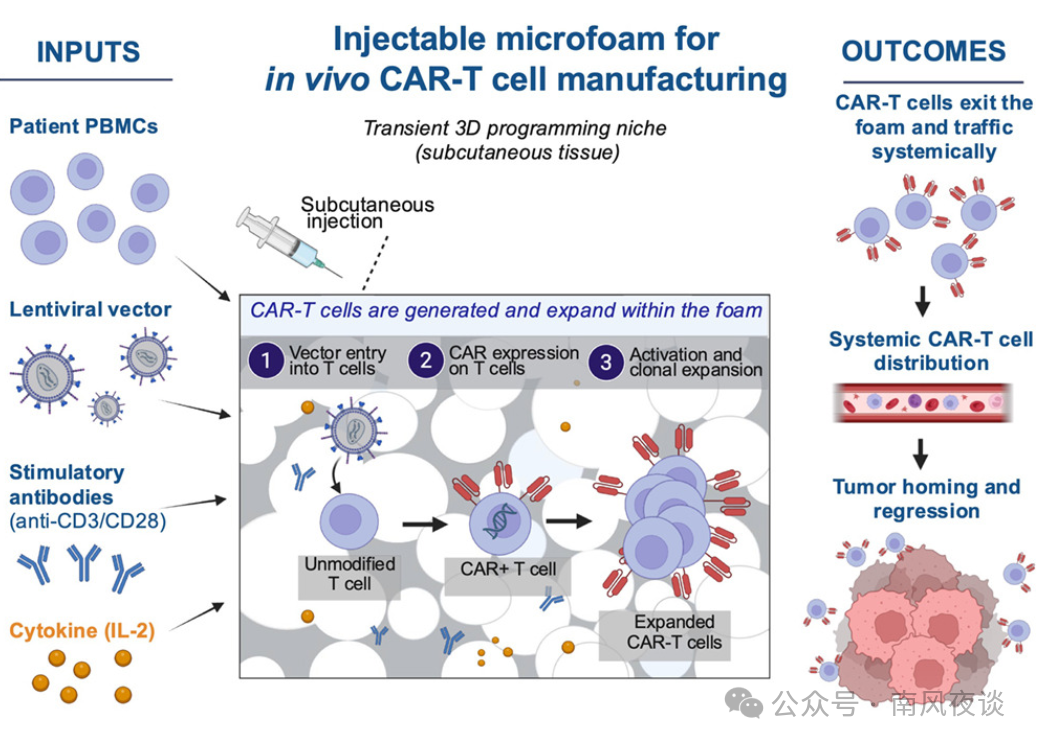
Abstract: CAR-T cell therapy has transformed hematologic malignancy treatment and is being explored for solid tumors, but broad application remains limited by high cost, complex manufacturing, long wait times, and uneven access. This study developed a methylcellulose-based gene therapy microfoam that can rapidly produce subcutaneously injectable CAR-T cells within hours of blood collection. Specifically, the study demonstrated that co-localizing T cells with the vector inside the microfoam effectively promotes CAR gene transduction efficiency. After subcutaneous injection, the newly programmed CAR-T cells spread systemically in vivo and achieved distant tumor regression in lymphoma and hepatocellular carcinoma mouse xenograft models, with antitumor activity comparable to conventionally manufactured CAR-T cells. The platform is a sterile closed system requiring no long-term cell culture, centralized manufacturing facilities, or cleanroom-level production conditions. These proof-of-concept results simplify CAR-T manufacturing and reduce infrastructure requirements, with potential to improve cell therapy accessibility.
Development of a 3-Day Manufacturing Method to Generate CD19-CD20-CD22 Trispecific CAR T-Cells From Whole Blood
Journal & IF: J Transl Med (9.7)
Corresponding author & affiliation: Steven L. Highfill (National Institutes of Health)
DOI: 10.1186/s12967-026-08306-8
Abstract: Background: CAR-T cell therapy has transformed treatment of multiple hematologic malignancies, but high relapse rates and limited accessibility remain critical challenges. This study developed a streamlined 3-day CAR-T manufacturing process. Methods: An automated density gradient separation method combined with T-isopure™ antibody cocktail (negative selection) was used to isolate T cells from healthy donor whole blood. Isolated T cells were activated, transduced with lentiviral vector encoding the trispecific CAR, and cultured in G-Rex vessels. Cells were harvested on day 3 and day 7 for analysis. CAR expression and T-cell phenotype were assessed by flow cytometry and gene expression; cytotoxicity and cytokine secretion were assessed by co-culture with target cell lines. Results: After T-isopure separation, CD3+ T cells as a percentage of CD45+ cells increased from 18.9% to 88.5%, with an average recovery of 40.6%; RBC clearance ≥99%, residual CD45+ cells were mainly monocytes and NK cells. T-cell viability from the 3-day process was >95%, transduction efficiency 53%, vector copy number <3 copies/cell. Phenotyping showed that cells on day 3 and day 7 had high proportions of stem cell-like memory T cells / central memory T cells, with no significant difference. Cytotoxicity assays confirmed that both processes produced CAR-T cells capable of potent and sustained killing of NALM6 tumor cells, with comparable efficacy. Gene expression analysis showed that 3-day CAR-T cells were less differentiated, displaying memory-like phenotypes, with downregulation of inflammatory signaling pathways — confirmed by culture supernatant protein analysis. Conclusion: This study established a rapid, GMP-compliant whole-blood direct manufacturing method for multifunctional CAR-T cells. The process yields potent, well-phenotyped CAR-T products without compromising viability or cytotoxicity. Compared with the standard 7-day process, the 3-day rapid process produces CAR-T cells expressing more stem cell-like phenotype-related genes, while significantly shortening manufacturing time and reducing cost. The method provides a feasible alternative for decentralized CAR-T manufacturing, particularly suited to resource-limited medical settings.
Metabolic and Functional Analysis Including Repetitive Antigen Stimulation Provides a More Accurate Assessment for CAR-T Cell Product Quality and Long-Term Functionality
Journal & IF: J Transl Med (9.7)
Corresponding author & affiliation: Jose Antonio Pérez-Simón / Estefanía García-Guerrero (Institute of Biomedicine of Seville)
DOI: 10.1186/s12967-026-08571-7
Abstract: Background: BCMA-targeting CAR-T cell therapy has shown significant clinical efficacy in multiple myeloma, but methods to assess product quality and predict long-term function remain limited. Although apheresis product immunophenotyping correlates with clinical outcomes, characterization of the infused CAR-T product faces challenges, with inconsistent results across studies. Methods: Two academic BCMA-CAR products (CARTemis-1) developed by the team were used, differing only in costimulatory domain (4-1BB and CD28). Detailed functional and molecular characterization was performed before and after antigen stimulation to identify the most accurate method for capturing functional differences. Methods included standard flow cytometry, short-term cytotoxicity, repetitive antigen stimulation, metabolic profiling, and transcriptomic assessment; additionally, metabolic profiling was performed on CAR-T products from 15 patients. Results: Prior studies reported functional differences between CAR-T products with different costimulatory domains, but conventional assays in this study showed no significant differences in viability, expansion kinetics, immunophenotype, or activation/exhaustion markers. In contrast, more functional assays clearly revealed differences: repetitive antigen stimulation showed that CARTemis-1-BB (4-1BB) had superior long-term cytotoxicity; metabolic profiling showed that this product had significantly higher spare respiratory capacity and maximal respiration after antigen stimulation. Transcriptomic analysis further confirmed distinct signaling pathway regulation, with T-cell activation-related signature genes enriched in CARTemis-1-BB, while Wnt/TGFβ-related response pathways were activated in CARTemis-1-28 (CD28). Notably, metabolic profiling of infused CAR-T products also identified specific features associated with clinical outcomes, distinguishing long-term responders from short-term/non-responders. Conclusion: In preclinical development, persistence and metabolic analyses are key tools for optimizing CAR-T construct selection, providing more accurate assessment of product quality than standard immunophenotyping, and helping identify constructs with superior therapeutic potential.
Augmenting CAR T Cell Functionality and Metabolism Through CD39 Downtuning
Journal & IF: Mol Ther Oncol (8.5)
Corresponding author & affiliation: Dennis Christoph Harrer (University Hospital Regensburg, Germany)
DOI: 10.1016/j.omton.2026.201277
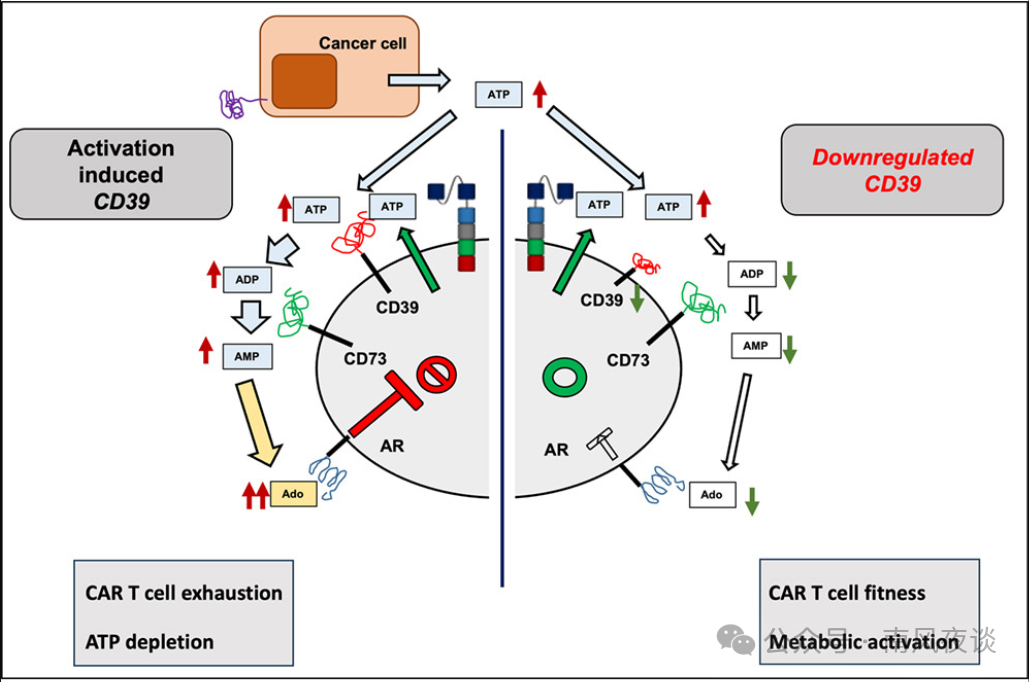
Abstract: The CD39/CD73 pathway is a key endogenous inhibitory pathway of T-cell function. CAR-T activation induces CD39 upregulation; compared with conventional CAR-T, CD39-low CAR-T cells reduce extracellular ATP degradation, with significantly enhanced granzyme, perforin release, and degranulation under repeated CAR stimulation, with overall stronger function. Additionally, CD39-low CAR-T cells have superior mitochondrial function and glycolytic activity. In NSG xenograft mouse CEA-positive gastric cancer models, CD39-low CAR-T cells showed significantly better tumor control than conventional CAR-T. This effect is CD39-specific: CD38 downregulation, which also regulates exhaustion, did not provide antitumor benefit under stimulation stress. Activation-induced CD39/CD73 upregulation forms a negative feedback loop inhibiting CAR-T; reducing CD39 expression weakens AMP/adenosine-mediated inhibition, thereby enhancing T-cell antitumor activity. In summary, CD39 downregulation alone is insufficient for all clinical scenarios, but combined with targeting other metabolic pathways or immune checkpoints, it can further extend in vivo persistence and enhance antitumor effects, with high value for combination applications.
Reversible Control of CAR T Cells Through PROTAC Compound Targeting Bromodomain Mutant
Journal & IF: Mol Ther Oncol (8.5)
Corresponding author & affiliation: Chi Hoon Park (Korea Research Institute of Chemical Technology)
DOI: 10.1016/j.omton.2026.201280
Abstract: Proteolysis-targeting chimera (PROTAC) is an innovative strategy for selective target protein degradation. This study demonstrated that the PROTAC compound AGB1 can specifically degrade CAR carrying a bromodomain L387V mutant (BD2m) tag (CAR-BD2m). ARV771, which can degrade wild-type bromodomains, impairs normal T-cell function, whereas AGB1 does not affect normal T-cell function and does not degrade endogenous bromodomain-containing proteins such as BRD4. Notably, AGB1’s efficiency in degrading CAR-BD2m is approximately 10-fold that of ARV771 in degrading wild-type BD2-tagged CAR (CAR-BD2w). In vitro, AGB1 reversibly regulated CAR-BD2m T-cell activity through targeted CAR protein degradation. In preclinical animal models, CAR-BD2m T cells showed potent antitumor activity comparable to conventional CAR-T cells; AGB1 effectively regulated CAR-BD2m T-cell function. In summary, the BD2m system can serve as an efficient tag platform for targeted CAR protein degradation, with potential to safely and reversibly regulate CAR-T activity in patients.
CAR19 Regulatory T Cells Treat Murine Chronic Graft-Versus-Host Disease Through Immune Suppression in Absence of Measurable B-Cell Cytolysis
Journal & IF: JCI Insight (6.8)
Corresponding author & affiliation: Bruce R. Blazar (University of Minnesota Medical School)
DOI: 10.1172/jci.insight.196197
Abstract: Chronic graft-versus-host disease (cGVHD) remains a major cause of morbidity and mortality after allogeneic HSCT. The pathogenesis includes T follicular helper (TFH) cells cooperating with germinal center B (GCB) cells, deposition of allo- and autoantibodies in affected tissues, and tissue fibrosis. This study used a clinically relevant cGVHD mouse model with bronchiolitis obliterans syndrome (BOS) to evaluate CD19-targeting human CAR T cells. CD8+ CAR19 T cells effectively reduced peripheral and germinal center B cells, but did not improve lung function. In contrast, a single infusion of CAR19 CD4+ regulatory T cells (Treg) alleviated progressive lung disease and modulated germinal center (GC) architecture; compared with conventional Treg, this approach reduced TFH levels without detectable B-cell depletion. Compared with EGFR-targeting Treg, mice receiving CAR19 Treg had stronger B-cell activation suppression, retained splenic architecture, and CAR19 Treg more fully interacted with CD19+ B cells at the B-cell follicular boundary. Combined with the absence of measurable B-cell cytolytic activity, this suggests the core mechanism is suppression of the germinal center reaction rather than B-cell depletion. In summary, CAR19 Treg is a safe and promising approach for cGVHD/BOS, exerting immunosuppressive effects and improving disease outcomes; CD8+ CAR19 T cells showed limited benefit.
Dual-Targeting LILRB3/LILRB4 CAR-T Cells for the Treatment of Monocytic Acute Myeloid Leukemia
Journal & IF: Biochem Pharmacol (6.5)
Corresponding author & affiliation: Jinliang Yang / Lantu Gou (Sichuan University)
DOI: 10.1016/j.bcp.2026.118253
Abstract: Monocytic acute myeloid leukemia (AML) is an aggressive malignancy with poor prognosis. Monocytic AML cells commonly highly express LILRB3 and LILRB4. This study examined LILRB3 and LILRB4 expression in primary samples from monocytic AML patients, leukemia stem cell-enriched populations, and AML cell lines, finding frequent co-expression, suggesting dual-targeting could improve therapeutic benefit. Based on this, the study used a humanized antibody-derived single-chain variable fragment (scFv) that recognizes both LILRB3 and LILRB4 to construct dual-targeting CAR-T cells. In vitro experiments showed that LILRB3/4 CAR-T cells produced potent antigen-dependent cytotoxicity against AML cell lines and primary patient leukemia blasts, with very low toxicity to normal hematopoietic stem/progenitor cells. Compared with single-antigen-positive leukemia cells, the CAR-T cells showed stronger killing of dual-antigen-positive tumor cells. In subcutaneous and disseminated AML xenograft mouse models, LILRB3/4 CAR-T cell treatment significantly reduced tumor burden and extended mouse survival. In summary, LILRB3/4 CAR-T cells are a highly promising therapeutic approach for monocytic AML.

