


A Nature Communications study from the Second Affiliated Hospital of Nanchang University offers a fresh perspective on a long-standing clinical challenge in child growth: idiopathic short stature (ISS), in which children have normal growth hormone levels but remain short, with highly variable response to growth hormone therapy. The study suggests that long-term high-capsaicin diet may suppress skeletal growth in children by inducing gut inflammation and disrupting key molecular signaling.
 Fig. 1. Article Screenshot
Where Chili Is Heavily Eaten, Short Stature Is More Common
Epidemiological data show that Chinese provinces with high chili consumption — Jiangxi, Chongqing, Hunan and Guizhou — have a notably higher incidence of ISS than other regions. Average per-capita annual chili consumption in these regions exceeds 95 kg, and in some places reaches 111.57 kg, with ISS patients accounting for a substantial share of cases.
Picking up on this regional pattern, the team conducted targeted animal experiments. Young rats were fed a diet containing 0.01% capsaicin (simulating the daily intake level in high-spice regions). After 28 days, the capsaicin-fed rats had significantly shorter body length and lower body weight than controls, with thinned growth plates and reduced new-bone formation. Critically, growth hormone (Gh) and insulin-like growth factor-1 (Igf-1) levels remained normal — reproducing the biochemical profile of human ISS.
Gut Inflammation Is the Key Link
Deeper investigation showed that capsaicin does not act directly on bone; it first “attacks” the gut. Long-term capsaicin intake disrupted villus structure in the small intestine and colon, increased inflammatory cell infiltration, raised myeloperoxidase (MPO) and malondialdehyde (MDA) activity in gut tissue, and upregulated pro-inflammatory cytokines TNF-α and IL-1β — pointing to a mild inflammatory response in the gut.
This gut inflammation activated the NF-κB signaling pathway, a known central regulator of inflammation. Experiments showed that, in capsaicin-treated gut epithelial cells, key NF-κB molecules — phosphorylated p65 and IκB — were elevated; suppression of NF-κB activity subsequently reversed the downstream molecular abnormalities. This confirms that gut inflammation is the key bridge linking capsaicin diet to growth suppression.
The “Real Culprit” Behind Impaired Growth — Exosomal miR-17-3p
How does gut inflammation remotely affect bone growth? Exosomes are the key signal carriers. Exosomes are small vesicles secreted by cells; they can carry miRNAs and other molecules through the bloodstream to mediate intercellular signaling.
The team analyzed samples from 106 ISS patients and 106 healthy children. Plasma exosomal hsa-miR-17-3p was significantly elevated in ISS patients (specificity 89.62%, sensitivity 98.13%), suggesting miR-17-3p as a potential biomarker for ISS. In animal experiments, capsaicin-fed rats showed increased rno-miR-17-3p expression in gut tissue and a parallel rise in plasma exosomes — mirroring the human ISS signal (“hsa” and “rno” are species prefixes for miR-17-3p).
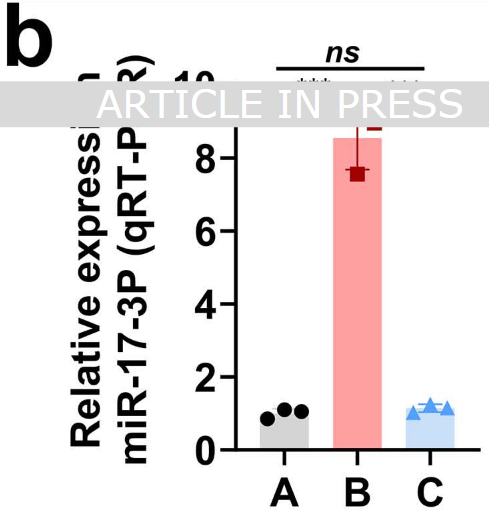 Fig. 2. A: Healthy group; B: ISS group; C: ISS samples after inhibition treatment
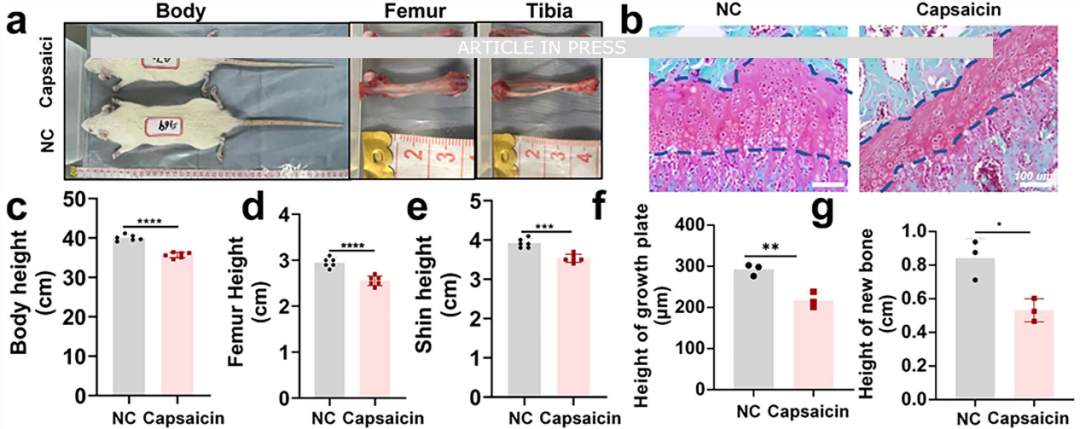 Fig. 3. Animal Experiments
Further experiments confirmed that miR-17-3p is delivered via exosomes to the bone growth plate, where it targets and inhibits the ZNF148/SOS1 signaling axis, in turn affecting RAS/ERK and PI3K/AKT pathway activation and ultimately blocking chondrocyte proliferation and bone formation — thereby inhibiting height growth.
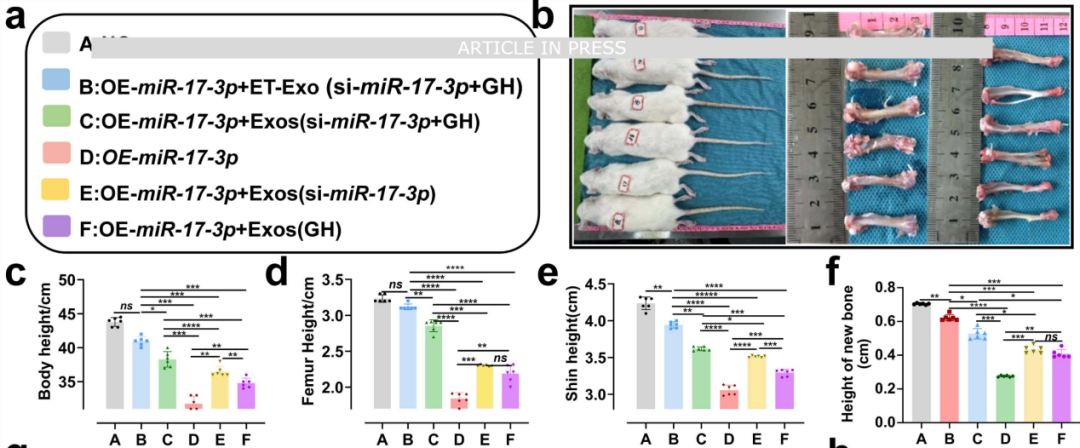 Fig. 4. Animal Experiments
New Therapeutic Direction: Targeted Exosomes Reverse Growth Suppression
Building on this mechanism, the team developed a targeted therapeutic strategy. They engineered exosomes surface-modified with type II collagen peptides, allowing them to specifically target growth-plate cartilage; these exosomes were loaded with miR-17-3p small interfering RNA (siRNA) and growth hormone.
In animal experiments, these engineered exosomes precisely delivered siRNA and growth hormone to growth plates, effectively silencing miR-17-3p expression, restoring chondrocyte proliferation and bone formation, and successfully reversing the capsaicin-induced short-stature phenotype. Compared with conventional growth hormone therapy, this targeted delivery approach not only improved efficacy but also reduced systemic side effects, offering a new strategy for ISS treatment.
Summary: Limitations Exist, but “Too Spicy”Diets Still Warrant Caution
Does eating spicy food inevitably affect height? Not necessarily — the new study does have clear limitations. On the clinical side, samples were concentrated in high-chili-consumption regions without a non-spice-diet control group, and the specific dose and duration of chili intake in patients were not defined, making it hard to establish a precise dose–effect relationship. For ethical reasons, gut tissue samples were not obtained from ISS patients; gut inflammation was inferred indirectly from fecal markers, lacking direct pathological evidence. On the animal side, rats differ from human children in growth cycle and metabolism, and the 28-day short-term intervention cannot mimic the cumulative effects of long-term human diet.
Still, the value of this study should not be understated. It is the first to reveal a novel “diet → gut inflammation → exosome → miRNA → skeletal growth” regulatory axis, providing an important breakthrough for ISS etiology and treatment.
The study also sheds light on why some ISS patients respond poorly to growth hormone: miR-17-3p overexpression reduces growth-plate responsiveness to GH. In the future, measuring plasma exosomal miR-17-3p levels in patients may help predict growth hormone response and inform individualized treatment.
Reference
[1] Wang, Y., Wu, Z., Yuan, J. et al. Capsaicin diet drives gut inflammation and exosomal miR-17-3p elevation in idiopathic short stature. Nat Commun (2025).

