


Introduction
The traditional view holds that weight loss is a prerequisite for glycemic control, but recent evidence-based research suggests that prediabetes can be effectively reversed through metabolic restructuring, even when body weight remains stable [1]. This article systematically reviews the core evidence and intervention pathways for non-weight-loss reversal of prediabetes: Can reversal really be achieved without weight loss? How exactly? Why does it work? Where do we go from here? The aim is to provide new perspectives for individualized, precise prevention and control.
Type 2 diabetes (T2D) has become a major global public health issue, with incidence rising year by year. Approximately 720 million adults worldwide are estimated to have prediabetes, a number projected to reach 1 billion by 2045 [2]. Prediabetes — the reversible transitional stage between normal glycemia and pathological hyperglycemia — represents a critical window for clinical intervention to halt, or even reverse, the development of diabetes.
The Diabetes Prevention Program (DPP) and similar landmark studies established the central role of weight loss in diabetes prevention, with guidelines recommending a 7%–10% weight reduction as a key target. This model, however, has clear limitations: caloric restriction can trigger metabolic adaptation and weight rebound; for normal-weight or even lean individuals with prediabetes, weight loss offers limited benefit and may disrupt metabolic balance.
Recent advances in metabolic medicine have challenged the conventional view, suggesting that the key to improving glucose metabolism may lie in the remodeling of metabolic homeostasis, rather than in weight reduction per se. A 2025 Nature Medicine cohort study, the Prediabetes Lifestyle Intervention Study (PLIS), based on a large clinical dataset, demonstrated that complete remission of prediabetes can be achieved without weight loss. This breakthrough is shifting diabetes prevention from a weight-loss-oriented model toward a multidimensional, metabolically optimized approach [1].
Breaking the “Weight-Loss Only” Paradigm: Evidence from the PLIS Study
Can reversal really be achieved without weight loss? Most current clinical guidelines set 5%–7% weight loss as the core intervention target for prediabetes, on the basis that reducing adiposity alleviates peripheral insulin resistance. The latest systematic review and dose–response meta-analysis further quantified this relationship: the dose–response curve in Figure 1 shows that, in the 1%–9% weight-loss range, the risk ratio for reversion to normoglycemia rises approximately linearly from ~1.0 to ~2.4, with no plateau, suggesting that weight-loss interventions follow a “more is better” linear principle [2].
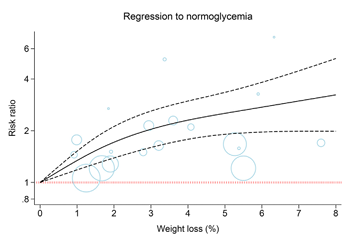
Fig. 1. Dose–Response Relationship Between Percentage Weight Loss and Reversion From Prediabetes to Normoglycemia
However, this weight-loss-centric intervention model has several limitations: in terms of efficacy, caloric restriction can induce metabolic adaptation, leading to long-term weight rebound; in terms of population applicability, the model is not suited to patients with stable weight or a lean build, for whom forced weight loss offers limited benefit and may disrupt metabolic balance; in terms of evaluation, using body weight alone to assess intervention outcomes is too one-dimensional, ignoring key metabolic indicators such as fat distribution, islet function, and chronic inflammation.
The PLIS prospective cohort study, published in 2025 by Sandforth and colleagues in Nature Medicine, is the first to systematically construct an evidence base for non-weight-loss reversal of prediabetes using a large-sample, long-term follow-up dataset, posing a significant challenge to the traditional weight-loss-focused view of glycemic control [1]. The study enrolled 1,105 prediabetes subjects in a 1-year lifestyle intervention, with follow-up extending to up to 10 years. Among the 234 subjects (21.2%) who did not lose weight or even gained weight, 51 (21.8%) achieved complete normalization of glycemic indices, completing metabolic reversal; in long-term follow-up, their T2D risk was reduced by 71% (RR=0.29), essentially equivalent to the benefit seen in those who achieved the standard weight-loss target. These results indicate that weight reduction is not a necessary condition for prediabetes remission or primary diabetes prevention [1].
Further analysis revealed that responders and non-responders had similar weight-change trajectories but differed significantly in fat distribution. As shown in Figure 2, responders (R group) showed a significant increase in subcutaneous adipose tissue (SCAT, P=0.035), a significant increase in the SCAT/VAT ratio (P<0.0001), and a decrease in liver fat content (P=0.031) at 12 months, whereas non-responders (NR group) showed a significant increase in visceral adipose tissue (VAT, P=0.031), a significant decrease in the SCAT/VAT ratio (P<0.0001), and an increase in liver fat content (P=0.74) [1]. This pattern of fat redistribution — benign accumulation of subcutaneous fat and reduction in visceral lipotoxicity — may be a core mechanism for glycemic reversal in the context of weight stability. Responders also showed improved insulin sensitivity, enhanced β-cell function, and stronger responsiveness to the GLP-1 hormone [1].
These findings were validated in an independent U.S. DPP cohort, supporting their robustness and broad applicability [1].
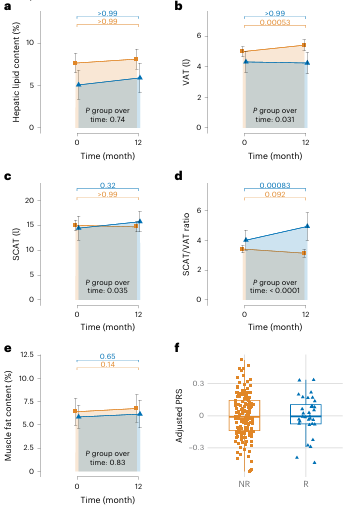 Fig. 2. Body Fat Distribution
Controlling Glucose Without Dieting or Losing Weight: Evidence for Four Pathways
If weight loss is not required, what should be done? Breaking the cognitive barrier is only the first step; the next is to find implementable pathways. In recent years, multiple studies have validated four weight-neutral intervention strategies across different dimensions.
First, on the dietary side. Optimizing dietary composition can independently improve glucose metabolism, without relying on weight change to demonstrate its value. An open-label randomized clinical trial provided direct evidence: the anti-inflammatory diet group achieved significant reductions in fasting blood glucose (β=-6.42, 95% CI -12.9 to -0.06) and HbA1c (β=-0.27, 95% CI -0.55 to -0.007), despite no significant difference in body weight change compared with the control group (P=0.124) [3] (Figure 3). The mechanism may involve suppression of adipose tissue inflammatory infiltration and reduction of oxidative damage to islet β cells — restoring glucose metabolism without weight loss.
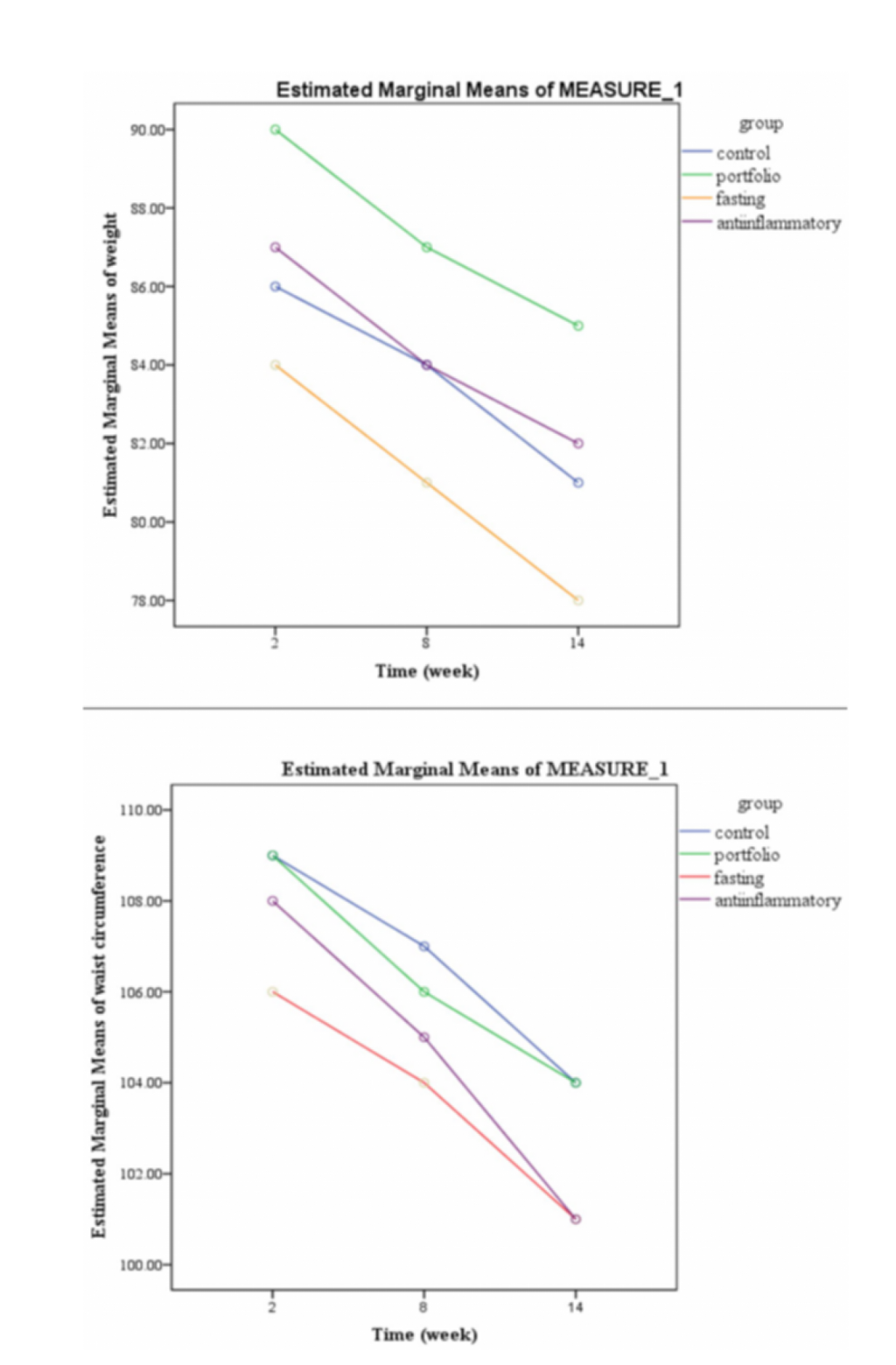 Fig. 3. Trajectories of Body Weight and Fasting Blood Glucose During Intervention in Each Group
Second, on exercise. The core mechanism by which exercise improves glucose control is the alleviation of systemic lipotoxicity through skeletal muscle metabolic reprogramming, a process that does not require weight loss. A systematic review and network meta-analysis showed that, compared with no exercise, low- to moderate-intensity resistance training (RT-L) had the most significant effect in lowering fasting blood glucose (MD=-0.52 mmol/L, 95% CI -0.71 to -0.34); moderate-intensity aerobic exercise (MD=-0.37 mmol/L, 95% CI -0.51 to -0.22) and moderate aerobic combined with RT-L (MD=-0.50 mmol/L, 95% CI -0.79 to -0.22) also produced significant reductions in fasting blood glucose [4] (Figure 4). For HbA1c, moderate-intensity aerobic combined with RT-L showed the most significant effect (MD=-0.54%, 95% CI -0.87 to -0.21); moderate-intensity aerobic exercise (MD=-0.27%, 95% CI -0.35 to -0.18) and RT-L (MD=-0.25%, 95% CI -0.35 to -0.16) were also significantly effective [4] (Figure 5).
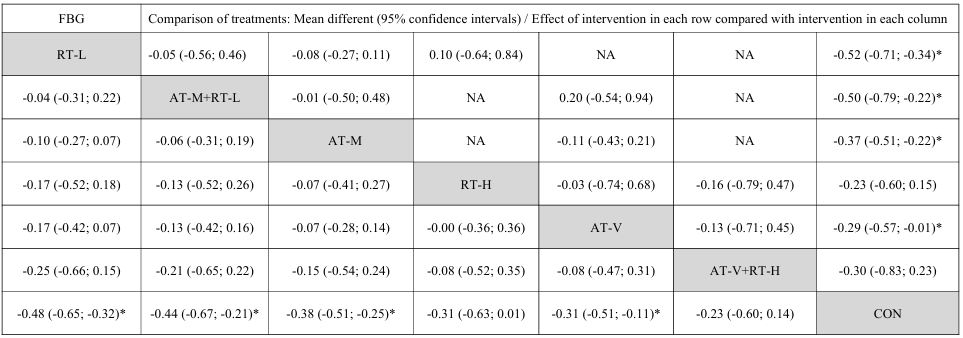 Fig. 4. Pairwise Comparisons From Network Meta-Analysis of the Effect of Different Exercise Modalities on Fasting Blood Glucose (FBG)
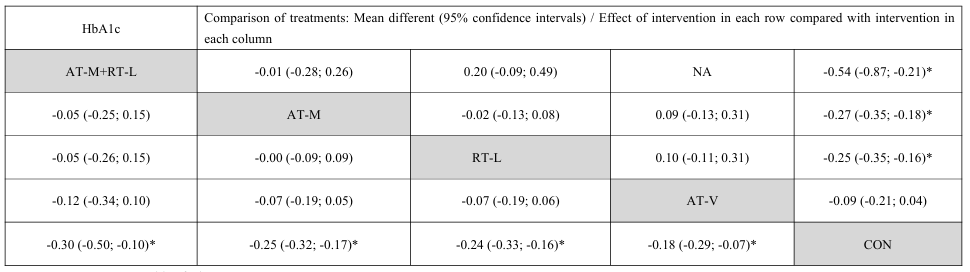 Fig. 5. Pairwise Comparisons From Network Meta-Analysis of the Effect of Different Exercise Modalities on HbA1c
Long-term adherence to resistance training may yield even greater benefits. A randomized controlled trial (RCT) of 248 prediabetes patients showed that, after 2 years of moderate-intensity resistance training, T2D risk was reduced by 58.2%, with a relative risk of 7.84 for reversion to normal glucose tolerance (P=0.008); these benefits did not depend on significant weight loss [5].
Beyond diet and exercise, nutrient supplementation may also help. Vitamin D is one such candidate — it may protect islet function through anti-inflammatory and antioxidant mechanisms, potentially delivering glycemic benefit without weight loss. A meta-analysis of 10 RCTs showed a normoglycemia reversion rate of 18.5% in the vitamin D group versus 14.0% in the placebo group, with a pooled relative risk of 1.27 (95% CI 1.12–1.45) [6]. This suggests that vitamin D supplementation may increase the probability of reversion to normoglycemia.
Finally, on medication. GLP-1 receptor agonists (GLP-1 RAs) are often considered “weight-loss injections,” but their glucose-lowering effect can occur independently of weight loss. A 2025 JAMA Pediatrics systematic review and meta-analysis showed that GLP-1 RAs significantly reduced HbA1c (-0.44%, 95% CI -0.68 to -0.21) and fasting blood glucose (-9.92 mg/dL, 95% CI -16.20 to -3.64) [7]. Although these drugs are currently approved primarily for patients with obesity or T2D, both basic and clinical research suggest that their glycemic and weight-loss effects are mediated by distinct pathways and may be separable.
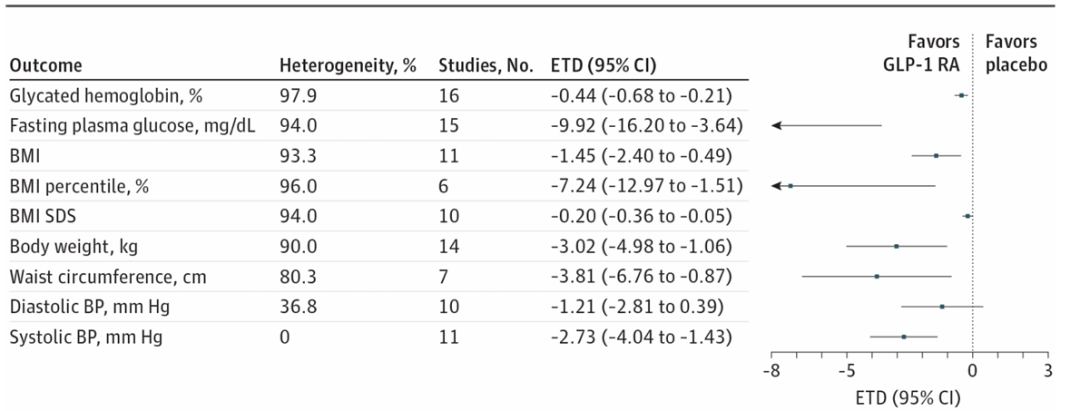 Fig. 6. Forest Plot Summarizing the Efficacy of GLP-1 Receptor Agonists
It should be emphasized, however, that the clinical use of GLP-1 RAs must strictly adhere to existing indications (currently primarily covering patients with BMI ≥25 kg/m²). The purpose of citing this evidence here is to illustrate, from a mechanistic perspective, that glycemic and weight effects can “take separate paths” — not to encourage off-label use in lean or weight-stable prediabetes populations.
How Does Glucose Improve Without Hunger or Weight Loss? The Answer Lies Inside the Body
Four pathways have provided answers. But the deeper question is: when body weight does not fall, how does the body internally achieve repair of glucose metabolism? Existing research reveals the core mechanisms of glycemic repair in the absence of weight loss [1,6]. Glycemic repair without weight loss is not a single-pathway process but a coordinated network of multiple pathways. Metabolic homeostasis reconstruction may repair glucose dysregulation without weight loss through four synergistic pathways:
Optimize the adipose niche. Subjects who achieved prediabetes reversal and those who did not had similar weight changes but strikingly different fat distribution: the reversal group gained subcutaneous fat (metabolically protective), while the non-reversal group gained visceral fat (metabolically harmful) [1].
β-cell repair. The reversal group showed improved insulin sensitivity, enhanced β-cell function, and stronger responsiveness to the GLP-1 hormone [1].
Peripheral metabolic remodeling. Resistance training may optimize skeletal muscle lipid composition and improve insulin sensitivity. A 2-year resistance training RCT reported that resistance training can reduce T2D risk by 58.2% and increase the relative risk of reversion to normal glucose tolerance by 7.84-fold [5].
Alleviate chronic inflammation. An anti-inflammatory diet may suppress adipose tissue inflammatory infiltration, reduce oxidative damage to islet β cells, and lower fasting blood glucose and HbA1c [3].
Ultimately, mechanistic understanding must return to the clinic. How to translate these findings to more patients is the next question to be answered. The current evidence is driving an update in the concept of diabetes prevention, shifting the intervention model from a “weight-loss-oriented” approach toward “metabolic precision regulation” [1]. Weight-neutral interventions may complement the traditional weight-loss paradigm and may be suited to patients with poor weight-loss adherence, weight rebound, lean build, high muscle mass, or normal-weight metabolically obese individuals.
However, current research in this field has certain limitations: the PLIS study is a post-hoc analysis with a limited sample size; optimal intervention protocols and therapeutic targets for different populations are not yet defined; long-term follow-up data for some interventions still require further validation.
Future studies should include large-sample, long-term, multicenter RCTs to refine individualized intervention strategies. In summary, current research suggests that weight loss is not a necessary condition for prediabetes remission or diabetes prevention, and multidimensional metabolic restructuring may help block the progression of glucose dysregulation, providing a new theoretical and practical direction for the primary prevention of T2D [1].
References
[1] Sandforth A, Arreola E V, Hanson R L, et al. Prevention of type 2 diabetes through prediabetes remission without weight loss. Nature Medicine. 2025;31:3330-3340.
[2] Jayedi A, Soltani S, Emadi A, et al. Efficacy of lifestyle weight loss interventions on regression to normoglycemia and progression to type 2 diabetes in individuals with prediabetes: a systematic review and pairwise and dose-response meta-analyses. The American Journal of Clinical Nutrition. 2024;120(5):1043-1052.
[3] Pasdar Y, Saber A, Rezvani N, et al. Effect of intermittent fasting, portfolio-moderate-carbohydrate, and anti-inflammatory diets on cardio-metabolic status in pre-diabetic patients: an open-label randomized clinical trial. Diabetology & Metabolic Syndrome. 2025;17:319.
[4] Zhang H, Guo Y, Hua G, et al. Exercise training modalities in prediabetes: a systematic review and network meta-analysis. Frontiers in Endocrinology. 2024;15:1308959.
[5] Lou Q. Two years moderate resistance training prevents type 2 diabetes but does not reduce cardiovascular risk for patients with prediabetes. Diabetes. 2019;68(Supplement_1):736-P.
[6] Kretschmer P, Balk E, Pittas A G. The effect of vitamin D on regression to normal glucose regulation in adults with prediabetes: a systematic review and meta-analysis. Journal of the Endocrine Society. 2024;8(Supplement_1):bvae163.2356.
[7] Kotecha P, Huang W, Yeh Y Y, et al. Efficacy and safety of GLP-1 RAs in children and adolescents with obesity or type 2 diabetes: a systematic review and meta-analysis. JAMA Pediatrics. 2025;179(12):1308-1317.

