


Lung cancer management is shifting from late-stage diagnosis toward an early-stage, potentially curable phase. A review by Academician Jie He and colleagues at the Cancer Hospital of the Chinese Academy of Medical Sciences, published in CA: A Cancer Journal for Clinicians, examines current gaps in early-stage non-small cell lung cancer (NSCLC) care: lagging TNM staging, ambiguous management of ground-glass opacities (GGOs), and coexisting over- and undertreatment [1].
The authors propose a “risk-adaptive” precision management paradigm that combines anatomic features, multi-omics data, and artificial intelligence (AI) to escalate treatment in high-risk patients and de-escalate it in low-risk patients.
Article Key Points
- 2022 global lung cancer burden: 2.48 million new cases and 1.82 million deaths; China accounts for over 40%
- Ninth-edition TNM subdivides N2 into N2a (single station) and N2b (multi-station); T1N1 moved to stage IIA
- US localized-stage diagnosis rose from 17% (2004) to 28% (2018); some Chinese centers report stage I rates above 60%
- Lung squamous carcinoma: TP53, KRAS, KEAP1, STK11 drivers; adenocarcinoma: AAH to AIS to MIA to invasive sequence
- 2025 Chinese studies support CT surveillance for low-risk GGO subtypes rather than routine surgery
- LDCT screening reduces mortality in high-risk populations; US threshold lowered to 20 pack-years in 2023
- JCOG0802: segmentectomy CSS noninferior, but local recurrence 12% vs 5% with lobectomy
- JCOG0804: sublobar resection for GGO-dominant nodules 2 cm or smaller achieved 99.7% recurrence-free survival
- Evidence status: narrative review in a high-impact journal; individual data points derive from varied study designs
Global Lung Cancer Burden and the Ambiguity of GGO Management
In 2022, approximately 2.48 million new lung cancer cases and 1.82 million deaths were reported worldwide. China accounted for more than 40% of new cases globally. Because screening has become more widely available, lung cancer is now diagnosed at earlier stages, and the proportion of early-stage lesions continues to rise.
Fig. 1. Screenshot of the Original Review in CA: A Cancer Journal for Clinicians
The ninth edition of the TNM staging system for lung cancer, currently used in clinical practice, made several updates. N2 lymph node involvement is now subdivided into N2a (single-station) and N2b (multi-station). Some stages were downstaged: T1N1 moved from stage IIB to stage IIA, and T1N2a moved from stage IIIA to stage IIB, aligning stage assignment more closely with clinical prognosis.
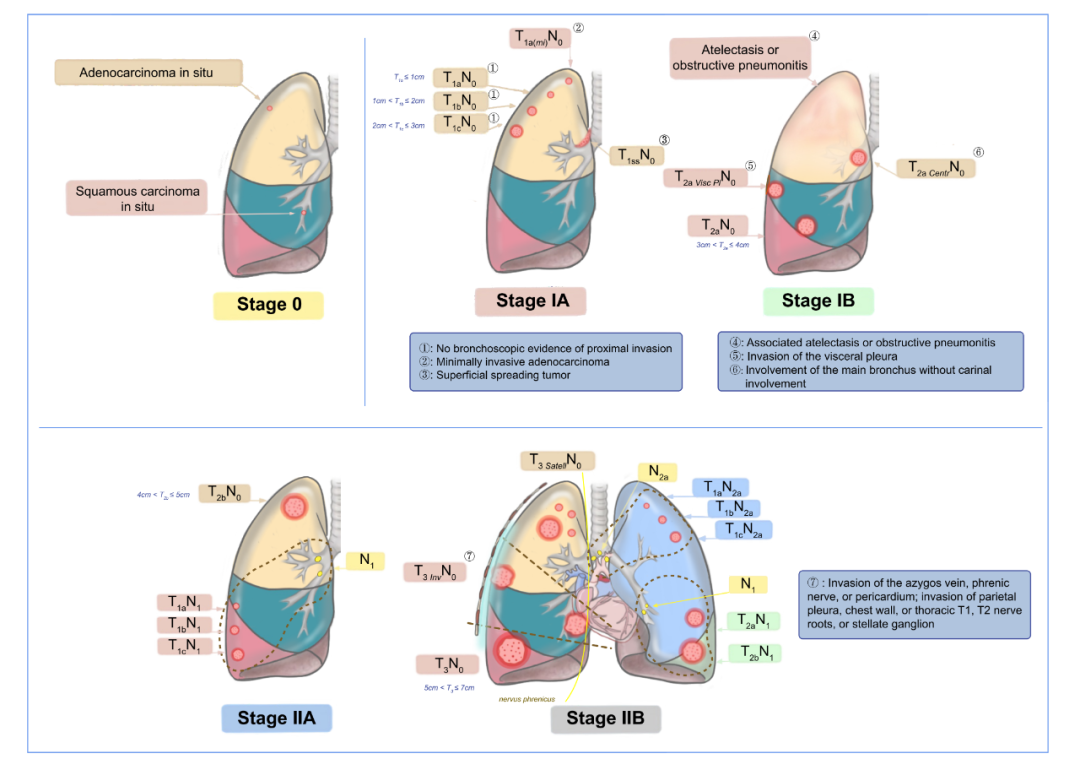
Fig. 2. Schematic of the Ninth-edition AJCC Lung Cancer Staging System
Real-world data indicate that early detection has improved substantially. In the United States, the proportion of patients diagnosed with localized early-stage lung cancer rose from 17% in 2004 to 28% in 2018. Progress in China has been more marked: with AI-assisted diagnostic tools, stage I diagnosis rates at some advanced centers have exceeded 60%, improving prospects for curative treatment.
The central clinical gap remains unresolved, most notably in GGO management. Historically, GGO lesions were often treated with aggressive surgical intervention. In 2025, three Chinese studies provided evidence that low-risk GGO subtypes display indolent malignant behavior and that regular CT surveillance is safe and appropriate, without the need for excessive surgery.
TNM staging relies solely on tumor anatomy, size, and nodal status. It does not capture driver mutations or the immune microenvironment, making it difficult to distinguish invasive behavior from recurrence risk. This is a core limitation of the standardized approach and the gap the proposed risk-stratification framework is intended to address.
Two Major Subtypes Follow Distinct Molecular and Immunologic Evolution
Lung adenocarcinoma and lung squamous carcinoma are the two core NSCLC subtypes. Their pathogenesis, molecular evolution, and immune microenvironment differ substantially, which directly shapes treatment differences and underlies individualized therapy.
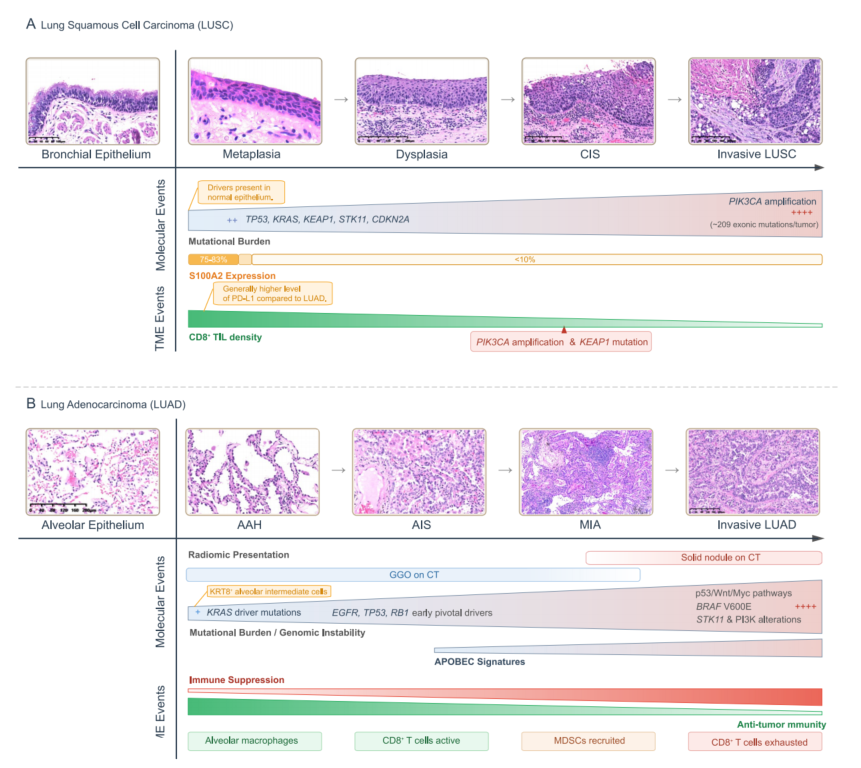
Fig.3. Pathogenesis and Molecular Evolution of the Two NSCLC Subtypes
In lung squamous carcinoma, carcinogenesis is highly dependent on smoking exposure and follows a stepwise course: bronchial epithelium, squamous metaplasia, dysplasia, carcinoma in situ, and invasive squamous carcinoma. TP53, KRAS, KEAP1, and STK11 driver mutations can already be detected in normal-appearing bronchial epithelium before morphologic changes. As the tumor progresses, molecular abnormalities such as PIK3CA amplification emerge, accompanied by declining CD8+ T cell infiltration and suppressed antitumor immunity.
Lung adenocarcinoma more often presents as a GGO and follows a defined sequence: atypical adenomatous hyperplasia (AAH), adenocarcinoma in situ (AIS), minimally invasive adenocarcinoma (MIA), and invasive adenocarcinoma. Core drivers including KRAS, EGFR, TP53, and RB1 can appear early in carcinogenesis, while later-emerging APOBEC mutation signatures are important molecular markers of high postoperative recurrence risk.
The immune microenvironment in adenocarcinoma also evolves dynamically. At the pure GGO stage, the lesion is immunologically active, with alveolar macrophages and CD8+ effector T cells functioning normally. As the lesion progresses and solid components increase, myeloid suppressor cells are recruited in bulk and CD8+ T cells become exhausted, shifting the tumor microenvironment to an immunosuppressive state. This dynamic explains why GGO lesions and solid nodules differ in their response to immune checkpoint inhibitors.
LDCT Screening: Proven Benefit, Unsettled Implementation
Large randomized trials including NLST, NELSON, and ITALUNG have confirmed that low-dose computed tomography (LDCT) screening significantly reduces mortality in high-risk populations, establishing it as a core tool for early lung cancer control. Screening guidelines have continued to evolve on this evidence base.
The 2023 American Cancer Society guideline substantially widened eligibility, lowering the smoking threshold from 30 pack-years to 20 pack-years and removing the requirement for a specified interval since quitting.
Asian populations differ from Western populations: lung cancer is more frequent among never-smokers, and EGFR mutation rates are higher. Asian guidelines therefore moved away from a smoking-history-only criterion toward age-stratified screening for ages 50 to 75 combined with individualized risk assessment.
China’s screening system combines AI-assisted diagnosis with nodule assessment algorithms, improving screening precision. Implementation gaps remain. Adherence is a shared weakness: in US data, only 22.3% of those completing an initial screen returned for repeat screening within 11 to 15 months, and 24-month adherence reached only 34.3%. Screening in never-smokers remains disputed. TALENT reported a detection rate of only 2.6% for LDCT screening in high-risk never-smokers, with substantial overdiagnosis risk, and population screening for average-risk never-smokers is not recommended.
Surgical Paradigms Have Shifted Toward Risk-Adapted Resection
Early-stage NSCLC surgery has moved away from a single uniform approach. Long-term follow-up from several phase 3 trials has supported tumor-feature-based stratification and individualized resection.
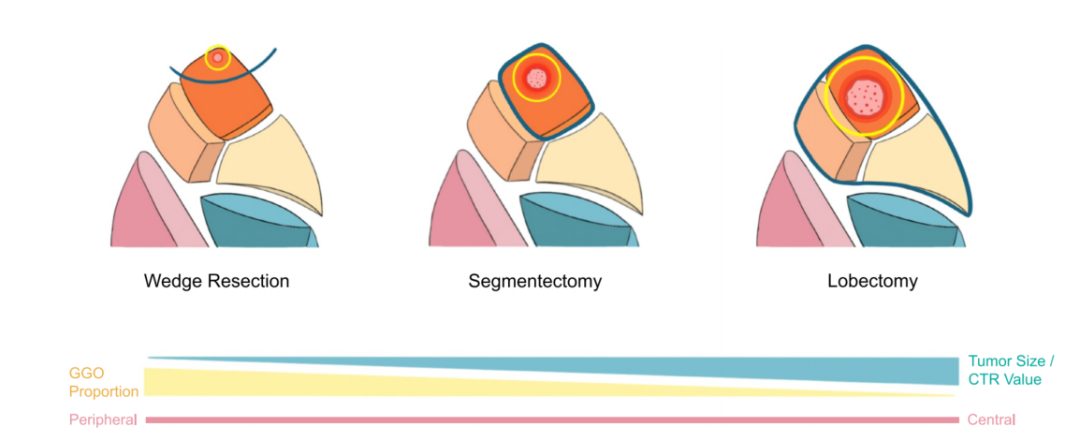
Fig.4. Surgical Resection Strategies for Stage IA Peripheral NSCLC
Ten-year follow-up of JCOG0802 showed that for peripheral stage IA NSCLC with diameter of 2 cm or smaller and solid component of at least 50%, segmentectomy and lobectomy did not differ significantly in cancer-specific survival. Local recurrence after segmentectomy was 12%, significantly higher than the 5% observed with lobectomy. For these solid-predominant early tumors, lobectomy remains the standard for curative intent and offers the lowest local recurrence risk.
For low-risk indolent lesions, sublobar resection has been validated. CALGB 140503 showed that for peripheral T1aN0 tumors of 2 cm or smaller, sublobar resection was not inferior to lobectomy in long-term outcomes. JCOG0804 reported a recurrence-free survival of 99.7% after sublobar resection in GGO-dominant nodules of 2 cm or smaller, making it the preferred approach for this lesion type.
Minimally invasive techniques have largely replaced thoracotomy. The VIOLET trial showed that video-assisted thoracic surgery (VATS) is oncologically equivalent to thoracotomy, with less postoperative pain, shorter hospital stay, and improved quality of life. Robotic-assisted thoracic surgery (RATS) is comparable to VATS and adapts to complex operative scenarios.
Lymph node evaluation has also been refined. Standard radical resection requires assessment of at least six nodal stations, including three mediastinal stations. For predominantly GGO lesions with very low invasive risk, mediastinal systematic lymph node dissection may be omitted at the operator’s discretion, reducing surgical trauma.
Table 1. Key randomized controlled trials of systemic therapy in early-stage NSCLC
|
Study Name |
Strategy |
Inclusion Criteria & Design |
Treatment Regimen |
Key Results |
|
Chemotherapy |
||||
|
IALT: Arriagada 2004, 2010 |
Adjuvant |
Stage I-III: Cisplatin-based doublet (3 or 4 cycles) vs Observation |
Cisplatin Doublet |
OS: HR 0.91 (95% CI 0.81-1.02); DFS: HR 0.88 (95% CI 0.78-0.98); Benefit reversed after 5 years: HR 0.86 vs 1.45 |
|
JBR-10: Winton 2005, Butts 2010 |
Adjuvant |
Stage IB-II: Vinorelbine + Cisplatin (4 cycles) vs Observation |
Vinorelbine + Cisplatin |
OS: HR 0.78 (95% CI 0.61-0.99); 5y OS: 69% vs 54%; Benefit mainly in N1 patients; No benefit in N0 (Stage IB) |
|
ANITA (ISRCTN95053737) |
Adjuvant |
Stage IB-IIIA: Vinorelbine + Cisplatin (4 cycles) vs Observation |
Vinorelbine + Cisplatin |
OS: HR 0.80 (95% CI 0.66-0.96); 5y OS: II/IIIA benefit 8.6%, Stage IB no benefit |
|
CALGB 9633: Strauss 2008 |
Adjuvant |
Stage IB: Paclitaxel + Carboplatin (4 cycles) vs Observation |
Paclitaxel + Carboplatin |
OS: HR 0.83 (95% CI 0.64-1.08); Tumor >=4 cm subgroup: OS HR 0.69 (95% CI 0.48-0.99) |
|
Immunotherapy |
||||
|
CheckMate 816 (NCT02998528) |
Neoadjuvant |
Stage IB (>=4 cm) to IIIA; Exclude EGFR/ALK; Nivolumab + Platinum chemo (3 cycles) vs Platinum doublet chemo |
Nivolumab (PD-1) |
EFS: HR 0.63 (97.38% CI 0.43-0.91); pCR: 24.0% vs 2.2%; OS: HR 0.72 (95% CI 0.52-1.00) |
|
KEYNOTE-671 (NCT03425643) |
Perioperative (Triplet) |
Stage II-IIIb (N2); Includes EGFR/ALK; Neoadjuvant: Pembrolizumab + Platinum chemo (4 cycles); Adjuvant: Pembrolizumab (<=13 cycles) |
Pembrolizumab (PD-1) |
EFS: HR 0.59 (95% CI 0.48-0.72); MPR: 30.2% vs 11.0%; OS: HR 0.72 (95% CI 0.56-0.93) |
|
AEGEAN (NCT03800134) |
Perioperative (Triplet) |
Stage II-IIIb (N2); Exclude EGFR/ALK; Neoadjuvant: Durvalumab + Platinum chemo (4 cycles); Adjuvant: Durvalumab q4w (12 cycles) |
Durvalumab (PD-L1) |
EFS: HR 0.68 (95% CI 0.53-0.88); pCR: 17.2% vs 4.3%; 24-mo EFS: 63.3% vs 52.4% |
|
Neotorch (NCT04158440) |
Perioperative (Triplet) |
Stage II-III; Exclude EGFR/ALK; Neoadjuvant: Toripalimab + Platinum chemo (3 cycles); Adjuvant: Toripalimab + Chemo (1 cycle) -> Toripalimab (13 cycles) |
Toripalimab (PD-1) |
EFS: HR 0.40 (95% CI 0.28-0.57); MPR: 48.5% vs 8.4%; Median EFS not reached |
|
CheckMate 77T (NCT04025879) |
Perioperative (Triplet) |
Stage II-IIIb; Exclude EGFR/ALK; Neoadjuvant: Nivolumab + Platinum chemo (4 cycles); Adjuvant: Nivolumab q4w (1 year) |
Nivolumab (PD-1) |
EFS: HR 0.58 (95% CI 0.42-0.81); pCR: 25.3% vs 4.7%; 18-mo EFS: 70.2% vs 50.0% |
|
RATIONALE-315 (NCT04379635) |
Perioperative (Triplet) |
Stage II-IIIA; Exclude EGFR/ALK; Neoadjuvant: Tislelizumab + Platinum chemo (3 or 4 cycles); Adjuvant: Tislelizumab (max 8 cycles) |
Tislelizumab (PD-1) |
EFS: HR 0.56 (95% CI 0.40-0.79); MPR: 56.2% vs 15.0%; OS: HR 0.65 (95% CI 0.45-0.93) |
|
IMpower010 (NCT02486718) |
Adjuvant |
Stage IB (>=4 cm) to IIIA; Includes EGFR/ALK; Atezolizumab (16 cycles) vs Observation after platinum-based chemo |
Atezolizumab (PD-L1) |
Stage II-IIIA DFS: HR 0.83 (95% CI 0.69-1.00); PD-L1>=1% DFS: HR 0.70 (95% CI 0.55-0.91); PD-L1>=50% DFS: HR 0.49; OS: HR 0.44 |
|
KEYNOTE-091 / PEARLS (NCT02504372) |
Adjuvant |
Stage IB (>=4 cm) to IIIA; Includes EGFR/ALK; Pembrolizumab (18 cycles) vs Placebo after chemo |
Pembrolizumab (PD-1) |
DFS: HR 0.76 (95% CI 0.63-0.91); PD-L1>=50% subgroup DFS: HR 0.82 (95% CI 0.58-1.14) |
|
Targeted Therapy |
||||
|
NeoADAURA (NCT04351555) |
Neoadjuvant |
Stage II-IIIb; EGFR+ (Ex19del/L858R); Arm A: Osimertinib + Chemo; Arm B: Osimertinib alone; Arm C: Placebo + Chemo (9 weeks) |
Osimertinib (EGFR) |
MPR: 26% (Arm A) vs 25% (Arm B) vs 2% (Arm C); EFS/DFS data still maturing |
|
CTONG1104 (NCT01405079) |
Adjuvant |
Stage II-IIIA; EGFR+ (Ex19del/L858R); Gefitinib (2 years) vs Cisplatin + Vinorelbine (4 cycles) |
Gefitinib (EGFR) |
DFS: HR 0.60 (95% CI 0.42-0.87); OS: HR 0.92 (95% CI 0.62-1.36) |
|
ADAURA (NCT02511106) |
Adjuvant |
Stage II-IIIA; EGFR+ (Ex19del/L858R); Osimertinib (3 years) vs Placebo |
Osimertinib (EGFR) |
DFS: HR 0.27 (95% CI 0.21-0.34); OS: HR 0.49 (95% CI 0.34-0.69); 5y OS: 88% vs 78% |
|
EVIDENCE (NCT02448797) |
Adjuvant |
Stage II-IIIA; EGFR+ (Ex19del/L858R); Erlotinib (2 years) vs Platinum-based chemo (4 cycles) |
Erlotinib (EGFR) |
DFS: HR 0.36 (95% CI 0.24-0.55); 36-mo DFS: 63.9% vs 32.5%; OS data still maturing |
|
ARTS (NCT04687241) |
Adjuvant |
Stage II-IIIb (N2); EGFR+ (Ex19del/L858R); Almonertinib (3 years) vs Placebo |
Almonertinib (EGFR) |
DFS: HR 0.17 (95% CI 0.09-0.29); Median DFS not reached |
|
ALINA (NCT03456076) |
Adjuvant |
Stage IB-IIIA; ALK+; Alectinib (2 years) vs Chemo (4 cycles) |
Alectinib (ALK) |
DFS: HR 0.24 (95% CI 0.13-0.43); 24-mo DFS: 93.8% vs 63.0%; CNS DFS: HR 0.22 (95% CI 0.08-0.58) |
Summary of the Proposed Paradigm
The central tension in early-stage NSCLC care is clear: an anatomy-based standardized framework cannot accommodate molecular heterogeneity, immune microenvironment differences, or individual risk profiles. Ambiguous GGO management, lagging staging, and coexisting over- and undertreatment persist.
The review addresses these gaps with a risk-adaptive precision management paradigm that integrates anatomic features, multi-omics molecular data, AI-based analysis, and clinical risk factors to stratify each patient individually, escalating treatment for those at high risk of invasion or recurrence and de-escalating it for those at low risk:
- For patients with high invasive or recurrence risk, perioperative targeted or immune therapy and intensive surveillance are used to control recurrence.
- For patients with indolent low-risk GGO, surgery is simplified and unnecessary chemoradiotherapy is omitted, avoiding treatment-related harm.
- AI-based diagnosis and remote monitoring are used to narrow regional disparities in care access.
As multi-omics testing, AI-based interpretation, and dynamic noninvasive monitoring become more widely implemented, the authors suggest early-stage NSCLC may be managed in an individualized and precise way throughout the disease course.
References
[1]Zhang C, Gu X, Wang P, et al. Early stage nonsmall cell lung cancer: Toward a risk-adaptive paradigm in the era of biologic precision. CA: A Cancer Journal for Clinicians. 2026. DOI: 10.3322/caac.70100.

