


As survival continues to extend for patients with ALK-positive advanced non-small cell lung cancer (NSCLC), the long-term safety management of targeted therapy has become an increasingly prominent clinical concern. Balancing efficacy with safety while preserving quality of life and treatment adherence now represents a critical challenge in clinical practice.
At the 2026 American Society of Clinical Oncology (ASCO) Annual Meeting, the phase III CROWN study presented its 7-year follow-up update (Abstract #8502). The results showed that median progression-free survival (PFS) with first-line lorlatinib remains unreached, with a 7-year PFS rate of 55% [1]. This efficacy milestone sets a new PFS record for targeted therapy in advanced solid tumors. As treatment duration lengthens, adverse event (AE) management becomes essential for sustaining continuous treatment. The 7-year data confirm that lorlatinib’s safety profile remains stable, with a predictable AE spectrum that can be effectively managed through scientific dose adjustment. On this occasion, MedJ Oncology invited Prof. Xia Song of Shanxi Provincial Cancer Hospital to provide an in-depth analysis of lorlatinib dose adjustment and long-term safety management.
Seven-Year Follow-Up Confirms Breakthrough: Over Half of Patients Remain Progression-Free at 7 Years
The release of CROWN’s 7-year follow-up data brings greater clarity to the long-term survival landscape of ALK-positive advanced NSCLC. The data show that median PFS remains unreached, already exceeding 84 months, with a 7-year PFS rate of 55% [1]. In other words, more than half of treatment-naïve patients receiving first-line lorlatinib have not experienced disease progression within 7 years. Even more notably, among patients who remained free of PFS events at the 2-year landmark, 79% were still progression-free at year 7. This reveals an important clinical insight: patients who successfully navigate the first two years of treatment enter a long-term stable phase, after which the risk of subsequent disease progression declines markedly. A mixture-cure model based on the 5-year data previously predicted that first-line lorlatinib could achieve an mPFS approaching 10 years [2]. The 84+ months demonstrated by the 7-year data are progressively validating this prediction, bringing "clinical cure" closer to reality.
Macrocyclic Amide Structure as the Driver of Therapeutic Breakthrough
Lorlatinib’s ability to push PFS to an unprecedented 7 years is rooted in its unique macrocyclic amide structure. Unlike the linear molecular architecture of first- and second-generation ALK tyrosine kinase inhibitors (TKIs), the macrocyclic ring "locks" the molecule into a compact cyclic conformation, endowing lorlatinib with three key properties — facile CNS penetration, broad mutational coverage, and potent kinase inhibition. These properties act synergistically and translate clinically into three capabilities: preventing brain metastases, preventing on-target ALK resistance, and achieving sustained deep response.
Proactive prevention of brain metastases: The macrocyclic amide group optimizes lipophilicity, and with a molecular weight of only 406 Da — below the 450 Da threshold for CNS drug design — lorlatinib possesses the fundamental prerequisites for crossing the blood-brain barrier (BBB), achieving a BBB penetration rate of up to 96% [3,4]. More importantly, the macrocyclic structure renders it a poor substrate for P-glycoprotein (P-gp) and breast cancer resistance protein (BCRP), with an efflux ratio of only 1.5, well below the 2.5 alert threshold [4]. This means lorlatinib is not actively "pumped out" by the efflux transporters at the BBB and can therefore maintain effective concentrations in the CNS. In the CROWN 7-year follow-up, the ITT population achieved a 7-year intracranial progression-free rate of 92% [1]. Results in the Asian population were even more striking — the 5-year follow-up had already shown a cumulative incidence of new brain metastases of 0% among Asian patients without baseline brain metastases [5]. In the latest 7-year follow-up, no new intracranial progression events were observed in the lorlatinib arm beyond 30 months of treatment. This means that the goal of "zero brain metastases at 7 years" is becoming a reality for Asian patients without baseline brain metastases.
Prevention of on-target ALK resistance: Owing to its steric tolerance conferred by the macrocyclic structure, lorlatinib is minimally affected by steric hindrance and can effectively cover the vast majority of known ALK resistance mutations, including G1269A and G1202R, with a broader anti-ALK mutation spectrum [6]. ctDNA analysis from the 7-year CROWN follow-up detected no de novo secondary resistance mutations within the ALK kinase domain — an incidence of 0% — following first-line lorlatinib. The absence of on-target resistance means that patients are spared the risk of cumulative toxicity from sequential therapies and avoid the prognostic deterioration associated with compound mutations that accumulate during sequential treatment.
Sustained deep response: The lorlatinib macrocyclic amide structure fits almost entirely into the ATP-binding pocket, delivering superior binding depth and stability, with a half-maximal inhibitory concentration (IC50) below 0.07 nM [6] — compared with first- and second-generation agents whose IC50 values are typically ≥ 0.2 nM, representing roughly an order-of-magnitude improvement in inhibitory potency — and near-complete coverage of ALK secondary resistance mutations, including refractory mutations such as G1202R. A post hoc analysis of depth of response from the 5-year follow-up showed that 80% of patients achieved > 50% reduction in target lesion size, with 34% achieving > 75% reduction [7]. The 7-year follow-up data demonstrated an objective response rate (ORR) of 81%, with median duration of response (DoR) still unreached, exceeding 84 months. The "low tumor burden" state achieved through deep response is precisely one of the key drivers enabling lorlatinib to achieve such prolonged disease suppression and ultra-long PFS. These three properties — facile CNS penetration, broad mutational coverage, and potent inhibition — are interlinked and mutually reinforcing. Together, they translate into quantifiable clinical benefits in preventing brain metastases, preventing on-target ALK resistance, and sustaining deep response, while also providing a molecular explanation for lorlatinib's stable and predictable safety profile during long-term treatment, and creating an ample management window for scientific dose adjustment.
Proactive Management and Scientific Adjustment — Building Confidence in Long-Term Therapy
Sustained benefit from long-term therapy is inseparable from effective AE management. In the CROWN 7-year follow-up, the rate of permanent discontinuation due to treatment-related adverse events (TRAEs) was only 5%, and all such events occurred within the first 26 months of treatment, with no additional cases thereafter [1]. This indicates that the vast majority of AEs can be managed through standardized protocols without requiring treatment termination. Lorlatinib’s AE spectrum is well-defined and temporally predictable: the median times to onset of hyperlipidemia, edema, and cognitive effects were 15 days, 42 days, and 155 days, respectively [8].
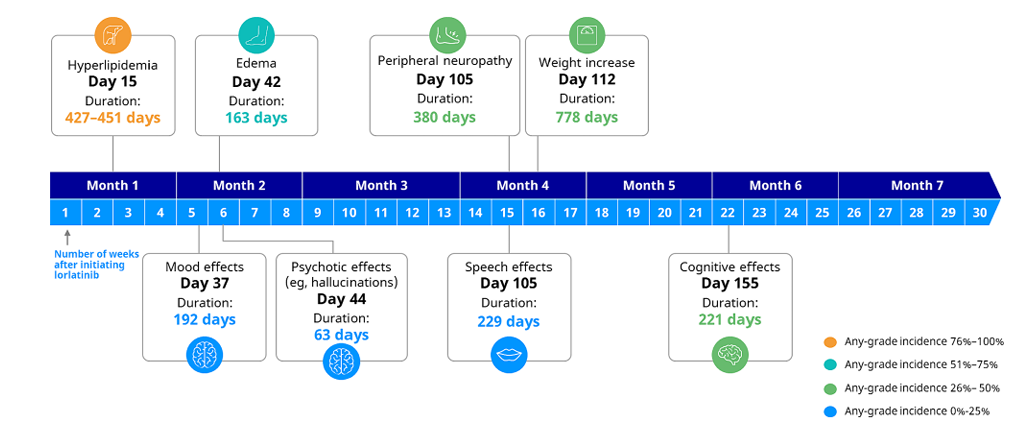
Fig. 1. Timeline of Typical Onset for Common Lorlatinib Adverse Events
The global CROWN data have established the predictability and manageability of lorlatinib AEs, a conclusion that has been corroborated in the Chinese population. A nationwide multicenter retrospective real-world study (n = 120) showed that hyperlipidemia was predominantly grade 1–2, with grade 1–2 hypertriglyceridemia accounting for 80.7% [9], effectively manageable through routine lipid monitoring and lipid-lowering therapy. Furthermore, a study led by Prof. Junling Li’s team (n = 79) reported no cases of interstitial lung disease (ILD), and cognitive effects were mostly non-disruptive to daily life and self-resolving [10]. These real-world data further solidify the evidence base for lorlatinib’s predictable and manageable safety profile in Chinese patients.
Within the AE management framework, dose adjustment is an important tool and a clinical reality that cannot be avoided in the long-term management of targeted therapy. Conventionally, dose reduction of targeted agents is often perceived as a signal of compromised efficacy. However, the 7-year CROWN data present the opposite conclusion: approximately 34% of patients required dose adjustment for AE management, with a median time to dose adjustment of 25 weeks [1]. A landmark analysis using a 26-week cutoff showed that patients who underwent dose reduction before 26 weeks and those who remained on the starting dose both achieved median PFS that remained unreached — neither group had reached the median endpoint. Cox multivariable analysis further confirmed that no differences in PFS or time to intracranial progression (IC-TTP) were observed across the 100 mg, 75 mg, and 50 mg dose levels. Regardless of whether patients maintained the starting dose or were down-titrated to 75 mg or even 50 mg due to AEs, the long-term efficacy of lorlatinib remained consistent. This means that, under scientific guidance, dose adjustment does not compromise lorlatinib’s long-term efficacy.
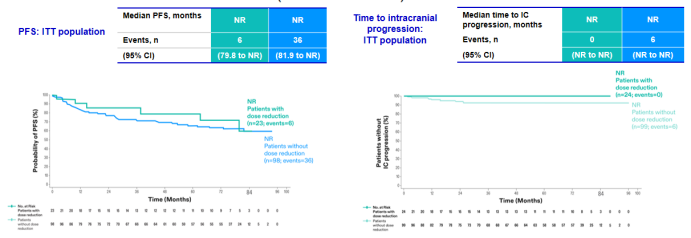
Fig. 2. Impact of Lorlatinib Dose Adjustment Within 26 Weeks on Efficacy (Investigator Assessment)
The safety management guidelines provide a clear operational framework for lorlatinib dose adjustment: Prepare, Monitor, Manage, and Reassess [8]. Baseline evaluation identifies risk factors; regular monitoring tracks key indicators during treatment; early intervention on emerging AEs (lipid-lowering therapy, concomitant medication, dose adjustment) is implemented; and periodic reassessment confirms the effectiveness of management. This paradigm shifts the approach from reactive to proactive, providing systematic safeguards for patients to remain on long-term treatment.

Fig. 3. General Management Flow for Lorlatinib AEs: Prepare, Monitor, Manage, Reassess
The evidence above demonstrates that lorlatinib AEs are manageable and controllable during long-term therapy, and that scientifically guided dose adjustment does not compromise long-term efficacy. This provides a reliable basis for flexibly tailoring dosing regimens according to individual patient tolerance in clinical practice. In the first-line treatment decision-making for ALK-positive advanced NSCLC, what lorlatinib delivers is not merely ultra-long PFS, but the dual assurance — validated through 7 years of follow-up — that efficacy and safety can be achieved together.
Conclusion
The 7-year follow-up data for lorlatinib not only set a new efficacy benchmark but also confirmed that AEs can be effectively managed through scientific dose adjustment without compromising long-term outcomes, providing a clear practical roadmap for long-term treatment management. Clinicians can individualize the dosing regimen based on patient tolerance, preserving treatment continuity while safeguarding efficacy. For the first-line treatment of ALK-positive advanced NSCLC, this means that ultra-long PFS is no longer merely a statistical endpoint — it is a real and attainable benefit for every patient. When AEs are effectively controlled through scientific management, and individualized adjustments allow patients to both tolerate and benefit from continuing therapy, advanced lung cancer ceases to be an endpoint and becomes a manageable long-term condition. The journey from prolonged survival to clinical cure is now becoming a reality.
Expert Profile

Prof. Xia Song
· Department of Respiratory Medicine, Shanxi Provincial Cancer Hospital; Chief Physician; Master’s Supervisor
· Vice Chair, Tumor Chemotherapy Committee, China Medicine Education Association (CMEA)
· Director, Shanxi COE Center, Lung Cancer Committee, CMEA
· Standing Committee Member, Tumor & Microbiome Committee, Chinese Geriatric Oncology Society (CGOS)
· Committee Member, Medical Oncology Expert Committee, Chinese Medical Association (CMA)
· Committee Member, Non-Small Cell Lung Cancer Expert Committee, Chinese Society of Clinical Oncology (CSCO)
· Committee Member, Thoracic Oncology Section & Medical Oncology Section, China International Exchange and Promotive Association for Medical and Health Care (CPAM)
· Vice Chair, Lung Cancer Committee, Immunotherapy Committee & Adverse Drug Reactions Committee, Beijing Cancer Prevention and Treatment Research Association
· Chair, Thoracic Oncology Committee, Shanxi Geriatrics Society
· Executive Board Member, Shanxi Geriatrics Society & Shanxi Anti-Cancer Association; Board Member, Shanxi Medical Association
· Vice Chair, Lung Cancer Committee, Tumor Metastasis Committee & Targeted Therapy Committee, Shanxi Anti-Cancer Association
· Vice Chair, Oncology Committee, Shanxi Nutrition Society
· Shanxi Provincial Academic & Technology Leader; Sanjin Talent
References
1. Shaw AT, Solomon BJ, Felip E, et al. Lorlatinib versus crizotinib as first-line treatment for advanced ALK-positive non-small cell lung cancer: 7-year update from the phase 3 CROWN study. Ann Oncol. Published online May 29, 2026.
2. Williams TL, et al. MSR60 Modeling Challenges for Cancer Drugs With Unprecedented Outcomes: Lorlatinib in the First Line Setting of ALK+ aNSCLC as a Case Study. Value Health. 2024;27(12):S449.
3. Sun S, Pithavala YK, Martini JF, Chen J. Evaluation of Lorlatinib Cerebrospinal Fluid Concentrations in Relation to Target Concentrations for Anaplastic Lymphoma Kinase (ALK) Inhibition. J Clin Pharmacol. 2022;62(9):1170-1176.
4. Di L, Artursson P, Avdeef A, et al. The Critical Role of Passive Permeability in Designing Successful Drugs. ChemMedChem. 2020;15(20):1862-1874.
5. Solomon BJ, Liu G, Felip E, et al. Lorlatinib Versus Crizotinib in Patients With Advanced ALK-Positive Non-Small Cell Lung Cancer: 5-Year Outcomes From the Phase III CROWN Study. J Clin Oncol. 2024;42(29):3400-3409.
6. Johnson TW, Richardson PF, Bailey S, et al. Discovery of (10R)-7-amino-12-fluoro-2,10,16-trimethyl-15-oxo-10,15,16,17-tetrahydro-2H-8,4-(metheno)pyrazolo[4,3-h][2,5,11]-benzoxadiazacyclotetradecine-3-carbonitrile (PF-06463922), a macrocyclic inhibitor of anaplastic lymphoma kinase (ALK) and c-ros oncogene 1 (ROS1) with preclinical brain exposure and broad-spectrum potency against ALK-resistant mutations. J Med Chem. 2014;57(11):4720-4744.
7. Garcia Campelo R, Schulz C, Min YJ, et al. Depth of response and progression-free survival in patients with advanced ALK-positive non-small-cell lung cancer treated with lorlatinib. J Clin Oncol. 2025;43(16_suppl):8589.
8. Liu G, Mazieres J, Stratmann J, et al. A pragmatic guide for management of adverse events associated with lorlatinib. Lung Cancer. 2024;191:107535.
9. Xu F, Cheng Y, Wang Y, et al. Hyperlipidemia as adverse event of lorlatinib, a multicenter cohort study. J Clin Oncol. 2025;43(16_suppl):e24040.
10. Wu L, Liu J, Zou Z, et al. Efficacy and safety of lorlatinib in first-line and subsequent-line treatments for patients with ALK-positive non-small cell lung cancer: a single-center real-world study in China. Transl Lung Cancer Res. 2026;15(1):5.

