


Today, a research team led by Prof. Sheyu Li from West China Hospital of Sichuan University, in collaboration with multinational researchers, published a landmark study in the international medical journal British Medical Journal (BMJ, IF=55.1) titled "Comparative effects of drugs for adults with overweight or obesity: systematic review and network meta-analysis". This study comprehensively evaluated the comparative and absolute effects of 19 currently available drugs for overweight or obesity in adults across 24 patient-important outcomes through network meta-analysis. It represents the most comprehensive evidence synthesis of weight-loss medications to date in terms of evidence coverage and outcome breadth, providing a solid data foundation for clinicians, policymakers, and patients to make individualized choices based on different treatment goals.
Fig. 1. Screenshot of the publication
Study Overview: A "Panoramic Map" of 19 Drugs and 24 Outcomes
The study included 262 randomized controlled trials with 99,791 participants, evaluating 19 drugs (including both approved agents and some in late-stage development) across 24 clinically relevant endpoints: weight change, waist circumference, body composition (fat/lean mass), all-cause mortality, myocardial infarction, stroke, heart failure, renal outcomes, quality of life, gastrointestinal events, fatigue, gallbladder disease, and discontinuation rates. The median follow-up was 26 weeks (range 12–172 weeks), with a median participant age of 49 years, median BMI of 34.7 kg/m², and 63.3% female participants. This population closely resembles real-world obesity clinic patients, enhancing the clinical generalizability of the findings.
Using lifestyle modification alone as the comparator and the GRADE system to grade evidence certainty (high, moderate, low, very low), the study systematically estimated the relative and absolute effects of 19 drugs across 24 outcomes. Results are summarized in Fig. 2 and Fig. 3.
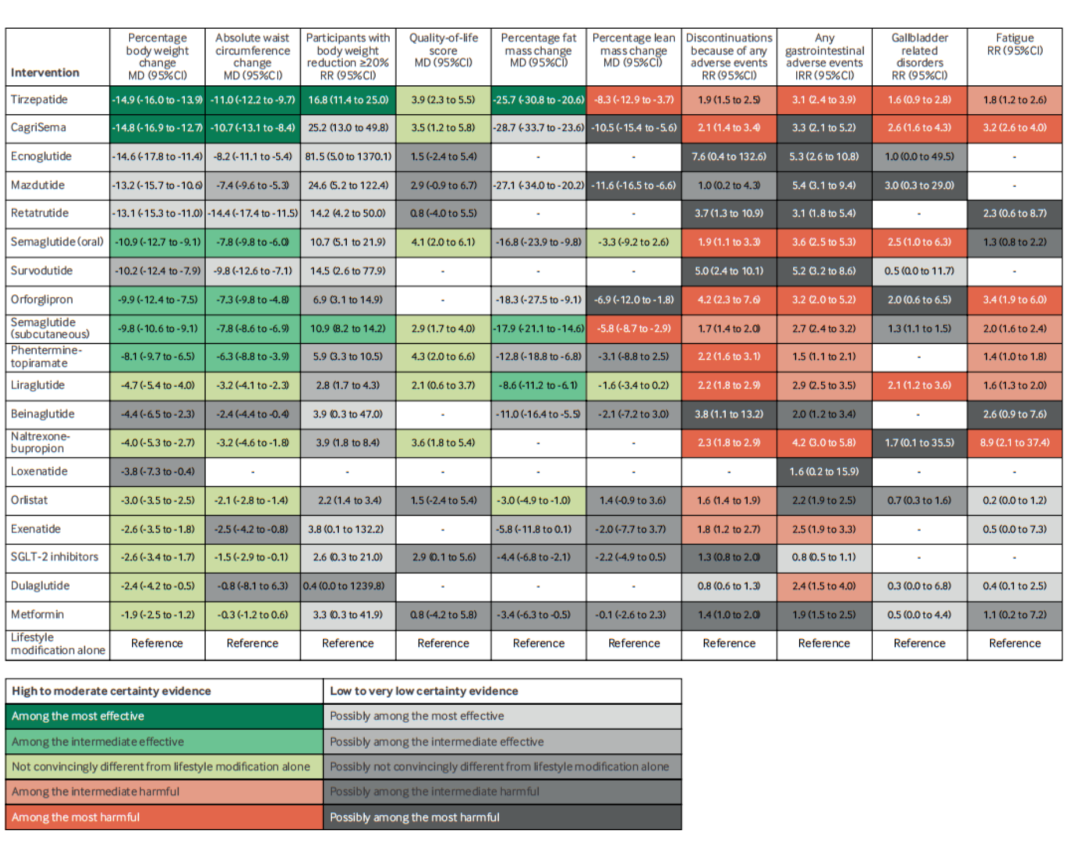
Fig. 2. Relative effects of weight-loss drugs on benefit and harm outcomes
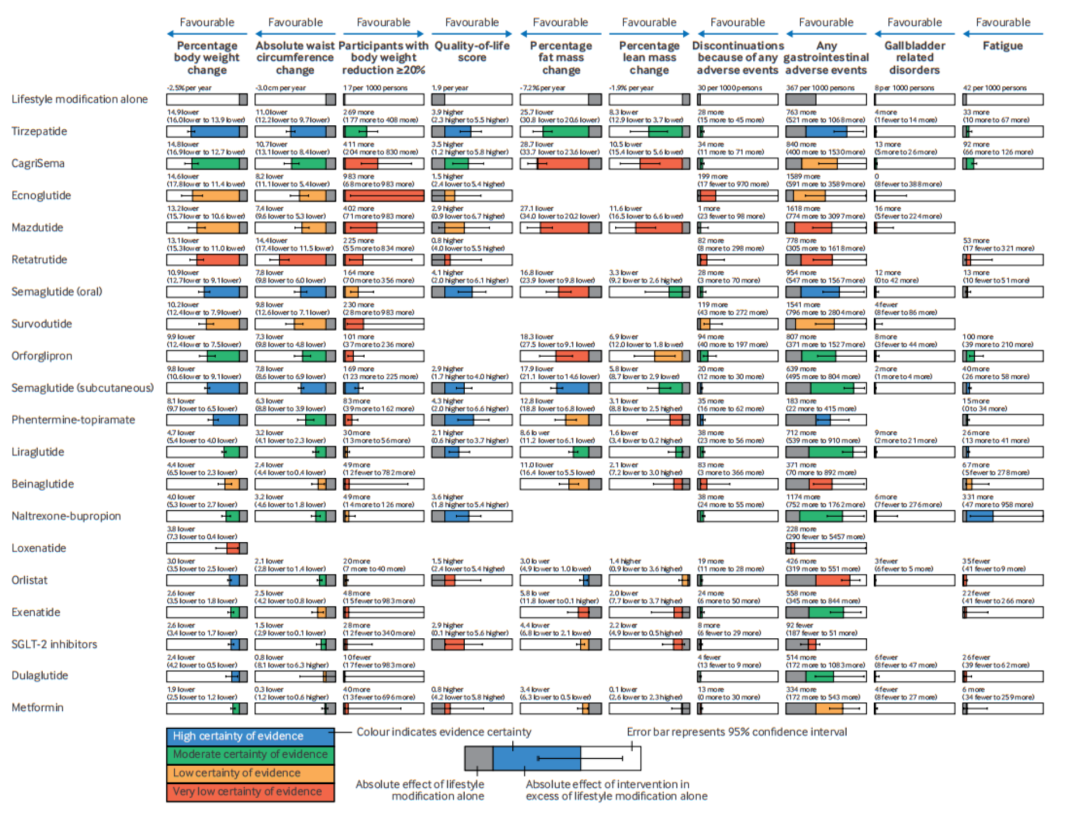
Fig. 3. Absolute effects of weight-loss drugs on benefit and harm outcomes, with lifestyle modification alone as the reference
Benefit Dimensions: Different Drugs Have Different "Advantage Tracks"
In the comprehensive assessment across 24 outcome measures, different drugs showed distinct differentiation patterns in benefit dimensions.
1. Weight Loss and Waist Reduction
Compared with lifestyle intervention, multiple drugs achieved significant weight loss within one year. Novel incretin-based drugs represented by Tirzepatide and CagriSema achieved mean weight reductions of 14.8%–14.9% (moderate to high certainty evidence). Oral Semaglutide, Orforglipron, subcutaneous Semaglutide, and Phentermine-topiramate showed weight reductions ranging from 8.1% to 10.9%. Waist circumference reduction was highly consistent with weight changes, indicating clear improvement in central obesity.
Notably, several emerging drugs also demonstrated promising potential. Mazdutide (approved in China in June 2025; its global multicenter long-term outcome trials were ongoing at the time of literature search in November 2025), Retatrutide, and Ecnoglutide showed weight reductions of 13.1%–14.6% in available clinical trials, numerically comparable to Tirzepatide and CagriSema. The study noted that these findings are primarily based on limited confirmatory trials and have not been extensively validated in clinical practice; therefore, the evidence certainty for these drugs is low to very low, and their definitive clinical positioning and long-term benefits require confirmation through larger-scale, longer-follow-up studies.
2. Cardiovascular and Renal "Hard Endpoints"
In terms of cardiovascular protection, subcutaneous Semaglutide is currently the only drug with high-certainty evidence demonstrating reduction in all-cause mortality (HR 0.81) and non-fatal myocardial infarction (HR 0.72) , with evidence primarily derived from large outcome trials in high-cardiovascular-risk populations. In addition, both subcutaneous Semaglutide and Tirzepatide showed effects in reducing heart failure risk (HR 0.43 and 0.49, respectively), with Tirzepatide also having evidence for reduced heart failure hospitalization.
As of the literature search cut-off: November 2025
For renal outcomes, subcutaneous Semaglutide may slow kidney disease progression (HR 0.80, moderate certainty), but no drug has yet been proven to definitively reduce the risk of end-stage renal failure.
This finding profoundly highlights: the numerical advantage in weight reduction does not equate to confirmed cardiovascular or renal protection; different drugs have substantial differences in the strength of evidence for "hard endpoints," and clinical selection must go beyond the single dimension of weight change.
3. Quality of Life: Weight Loss ≠ Subjective Improvement
Somewhat unexpectedly, despite significant weight loss achieved by multiple drugs, all drugs failed to reach the minimal clinically important difference threshold (10 points) for health-related quality of life at one-year follow-up. The drug closest to this threshold showed a mean change of only 4.3 points.
This "discrepancy" challenges the clinical assumption that "weight loss equals improved life." Improvements in quality of life may be offset or diluted by multiple variables such as side effect burden, treatment costs, medication convenience, and psychosocial factors. Clinicians should avoid overpromising subjective improvements from weight loss when communicating expectations and should objectively inform patients that quality-of-life benefits may be limited.
Risk Dimensions: The "Hidden Costs" of Efficacy Cannot Be Ignored
While weight-loss drugs bring benefits, their safety risks also require careful evaluation. The following analysis examines three aspects.
1. Gastrointestinal Reactions, Fatigue, and Discontinuation — The Most Common Barriers to Adherence
The study clearly reveals a pattern: drugs with more prominent weight-loss effects tend to carry heavier adverse event burdens, and patients face higher risks of discontinuing medication due to side effects.
Gastrointestinal adverse reactions: Multiple drugs targeting the GLP-1 receptor showed significantly elevated incidence, with absolute increases exceeding 700 events per 1,000 person-years for some drugs; the Naltrexone-bupropion combination reached as high as 1,174 events per 1,000 person-years.
Fatigue: Some drugs (e.g., Naltrexone-bupropion, Orforglipron, CagriSema) showed absolute risk increases for fatigue of 331, 100, and 92 events per 1,000 person-years, respectively.
Discontinuation due to adverse events: Orforglipron, Naltrexone-bupropion, Liraglutide, Phentermine-topiramate, CagriSema, and oral Semaglutide had discontinuation risk ratios ranging from 1.9 to 4.2, with absolute increases in discontinuations ranging from 19 to 94 per 1,000 person-years.
2. Increased Risk of Gallbladder Disease
Some drugs were associated with increased risk of gallbladder-related disorders (e.g., cholelithiasis, cholecystitis), with relative risk increases of approximately 1.6 to 2.6-fold and absolute increases of about 4–13 events per 1,000 person-years. Although the incidence is not high, clinical attention should be paid, especially in patients with a history of biliary tract disease.
3. Lean Mass Loss
The study paid particular attention to body composition changes. Moderate-certainty evidence showed that Tirzepatide reduced fat mass by 25.7% while also reducing lean mass by 8.3%; subcutaneous Semaglutide reduced fat mass by 17.9% and lean mass by 5.8%. For elderly patients, those at high risk of sarcopenia, or those with frailty, this "non-selective" weight loss may have adverse effects on muscle function, basal metabolic rate, and physical function. Current guidelines recommend combining structured aerobic and resistance training during pharmacotherapy to preserve muscle mass, but the real-world effectiveness of this strategy requires further validation.
Conclusion
This study provides a multidimensional evidence framework for individualized decision-making in obesity pharmacotherapy. It emphasizes that pharmacological treatment of obesity is essentially a long-term or even lifelong strategy, posing real challenges to patient adherence, healthcare resource accessibility, and the long-term sustainability of health systems.
In the future, as large-scale long-term outcome trials of novel drugs are completed and individualized risk prediction models are refined, the evidence landscape for obesity treatment will continue to evolve. But for now, clinicians must clearly recognize that the choice of weight-loss drugs is not a contest of a single metric, but a careful balance between efficacy, safety, tolerability, cost, and patient values.
References:
[1] Nong K, Shi Q, Xie X, et al. Comparative effects of drugs for adults with overweight or obesity: systematic review and network meta-analysis. BMJ. 2026;394:e372161.

