


In a landmark report titled “U.S. Investors and Big Pharma Race to Find New Drugs in China,” CNBC’s Health & Science division highlighted a seismic shift: multinational pharmaceutical companies are increasingly partnering with Chinese biotechs to access early-stage drug candidates at a fraction of U.S. costs. The strategy—validating molecules in China’s lower-cost clinical trials before advancing them to expensive U.S. development—has become a “revolutionary efficiency play” in the industry.
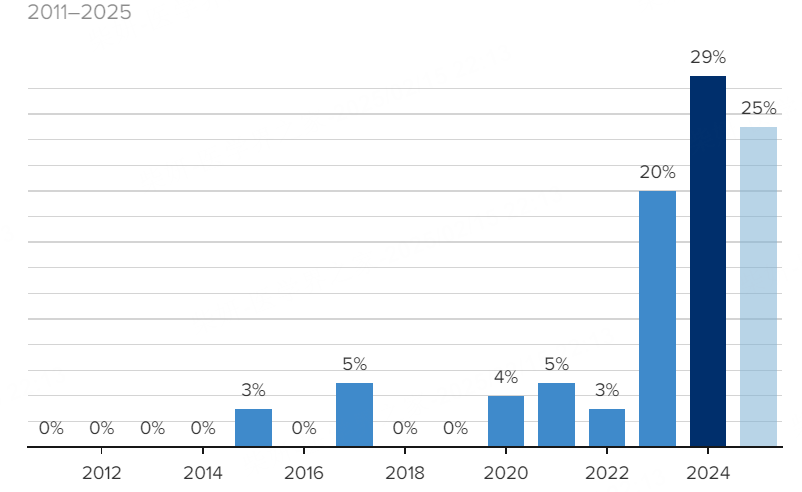
Figure 1. Proportion of Chinese involvement in big pharma transactions with minimum $50M upfront payments
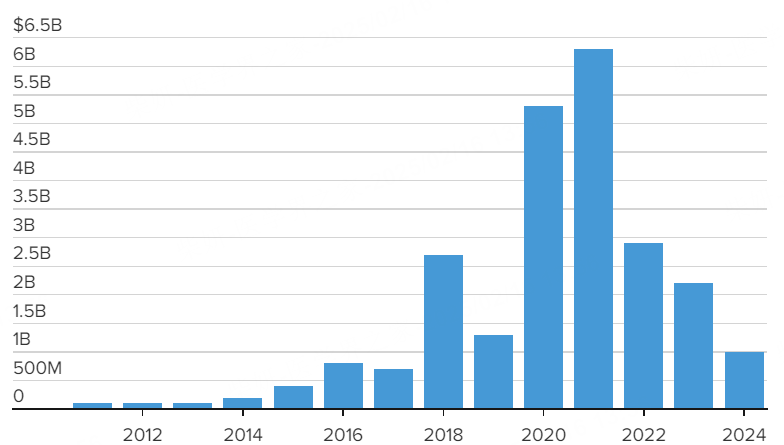
Figure 2. Venture Capital Funding for Chinese Biotech Firms Plummets 85% Since 2021
The Numbers Behind the Trend
1. Deal Activity: In 2024, 30% of global pharma deals with upfront payments of at least $50 million involved Chinese firms, up from 20% in 2023 and zero five years ago (DealForma data).
2. VC Dry-Up: Chinese biotech VC funding plummeted 85% from $6.3 billion in 2021 to $1 billion in 2024, pushing local firms to seek licensing deals for survival.
Game-Changing Collaborations
1. Summit Therapeutics’ Breakthrough: The obscure biotech stunned the industry in 2024 by licensing Ivonescimab, an anticancer drug from China’s Akeso, which outperformed Merck’s Keytruda in trials. Despite early skepticism over FDA acceptance of China-only data, Summit is now running three global Phase III trials to meet regulatory standards.
2. Merck’s Dual Moves: In December 2024, Merck licensed a clinical-stage weight-loss drug and a Keytruda competitor—both from Chinese developers—signaling strategic reliance on Chinese R&D.
3. Kailera Therapeutics’ Launch: A $400 million joint venture backed by U.S. investors, Kailera is developing a clinical-stage weight-loss drug from China’s Hengrui Medicine, exemplifying the “China-first” model.
Drivers of the Shift
1. Cost Efficiency: Clinical trials in China cost 50–70% less than in the U.S., allowing rapid early-stage validation.
2. Quality Leap: Chinese firms now produce “more robust and numerous molecules,” says Bain Capital’s Adam Koppel, who oversaw a $1.4 billion exit after licensing a Hengrui asthma drug.
3. Licensing Model: Non-equity partnerships mitigate risks for both sides, with U.S. firms paying upfront fees ($100M+ typical) and milestones for proven assets.
Risks and Repercussions
1. U.S. Biotech Disruption: When Merck licensed Hansoh’s weight-loss drug for $2 billion, U.S. rival Viking Therapeutics saw its stock plummet 18%, highlighting fears that Big Pharma’s China focus could starve American startups of funding.
2. Regulatory and Political Headwinds: While the FDA now accepts global trial data, proposed U.S. legislation like the Biosecurity Act threatens to restrict collaborations, mirroring tensions in AI and semiconductors.
3. Ethical Debates: Critics warn of a “bioprospecting” dynamic, where Chinese innovations are undervalued, though advocates argue shared risk accelerates global access to treatments.
The New Normal
As Stifel’s Tim Opler notes, the trend reflects a broader tech rivalry: “China is investing heavily in science, and we’re seeing a DeepSeek moment in biotech.” With companies like Gilead now dedicating equal resources to China as to the U.S., the “China model” of drug development—cost-effective, collaborative, and globally scalable—may soon define the industry’s future, for better or worse.

