


The price of cynomolgus macaques—a current staple of preclinical drug development—remains high. In July 2026, China’s spot-market quote reached RMB 200,000 per monkey.
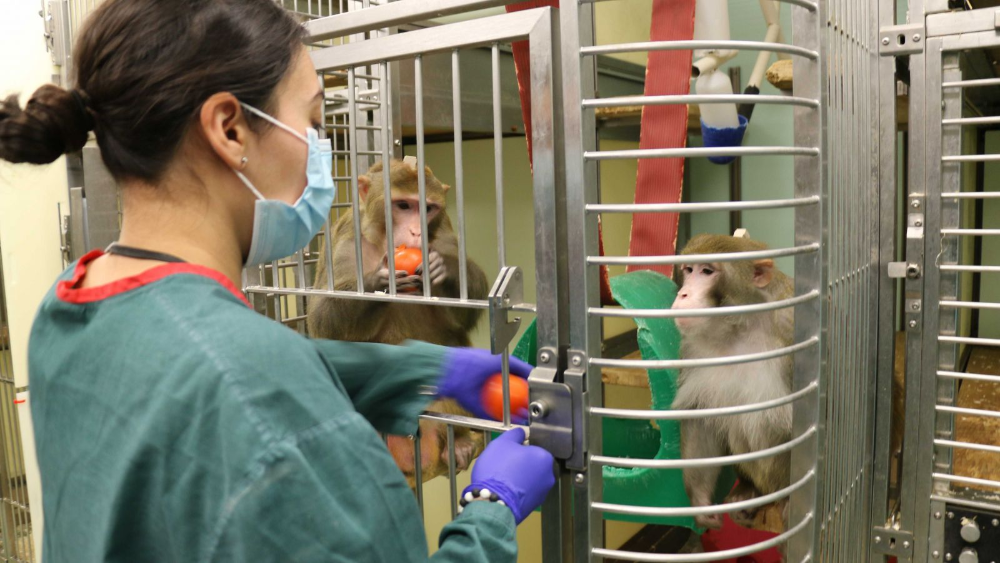 Fig.1.Cynomolgus monkeys remain a “must-have” for nonclinical drug evaluation, but their high cost and long lead times are driving the industry to seek new approaches
Source: Understanding Animal Research
A June procurement announcement by the National Institutes for Food and Drug Control set the contracted unit price at RMB 178,000, while the next batch of tenders has priced the budgeted unit at RMB 190,000. More troubling than price, however, is lead time: orders at major monkey facilities are locked in for this year, with new requests now expecting a wait of 4-8 months.
A different figure comes from the New Approach Methodologies (NAMs) industry. Aiming Medical, a Zhejiang-based organoid company, says its liver organoids can now be expanded in batches of 3,000 and cryopreserved for on-demand use—at less than RMB 100 per unit.
The contrast between RMB 200,000 and RMB 100 is not entirely fair: a monkey provides whole-system evaluation, while a liver organoid answers only liver-specific drug-response questions. Yet placed side by side, the two figures mark a dual pressure on the preclinical evaluation system—legacy methods becoming ever more expensive and slower, NAMs ever cheaper, but without yet winning regulatory recognition.
On 7 July 2026, the Center for Drug Evaluation (CDE) issued for public comment the Pilot Plan for Promoting Research and Application of New Approach Methodologies (NAMs)—in English, Propel Innovation and Operation of NAMs to Enhance Efficiency in R\&D, abbreviated to PIONEER. The plan explores which new methods can earn regulatory recognition.
Reading all four accompanying documents, three motivations stand out: species differences between animals and humans that limit the extrapolation of results, traditional animal testing's long cycles, high cost, and low throughput, and the global regulatory trend toward the “3R”principle—Replacement, Reduction, and Refinement of animal experiments.
The PIONEER draft opens two entry points. Drug developers who have used or plan to use NAMs data as supporting evidence for registration may apply to enroll their drug products. Developers of NAMs methods, including organoid and organ-on-chip platforms, may apply for joint methodology validation with CDE. The two tracks are not mutually exclusive—if a drug developer's program reaches a point where such validation is needed, a supplementary application may be filed.
For enrolled projects, CDE will adopt an “early engagement, timely communication, full-cycle tracking” model. Drug developers and/or NAMs developers may apply through Class I communication meetings—a top-priority formal channel for resolving the most pressing issues in drug development. The pilot has no cap on the number of participants, runs on a 5-year application window, and requires a 5-business-day public notice before enrollment.
The documents list eight application scenarios: supplementing traditional evaluation; exempting antibody-class drugs from longer-cycle repeat-dose toxicity studies; evaluating specific toxicity and pharmacokinetic endpoints; covering advanced therapy products and rare disease drugs; replacing some conventional animal efficacy models; and serving as supportive data in weight-of-evidence assessments.
The most closely watched sentence reads: methods that pass review may be used by the applicant in specific application scenarios without repeated validation.
What the Regulation Is Saying
Yaosu Tech founder Xin Xie told MedJ that this marks an upgrade from “each project validating separately” to “one validation, broad applicability.”
 Fig.2.Organ-on-a-Chip is one of the representative technologies of New Approach Methodologies (NAMs), enabling the simulation of human organ functions on microfluidic chips
Source: uFluidix
The original wording, however, appears narrower: the exemption from repeated validation applies to methods that the applicant has passed review for, within specific application scenarios. Qualification is granted applicant-by-applicant and scenario-by-scenario, not as an industry-wide blanket endorsement.
Prof. Yang Yue, a researcher at Tsinghua University School of Pharmacy and director of the University's Institute of Drug Regulatory Science, accepts this reading. Any tool or method has a defined scope of applicability when developed, she noted; once extended beyond that scope, validation cannot be waived. If the application scenario is unchanged, however, repeat validation may not be required, “because the method has already been reviewed once.” She drew an analogy: “After an active pharmaceutical ingredient passes its first review, subsequent applications are simplified.”
Why Regulation Is Shifting
CDE's attitude toward new methods did not turn abruptly. On 30 November 2021, CDE issued two guidance documents, including the Technical Guidelines for Nonclinical Research and Evaluation of Gene Therapy Products (Trial), mentioning for the first time that organoid and other new-type models could be used in evaluation. In May 2026, the National Institutes for Food and Drug Control established its Center for Innovative Methodologies Evaluation. By July of this year, the PIONEER plan had been released.
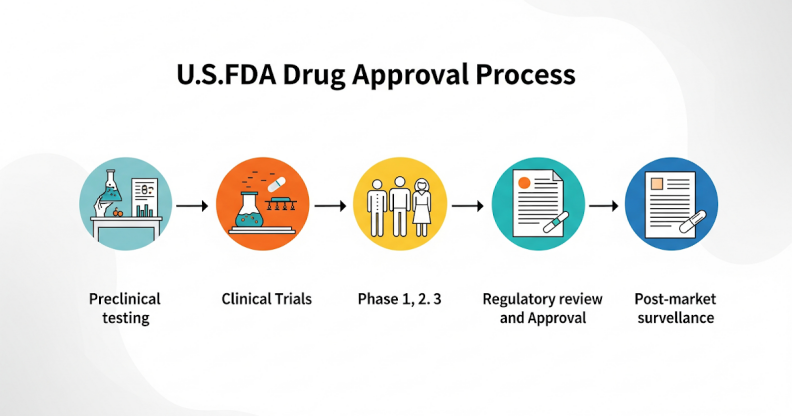 Fig.3.U.S. FDA Drug Approval Process. The 2022 FDA Modernization Act 2.0 legally eliminated the mandatory requirement for animal testing prior to new drug marketing approval
Source: Pharmaguideline
Does this arrangement require new higher-level legislation? Prof. Yang's answer is no. She divides the regulatory document system into laws, regulations, and technical guidelines: the Drug Administration Law requires drug R\&D to undergo pharmaceutical and nonclinical studies, and NAMs fall within nonclinical methodological alternatives— “this can be resolved at the level of technical guidelines”—and do not conflict with the Drug Administration Law or its implementing regulations. She also notes that at this stage, NAMs are not positioned as a forced replacement for animal testing. The core scientific reason is straightforward: targets and mechanisms in animals differ from those in humans— “if you run the test in animals, the result really doesn't represent humans.”
More work is happening beneath the surface. One NAMs practitioner noted that the National Institutes for Food and Drug Control had already conducted roughly three years of organoid platform validation: dozens of drugs with established toxicity grades are sent, double-blind, to various organoid platforms to test the accuracy rates and judge whether the technology as a whole has matured. The same source revealed that CDE's pharmacology and toxicology division has recently been promoting the PIONEER plan among benchmark drug developers nationwide, guiding them through applications.
According to industry sources close to regulators, internal communications have repeatedly emphasized the principle of “urgent needs first.” Where existing models cannot address a problem and R\&D cannot wait, new methods are deployed first to fill the gap.
Prof. Zhang Leshuai, vice dean and professor of life sciences at Suzhou University and a former FDA drug safety evaluation reviewer, explained the underlying regulatory logic at the July 2026 China Pharmaceutical Innovation Conference (CPIC) in Shanghai: “Whether black cat or white cat, as long as it catches the mouse, it’s a good cat.” Regulators, he said, do not care whether the method is an organoid, an organ-on-chip, or a computational model. They ask a single question: can its output predict the drug's effect on humans? Zhang offered a more extreme example: zebrafish look nothing like humans, but as long as their results can predict a specific toxicity endpoint, the method qualifies. “Resemblance is not what matters. Whether it works is what matters.”
China and the U.S., on Different Tracks
This regulatory turn is not confined to China. The U.S. has taken a law-first path. In December 2022, the FDA Modernization Act 2.0 removed the legal mandate requiring animal experiments prior to drug approval. In April 2025, FDA published a roadmap to reduce animal testing in preclinical safety research, beginning with monoclonal antibodies and projecting that within 3-5 years, animal tests should become “the exception rather than the norm.” A draft guidance on simplified nonclinical safety evaluation for selected monoclonal antibodies was released in December 2025, and in March 2026, FDA published a draft general validation framework for NAMs.
China's approach differs from the U.S., Xin Xie summarized, as “FDA fast on regulatory breakthrough, China steady on pilot validation.”FDA’s ISTAND program offers one reference point. ISTAND is the U.S. qualification pathway for new methods; as of 1 January 2026, FDA data show 16 projects in the ISTAND pipeline, 14 letters of intent accepted, and only 2 having progressed into the qualification phase—the industry broadly awaits the first ISTAND-qualified drug development tool.
The world's most aggressive regulator has so far not qualified a single method. China, by contrast, has rolled out a pilot with no cap on participation. What is the logic?
The answer may lie in the industrial data on innovative drugs. According to PharmaGO, in the first half of 2026, total overseas licensing deals for Chinese innovative drugs reached $99.7 billion, with about $5 billion in upfront payments, accounting for 8 of the global top 10 transactions. The dominant outbound pipelines are nearly all antibody drugs, particularly antibody-drug conjugates (ADCs). Returning to the PIONEER plan's eight scenarios, one of them is precisely “exempting antibody-class drugs and others from longer-cycle repeat-dose toxicity studies.” The regulator’s on-site coaching mentioned earlier targets leading macromolecule drug developers. As Dr. Chongyang Shen, co-founder and chief scientist of Aiming Medical, puts it: “The drug companies expect something, and that's what gets made.”
Beyond industry data, Prof. Yang offered a regulatory-science explanation. FDA operates a Drug Development Tool qualification system for new methods: a tool that is qualified and published becomes available to all products; those outside this pathway are reviewed case by case, with the evidence volume and strength examined per submission. In her view, ISTAND’s zero qualifications so far is largely a bottleneck around evidence reliability. China's logic, by contrast, is to open the door first; innovation arrives and enterprises are invited in to explore. Every CDE pilot project goes through formal communication first— “this process is not external, which effectively amounts to the same step FDA takes, but you can't see it.”So in her view, it is not accurate to say Chinese regulators are more lenient; some steps simply happen out of sight. “Innovation cannot be pre-regulated.”
Mingliang You, chairman of Aiming Medical, sees this turn as weightier. He frames it as a contest of standards: in laboratory animal breeding and use, the U.S. can no longer outpace China, and changing the rules opens a different track. Although this is his personal view, it is clear that China-U.S. competition in innovative drugs has now extended from pipelines into evaluation methods and review rules.
Prof. Yang’s perspective tilts more toward the mechanism level. She notes that this contest is not only between China and the U.S.; the body that ultimately coordinates global consensus remains ICH. China's National Medical Products Administration is a member of ICH's Management Committee, CDE experts play an increasing role in shaping ICH guidelines, and Chinese industry experts are entering ICH expert working groups. “If China has advanced experience, whether by issuing domestic guidelines first or publishing internationally influential papers first, that experience may be cited or recognized by ICH.” In her view, whether this translates into the rules depends on the scientific quality, rationale, and forward-thinking nature of the work.
Can the Technology Bear the Trust?
Opening the floodgates is one thing; whether the industry can bear the exploration is another—and this is a problem the official documents acknowledge. The PIONEER-related documents note: “Currently, NAMs development still faces many challenges, including limited technological maturity, the lack of industry standards and regulatory guidelines, and a weak data ecosystem.”
At an organoid and bio-chip session in Shanghai on 22 July, several companies shared their data. Qijia Tech CEO Di Wu reported that his company's liver organoid toxicity evaluation accuracy is approximately 85.9%, with heart and intestinal toxicity accuracy between 80% and 90%, and batch-to-batch average variation within 23%. Yaosu Tech told MedJ that its liver-chip prediction accuracy for drug-induced liver injury (DILI) reached 92.3%, with 100% specificity on a 17-compound blind test; the results were published in the journal Toxicology.
These figures are all self-reported by the companies; methodologies and validation scale vary. But they point to a single fact: on sharply bounded endpoints such as liver and cardiac toxicity, the accuracy of new methods may have reached the threshold of practical use.
Dr. Haisheng Zhang, founder of Xigen Bio, shared a telling detail at the meeting: early academic cardiac organoids beat at anywhere from a dozen to thirty times per minute; his team spent roughly 10 months stabilizing them to 60-70 beats per minute. “Academic work has to be fancy; in industry it must be stable; by the time it reaches regulation, it must be even more boring. That's the nature of the cycle.”
Prof. Zhang Leshuai also pointed out, however, that most current models are still in the proof-of-concept stage, demonstrating that “my model is good” with a few compounds—a biased reporting of favorable results. Real translational validation demands testing against hundreds of known drugs; few have that number to share. Dongxu Han, head of the organoid platform at Ruiyi Pharma, presented two case sets showing that an in vitro model and an in vivo animal study can yield opposite results on the same drug. His conclusion: “One model is one experiment; a sequence of models, from in vitro to in vivo, is needed to constitute a credible dataset.”
Prof. Yang holds a similar reservation. NAMs validation and research remain very challenging, she said: a cell or a chip is a localized model that cannot directly yield a conclusion about whole-body safety, unless one day the disease phenotype can be encoded as a complete “digital human”—and that requires massive data accumulation. “This is a research exploration that will take time to realize.”
Pharma internal attitudes are calmer than external discussions suggest. Xiong Yao, director of in vivo pharmacology at Innovent Biologics, said at the meeting that Innovent has tracked organoids early, building an in-house platform as early as 2020. After years of use, their assessment is that organoids add value where traditional models cannot answer—e.g., diseases that mouse species differences preclude modeling. Relying on them to fully replace animal testing is not currently realistic, he noted. Dr. Shen cited a survey of major Western pharma: about 70% accept NAMs as an evaluation modality, but none are willing to completely abandon animal testing.
Technology is not yet fully mature, yet regulators have opened the gate early—does that create a contradiction? Mr. You’s reading is that regulators have never doubted the technology itself. “They won't say the tool is bad. What they are saying is that you have no unified standard.”Viewing the two facts together, PIONEER’s underlying logic may be precisely this: because standards and data are insufficient, the door must be opened so that real registration projects accumulate cases and build standards. Rather than wait until validation matures and then open up, open up in exchange for validation.
Who Is Using, Who Is Waiting
For drug companies, the largest obstacle is not regulation but industry inertia. Mr. Xiong noted that when traditional models raise no flags, teams are naturally unwilling to take risks switching to new tools—"the resistance comes more from within our own hearts." Pharma's standard for evaluating a new model is simple: how stable it is, and what question it can answer. What initially drew them to organoids was speed—theoretically, mouse studies usually take 1-3 months, while organoids claim 1-3 weeks. But Mr. Xiong recalled that this acceleration has not been replicated inside Innovent; the inertia around traditional models is stronger than expected.
What NAMs companies want is recognition beyond the regulatory line. On 30 June, China's National Healthcare Security Administration (NHSA) issued a draft for the second round of public comment on the project-establishment guideline for inspection-class medical service pricing items, with "tumor tissue organoid culture fees" and "drug susceptibility testing fees" appearing for the first time in the national inspection-class project list. Mr. You believes that organoid drug-susceptibility testing may in future be charged for within hospitals in a compliant way—an indication of regulatory recognition on a separate line. According to him, Aiming currently provides research services to more than 300 hospitals, with clinical collaborations at a dozen or so. For organoid companies, liver organoids at RMB 30 each may be the preparation for large-scale clinical application.
Other NAMs companies are placing bets on international rules. Yaosu Tech noted that it is the only Chinese team in FDA's ISTAND pipeline working on DILI prediction, with what it describes as an integrated barrier of hardware, data, AI, and regulatory work. In June this year, Yaosu completed an A-series funding round of more than RMB 400 million, with cumulative funding exceeding RMB 600 million. Sen Ye, Yaosu's head of scientific affairs and innovation, disclosed at the meeting that the project is currently at the letter-of-intent-accepted stage, with FDA questions to be addressed item by item.
Xigen Bio chose to validate its platform through its own pipeline. Its “organoid + AI”-based diffuse gastric cancer candidate SIGX1094R has received clinical trial approvals in both China and the U.S., along with FDA Orphan Drug and Fast Track designations. In August 2025, Xigen was nominated for the Prix Galien "Best Biotechnology Product Award"—the only Chinese company on that year’s shortlist—and is currently running a Phase I trial at Peking University Cancer Hospital. Dr. Zhang has suggested to CDE that the regulator need not dictate which culture medium or technical route a company uses—”regardless of whether the dish was made by a cooking machine or a chef, if the dish arrives fragrant, visually appealing, and full of flavor, that should be enough.”
Traditional contract research organizations (CROs) are still watching. Yuzhou Xu, executive director at Ruiyi Pharma, noted that within Ruiyi, organoids remain “currently a small, cutting-edge exploratory team”—a state common across major companies. How large they grow depends on how far the industry chain pushes technological maturity.
For capital, the lens on NAMs projects is becoming sharper. Yan Zhou, deputy general manager of the Pudong Group Investment Promotion Service Center, revealed that Pudong hosts 70-80% of Shanghai’s organoid companies. Investors evaluate projects along three dimensions: standardized products, sustainable revenue model not dependent on fundraising, and whether AI integration is truly grounded.
Five Unresolved Questions
Notably, PIONEER is still only a draft for comment, and the questions around it are no fewer than the applause.
First, the threshold. With no cap on participants, regulators have kept the screening pressure on themselves. FDA’s zero qualifications to date and PIONEER's open posture form two sharply different institutional temperaments. Openness favors rapid case accumulation—but it must also address: could waves of immature methods flood in, dragging the pilot into a protracted sifting process?
Second, responsibility. Drug review is a lifelong-responsibility system. Methods that pass review, exempted from repeated validation, cede part of the case-by-case checks at the review stage. If a platform’s data later raises issues, where does accountability sit—with the platform, the applicant, or the reviewer?
Third, timing. The proof-of-concept status Prof. Zhang described creates a time gap with the pace of regulatory opening. In that interval, it is hard to guarantee that no company will submit with insufficiently validated data. A quote from a clinical researcher in a 22 July 2026 Yicai story captures a common reservation: animal testing may not be the optimal solution, but it remains the most equitable approach today.
Fourth, scope. As noted earlier, exemption from repeated validation is granted applicant-by-applicant and scenario-by-scenario. If outsiders read this as a platform-level, once-and-for-all endorsement, the reading may be inaccurate—and at a significant distance from what the framework actually does.
Fifth, procedure. Some companies have suggested in feedback that the joint CRO-organoid-company application pathway be clarified; the current documents do not address this.
According to the notice, PIONEER’s public comment period is one month from issuance, ending 7 August. Whether the final wording adjusts, and which products and methods will be in the first enrolled batch, will become clear after the public roster is released. Only then can the industry truly read the regulator’s calibration.
Dr. Shen predicted that, under favorable conditions, the first jointly validated methodology that does not require repeated validation within a specific application scenario may emerge around 2028.
Looking back from that point, the immediate impact of the summer 2026 document may matter less than it appears. After all, the replacement cycle for new-drug evaluation systems may be very long, which means monkeys will likely remain irreplaceable for some considerable time.
But who writes the evaluation rules—and based on whose case files—this country-versus-country competition has quietly begun in the background. This time, Chinese regulators have chosen to enter early.

