


Background and Clinical Question
Beta-blockers have been a cornerstone of cardiovascular therapy for decades, with established roles across myocardial infarction (MI), hypertension, chronic coronary disease and heart failure with reduced ejection fraction (HFrEF). Much of the supporting evidence, however, predates routine primary percutaneous coronary intervention, high-intensity statin therapy, sacubitril/valsartan, sodium-glucose cotransporter 2 (SGLT2) inhibitors and other modern guideline-directed treatments.
A new narrative review published in the Journal of the American College of Cardiology (JACC), authored by Brian W. Sperry, Majd Abdel Jawad and Deepak L. Bhatt with colleagues, revisits the central question of which patients still derive meaningful prognostic benefit from beta-blocker therapy in the current treatment era.
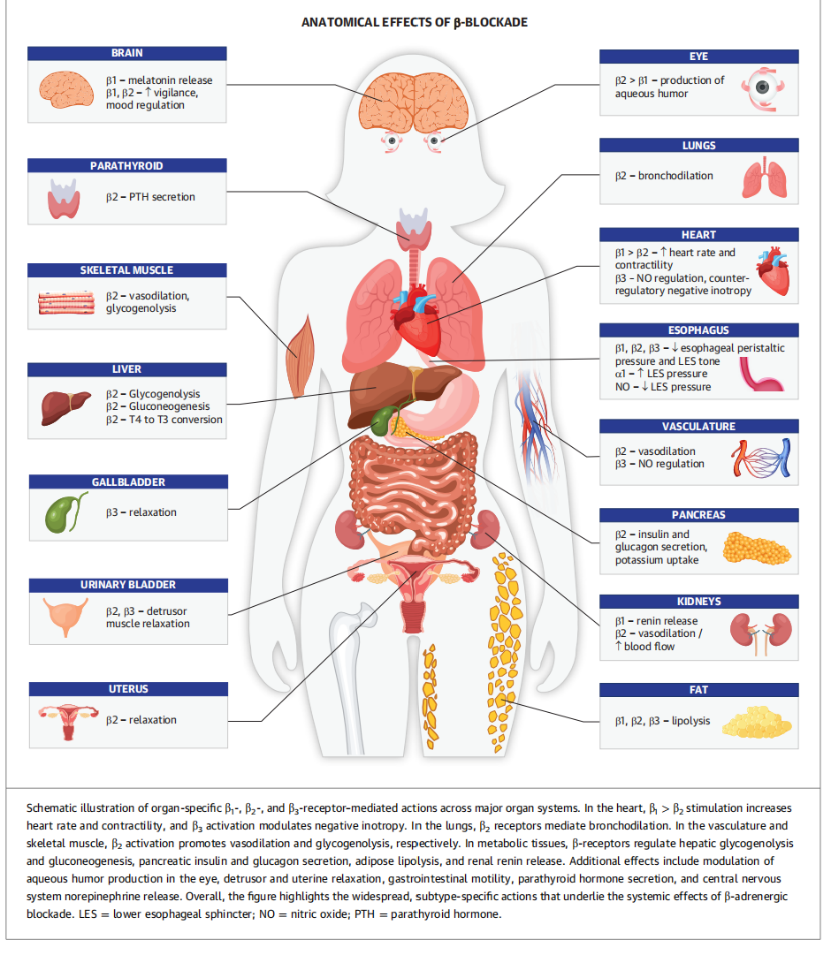 Fig.1.Mechanism of Action of β-blockers And Their Effects on Different Organs
Populations With Established Benefit
In HFrEF (left ventricular ejection fraction [LVEF] <40%), the review reaffirms beta-blockers as guideline-recommended foundational therapy. Three landmark randomized controlled trials cited in the review include:
· MERIT-HF, which enrolled 3,991 patients with HFrEF and randomized them to long-acting metoprolol versus placebo; the trial reported a 19% relative reduction in the primary composite of all-cause mortality or all-cause hospitalization, and a 32% relative reduction in mortality or cardiac transplantation.
· The U.S. Carvedilol Heart Failure Program, in which mortality was 3.2% in the carvedilol group versus 7.8% in the placebo group, corresponding to an approximately 65% relative risk reduction.
· COPERNICUS, which evaluated carvedilol in patients with severe heart failure and reported a 24% relative reduction in the primary composite endpoint and a 35% relative reduction in all-cause mortality.
In the post-MI setting, the magnitude of beta-blocker benefit tracks closely with post-infarction LV function:
· For patients with LVEF ≤40% after MI, beta-blockers provide clear, guideline-supported prognostic benefit consistent with the landmark long-term trials.
· For patients with mildly reduced LVEF of 41-49%, a recent individual patient data meta-analysis reported a 25% relative reduction in the composite of all-cause death, recurrent MI, or heart failure hospitalization (hazard ratio [HR] 0.75), suggesting that this intermediate band may also benefit from therapy.
· 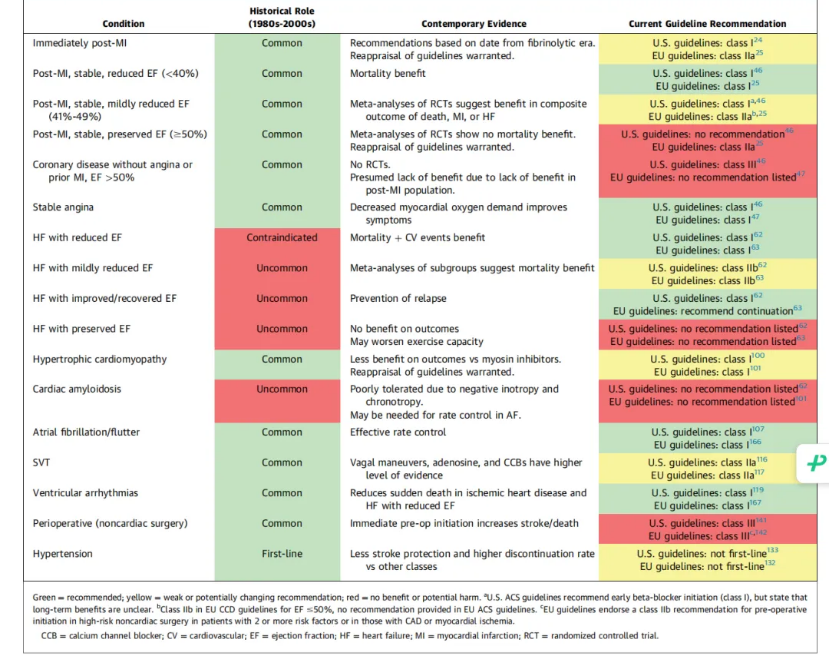
Fig.2.Recommendations for β-blocker Application in Various Cardiovascular Diseases: from "Universal Use" to "Selective Use"
Populations With Limited or No Routinely Indicated Benefit
For patients with preserved LVEF (≥50%) following MI, a contemporary meta-analysis found event rates of 8.1% in beta-blocker users and 8.3% in non-users, yielding an HR of 0.97 (P=0.54). This analysis argues against the historical "one MI, lifetime beta-blocker" default and suggests that routine continuation of beta-blockers in post-MI patients with preserved LV function may not be justified.
In heart failure with preserved ejection fraction (HFpEF), the review notes that current evidence does not support a mortality benefit from beta-blockers. A key mechanistic consideration is that many HFpEF patients depend on heart rate augmentation during exertion to maintain cardiac output; attenuating this chronotropic reserve with beta-blockade may actually reduce exercise tolerance. The authors suggest that, absent specific indications such as atrial fibrillation requiring rate control, angina or refractory hypertension, beta-blockers should not be initiated routinely in HFpEF.
For stable coronary artery disease without prior MI, left ventricular dysfunction, or angina, the review observes that contemporary evidence does not support a long-term prognostic benefit. The 2023 AHA/ACC chronic coronary disease guideline accordingly classifies beta-blocker use in this setting within its "no benefit" recommendation category.
For uncomplicated hypertension, beta-blockers are no longer recommended as first-line antihypertensive agents, primarily because of inferior stroke protection and tolerability compared with other drug classes.
Translational and Practical Implications
Across the cited trials, beta-blockers consistently deliver prognostic benefit in patients whose disease is characterized by reduced LV systolic function, whether the underlying cause is acute MI or chronic HFrEF. The signal diminishes or disappears in conditions whose pathophysiology is not driven primarily by sympathetic overactivation or adverse ventricular remodeling. The review therefore signals a transition from a "universal use" to a "selective use" paradigm, summarized in Table 1 below.
Table 1. Suggested Categorization of Beta-Blocker Use in the Modern Era
|
Category |
Population |
Recommendation |
|
Established benefit |
HFrEF (LVEF <40%); MI with LVEF ≤40%; selected arrhythmias |
Continue as guideline-directed therapy |
|
Individualized consideration |
MI with LVEF 41-49%; selected hypertrophic cardiomyopathy |
Case-by-case, weighing LV function and tolerability |
|
No routine indication |
Post-MI with LVEF ≥50%; HFpEF without other indication; stable CAD without prior MI or LV dysfunction; uncomplicated hypertension |
Avoid use based on historical reflex alone |
Limitations and Outlook
The conclusions of this narrative review rely largely on secondary analyses of older landmark trials and on more recent patient-level meta-analyses. Heterogeneity across study eras, evolving background therapy, patient selection and outcome definitions all complicate direct extrapolation to today's practice. The review authors note that additional prospective data are needed to refine beta-blocker use within the modern treatment landscape, particularly for the LVEF 41-49% band and for HFpEF phenotypes in which chronotropic incompetence may itself be a treatable trait rather than a contraindication to beta-blockade.re details.
Reference
1.Sperry BW, Abdel Jawad M, Bhatt DL, et al. Refining the Role of Beta-Blockers in Cardiovascular Medicine. J Am Coll Cardiol. 2026.

