


On August 24, GlaxoSmithKline (GSK) announced that Japan’s Ministry of Health, Labour and Welfare has officially approved its investigational hepatitis B drug bepirovirsen for the functional cure (clinical cure) of chronic hepatitis B in adults. This is the world’s first drug specifically approved for functional cure of chronic hepatitis B—meaning patients may be able to stop lifelong medication, and their risk of developing severe complications such as liver cancer and cirrhosis drops to near that of the general population. It represents the “holy grail” that the hepatitis B field has pursued for decades.
“The approval of bepirovirsen will likely rewrite current treatment guidelines. Clinical workflows, strategies, and treatment goals will change accordingly, ushering in a revolutionary new era in hepatitis B management,” Professor Jie Peng, Chief Physician in the Department of Infectious Diseases at Nanfang Hospital, Southern Medical University, told MedJ. Bepirovirsen had previously filed for marketing authorization in China in March of this year and was granted priority review; after the initial submission did not pass, the company resubmitted on May 27, and the review is currently ongoing, with the drug expected to become available in Chinese clinical practice in the future.
Breaking Through to “Functional Cure”
Global statistics show approximately 257 million people are living with chronic hepatitis B, which accounts for about 39% of all liver cancer cases worldwide, has caused hundreds of millions of cases of hepatitis B‑related cirrhosis, and results in approximately 1.1 million deaths annually. Professor Peng told MedJ that current antiviral therapy for chronic hepatitis B relies primarily on long‑term, daily oral nucleos(t)ide analogues (NAs), which suppress HBV DNA replication and thereby greatly reduce the risk of disease progression to cirrhosis, liver cancer, and other complications.
“After several years to over a decade of treatment, some patients will have their surface antigen levels reduced to a low level, forming a ‘favorable population.’ At that point, clinicians may consider adding interferon combination therapy to further pursue clearance of hepatitis B surface antigen,” Professor Peng explained. This is currently the core strategy for achieving functional cure of hepatitis B. However, the process is lengthy, and issues such as long‑term medication side effect management, adverse reactions to interferon, and treatment costs also affect patient adherence. “Overall, among chronic hepatitis B patients on long‑term oral nucleos(t)ide analogues, only about 1%–3% ultimately achieve functional cure”.
In this context, the emergence of small interfering nucleic acid drugs has become the key to breaking the deadlock, and bepirovirsen is a representative of this class. Bepirovirsen is an antisense oligonucleotide (ASO) small nucleic acid drug that employs gene silencing to precisely target viral RNA—like a “genetic special forces” unit—preventing viral protein synthesis and causing hepatitis B surface antigen and other protein levels to drop precipitously.
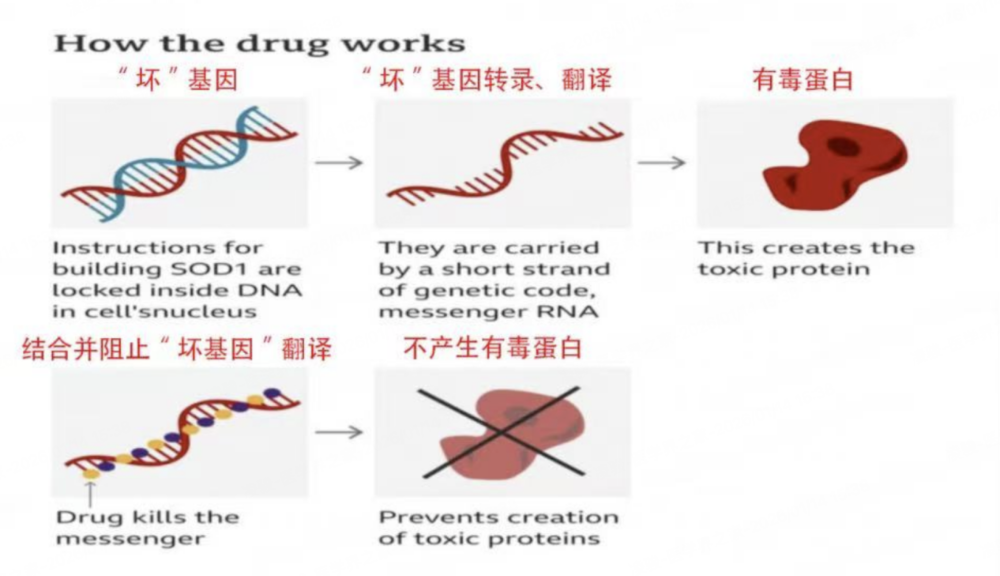 Fig.1.Pivotal Trial Data
The core basis for approval is the pooled data from two global multicenter phase 3 trials, B‑Well 1 and B‑Well 2. The trials covered 1,838 patients with chronic hepatitis B on nucleos(t)ide analogue therapy across 29 countries, all with baseline hepatitis B surface antigen (HBsAg) levels ≤3000 IU/mL.
Results showed that after 24 weeks of bepirovirsen treatment, with follow‑up through week 72, the functional cure rate in the overall population reached 19% (233/1,220), while none of the 614 patients in the placebo group achieved functional cure. Furthermore, in patients with baseline HBsAg ≤1000 IU/mL, functional cure rates were even higher, reaching 25%–28%. Even among patients who did not completely clear HBsAg, antigen levels fell to very low ranges after treatment, suggesting potential sustained response benefits.
In terms of safety, bepirovirsen was generally well tolerated. The most common adverse events were injection site reactions, mostly mild. Approximately 6% of patients experienced transaminase elevations, which typically accompanied rapid declines in surface antigen, suggesting an association with immune activation, and all were reversible.
A New Era in Hepatitis B Treatment
In fact, beyond bepirovirsen, small nucleic acid drugs are on the verge of a breakthrough in addressing the current global dilemma of achieving clinical cure for hepatitis B. Professor Peng explained that the reason traditional nucleos(t)ide analogues struggle to “cure” hepatitis B is that while they suppress viral DNA replication, they cannot eliminate the covalently closed circular DNA (cccDNA) within hepatocyte nuclei—the stable reservoir of existing HBV DNA.
It is precisely this persistent reservoir of hepatitis B virus (HBV) DNA that continuously produces “viral proteins,” including hepatitis B surface antigen (HBsAg). HBsAg, in turn, induces “immune paralysis,” causing immune system dysfunction and rendering the body unable to effectively eliminate the virus, thereby allowing the virus to replicate persistently within hepatocytes.
Unlike nucleos(t)ide analogs, small nucleic acid–based drugs directly and precisely target HBV RNA—including messenger RNA (mRNA)—thereby preventing viral protein synthesis.
Typically, even in the presence of an HBV DNA reservoir, small nucleic acid–based drugs can block the process of gene translation, thereby inhibiting the production of a broad spectrum of viral proteins, including HBsAg. More importantly, sustained suppression of HBsAg production can “reactivate” the host’s immune system, further enhancing antiviral killing activity.
“Just like tossing a pebble into a calm lake, small nucleic acid-based drugs have generated ripples that are powerfully driving forward hepatitis B treatment. We can see that the era of functional cure for hepatitis B has already arrived,” said Jie Peng.
According to incomplete statistics, dozens of companies worldwide have initiated research and development of small nucleic acid-based drugs for hepatitis B treatment, with at least 12 investigational products having entered clinical trials.
Professor Hou Jinlin, Head of the Department of Infectious Diseases at Nanfang Hospital, Southern Medical University, is a Global Core Investigator for Bepirovirsen and the Principal Investigator for its China registration and clinical trial leading to market approval. Additionally, in December 2024, Professor Hou Jinlin’s team led the publication of another hepatitis B cure study in *The New England Journal of Medicine*, demonstrating that combining the siRNA-based drug Xalnesiran with interferon increased the hepatitis B cure rate to 23%.
“In patients who have long-term used nucleos(t)ide analogs, only a very small number ultimately achieve functional cure,” Jie Peng told MedJ.
“Admittedly, further research is still needed to determine Bepirovirsen’s long-term efficacy, as well as whether its dosage, combination regimens, and treatment duration can be further optimized. Yet, based on existing data, a higher proportion of hepatitis B patients achieved therapeutic outcomes in just six months—outcomes that previously might have taken several or even over a decade of treatment. This represents a qualitative leap forward,” said Jie Peng.
Initiating Treatment Early
From the perspective of disease management, Jie Peng noted that the emergence of oligonucleotide-based hepatitis B therapeutics can significantly improve patients’ willingness to undergo treatment and their adherence to therapy.
“With conventional nucleos(t)ide antiviral drugs, neither patients nor physicians know when treatment can be safely discontinued; many feel the therapy offers ‘no light at the end of the tunnel,’ gradually losing confidence as treatment continues,” Jie Peng explained. In past clinical practice, approximately 50% of patients discontinued therapy without medical guidance after six months or one year of treatment, substantially increasing their risks of developing cirrhosis, hepatocellular carcinoma, and other complications.
Moreover, many patients with chronic hepatitis B are already in severe disease states at their initial diagnosis. “Every day in our outpatient clinics, we feel heartbroken—many patients still believe that ‘there is no treatment available’ for hepatitis B and think they can simply ignore it as long as they have no symptoms and normal liver function. By the time they experience physical discomfort and seek medical care, their condition has often progressed to advanced cirrhosis or even liver cancer.”
In Jie Peng’s view, small nucleic acid drugs will transform this situation: “A finite treatment duration can significantly improve patient adherence; when doctors tell patients that they may recover after just six months of therapy, patients naturally gain confidence and strictly follow medical instructions to cooperate with treatment.”
Public information indicates that Bepirovirsen is currently under regulatory review for market approval in China. On May 11 of this year, GlaxoSmithKline (GSK) entered into an exclusive collaboration with CSPC Pharmaceutical Group regarding Bepirovirsen.
Under the agreement, CSPC Pharmaceutical Group will be responsible for the importation, distribution, hospital access, and promotion of Bepirovirsen in mainland China, while GSK will continue serving as the Marketing Authorization Holder (MAH), overseeing regulatory registration, quality control, pharmacovigilance, and global medical strategy.
Jie Peng told MedJ that current evidence indicates that small nucleic acid drugs alone are insufficient to achieve rapid functional cure of hepatitis B; combination therapy with nucleos(t)ide antiviral agents or immunotherapy is also required.
“Data show that the lower a patient’s baseline hepatitis B surface antigen (HBsAg) level at initiation of small nucleic acid drug therapy, the higher the likelihood of ultimately achieving functional cure.”
“Therefore, this suggests to our patients: do not wait—promptly initiate existing nucleos(t)ide antiviral treatment as prescribed by your physician to suppress hepatitis B virus to the lowest possible level. Once novel drugs become available and widely accessible in China, immediately transition to them. Only then can we achieve functional cure of hepatitis B more rapidly and effectively,” emphasized Jie Peng.

