


At the 2026 American Society of Clinical Oncology Genitourinary Cancers Symposium, two late-breaking abstracts focused on the hypoxia-inducible factor-2 alpha (HIF-2α) inhibitor belzutifan in clear cell renal cell carcinoma (ccRCC), the most common histologic subtype of kidney cancer. One trial addressed treatment after failure of PD-(L)1-based therapy in advanced disease; the other evaluated treatment intensification after nephrectomy in patients at high risk of recurrence. Both studies met key efficacy endpoints, suggesting a broader role for belzutifan across the disease course.
Taken together, the findings point to potential changes in both second-line management of advanced ccRCC and adjuvant therapy after surgery. However, overall survival (OS) data remain immature in both programs, and longer follow-up will be needed before the full clinical impact can be defined.
Breakthrough 1: LITESPARK-011 Targets the Post–PD-(L)1 Setting
For advanced ccRCC, immune-based combinations with targeted therapy are now standard first-line treatment. Once disease progresses, however, there is no globally accepted standard for subsequent therapy. Vascular endothelial growth factor receptor tyrosine kinase inhibitors (VEGFR TKIs) are commonly used, but much of the phase 3 evidence supporting these agents predates widespread frontline use of PD-(L)1 inhibitors. As a result, data in patients whose disease has already progressed on contemporary immunotherapy-based treatment have been limited.
LITESPARK-011 compared belzutifan plus lenvatinib with cabozantinib in patients with advanced ccRCC whose disease had progressed after anti–PD-(L)1 therapy. According to the source report, 747 patients from multiple countries and regions were randomly assigned 1:1 to belzutifan 120 mg once daily plus lenvatinib 20 mg once daily (n=371) or cabozantinib 60 mg once daily (n=376). The dual primary endpoints were progression-free survival (PFS) by blinded independent central review under RECIST 1.1 and OS; key secondary endpoints included objective response rate (ORR) and duration of response (DOR).
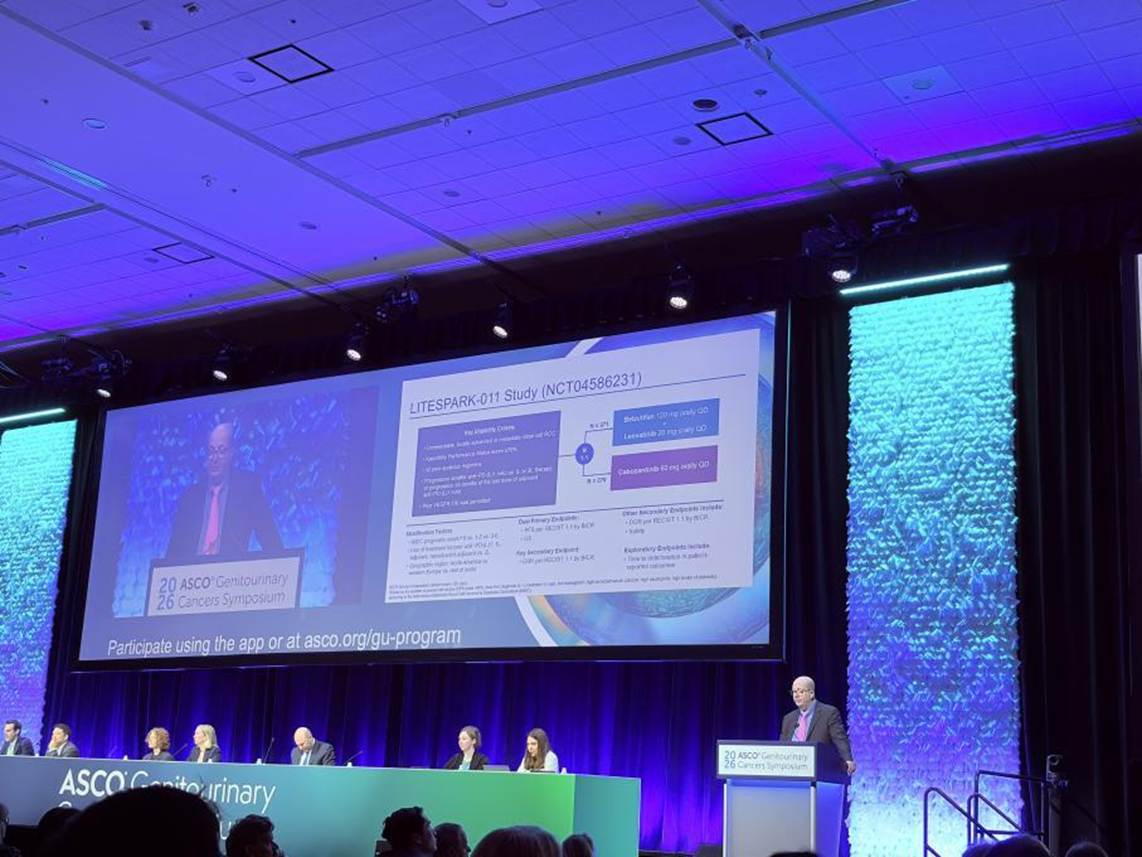
The study reported a statistically significant PFS improvement for the combination at the second interim analysis. Median PFS was 14.8 months with belzutifan plus lenvatinib versus 10.7 months with cabozantinib, corresponding to a 30% reduction in the risk of progression or death (hazard ratio [HR], 0.70). ORR also favored the combination: 52.6% at the first interim analysis and again 52.6% at the second, compared with 39.6% and 40.2%, respectively, for cabozantinib alone.
Responses also appeared more durable with the investigational regimen. Median DOR at the second interim analysis was 23.0 months with belzutifan plus lenvatinib versus 12.3 months with cabozantinib. OS was not yet mature, but the reported trend favored the combination and had not crossed the threshold for statistical significance at the time of presentation.
Safety was described as manageable and broadly consistent with the known profiles of the individual agents. Grade 3 or higher treatment-emergent adverse events occurred in 84.1% of patients in the combination arm and 82.7% of those receiving cabozantinib. Treatment-emergent adverse event–related deaths were reported in 5.4% and 3.2% of patients, respectively; of these, 2 deaths in the combination arm and 1 in the cabozantinib arm were considered treatment related.
The findings are notable because the trial is described as the first phase 3 study to show that an HIF-2α inhibitor–based combination outperformed a contemporary VEGFR TKI in this treatment setting. Even so, the absence of mature OS data means the extent to which these PFS and response gains will translate into longer survival remains unresolved.
Breakthrough 2: LITESPARK-022 Strengthens the Adjuvant Setting
In localized kidney cancer, surgery remains the cornerstone of curative treatment, but patients at high risk of recurrence continue to face substantial postoperative risk. On the basis of KEYNOTE-564, adjuvant pembrolizumab has become a standard option for these patients. LITESPARK-022 tested whether adding belzutifan to that standard could further reduce recurrence after nephrectomy.
The double-blind, placebo-controlled phase 3 trial enrolled 1,841 patients with ccRCC worldwide. Eligible patients included those with intermediate-high-risk or high-risk M0 disease, as well as patients with M1 no evidence of disease after surgery. Participants were randomly assigned 1:1 to intravenous pembrolizumab 400 mg every 6 weeks for about 1 year plus oral belzutifan 120 mg once daily, or the same pembrolizumab regimen plus placebo. The primary endpoint was investigator-assessed disease-free survival (DFS), with OS as a key secondary endpoint.
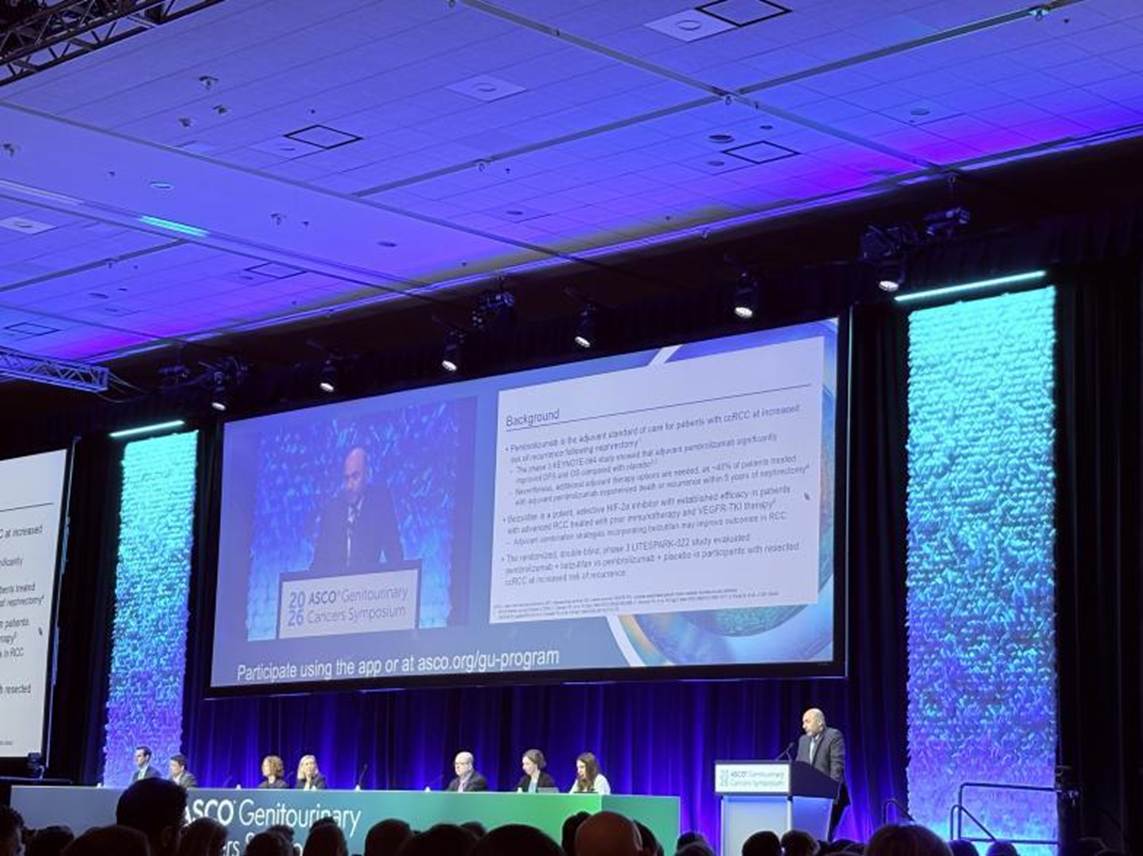
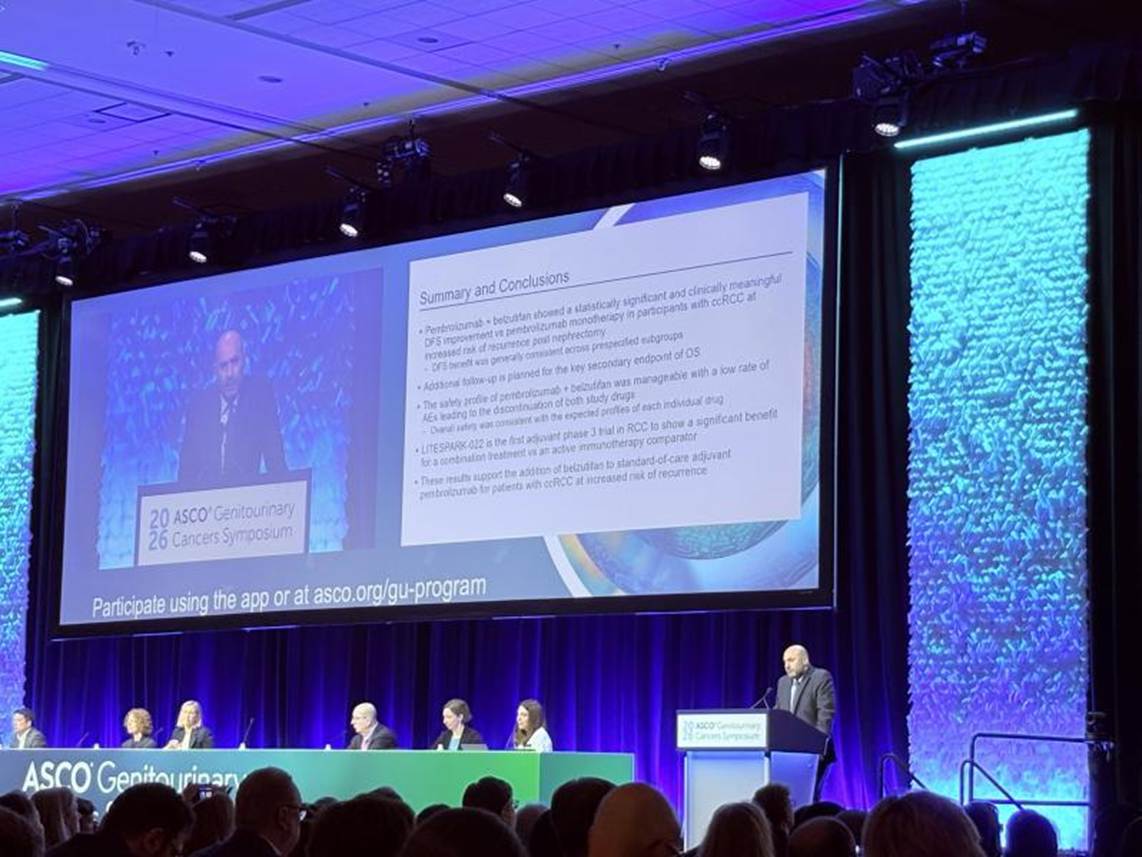
At the first interim analysis, with data cutoff on August 23, 2025, median follow-up was 28.4 months (range, 15.0-40.1), and 87% of the DFS events planned for analysis had occurred, according to the source article. The combination reduced the risk of recurrence or death by 28% versus pembrolizumab plus placebo (HR, 0.72). Median DFS had not been reached in either group, but the estimated 24-month DFS rates were 80.7% with belzutifan and pembrolizumab and 73.7% with pembrolizumab alone.
OS data were again immature. Only 29% of the events required for the final OS analysis had occurred, and the reported HR of 0.78 did not meet statistical significance. As in LITESPARK-011, additional follow-up will be necessary to determine whether the early time-to-event advantage translates into a survival gain.
Toxicity was higher with the intensified adjuvant regimen, although the overall profile was considered manageable. Grade 3 or higher treatment-emergent adverse events occurred in 52.1% of patients receiving belzutifan plus pembrolizumab versus 30.2% of those receiving pembrolizumab plus placebo. The most common higher-grade events included anemia, alanine aminotransferase elevation, and hypoxia. Grade 5 treatment-emergent adverse events were uncommon and identical in both groups at 0.3%.
Summary
Belzutifan is an oral HIF-2α inhibitor designed to target a pathway central to ccRCC biology. The ASCO GU 2026 data place the agent in two clinically distinct but strategically important settings: salvage treatment after modern frontline therapy and postoperative therapy aimed at preventing relapse. In that sense, the two trials expand the discussion around belzutifan from a single-line option to a drug with potential relevance across the continuum of ccRCC care.
Whether these results will alter practice immediately will depend in part on regulatory review, guideline interpretation, and the durability of benefit with longer follow-up. For now, the studies provide strong evidence that belzutifan-based combinations can improve clinically meaningful time-to-event endpoints in both advanced and high-risk postoperative ccRCC, while also underscoring the need to clarify OS benefit, refine patient selection, and better define toxicity management in broader practice.

