


Follicular lymphoma (FL) and marginal zone lymphoma (MZL) are the main subtypes of indolent non‑Hodgkin lymphoma (iNHL), characterized by slow progression but high relapse rates after response to first‑line rituximab‑based therapy. Patients with relapsed/refractory (R/R) disease previously received rituximab monotherapy with generally poor outcomes. The initial analysis of the AUGMENT trial demonstrated that lenalidomide enhances rituximab‑mediated antibody‑dependent cellular cytotoxicity, and the combination (R² regimen) significantly prolonged progression‑free survival (PFS) compared with rituximab plus placebo.
Recently, the Journal of Clinical Oncology published the 5‑year long‑term follow‑up results and subgroup analyses of this study, focusing on the long‑term efficacy, safety, and applicability of the R² regimen in elderly FL patients who often have poor organ function and intolerance to chemotherapy. Tianjin Medical University Cancer Institute and Hospital actively participated in this global multicenter phase III trial, with one of the highest enrollment numbers in China. We invited Prof. Huilai Zhang and Dr. Zechao Hu from this institution to summarize and interpret the data.
Fig. 1. Screenshot of the JCO publication
Nearly 2.5‑fold PFS improvement! 5‑year data from AUGMENT
1. Trial Design
This was a global multicenter, randomized, double‑blind, placebo‑controlled phase III trial. Patients were assigned 1:1 to the R² group or the R‑placebo group, with a maximum treatment period of 12 28‑day cycles. Lenalidomide or placebo was given on days 1–21 of each cycle; rituximab was given multiple times in cycle 1 and only on day 1 in cycles 2–5. Treatment was discontinued upon disease progression, intolerable toxicity, or withdrawal of consent.
2. Inclusion Criteria
Patients aged ≥18 years with pathologically confirmed grade 1–3a FL or MZL, relapsed/refractory after at least one prior line of therapy and at least two prior rituximab infusions, were enrolled. The intention‑to‑treat (ITT) cohort comprised 358 patients with balanced baseline characteristics, including 295 FL patients, among whom 66 were aged ≥70 years.
3. Follow‑up Strategy
Follow‑up was stratified by year with regular re‑examinations. The primary endpoint for the long‑term analysis was investigator‑assessed PFS (initial PFS was evaluated by an independent review committee [IRC]). Secondary endpoints included overall survival (OS), treatment‑emergent adverse events (TEAEs), histological transformation, and second primary malignancies (SPMs). The OS analysis was triggered when the last patient had been followed for 5 years. Prespecified subgroup analyses for FL and a post‑hoc analysis for FL patients aged ≥70 years were performed. Safety and other endpoints were assessed at defined cut‑off dates.
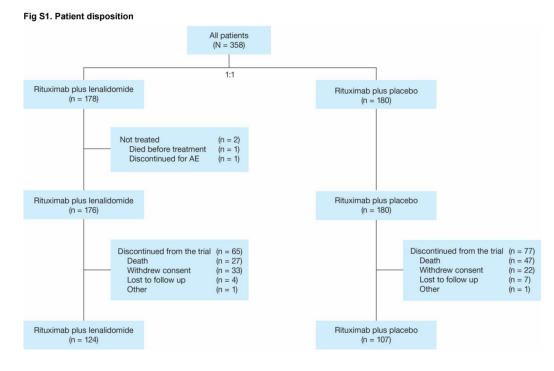
Fig. 2. AUGMENT trial patient disposition flow diagram
Results
At a median follow‑up of 65.9 months, the overall population had a median age of 62–64 years, 77% had Ann Arbor stage III/IV disease, and more than half had high tumor burden. In the elderly FL subgroup (age ≥70 years), the median age was 75–76 years, 41% had baseline creatinine clearance of 30–59 mL/min, and over 50% had high‑risk FLIPI scores, reflecting the real‑world characteristics of older lymphoma patients with impaired organ function.
1.PFS
- Overall ITT: 27.6 months in R² group vs 14.3 months in control group, HR 0.50 (disease progression or death reduced by 50%).
- FL subgroup: 30.4 vs 13.9 months, HR 0.43 (risk reduction 57%).
- Elderly FL (≥70 years): 32.3 vs 16.6 months, HR 0.47, showing consistent benefit in the older population.
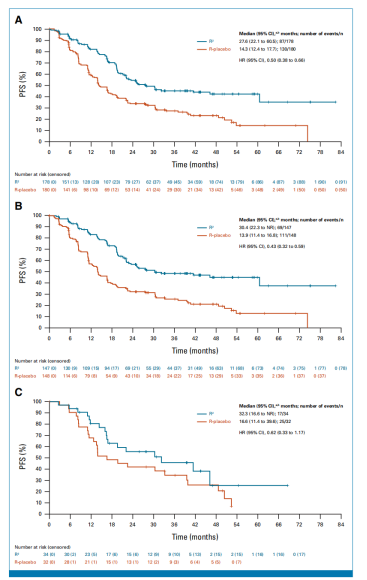
Fig. 3. PFS curves for the overall population and key subgroups, demonstrating long‑term benefit of R²
2.OS
- Overall ITT: Median not reached in either group; HR 0.59 (95% CI 0.37–0.95), 41% reduction in all‑cause mortality.
- FL subgroup: Median not reached in either group; HR 0.49 (95% CI 0.28–0.85), 51% reduction.
- Elderly FL: Median not reached in R² group vs 70.1 months in control; HR 0.47 (95% CI 0.18–1.23), 53% reduction, indicating a survival benefit even in the elderly.
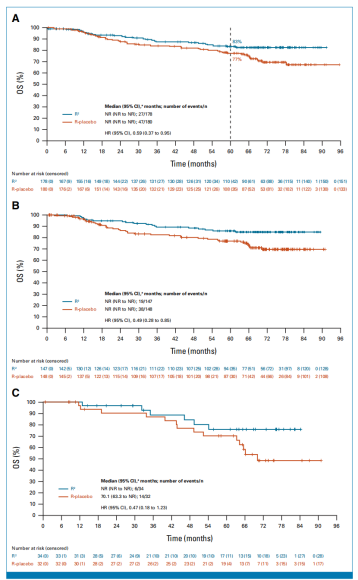
Fig. 4. OS curves showing significant survival benefit in the overall and FL populations, and a trend toward benefit in the elderly subgroup
Safety Analysis
- Overall TEAEs: Any‑grade TEAEs occurred in 99% (R²) vs 96% (control); grade 3/4 in 69% vs 32%. The most common TEAE in the R² group was neutropenia (59%), while diarrhea (23%) was most frequent in the control group. No new TEAE types emerged during long‑term follow‑up, and the safety profile remained consistent with the initial analysis.
- Elderly FL: Any‑grade TEAEs occurred in 100% (R²) vs 94% (control); grade 3/4 in 68% vs 34%. TEAE types were similar to the overall population and were manageable with supportive care and dose adjustments.
Long‑term oncological risks – At 5 years, both histological transformation and SPM rates were lower in the R² group than in the control group, confirming that a 12‑cycle limited course of lenalidomide combination does not increase the risk of late malignancies.
Conclusions
1. With a median follow‑up of 65.9 months, the long‑term data confirm that the R² regimen significantly prolongs PFS and OS compared with rituximab monotherapy in R/R iNHL, achieving durable disease control. The efficacy advantage was validated in the FL population and in elderly FL patients (≥70 years), who tolerated the regimen and derived clinical benefit.
2. The safety profile of R² is overall manageable, with neutropenia being the main TEAE; no new long‑term safety signals were identified, and risks of histological transformation and SPMs were lower.
3. These 5‑year AUGMENT data further establish R² as a standard of care for R/R iNHL and provide a backbone platform for combination with novel targeted agents, bispecific antibodies, and CAR‑T cell therapy.
Reasons for Recommendation
1. Filling the evidence gap – This study provides the 5‑year long‑term follow‑up data for R² in R/R iNHL, completing the evidence on long‑term antitumor activity and strengthening its evidence base.
2. Addressing the clinical dilemma in elderly patients – Elderly R/R FL patients often have poor tolerance to chemotherapy and limited options. This study demonstrates that the chemotherapy‑free R² regimen is effective and manageable in the elderly, offering an important therapeutic choice for this high‑risk population.
3. Guiding future treatment and research – The consistent efficacy and favorable safety of R² not only support its use as a standard second‑line therapy but also provide a solid platform for developing combination strategies with novel agents, thus promoting further optimization of the treatment landscape.
Expert commentary and portrait of Prof. Zhang
Expert Commentary
The 5‑year follow‑up data from the AUGMENT trial comprehensively depict the long‑term efficacy and safety of the R² regimen, reaffirming the clinical value of a chemotherapy‑free combination in R/R iNHL. Nevertheless, several limitations should be noted: the subgroup of FL patients aged ≥70 years was a post‑hoc analysis with a small sample size, limiting statistical power; PFS assessment during long‑term follow‑up was investigator‑assessed, introducing potential bias; and the study did not include head‑to‑head comparisons with emerging bispecific antibodies or novel targeted agents.
Looking forward, dedicated large‑scale studies in elderly FL patients are warranted to explore individualized dosing and optimized schedules. The R² platform can be further combined with other agents to deepen responses, and modern prognostic models such as FLIPI can be used to refine patient selection, ultimately moving toward personalized precision therapy for R/R iNHL.
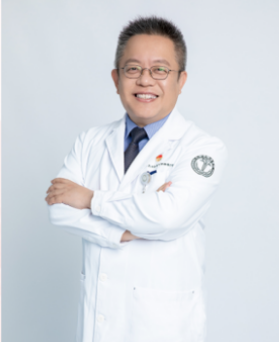
Prof. Huilai Zhang
- Vice President of the Hematology Physicians Branch, Tianjin Medical Doctor Association
- Tianjin Medical University Cancer Institute & Hospital
- Standing Committee Member of the Hematology Branch, Tianjin Medical Association
- Vice Chair of the Hematology Quality Control Center, Tianjin
Currently serving as:
- Director of the Lymphoma Department, Tianjin Medical University Cancer Institute & Hospital
- Deputy Director, National Key Laboratory of Drug Accessibility and System Translation
Primary research direction: Molecular diagnosis and individualized treatment of malignant lymphoma
Major committee positions:
- Member of the Lymphoma Quality Control Expert Committee, National Cancer Center
- Review Expert for the Four Major Chronic Diseases and National Natural Science Foundation projects
- Member of the 9th Council, China Anti-Cancer Association (CACA)
- Chair of the Lymphoma Committee, China Anti-Cancer Association (CACA)
- Standing Committee Member of the Lymphoma Committee, Chinese Society of Clinical Oncology (CSCO)
- Vice Chair of the Medical Oncology Committee, China International Exchange and Promotive Association for Medical and Health Care (CPAM)
- Member of the Hematology Physicians Branch, Chinese Medical Doctor Association
- Member of the Lymphoma Study Group, Oncology Branch, Chinese Medical Association
References:
[1] Trněný M, Zhang H, et al. Lenalidomide Plus Rituximab for Relapsed/Refractory Indolent Non‑Hodgkin Lymphoma: 5‑Year Follow‑Up and Subgroup Analyses From the Phase III AUGMENT Trial. J Clin Oncol. Published online April 16, 2026.

