


At the FuXing Hospital affiliated with Capital Medical University, there is a 92-year-old expert who remains active on the clinical front—Professor Xia Enlan, known as the 'Mother of Hysteroscopy' in China.
Today, many of Xia Enlan's students have retired from the hospital, but she continues to be active in clinical practice, not only seeing patients and performing surgeries but also actively participating in major obstetrics and gynecology academic conferences. She says, "I always feel there is so much to do, especially in the field of obstetrics and gynecology, where many patients are still waiting for treatment."
Despite her body aging day by day, Xia Enlan has no plans to leave clinical practice; she intends to continue advancing the development of hysteroscopy in China.
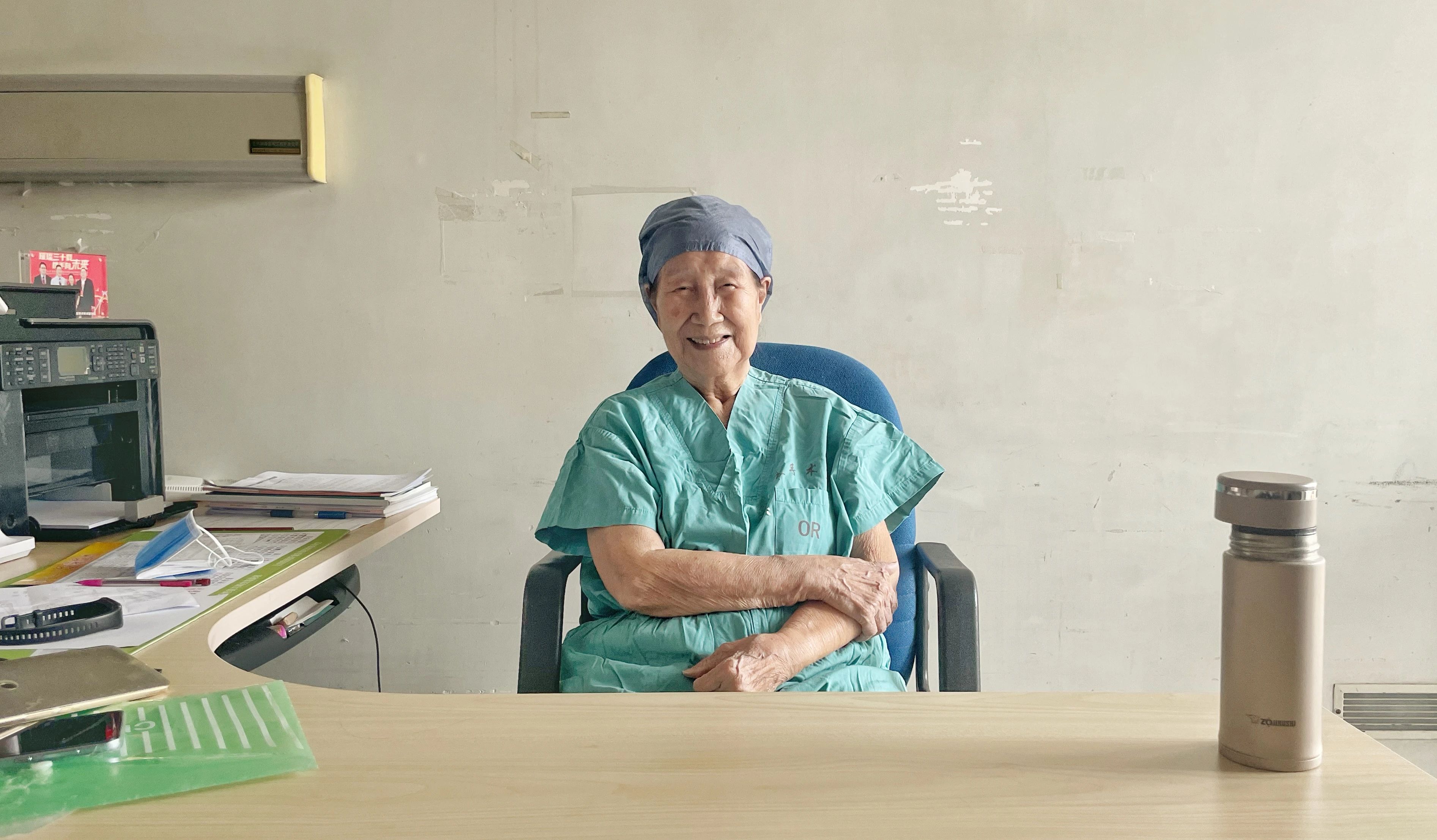
Fig.1 Xia Enlan/ photo by MedJ
Performing Complex Surgeries at 92
Even at the age of 92, Xia Enlan's schedule remains packed. Every Tuesday morning is her clinic time, starting at eight in the morning, she sees nearly a hundred patients in a day.
A nurse introduced that Dr. Xia Enlan's clinic is time-limited but not number-limited; as long as one can register before 4:30 PM, she will see everyone, no matter how late. "Half of our patients are from out of town, and we often don't finish until six or seven in the evening," she said.
On days when she is not in the clinic, Xia Enlan arrives at the hospital by seven in the morning, and her work is equally busy. She deals with departmental affairs, participates in shift changes, teaches students, and writes medical articles. Over the years, she has also learned English and how to use a computer, with energy and memory that are not inferior to the young.
Wednesdays and Fridays are surgery days. Xia Enlan introduced that the department currently has five operating rooms, and five groups of surgeries often take place simultaneously. She tours to observe the progress of several surgeries, and her presence always brings extra peace of mind to the surgeons on the operating table.
She also personally performs surgery on some patients.
A 62-year-old patient with uterine prolapse, whose entire uterus was outside, causing fatigue with walking and sitting, and bringing much inconvenience to her life. Xia Enlan personally took to the operating table and performed a "vaginal total hysterectomy" combined with anterior and posterior vaginal wall repair surgery for her.
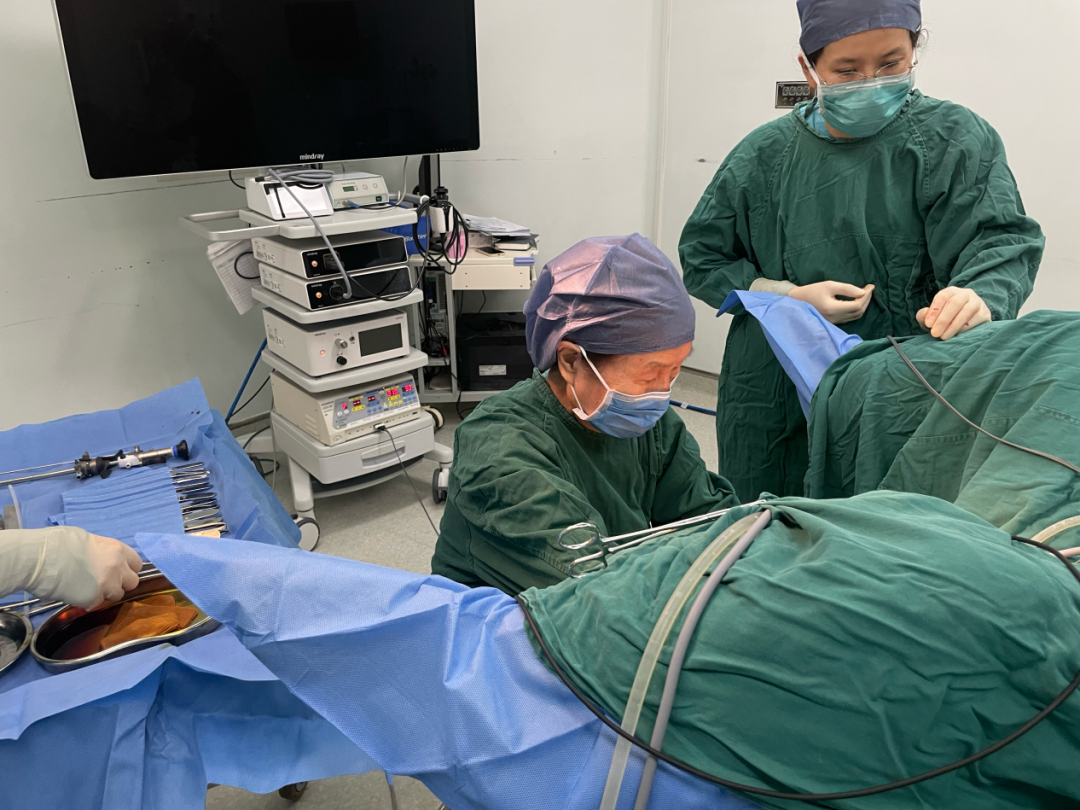
Fig.2 Xia Enlan at surgery/ photo by MedJ
"Vaginal total hysterectomy" offers advantages such as minimal trauma, rapid recovery, and no scarring on the body surface. However, due to the narrow surgical field of vaginal surgery, it is challenging to master the indications and contraindications, and the requirements for physicians are extremely high. Xia Enlan recalls that after the founding of the People's Republic of China, women's health care was just beginning, and many patients only sought medical attention at hospitals when they developed severe uterine prolapse. It was during this time that she treated a large number of patients and became proficient in this surgical technique.
"In hospitals like ours that primarily focus on endoscopy, many young doctors are not skilled in vaginal surgery. Sometimes they only encounter a patient every few months, which is not enough practice. Therefore, when it comes to such surgeries, I always personally guide them through the procedure."
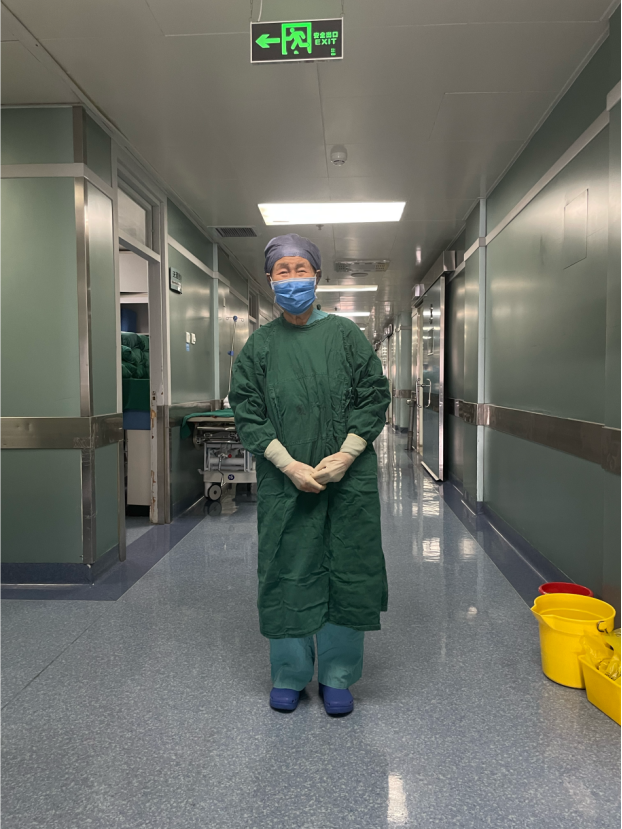
Fig.3 After completing the surgery/ photo by MedJ
Only at the age of 60 did her career truly take off
In 1949, at the tender age of 17, Xia Enlan was admitted to the Medical College of Northwest University, becoming one of the first generation of university students in the newly founded People's Republic of China. At the dawn of the nation, the mortality rates for mothers and newborns were alarmingly high, prompting the government to enact policies aimed at reducing maternal mortality. In response, the Medical College of Northwest University introduced a specialized obstetrics and gynecology program, which Xia Enlan chose to pursue.
Upon graduation, she was assigned to the Qinghai Provincial People's Hospital (formerly known as Qinghai Zhongshan Hospital), a modest facility with crowded wards. Yet, it was during the country's first baby boom, and the obstetrics department was inundated with patients. Xia Enlan not only performed cesarean sections but also mastered various techniques such as anesthesia and endotracheal intubation.
In 1969, during a peculiar era, the hospital where Xia Enlan worked was relocated to the Gansu Province Jingyuan County Mining District Hospital. In the remote areas of Gansu, she observed that obstetrics and gynecology were not given due importance, and the residents lacked scientific health concepts.
On one occasion, in a mining area of Jingyuan County in the Dingxi region, she encountered a young woman who had fallen into a coma due to blood loss, with continuous uterine bleeding threatening her life. Xia Enlan and her colleagues immediately recommended a hysterectomy, but the patient's husband believed that removing the uterus would render her neither man nor woman.
Even the patients themselves, constrained by societal norms and medical technology, would endure their suffering in silence, refusing medical treatment. The tragic fates of these women deeply affected Xia Enlan, making her realize that the loss of a uterus not only impacts a woman's physical health but also subjects them to discrimination and exclusion in society and family.
From then on, Xia Enlan began to ponder how to preserve women's uteri and assist more families. After the reform and opening up, as the nation vigorously developed medical science, Xia Enlan, with the support of policies, returned to work at the Beijing Fuxing Hospital, where she had the opportunity to further her studies.
In 1989, an article in The BMJ featured a British expert who attempted to treat uterine bleeding by entering the uterine cavity with a pediatric bladder electrotome, achieving success in 15 out of 16 cases. This greatly inspired Xia Enlan, but at the time, it was not easy to introduce this technology in China.
Xia Enlan recalls that back then, the surgery department at Fuxing Hospital had nine sections and three operating rooms, yet she had no dedicated surgery days and had to inquire everywhere to schedule a procedure. Even when she managed to secure a slot, coordinating with an anesthesiologist proved difficult, making the conduct of a single surgery a formidable challenge. Moreover, "there was no set pricing for surgeries, so no fees could be charged," and "there was a lack of specialized hysteroscopes for gynecology," which were all immediate obstacles in her path.
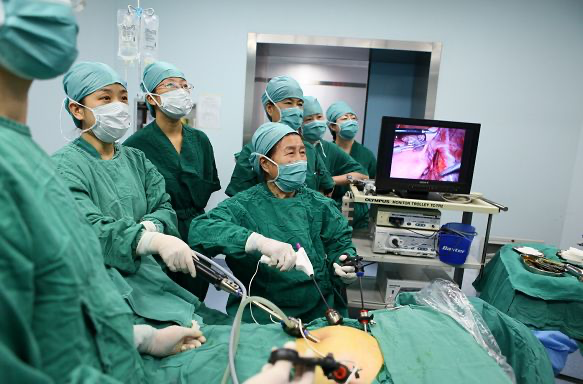
Fig.4 Despite her advanced age, Xia Enlan still had the capability to perform surgeries. [Photo provided by the interviewee]
On May 4, 1990, Xia Enlan's team successfully performed the first hysteroscopic endometrial resection for a young patient with abnormal uterine bleeding that did not respond to conservative treatment, marking a milestone in China. This procedure not only reduced surgical trauma and the risk of postoperative infection but also successfully preserved the patient's uterus.
Compared to traditional methods, hysteroscopic surgery is revolutionary. It completely changes the way traditional gynecological examinations rely solely on touch or imaging for diagnosis. Instead, it allows for precise diagnosis by directly observing the internal conditions of the uterine cavity and also aims to preserve the patient's uterine function and fertility during treatment.
For her exceptional contributions to gynecological diagnosis and treatment in China, in May 2017, at the first Global Hysteroscopy Congress held in Spain, Professor Xia Enlan was awarded the "Special Contribution Award" along with Loffer from the United States, Bettocchi from Italy, Hamou from France, and Hayashi Yasuyoshi from Japan. She is also hailed as the "Mother of Hysteroscopy" in China.
Never Considering Leaving Clinical Practice
After the success of the first surgery, an increasing number of patients from all over the country came to seek her expertise. "At our busiest, the admission forms for inpatients could stack up to a foot high," Xia Enlan noted. She realized that it was impossible for a single institution to perform all the surgeries needed and that the hysteroscopic technique needed to be popularized on a larger scale.
To this end, in 1992, Xia Enlan initiated a nationwide hands-on training program for hysteroscopic techniques, which has now reached its 93rd session, training tens of thousands of doctors skilled in gynecological endoscopy. A year later, she led the establishment of the country's first center dedicated to the diagnosis and treatment using hysteroscopy, continuing her clinical practice.
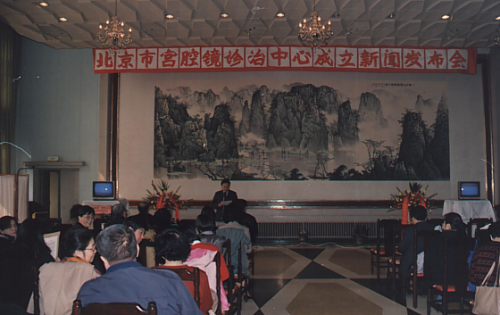
Fig.5 Photo from the press conference at the establishment of the Hysteroscopy Diagnosis and Treatment Center
Although the training program was still in its infancy, it quickly gained recognition and support from international peers. In 2000, the International Hysteroscopy Training Center established its Asian branch in Beijing, with Xia Enlan serving as the director. Since then, Xia Enlan has promoted the benefits of hysteroscopic technology for more women and has secured a place for Chinese obstetrics and gynecology on the international stage.
At the same time, she summarized her clinical experiences and published them in the form of papers in authoritative journals. Her first monograph, "Gynecological Endoscopy (First Edition)," was completed in 1998 and published in 2000, marking the first work on gynecological endoscopy in China. Xia Enlan considers this period as the first phase of hysteroscopic technology, where it began to make a significant impact nationwide.
In her view, the second phase spans from 2000 to 2010, during which hysteroscopic technology began to spread throughout the country. Data shows that by 2004, China had successfully performed over 2.84 million hysterectomies, and a considerable number of these patients could have their intrauterine lesions removed and their diseases cured while preserving their uteri through hysteroscopic surgery.
During this period, the clinical indications for hysteroscopic surgery were expanded to include the removal and treatment of diseases such as endometrial polyps, submucosal fibroids, intrauterine adhesions, and uterine abnormalities under hysteroscopic guidance. Concurrently, the Gynecological Endoscopy Study Group of the Obstetrics and Gynecology Academic Committee of the Chinese Medical Association was officially established, leading to an increase in academic exchanges across the country.
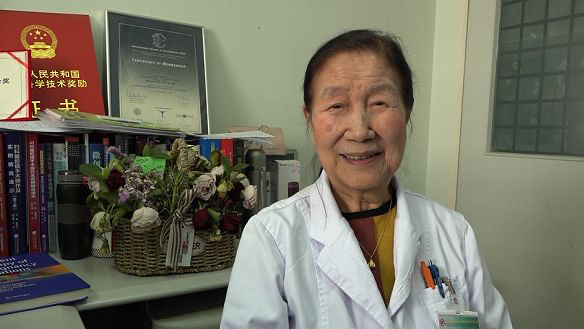
Fig.6 Dr. Xia Enlan
The period from 2010 to 2020 marks the third phase of hysteroscopic technology. Xia Enlan explains that by this time, hysteroscopy had become a common gynecological technique, widely adopted in district and county-level hospitals across the country. It was mastered by a vast number of gynecologists, and Chinese gynecology and obstetrics medicine had increasingly extensive exchanges with the international community, gaining a certain say in international conferences.
Seeing the technology she introduced and promoted help more Chinese women in clinical settings, Xia Enlan feels "a great sense of achievement." However, in her outpatient clinic, she still encounters many gynecological complex cases, especially patients with infertility caused by diseases such as intrauterine adhesions and endometrial polyps. Whenever she witnesses their suffering, Xia Enlan feels compelled to help them.
Over the years, she has called for attention to the significant role of hysteroscopic technology in the field of infertility. Studies have shown that 80% of infertility patients can be treated with other methods instead of undergoing in vitro fertilization (IVF). If these patients can have the opportunity to conceive through technologies like hysteroscopy, it would not only reduce medical costs but also alleviate the patients' suffering.
Throughout her seventy-year medical career, protecting fertility has been something Xia Enlan has always insisted on. Even a few years ago, after undergoing hip replacement surgery and treatment for coronary heart disease, she did not give up clinical practice and returned to the obstetrics and gynecology department of Fuxing Hospital shortly after being discharged.
Why is she still so dedicated at the age of 92? She says, "It's because of my love for it."

