


Can surgeons still make a difference if they have to change specialties at the age of 45? To this question, Wang Wenlin, director of the Institute of Chest Wall Surgery and director of chest wall surgery at the Second People's Hospital of Guangdong Province, is the answer.
Before the age of 45, Wang Wenlin was a cardiac surgeon, and after the age of 45 he was a thoracic surgeon. In the era when most of the surgeries in thoracic surgery have been minimally invasive, Wang Wenlin, who doesn't even know how to do thoracoscopy, has taken a different approach. With the correction of funnel chest as a pivot point, he not only set several world records, but also opened up a whole new clinical specialty of chest wall surgery.
Today, the surgical procedure that bears his name is one of the standard treatments in this field.
45 years old, transferred from cardiac surgery to thoracic surgery
Wang Wenlin originally specialized in cardiac surgery.
From master's degree, doctorate, post-doctorate to cardiac surgeon, Wang Wenlin has been working in the field of cardiac surgery for 16 years, and he thought he would be on this path for the rest of his life.
At the end of 2012, the then Director of Cardiothoracic Surgery of the Second People's Hospital of Guangdong Province (hereinafter referred to as the Second Provincial Medical Center) was suddenly notified that the hospital had introduced a new team of cardiac surgeons, and that it would set up an independent cardiac surgery department, and that he would take up the post of Director of Thoracic Surgery.
That year, he was 45 years old. He was aggrieved, puzzled and even indignant. Eventually, Wang Wenlin relented, "Cardiac surgery is the specialty I love most, but I resigned myself to starting a 'second career'."
Wang Wenlin's "first venture" was four years ago. January 1, 2009, he was transferred from the Guangzhou Military District General Hospital (now the People's Liberation Army Southern Theatre General Hospital) to the province's second medical director of cardiothoracic surgery.
The situation of the department at that time could be described as "penniless". The department was structured as a cardiothoracic surgery department, with a low volume of surgeries, almost no cardiac surgeries, and no cardiac surgery care unit; the wards were rated at 40 beds, but the number of hospitalized patients was often in the single digits, with no more than 20 at any one time.
"Of course, good business wouldn't make me the director." Wang Wenlin understands the situation well, "The poor foundation is a disadvantage, but it also gives me the opportunity to 'paint'."
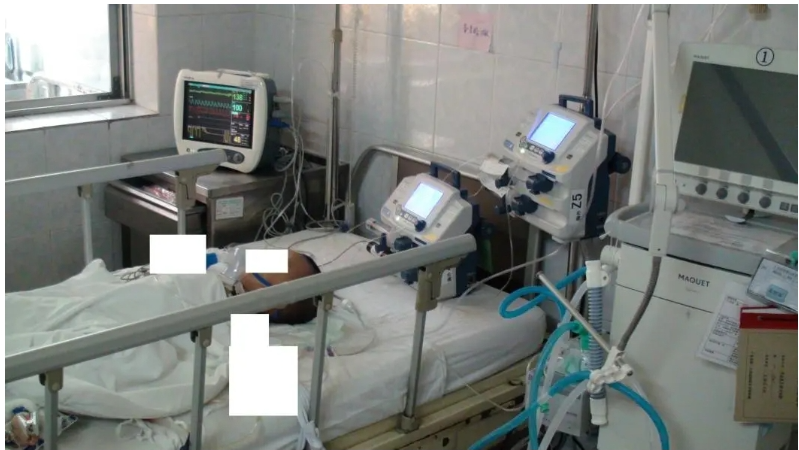
Fig.1There are no custodial wards and general wards are utilized for mobile ICU, Photo/Interviewee
It took Wang Wenlin only six months to get the department off the ground, and the under-occupied wards gradually became under-occupied. The number of heart surgeries jumped - 51 in 2009, 87 in 2010, 219 in 2011 and 306 in 2012.
In 2012, Wang Wenlin was named "Guangdong Provincial Model Worker", which was the first time that someone from the province's second medical center won the honor.
While Wang Wenlin was happy that his annual surgical volume had exceeded 300, and that he had developed a mature team that could pursue greater development, he received notice that he had gone from chief of cardiothoracic surgery to chief of thoracic surgery.
Wang Wenlin held his breath: from cardiac surgery to thoracic surgery and also succeeded in a number of senior teachers, I can also.
"I did not have a base of work in thoracic surgery in a major hospital, and my brief work years ago was in the era of large open chests, long after thoracoscopy had been popularized. For general thoracic surgery, my experience is almost blank." Wang Wenlin told MedJ.
He not only changed his specialty, but also led the whole department to find a way out. "Our original development was focused on the heart, and general thoracic surgery was only carried out intermittently, not to mention competing with those famous thoracic surgeries in Guangzhou, but also not comparable to the departments with average business, at least they had a lot of routine work to do."
Good at analyzing Wang Wenlin began to ponder, and quickly found a breakthrough - funnel chest.
The hottest areas of thoracic surgery are diseases of the lungs, esophagus, mediastinum, and other thoracic cavities, and very few doctors pay attention to funnel chest," he told MedJ. With less attention, there are fewer competitors. And the incidence of funnel chest is not low, there is no accurate data, by the median, it is also five in a thousand, a large number of patients. Moreover, cardiac surgeons have a clear advantage in performing funnel chest surgery: the biggest risk of funnel chest surgery is damage to the heart, and many patients with funnel chest have a combination of congenital heart disease, so it is better to control the risk if the surgeon has a basic knowledge of cardiac surgery to perform the surgery.
Though funnel chest is a cold spot in thoracic surgery, Wang Wenlin gave due consideration to another competitor - pediatric surgery. "Although funnel chest is a congenital disease, it can exist at any age; we are a general hospital and can admit patients of all ages; adult patients with hard bones and complex deformities make surgery more challenging and easier; the number of pediatric surgeons is relatively small, and there is not much competitive pressure."
Fear no authority, dare to innovate
Funnel chest is the most common chest wall deformity, most patients have no discomfort, some patients may have symptoms such as dyspnea, decreased activity tolerance, tachycardia, chest pain, etc. Those with severe cosmetic deformities may also have psychological problems such as depression and anxiety.
It was not until 2020 that the first Chinese Expert Consensus on the Surgical Treatment of Funnel Chest was released in China, in which it was stated that in recent years, with the popularization of minimally invasive funnel chest orthopaedic surgery (Nuss surgery) and other techniques, the number of funnel chest diagnoses and treatments has increased significantly, and the treatment effect has improved markedly, but there is a huge difference in the volume of surgeries between different hospitals. However, the number of surgeries varies greatly from hospital to hospital, and most hospitals that are able to perform corrective surgery for funnel chest have only a few tens of surgeries per year, so some doctors do not have enough knowledge about the various aspects of funnel chest diagnosis and treatment. There are still controversies about the timing, modality, indications and other aspects of funnel chest corrective surgery.
"The Nuss procedure mentioned in the Consensus was the standard treatment for funnel chest at that time. Invented in 1998 by Dr. Donald Nuss, a famous American surgeon, the Nuss procedure is considered a "revolutionary surgery" in the treatment of funnel chest. 20 years later, through continuous improvement by doctors, the Nuss procedure has become more and more mature.
However, in the clinic, Wang Wenlin also encountered many cases of unsatisfactory or even failed Nuss surgery, and thought about how to improve it. the principle of Nuss surgery seems to be very simple, as long as a steel plate is used to support the depression, the surgery will be successful. Through repeated dismantling, he discovered the "leverage principle" of Nuss surgery.
After mastering the principles and making improvements, the quality and effectiveness of the surgery were indeed further improved. However, Wang Wenlin discovered from extensive practice that the Nuss procedure had some flaws that could not be solved by improvement alone:
Surgery requires a special steel plate to be passed through the gap between the heart and the depression in the front chest wall, which may damage the heart; the plate needs to be supported by ribs and remain in the body for about 3 years, which will cause many inconveniences and hidden dangers to the patients; and children under 3-5 years old cannot be operated on, and so on.
It is also clearly pointed out in the above "consensus" that the incidence of postoperative pneumothorax and hemothorax is higher in Nuss minimally invasive surgery than in open surgery, and the risk of reoperation due to the displacement of the steel plate is higher in the postoperative period. In addition, it is also reminded that although rarely reported in the literature, intraoperative and postoperative complications of Nuss minimally invasive funnel chest correction surgery are not uncommon, and intraoperative fatal complications such as cardiac injuries still occur from time to time in hospitals with a limited number of surgical cases.
As long as the nature of the Nuss procedure remains the same, requiring the placement of a steel plate on the surface of the heart, the risk cannot be eliminated, according to Wang Wenlin.
In 2018, he published a series of six consecutive articles online under the title Nuss Surgery Critique, which provided a comprehensive and systematic analysis of the flaws of the Nuss procedure. This is the first time a voice has spoken out unequivocally against the Nuss procedure on a global scale.
Criticizing authority brings with it the challenge of others. For a time, criticism from peers also came.
"I think Dr. Nuss should be one of the greatest doctors in surgery, but respect for the man himself is not the same as only being obsessed with surgical dogma and ignoring technical flaws." Wang Wenlin said.
"Wang surgery"
Wang Wenlin has been conceptualizing new surgical procedures for funnel chest since 2013.
From the incision approach to the skin suture, from the creation of the shape of the plate to the choice of material ...... After more than 3 years of argumentative polishing, he has designed a procedure that is completely different from the Nuss procedure.
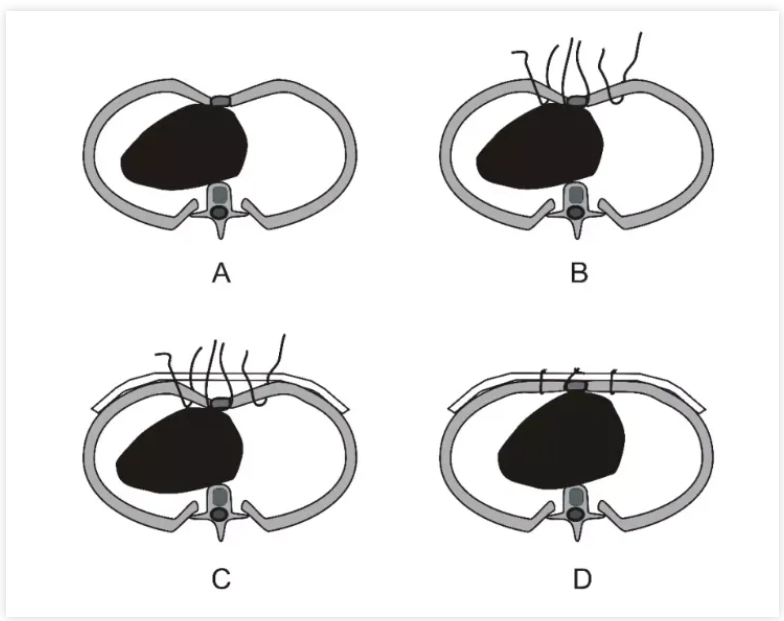
Fig.2 Basic schematic of Wang's surgery, Photo/Interviewee
It abandons the principle of leverage on which the Nuss procedure is based and uses the working principle of suspension for correction. Through a single incision in the center, a plasty plate is placed in front of the depression, lifting the depressed chest wall and fixing it to the plasty plate. There is no longer any need to pass over the surface of the heart or to support the plate with localized ribs, making the procedure much less risky and effectively preventing surgical constraints on the thorax.
Wang Wenlin named it "Wang Surgery"
"The first clinical application of the Wang procedure was in a child under 3 years of age with secondary funnel chest, which is generally considered to be no earlier than 3 years of age for corrective surgery. The child had undergone heart surgery at the age of 1 year, using a median incision that left a long scar on the forehead. For such a patient, a Nuss procedure requires an incision under the xiphoid process to free the sternal adhesions sufficiently before proceeding. Wang Wenlin felt that "this may be the best arrangement of fate". Since the child's median incision could not be avoided, why not try to do a Wang surgery through this incision first? If it works, the new procedure finally makes it into the clinic; if it doesn't, go ahead and do the Nuss procedure. The child's injuries will not increase and the healing process will not be compromised.
Utilizing the Wang procedure, Wang Wenlin completed the treatment of this high-risk and difficult post-cardiac surgery case of funnel chest in half an hour.
After the success of the first surgery in 2016, Wang Wenlin refined and improved Wang's surgery several times. at the end of 2018, Wang Wenlin released all the details of Wang's surgery.
The introduction of the new procedure has been met with a strong reaction, with many approvals and a great deal of criticism. Wang Wenlin said, "Whether this surgery is good or bad, we need to let time prove it and let the facts speak for themselves."
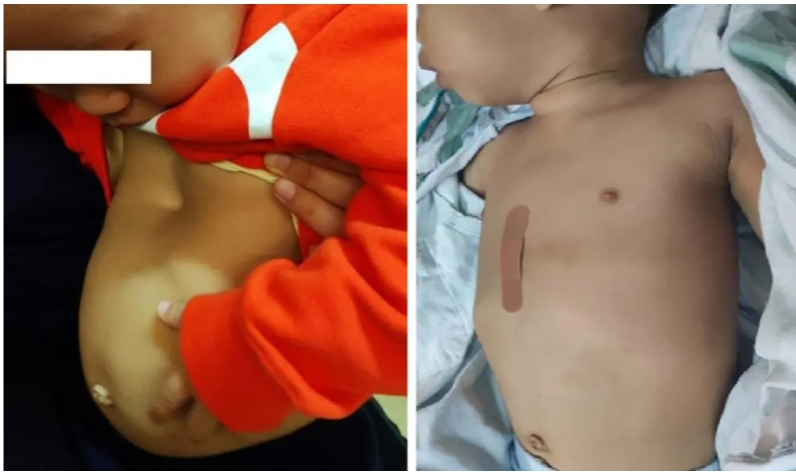
Fig.3 Before and after Wang's surgery, Photo/Interviewee
Sometime in April 2019, Wang Wenlin launched an article in his public number, "Wang Surgery: surgery like flying", on which day he used Wang Surgery to treat funnel chest in only 7 minutes and 13 seconds. A few days later, he said in his circle of friends, "A new record is born: Wang surgery, 6 minutes and 27 seconds."
With the thoracoscopic Nuss procedure, which rarely takes less than an hour, and even longer in severe cases such as extensive deformity, reoperation, and congenital heart disease, the Wang procedure has made the correction of funnel chest a safe, "minor" procedure. The Wang procedure makes funnel chest correction a safe "minor" surgery that not only breaks the age restriction of the Nuss procedure, but is also more suitable for patients with severe, combined heart disease and reoperation for funnel chest.
At the beginning of 2022, the Wang procedure was included in the National Clinical Version of the Surgical Procedure Classification Codes (NCCCC) 3.0 by the National Health Council (NHC), with a code value of 34, 7400x011. It is the only procedure in the catalog that is named after a Chinese physician.
After several years of mixed reviews, Wang Wenlin couldn't help but get a little excited when he learned the news, "This is a recognition of the Wang procedure." Today, the Wang procedure has become one of the standard procedures for the treatment of funnel chest and other depressed chest wall deformities.
Wenlin's surgery for chicken breast and other anteriorly convex chest wall deformities, Willine's surgery for compound deformities, Tesla's surgery for funnel chest without incision, and chest wall reconstruction surgery for straight back syndrome ...... Wang Wenlin has continued to innovate in his practice by originally designing more procedures. "These surgeries were designed simply because I wanted to find better treatment options for my patients." Wang Wenlin told MedJ.
To date, Wang Wenlin has more than 80 national patents, including many aspects of surgical procedures, materials, and instruments.
The world's first chest wall surgery
At the beginning of his change of specialty in 2013, Wang Wenlin spent most of his time worrying about where his patients would come from. "My hospital is not famous, my department is not famous, and I myself am not famous."
In September of the same year, Wang Wenlin opened the public number "Thoracic deformity surgery expert", insisting on popularizing thoracic deformity. Over the past ten years, he has almost never stopped writing. 4,000 articles, nearly ten million words, every word is written by his own hand. As long as he is not traveling, he will come to the hospital before 6:30 to work, using the early arrival time to respond to patient questions and write push articles. He says, "It's all about publicity and attracting patients."
After several years of hard work, Wang Wenlin's department gradually formed a distinctive feature and became a nationally renowned center for thoracoplasty and orthopedics. Not only do they no longer need to worry about their patients, but when it comes to summer and winter vacations, they have to borrow beds from other departments.
As early as 2008, Wang Wenlin had envisioned setting up a department (Chest Wall Surgery) specializing in chest wall diseases. The idea was later put on hold so as not to compete with traditional thoracic surgery, but he never forgot it. By 2018, when the vast majority of his department's admissions were patients with chest wall diseases, he realized it was time for the idea of chest wall surgery to take hold.
The establishment of the Chest Wall Surgery Department was highly valued by Tian Junzhang, the then president of the Provincial Second Medical Center, and other hospital leaders.On May 9, 2018, the world's first Chest Wall Surgery Department was inaugurated, and the clinical surgery department gained a new member.
The establishment of Chest Wall Surgery Department of the Second Provincial Hospital attracted the attention of many peers, and Wang Wenlin wanted to build a communication platform to jointly promote the development of chest wall surgery. With the help of Professor He Jianxing, chief of the Department of Thoracic Surgery at the First Affiliated Hospital of Guangzhou Medical University, on October 27, 2018, the first professional organization of chest wall surgery in China, the Chest Wall Surgery Professional Committee of the Guangdong Provincial Society of Thoracic Diseases, was born. As more and more experts from other provinces and regions asked to participate, Wang Wenlin had the even more daunting task of leading the formation of a national academic organization.
"The national presiding member himself should be a doctoral scholar, and the presiding member's organization should, in principle, rank in the top ten in the country or in the top three in the local province." None of Wang Wenlin's conditions were met.
Is a doctor's origin really that important? Wang Wenlin lost and then lit up the fighting spirit, temporarily put down the idea of preparing for the establishment of a national academic organization, and devoted himself to clinical, and carried out a large number of help and surgical promotion.At the end of 2018 to the end of 2019, within a year's time, he was invited to more than 130 hospitals in China to assist in surgery.
"On my busiest day, I traveled to five cities to complete five surgeries in three hospitals, totaling over 1,000 kilometers. I worked really hard and touched myself and my peers." He has been respected and recognized by his peers across the country for his forward-thinking ideas and superb skills.
In order to further promote the concept of chest wall surgery and related techniques, Wang Wenlin has traveled all over the country over the years and has taught techniques hand-in-hand in more than 400 hospitals. "The farthest would be Hotan in Xinjiang and Sakya in Tibet. Going out for surgery is hard, but it's very fulfilling, and I love my job."

Fig.4 Surgery of the Chest Wall, image/interviewee
At the beginning of 2023, the Institute of Chest Wall Surgery (Chest Wall Disease Diagnostic and Treatment Center) of the Second Provincial Medical College was established, which is the first hospital in the world that specializes in chest wall surgery, and the construction of the discipline was taken to a new level. In July of the same year, Wang Wenlin published Chest Wall Surgery, which is considered a programmatic work on chest wall surgery.
Today, more than 50 hospitals across the country have set up "chest wall surgery", the spark has become a prairie fire. But Wang Wenlin still have regrets: "We are still the only ones who are completely independent, and they are still a subspecialty under thoracic surgery."
He is again confident about the future, "Chest wall surgery is a nascent discipline. The emergence of any new things will not be smooth, but they have a strong vitality. Chest wall surgery now has newer concepts and richer connotations, such as chest wall plastic surgery, chest wall aesthetics, chest wall orthopedics and so on. In the future, it will definitely become a truly independent clinical department."

