


At 16:30 local time in Madrid, at the ESMO 2026 Congress, Prof. Lu Xie of Peking University People’s Hospital reported the primary results of the phase 3 ARTEMIS-011 study (abstract LBA9), which evaluated the B7-H3-targeted antibody-drug conjugate (ADC) risvutatug rezetecan (Ris-Rez) versus gemcitabine plus docetaxel (GD) in relapsed or refractory (R/R) osteosarcoma. The randomized controlled design demonstrated a statistically significant and clinically meaningful improvement in progression-free survival (PFS) by blinded independent central review (BICR), providing a potential new standard for patients with R/R osteosarcoma after multiple lines of failed therapy.
 Fig. 1. Prof. Lu Xie Presenting the ARTEMIS-011 Results at the ESMO 2026 Congress
Article Key Points
- Phase 3 ARTEMIS-011 (LBA9, Presidential Symposium): Ris-Rez vs gemcitabine plus docetaxel in R/R osteosarcoma
- 122 patients randomized 2:1 (80 vs 42); median age 21.0 years, 25.4% adolescents aged 12-18
- BICR median PFS 5.5 vs 1.4 months (HR 0.33, P<0.0001), a 67% reduction in risk
- Investigator-assessed PFS consistent: 5.6 vs 1.0 months
- OS immature but showing a favorable trend (HR 0.51)
- Grade ≥3 TEAEs 93% vs 83%; treatment-related SAEs 64% vs 29%, mainly hematologic
- Discontinuation due to TRAEs similar (4% vs 2%); 1 treatment-related ILD (grade 2, resolved)
- Primary results published in Annals of Oncology on the day of presentation
Background: Limited Options after Multiple Lines of Failed Therapy
Osteosarcoma is the most common primary malignant bone tumor, predominantly affecting adolescents and young adults. Even after surgery and first-line chemotherapy, a substantial proportion of patients experience recurrence or metastasis; R/R osteosarcoma progressing after multiple lines of treatment has extremely limited subsequent options and a poor prognosis.
Risvutatug rezetecan (Ris-Rez, HS-20093/GSK5764227) is a B7-H3-targeted ADC, composed of a fully human anti-B7-H3 monoclonal antibody conjugated via a cleavable tetrapeptide linker to a topoisomerase I inhibitor payload. Ris-Rez has previously shown antitumor activity with manageable toxicity in heavily pretreated R/R sarcomas. This study evaluated the efficacy and safety of Ris-Rez versus GD in Chinese patients with R/R osteosarcoma.
Study Design: Multicenter Randomized Phase 3, Primary Endpoint BICR-Assessed PFS
ARTEMIS-011 was a multicenter, open-label, randomized phase 3 trial enrolling patients with R/R osteosarcoma aged 12 years or older who had progressed or relapsed after at least two prior lines of systemic therapy. Patients were randomized 2:1 to receive Ris-Rez 12.0 mg/kg intravenously every 3 weeks or the GD regimen (gemcitabine plus docetaxel) every 3 weeks. The primary endpoint was BICR-assessed PFS.
Results: PFS 5.5 vs 1.4 Months, a 67% Reduction in the Risk of Progression
At the data cutoff of June 17, 2026, 122 patients had been randomized, 80 to the Ris-Rez arm and 42 to the GD arm, with a median follow-up of 7.1 months. The median age of the overall population was 21.0 years, and 25.4% (31 patients) were adolescents aged 12-18 years.
The BICR-assessed median PFS was 5.5 months in the Ris-Rez arm versus 1.4 months in the GD arm, with a hazard ratio (HR) of 0.33 (P<0.0001), corresponding to a 67% reduction in the risk of disease progression or death. The investigator-assessed median PFS was consistent (5.6 vs 1.0 months).
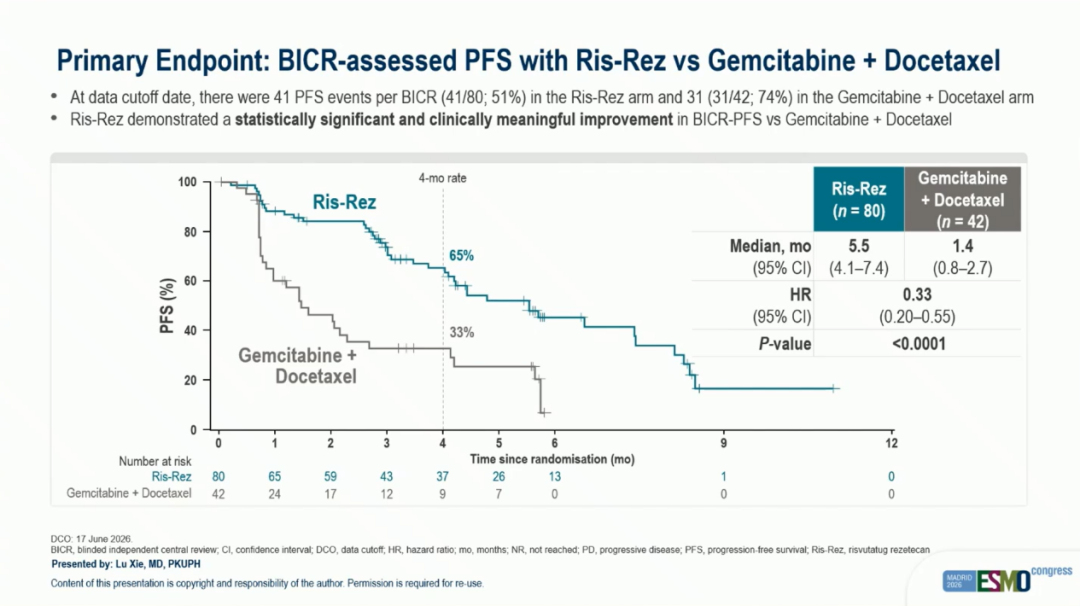 Fig. 2. BICR-Assessed Progression-Free Survival in ARTEMIS-011
Overall survival (OS) data are not yet mature but have already shown a trend favoring Ris-Rez (HR 0.51). The study supports Ris-Rez as a potential new standard of treatment for R/R osteosarcoma.
Safety
Regarding safety, the incidence of grade ≥3 treatment-emergent adverse events (TEAEs) was 93% in the Ris-Rez arm versus 83% in the GD arm. The incidence of treatment-related serious adverse events (SAEs) was numerically higher with Ris-Rez (64% vs 29%), driven mainly by hematologic toxicity. The proportions of patients discontinuing treatment due to treatment-related adverse events (TRAEs) were similar between arms (4% vs 2%). One treatment-related interstitial lung disease event was reported in the Ris-Rez arm (CTCAE grade 2, resolved). No treatment-related deaths occurred, and no new safety signals were observed.
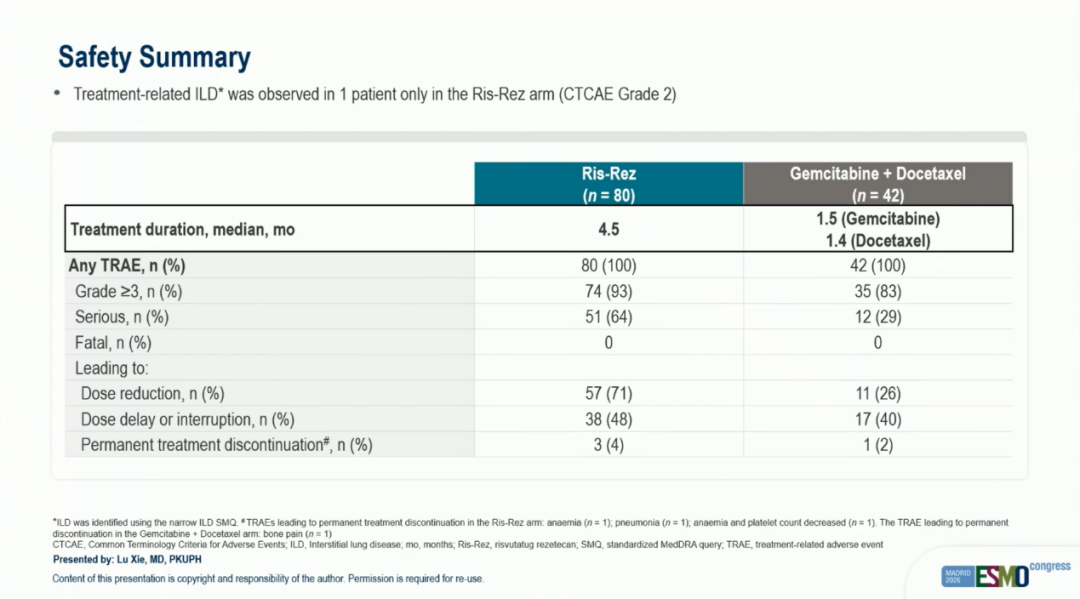 Fig. 3. Safety Data in ARTEMIS-011
Summary
ARTEMIS-011 met its primary endpoint: Ris-Rez significantly improved BICR-assessed PFS versus the GD regimen in patients with R/R osteosarcoma, and OS also showed a favorable trend, with a generally manageable safety profile. These results may bring a new standard treatment option for patients with R/R osteosarcoma after multiple lines of failed therapy. With extended follow-up, the final conclusion on the OS survival benefit is worth awaiting. At this ESMO Congress, the findings add confidence to and point the way forward for ADC therapy in the sarcoma field.
Reference
[1] Xie L, et al. Risvutatug rezetecan (Ris-Rez) versus gemcitabine and docetaxel (GD) in heavily pretreated patients with relapsed or refractory (R/R) osteosarcoma: Primary results from the phase 3 ARTEMIS-011 study. 2026 ESMO Congress.

