


For patients with ROS1 fusion-positive (ROS1+) non-small cell lung cancer (NSCLC), several approved first-line tyrosine kinase inhibitors (TKIs) have demonstrated efficacy, but limitations remain in central nervous system (CNS) activity and dose-limiting toxicity. At the 2026 World Conference on Lung Cancer (WCLC 2026), Prof. Alexander E. Drilon of Memorial Sloan Kettering Cancer Center, on behalf of his research team, presented efficacy and safety data for zidesamtinib—a highly selective ROS1 TKI—in TKI-naive patients with advanced/metastatic ROS1+ NSCLC from the global, multicenter, first-in-human phase 1/2 ARROS-1 trial (NCT05118789).
Zidesamtinib was designed to enhance anti-ROS1 and anti-ROS1-resistance-mutation activity while improving CNS coverage, and to minimize tropomyosin receptor kinase (TRK) inhibition and CNS-related side effects. ARROS-1 evaluated the antitumor activity and safety of zidesamtinib in patients with advanced ROS1+ NSCLC and other solid tumors. The newly reported data provide new evidence for first-line treatment decisions in TKI-naive ROS1+ NSCLC.
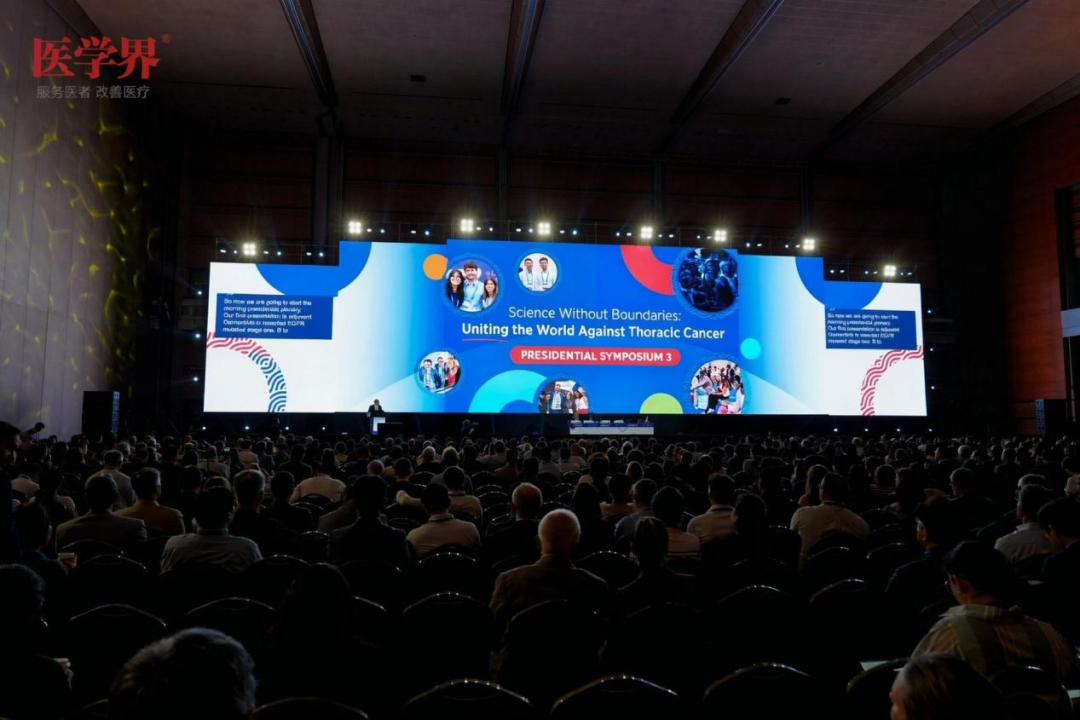 Fig. 1. Presentation at WCLC 2026
Study Design and Baseline Characteristics
ARROS-1 is a global, multicenter, first-in-human phase 1/2 trial evaluating zidesamtinib in ROS1+ solid tumors, including NSCLC. The study consisted of a dose-escalation phase (25-150 mg once daily [QD]) and an expansion phase at the recommended phase 2 dose (RP2D) of 100 mg QD. As of the data cutoff on April 16, 2026, 629 patients had been enrolled.
Two analysis populations were included in this report:
- Safety population: 532 patients with advanced ROS1+ NSCLC who received the recommended dose (100 mg QD), encompassing both TKI-naive and TKI-pretreated patients.
- TKI-naive efficacy population: 94 patients. As Drilon noted, this population was defined consistent with regulatory guidance: patients who received treatment before June 15, 2025, had ≥9 months of DOR follow-up, and had measurable disease. Median follow-up was 15.2 months (range 1.1-30.5).
Baseline characteristics were typical of ROS1 fusion-positive lung cancer: median age 59 years; 59% female; 59% non-smokers; 17% had baseline CNS metastases; 93% had stage IV disease; 27% had prior platinum-based chemotherapy; and the population was distributed across the Asia-Pacific, European, and North American regions.
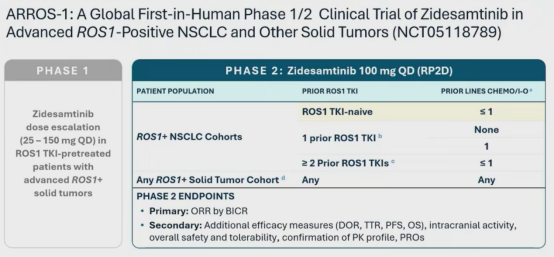 Fig. 2. ARROS-1 study Design
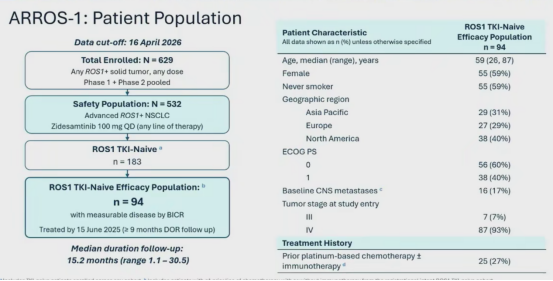 Fig. 3. ARROS-1 Patient Enrollment Flow
Striking Efficacy: High Response Rate and Durable Benefit
In TKI-naive patients, zidesamtinib demonstrated very high antitumor activity. By blinded independent central review (BICR), the objective response rate (ORR) was 94% (95% CI 87-98) in 94 TKI-naive patients receiving zidesamtinib 100 mg QD, with a complete response (CR) rate of 15%. Analysis of best percentage change in target lesions showed that the vast majority of patients experienced substantial tumor shrinkage from baseline.
Drilon noted that these data include one pending CR confirmation and one pending CR confirmation in a patient with confirmed PR. Responses were observed regardless of prior chemotherapy history in the efficacy population, suggesting that prior chemotherapy exposure may not substantially affect zidesamtinib response rates.
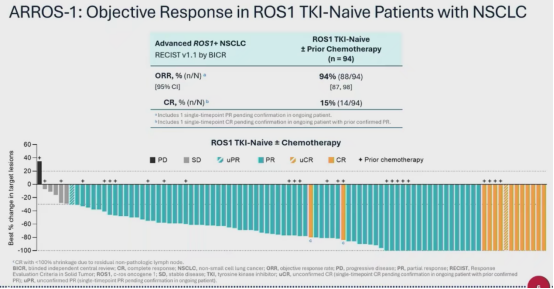 Fig. 4. Objective Response in TKI-naive ROS1+ NSCLC Patients in ARROS-1 (n=94)
For response durability, the DOR analysis included only patients with confirmed response (n=87). Median DOR was not reached (95% CI 20-NE), and the 12-month DOR rate was 86% (95% CI 75-92). In the efficacy population (n=94), median PFS was also not reached (95% CI NE-NE), with a 12-month PFS rate of 90% (95% CI 81-95). Together, these data suggest that zidesamtinib provides durable response and disease control in TKI-naive ROS1+ NSCLC.
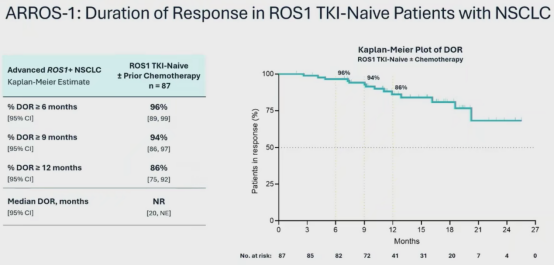 Fig. 5. Duration of Response (DOR) in TKI-naive ROS1+ NSCLC patients with Confirmed Response in ARROS-1 (n=87)
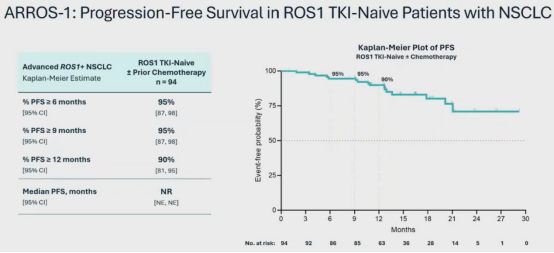 Fig. 6. Progression-free Survival (PFS) in TKI-naive ROS1+ NSCLC Patients in ARROS-1 (n=94)
Potent Intracranial Activity: A New Treatment Option for CNS-Metastatic Disease
Addressing the clinical challenge of brain metastases in ROS1+ NSCLC, zidesamtinib showed marked intracranial antitumor activity. In the CNS efficacy-evaluable population (n=10, with BICR-confirmed measurable baseline CNS lesions and no brain radiotherapy within 2 months before first dose), the intracranial objective response rate (IC-ORR) was 100% (95% CI 69-100), with 70% (7/10) achieving intracranial CR (IC-CR). Median intracranial DOR (IC-DOR) was not reached (95% CI 9-NE), and the 12-month IC-DOR rate was 78% (95% CI 36-94). These findings suggest that zidesamtinib can produce deep and durable intracranial responses in patients with measurable baseline CNS lesions. In addition, among 78 patients without baseline brain metastases, no CNS progression events were observed.
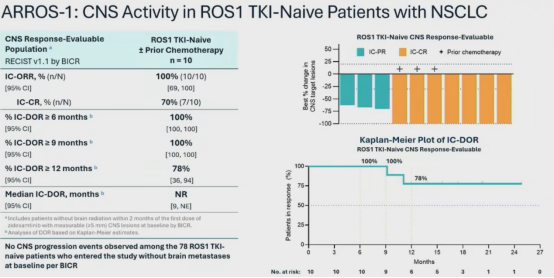 Fig. 7. Intracranial Pesponse in TKI-naive ROS1+ NSCLC Patients in ARROS-1 (n=10)
Manageable Safety: Low Neurotoxicity Aligns With Design Intent
Safety is central to evaluating zidesamtinib’s first-line potential. In the 532-patient safety population, zidesamtinib was generally well tolerated. The most common treatment-emergent adverse events (TEAEs) were peripheral edema (42%), blood creatine phosphokinase (CPK) elevation (23%), constipation (23%), and weight gain (22%), the majority of which were grade 1-2. Grade ≥3 rates were low: peripheral edema 1%, blood CPK elevation 5%, constipation <1%, and weight gain 7%.
For dose modifications, TEAE-related dose reduction and discontinuation occurred in 12% and 4% of patients, respectively, both relatively low. Notably, neurological adverse events—although common, including dysgeusia (18%) and peripheral sensory neuropathy (17%)—were predominantly grade 1-2, with grade ≥3 events being rare (headache <1%, peripheral sensory neuropathy 1%). This profile is consistent with zidesamtinib’s design intent of “minimizing TRK inhibition.”
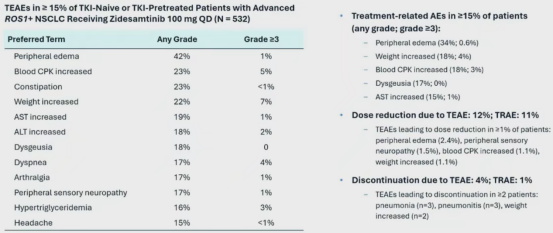 Fig. 8. Summary of Treatment-Emergent Adverse Events (TEAEs) in Patients with Advanced ROS1+ NSCLC Receiving Zidesamtinib 100 mg QD in ARROS-1 (N=532)
Summary
The ARROS-1 data indicate that zidesamtinib shows marked systemic and intracranial antitumor activity in TKI-naive advanced ROS1+ NSCLC, with an overall manageable safety profile. Drilon noted at the end of his presentation that these data support continued exploration of zidesamtinib as a frontline therapy for TKI-naive patients. With longer follow-up and additional data, zidesamtinib may emerge as a new first-line option for TKI-naive ROS1+ NSCLC and may further improve long-term outcomes in this population.
The findings are derived from a conference abstract presented at WCLC 2026 and have not yet been peer-reviewed.
This article is intended to provide scientific information to healthcare professionals and does not represent the editorial position of MedJ.
Reference
[1] Drilon AE, de Langen AJ, Ahn MJ, et al. Zidesamtinib in TKI-naive patients with advanced/metastatic ROS1+ NSCLC: ARROS-1 efficacy and safety data. Presented at: 2026 World Conference on Lung Cancer (WCLC); September 12-15, 2026; Seoul, Republic of Korea. PL03.06.

