


The ESMO 2026 Annual Meeting was held Oct 23 to 27, 2026, in Madrid, Spain. On Oct 23, Prof. Shusen Wang of Sun Yat-sen University Cancer Center presented the results of the randomized phase 3 APEX-Breast01 study (LBA27).
The trial compared the biparatopic HER2-targeting antibody-drug conjugate (ADC) TQB2102 with treatment of physician’s choice (TPC) in patients with HER2-low recurrent or metastatic breast cancer who had not previously received chemotherapy in the advanced setting, and was designed to inform treatment selection for this population.
Article Key Points
- APEX-Breast01, phase 3, n=543: TQB2102 7.5 mg/kg every 3 weeks vs physician’s choice chemotherapy
- Primary endpoint, HR+/HER2-low, BICR median PFS 16.4 vs 5.5 months (HR 0.29, 95% CI 0.22-0.39)
- All HER2-low population, BICR median PFS 16.4 vs 5.5 months (HR 0.29, 95% CI 0.22-0.38)
- ORR 68.8% vs 31.0% overall, 66.7% vs 31.3% in HR-positive, 80.5% vs 29.3% in HR-negative
- HR-negative subgroup, n=82: median PFS 8.5 vs 5.4 months (HR 0.27); small subgroup, interpret with caution
- Safety: grade 3 or higher TRAEs 69.1% vs 42.4%; neutropenia 30.1% vs 23.3% and leukopenia 21.6% vs 14.0%
- Dose reductions 34.2% vs 18.5%; discontinuation for TRAEs 1.5% in both arms
- TQB2102-related ILD in 6 patients (2.2%), grade 3 in 1.1%
- Evidence status: conference abstract (LBA27); full results have not yet been peer-reviewed
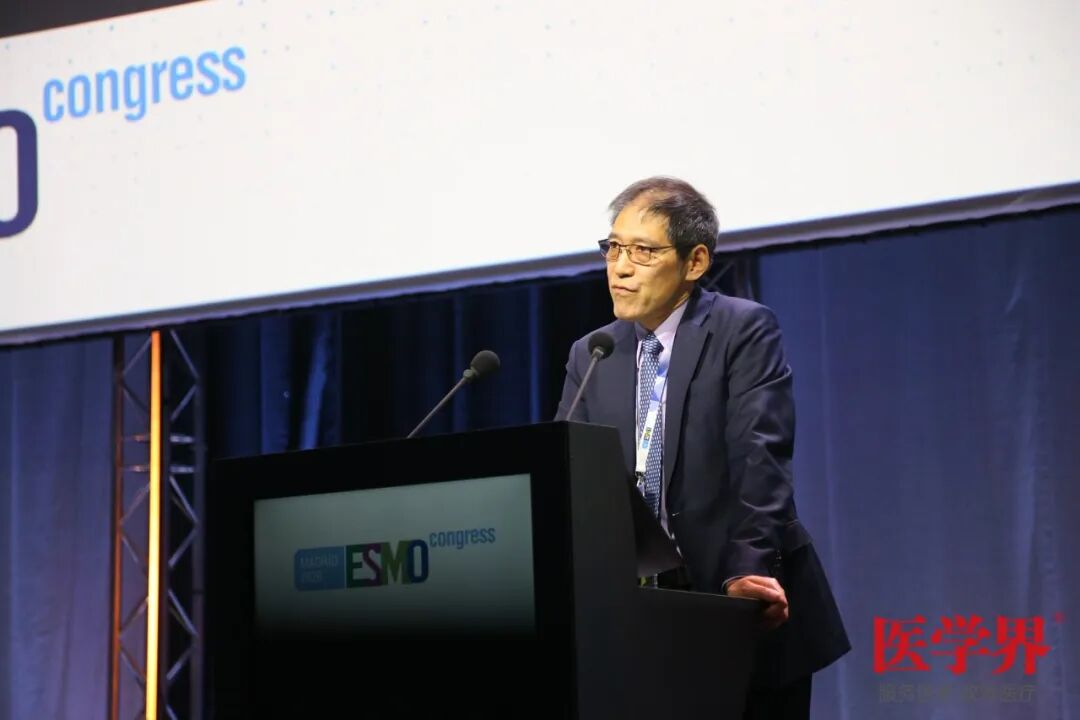 Fig.1. Prof. Shusen Wang Presenting the APEX-Breast01 Results at the ESMO 2026 Meeting
Study Design and Population
APEX-Breast01 is a randomized, controlled, confirmatory phase 3 study in patients with HER2-low recurrent or metastatic breast cancer who had not previously received chemotherapy in the advanced setting. Eligible patients included those with HR-positive disease who had progressed after endocrine therapy in the metastatic setting, and those with HR-negative disease with a PD-L1 combined positive score (CPS) below 1 or unknown CPS status.
Patients were randomized 1:1 to TQB2102 at 7.5 mg/kg every 3 weeks, or to TPC with capecitabine, paclitaxel, or nab-paclitaxel.
The primary endpoint was progression-free survival (PFS) by blinded independent review committee (BIRC) in the HR-positive/HER2-low population. A key secondary endpoint was BIRC-assessed PFS in the overall HER2-low population.
As of the May 31, 2026 data cutoff, 543 patients had been randomized: 269 in the TQB2102 arm and 274 in the TPC arm. Of these, 461 were HR-positive (84.9%), and 91.3% of that subgroup had previously received a CDK4/6 inhibitor; approximately 82 were HR-negative. Baseline characteristics were balanced between arms, with IHC 1+ in 58.3% versus 57.9% and prior taxane therapy in 62.3% versus 61.8%.
Progression-Free Survival: The Primary Endpoint
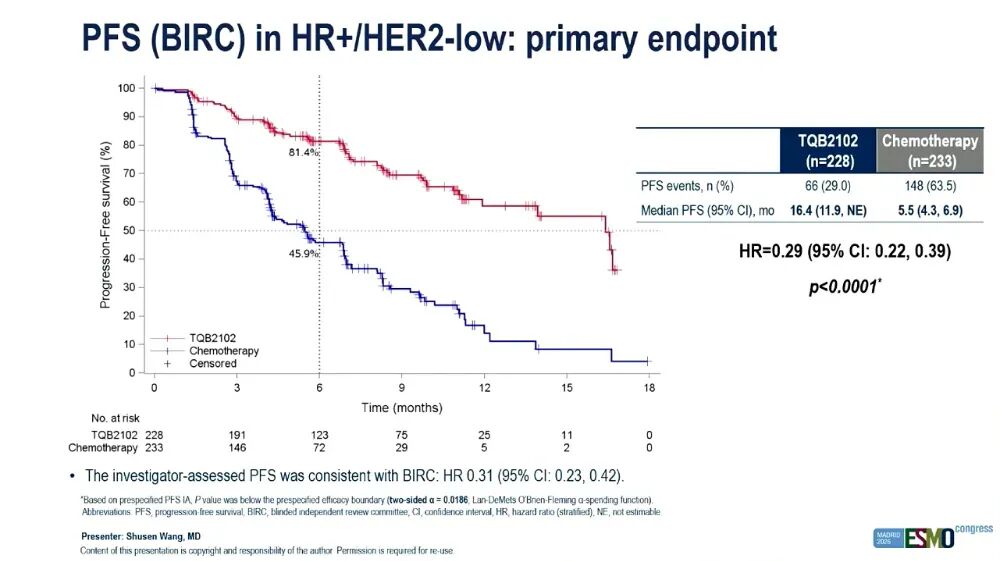 Fig.2. Progression-free Survival by BIRC in the HR-positive/HER2-low Primary Endpoint Population
In the HR-positive/HER2-low population, median PFS by BIRC was 16.4 months with TQB2102 versus 5.5 months with TPC (HR 0.29, 95% CI 0.22-0.39, P<0.0001), a 71% reduction in the risk of disease progression or death and an absolute median PFS extension of 10.9 months.
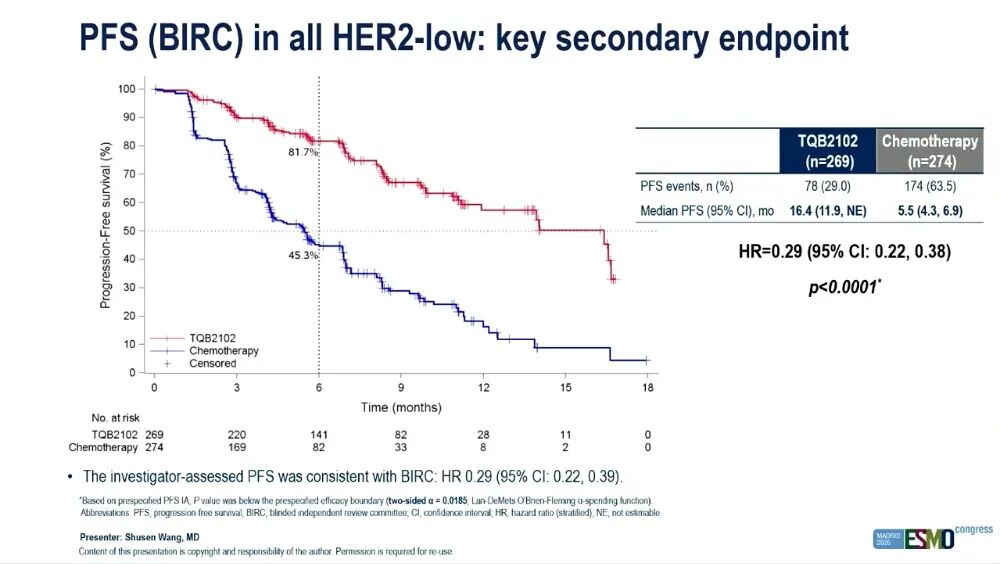 Fig3. Progression-free Survival by BIRC in the Overall HER2-low Population, the Key Secondary Endpoint
Results in the overall HER2-low population were nearly identical: median PFS by BIRC was 16.4 months versus 5.5 months (HR 0.29, 95% CI 0.22-0.38, P<0.0001).
Objective Response Rate
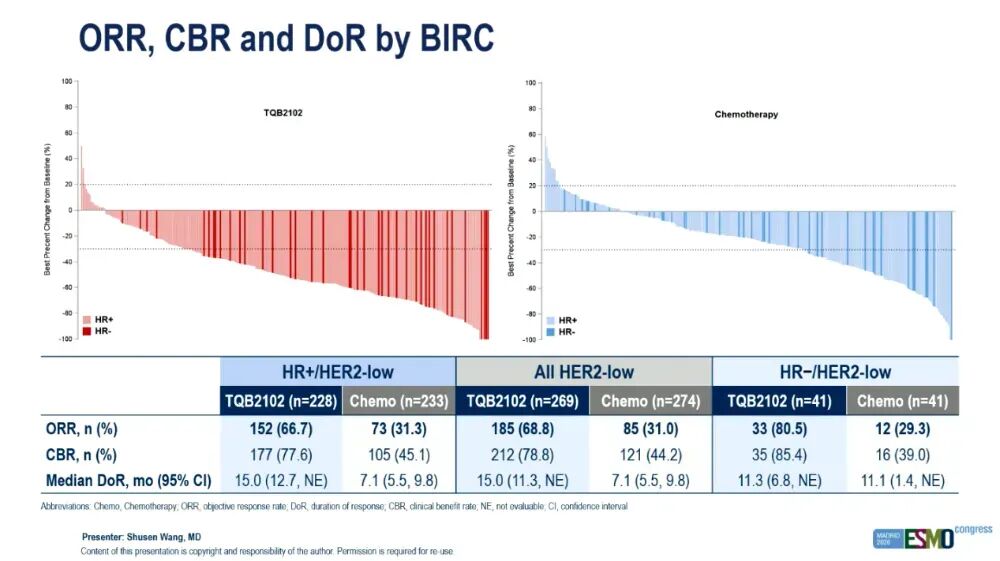 Fig.4. Objective Response Rate, Clinical Benefit Rate, and Duration of Response as Assessed by BIRC
Response rates favored TQB2102 across all analyzed populations:
- HR-positive population: 66.7% versus 31.3%
- All HER2-low population: 68.8% versus 31.0%
- HR-negative population: 80.5% versus 29.3%
Clinical benefit rate and duration of response also favored the TQB2102 arm.
Overall Survival: Not Yet Mature
Overall survival data were not yet mature at the data cutoff and remain descriptive. The LBA full text reports a hazard ratio of 0.44 for death in the overall population, 0.47 in the HR-positive subgroup, and 0.21 in the HR-negative subgroup. Interim and confirmatory analyses are planned.
Safety
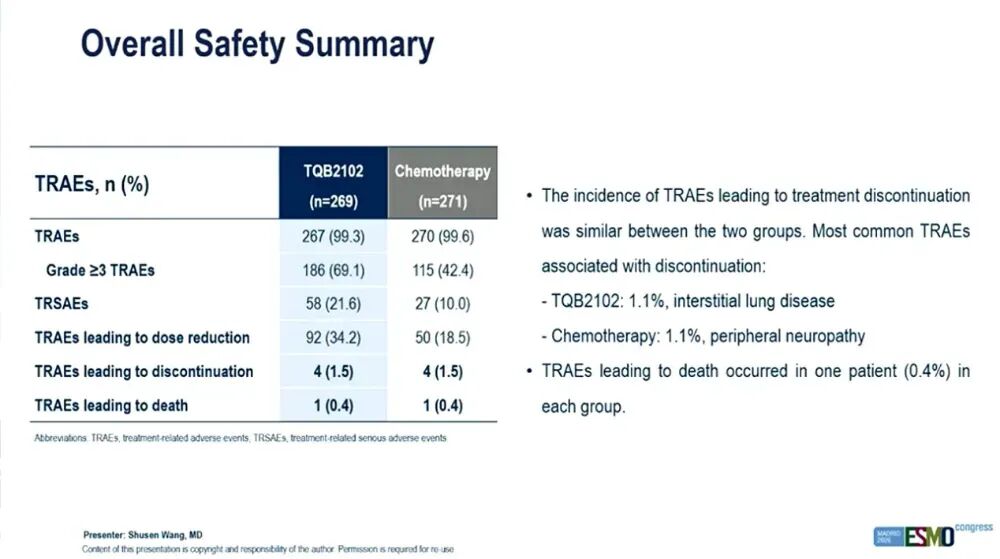 Fig.5. Overall Safety Data for TQB2102 Versus Physician’s Choice Chemotherapy
Treatment-related adverse events with TQB2102 were predominantly hematologic. The most common grade 3 or higher TRAEs were neutropenia, reported in 30.1% of the TQB2102 arm versus 23.3% with TPC, and decreased white blood cell count, in 21.6% versus 14.0%. The incidence of grade 3 or higher TRAEs overall was 69.1% versus 42.4%.
Treatment-related interstitial lung disease, the safety event of greatest interest for HER2 ADCs, occurred in 6 patients (2.2%) on TQB2102, with grade 3 events in 1.1%. Discontinuation for TRAEs occurred in 1.5% of patients in each arm, and dose reductions in 34.2% versus 18.5%.
Conclusions
The APEX-Breast01 results indicate that TQB2102 may offer a new option for patients with HER2-low advanced breast cancer who have not yet received chemotherapy in the advanced setting, with consistent benefit in both HR-positive and HR-negative populations. The findings were presented as an interim analysis of the phase 3 study, and the HR-negative subgroup was small.
Reference
Shusen Wang, et al. APEX-Breast01: TQB2102 versus chemotherapy in HER2-low recurrent or metastatic breast cancer (r/m BC): Results from a randomized phase 3 study. 2026 ESMO. Abstract LBA27. ClinicalTrials.gov identifier NCT06561607.

