


There is a group of people who have been repeatedly exposed to the new coronavirus, but have never been infected or have remained symptom-free after infection. They are known as “Neo-Crown super-immune”.
In an effort to unravel the mystery of the “New Crown super-immunizers,” a joint team from University College London School of Medicine and others studied dozens of healthy people who had never been vaccinated against New Crown and had not been infected with New Crown.
The results of the study were recently published in Nature. It shows that “super-immune people” may have an inborn genetic trait that gives them a special immune response that allows them to quickly clear the new coronavirus from their bodies. This gives them a special immune response that allows them to quickly clear new coronaviruses and prevent them from proliferating in the body.
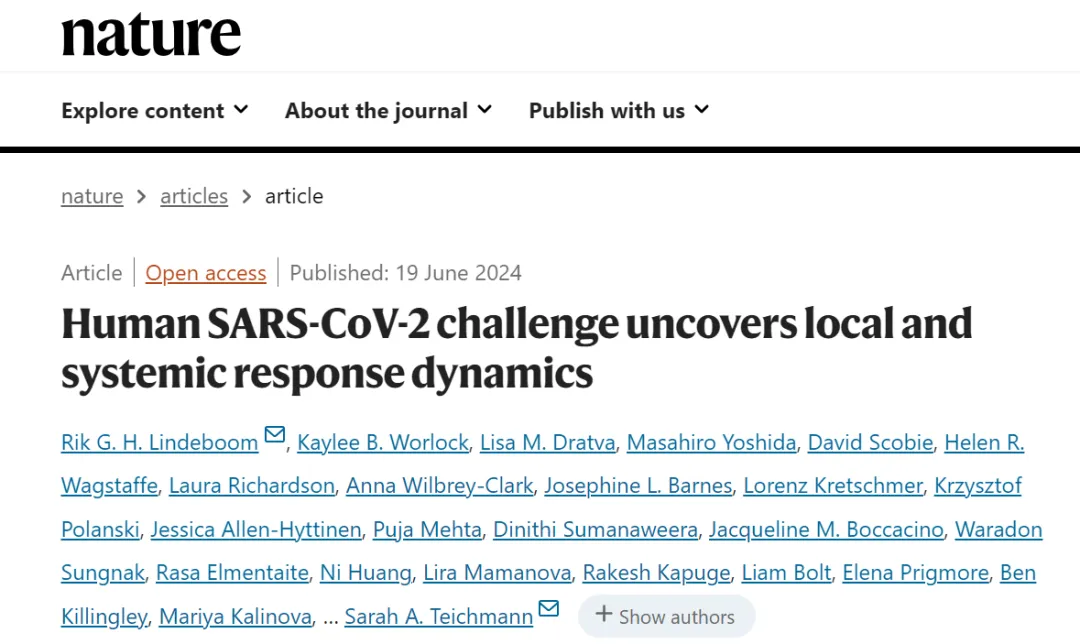
The study is part of the world's first “human challenge trials” for the new coronavirus, which will start in February 2021. The challenge trials seek to answer three questions: what is the minimum amount of virus needed to infect a human being; what is the initial response of the human immune system to the virus; and who gets sick when infected and who does not.
Up to now, there are still no standardized answers to many questions.
“The Chosen Gene”
“Past studies have focused on segments or moments in the occurrence and development of new crowns. We studied the evolution of 3 different infection scenarios, providing information in a great deal of detail.” So told the BMJ when co-first author Kaylee Worlock, of University College London Medical School, discussed the study's features.
Under strict laboratory conditions, researchers sprayed a dose of the original strain of the new coronavirus into the nasal passages of dozens of subjects, according to an article in Nature. Sixteen of the subjects were of concern. They were divided into three groups based on their infection: six in the first group, who were actively infected and became symptomatic, tested positive for the virus twice a day, and continued to be positive for more than two days; three in the second group, who tested positive for the virus only once out of two times a day for no more than two days, and were asymptomatic; and seven in the third group, who were asymptomatic and continued to be negative.
Nasal and blood samples were collected 28 days before and one year after the “active infection” and analyzed by single-cell RNA sequencing. Over 600,000 samples were collected.
The final analysis showed that the second group of “short-positive” and the third group of “all-negative” patients had an “innate” immune advantage. This includes a rapid activation of mucosal-associated immune-associated constant T (MAIT) cells and a significant reduction in monocytes in the early stages of infection. These are two important biomarkers that indicate an immediate immune response to exposure to the new coronavirus.
The Nature article also points out that a gene called HLA-DQA2 plays an important role. This gene belongs to the human leukocyte antigen (HLA) family and is responsible for encoding cell surface proteins that help the immune system recognize invaders.
Most amazingly, HLA-DQA2 seems to have an “associative function”. Even though it has never been exposed to the new coronavirus, it recognizes the similarities between the new coronavirus and the coronavirus that causes seasonal colds, and launches a lightning attack as soon as it is detected.
The higher the HLA-DQA2 activity, the stronger the body's immune defenses, the study said. “Even when infected, the virus is cleared quickly and with minimal or no symptoms.” The BMJ paid attention to the aforementioned study and reported on it, saying.
Mystery upon mystery
Among the many genes involved in the human immune response, HLA variants have the strongest association with viral infections. Or for this reason, HLA has been the subject of much attention and results in topics related to new crown infections.
In July 2023, Nature published a study by the University of California, San Francisco and others confirming that the secret to asymptomatic infections may lie in the human leukocyte antigen mutation “HLA-B*15:01”.
People who carry this mutation are like having “pre-existing immunity”. Their immune system recognizes the similar genetic sequence of the new coronavirus and the seasonal coronavirus, thus clearing the new coronavirus. Overall, about 20% of people who are asymptomatic after infection carry HLA-B*15:01, compared with 9% of those who report symptomatic infection.
In addition, there is a strong cumulative effect of related genotypes. Individuals carrying two copies of HLA-B*15:01 are more likely to remain asymptomatically infected, more than eight times more likely than individuals carrying other genotypes.
Earlier, the University of Newcastle, UK, had published a paper on the genotyping differences found in patients with severe new crown disease and those with asymptomatic infection. “The latter carried the HLA-DRB1*04:01 gene at three times the rate of the others.”
However, the previous studies have limitations.
In the study by University College London Medical School and others, limitations include the use of an original strain, which is at odds with the current predominantly prevalent strain; may not be representative of real-world cellular responses; and, “Given the current state of neo-crested infections and vaccinations, replication of the data from the present study in the future will be largely impossible.”
In contrast, studies by the University of California, San Francisco, and the University of Newcastle upon Tyne in the United Kingdom have shown that the samples are only partially representative of European and American populations, and that the population representation is weak.
But the BMJ, reporting on the University College London School of Medicine study, noted that it provides new insights into the mechanisms of immunity and points to new directions for developing more effective vaccines and treatments. Related research ideas could be extended to other areas.
It is worth noting that the idea of seeking preventive and diagnostic methods through “human challenge trials” is an old one.
This is also known as controlled human infection modelling (CHIM), which involves deliberately infecting human volunteers with pathogenic strains of viruses, parasites, bacteria, or fungi for the purpose of studying the pathogenesis, transmission, and course of a specific infectious agent and to test the efficacy of candidate preventive or therapeutic drugs.
In addition to the University College London School of Medicine, the University of Oxford and the Imperial College of Science and Technology of the United Kingdom are also involved in the “New Coronavirus Human Challenge Trial”. This involves deliberately re-exposing subjects who have been infected with the new coronavirus to the virus in order to observe the immune response and whether or not they will be re-infected.
Based on this, the researchers say, the medical community may be able to develop better vaccines and therapies and learn whether people can be protected from the new coronavirus infection and how long the protection lasts.
However, because of the need for effective isolation and observation until May 2023, the study in question is still in the process of recruiting and continuing to advance, according to information on the official website of the University of Oxford school.
The Chinese Journal of Epidemiology 2021 published an article signed by Han Bingfeng and Huang Ninghua from the School of Public Health of Peking University, entitled “Development and Prospect of Human Challenge Trials of Vaccines,” which pointed out that since the 1940s, the United States and the United Kingdom have conducted human challenge trials of drugs or vaccines on many occasions, and that ethical evaluation and trial procedures are relatively complete. China has never conducted similar trials, and there are no legal provisions in the Drug Administration Law and Vaccine Administration Law that allow for the conduct of human challenge clinical trials, nor has the State Drug Administration promulgated clear and feasible ethical review specifications for human challenge trials.
The article argues that there is a need for China to fully understand and evaluate vaccine human challenge trials and applications.

