


Updated eight-year overall survival data from the Phase 3 ADAURA trial were presented by Prof. Roy S. Herbst of Dartmouth Cancer Center during Presidential Symposium 2 at the 2026 World Conference on Lung Cancer in Seoul, Republic of Korea, on September 14, 2026. The analysis provides longer-term follow-up of adjuvant osimertinib in patients with completely resected, EGFR-mutated non-small cell lung cancer.
Earlier ADAURA analyses showed that three years of adjuvant osimertinib improved disease-free survival and overall survival. The latest presentation assessed whether the survival benefit persisted after completion of the planned treatment period.
Study Design
ADAURA (NCT02511106) is a global, double-blind, randomized, placebo-controlled Phase 3 trial in patients with completely resected, EGFR-mutated stage IB-IIIA non-small cell lung cancer. Participants were randomly assigned 1:1 to receive osimertinib 80 mg once daily or placebo for three years, until disease recurrence, or until another discontinuation criterion was met. Adjuvant chemotherapy was permitted.
The primary endpoint was disease-free survival in patients with stage II-IIIA disease. Overall survival was a secondary endpoint. The primary population for the updated overall survival analysis comprised patients with stage II-IIIA disease, while the overall population included patients with stage IB-IIIA disease.
Eight Year Overall Survival in Stage II to IIIA Disease
At the May 4, 2026 data cutoff, 142 overall survival events had occurred among 470 patients in the stage II-IIIA population. The overall survival hazard ratio for osimertinib versus placebo was 0.53 (95% CI, 0.38-0.75).
The estimated eight-year overall survival rate was 74% (95% CI, 67%-80%) with osimertinib and 58% (95% CI, 50%-65%) with placebo, an absolute difference of 16 percentage points. Median overall survival had not been reached in either group. Median follow-up was 92.0 months in the osimertinib group and 68.5 months in the placebo group.
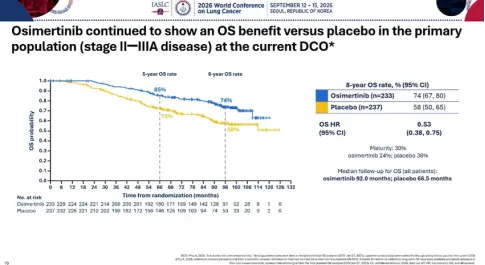
Fig. 1. Eight-year overall survival in patients with stage II-IIIA disease in ADAURA.
Overall Survival in the Stage IB to IIIA Population
In the overall stage IB-IIIA population, 175 overall survival events had occurred among 682 patients. The overall survival hazard ratio was 0.52 (95% CI, 0.39-0.71).
The estimated eight-year overall survival rate was 79% (95% CI, 74%-83%) with osimertinib and 64% (95% CI, 58%-70%) with placebo, an absolute difference of 15 percentage points. Median overall survival had not been reached in either group. Median follow-up was 93.3 months with osimertinib and 79.6 months with placebo.
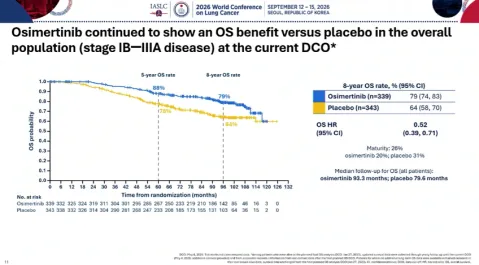
Fig. 2. Overall survival in the stage IB-IIIA population in ADAURA.
Overall Survival Across Prespecified Subgroups
Overall survival benefit with osimertinib was observed across the prespecified subgroups. Hazard-ratio point estimates were below 1 in all subgroups and ranged from approximately 0.45 to 0.74, supporting a consistent treatment effect across baseline characteristics.
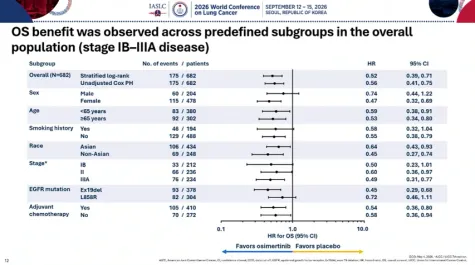
Fig. 3. Prespecified subgroup analysis of overall survival in ADAURA.
Results by Disease Stage
Eight-year overall survival rates were higher with osimertinib than with placebo at each disease stage. In stage IB disease, the rates were 91% and 77%, respectively (HR, 0.50; 95% CI, 0.23-1.01). In stage II disease, the rates were 78% and 63% (HR, 0.60; 95% CI, 0.36-0.97). In stage IIIA disease, the rates were 70% and 52% (HR, 0.49; 95% CI, 0.31-0.77), an absolute difference of 18 percentage points.
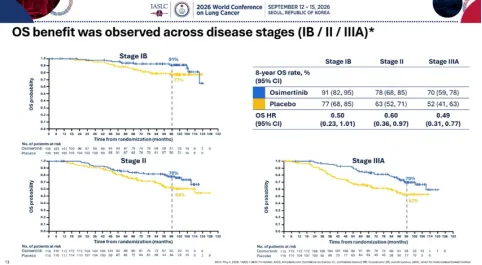
Fig. 4. Eight-year overall survival according to disease stage in ADAURA.
Interpretation and Next Questions
Prof. Herbst said the eight-year follow-up showed a clear and durable overall survival benefit, indicating that the survival advantage persisted after completion of three years of adjuvant osimertinib. For patients with early-stage EGFR-mutated non-small cell lung cancer, the findings support the potential for early targeted treatment to alter long-term outcomes.
Further research is needed to improve timely EGFR testing and treatment access, determine how minimal residual disease assessment could help identify resistance, and evaluate neoadjuvant strategies and longer treatment durations.

