



incoming president of the Chinese University of Hong Kong and Academician of the Chinese Academy of Sciences, Dennis Lo Yuk Mi
On October 19th, the "2024 MedJ Value-based Healthcare Conference and the 5th Taishan Award Ceremony" was held in Yangpu District, Shanghai. The incoming president of the Chinese University of Hong Kong and Academician of the Chinese Academy of Sciences, Dennis Lo Yuk Ming, attended the event. He is the recipient of this year's "Taishan Award - Clinical Research Award." Academician Lo's series of groundbreaking achievements in the field of non-invasive prenatal testing and cancer screening have had a profound impact on the development of global medicine.
Academician Lo Yuk Ming is the founder of global non-invasive prenatal gene detection and is known as the "Father of Non-Invasive Prenatal Testing." The groundbreaking "Non-Invasive Prenatal Diagnosis (NIPT)" technology he introduced in 2011 has now been implemented in over 90 countries, providing more than 10 million standard treatments of non-invasive prenatal testing for pregnant women worldwide each year.
Previously, Academician Lo Yuk Ming had successively received international awards known as the "Nobel Prize Bellwether," including the Thomson Reuters Citation Laureate Award (Chemistry), the Breakthrough Prize in Life Sciences, and the Lasker Clinical Medical Research Award. Speaking of his decades of scientific research career, Academician Lo expressed his gratitude for the award, saying:
"I am a scientist and also a doctor. The 'physician-scientist' is a bridge between medicine and science. My research focuses on detection before pregnancy and cancer screening, which can be said to help patients at the very beginning and the very end of life."
The following content is compiled from Academician Lo Yuk Ming's keynote speech at the 5th "Taishan Award":
Over 30 years ago, I was studying medicine at the University of Oxford in the UK. As a medical student, one of the important subjects was obstetrics and gynecology. I learned that when a pregnant woman wants to know how healthy the fetus is and to diagnose chromosomal diseases in the fetus, amniocentesis technology is required, but this invasive method may have an impact on the fetus.
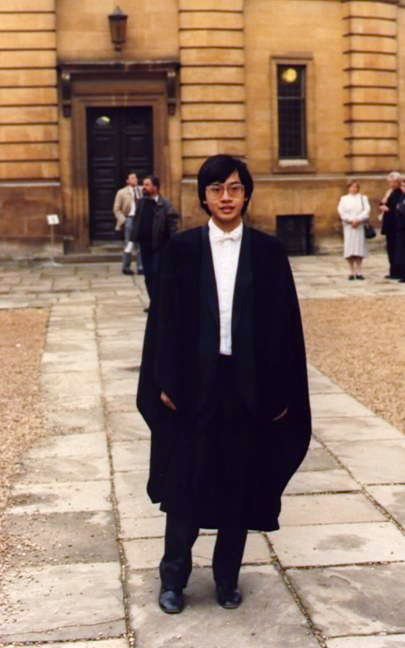
Dennis Lo Yuk Ming during his time at the University of Oxford.
At that time, I thought, is it possible to invent a new method that can detect the fetus's chromosomes or DNA directly through the pregnant woman's blood?
The earliest idea was that if the fetus is male, we should be able to find the male Y chromosome in the pregnant woman's blood. When I was studying in the UK, I wasn't very accustomed to the local food, and sometimes I would cook noodles at home. So I imagined, could we use the method of cooking noodles to "cook" plasma?
It was through such a "whim" of a simple method that I discovered the signal of the Y chromosome in part of the pregnant woman's plasma, which was also the first time fetal DNA was found in the pregnant woman's blood. This fetal DNA can be found in the blood very early in pregnancy, and by the 10th week, the concentration of fetal DNA reaches 15%. However, it cannot be detected in the pregnant woman's blood within 2 hours after birth.
I further thought, is it possible to transform this discovery into a new method for prenatal diagnosis, especially for diagnosing Down syndrome? Down syndrome is a condition where there is an extra 21st chromosome, and the traditional diagnostic method is amniocentesis, which involves obtaining a fetal cell and checking how many 21st chromosomes are in the cell.
But the new method I thought of was to check how many DNAs are in the pregnant woman's blood in total. I used a random quantitative sorting technology, and through the analysis of the pregnant woman's blood DNA, it was verified that the diagnostic accuracy rate for fetal Down syndrome reached over 99.5%. This technology is called NIPT (Non-Invasive Prenatal Testing), and it has now been used more than 100 million times worldwide
After non-invasive prenatal testing was recognized and promoted globally, I thought, what other applications could this technology have?
The fetus grows inside the pregnant woman's body, which is similar to the growth of a tumor inside a patient's body. For example, nasopharyngeal cancer is related to a virus called EB. I imagined, is it possible that cancer cells could release the EB virus into the patient's blood? When I proposed this hypothesis, many doctors thought it would not succeed because normal people also have the EB virus in their bodies, and this technology should have a lot of false positives.
In fact, 90% of early-stage nasopharyngeal cancer patients can survive long-term, but in the advanced stage, more than 40% of patients will face death. To verify our method, we conducted a clinical trial with more than 20,000 people a few years ago, and the results showed that this technology can find all patients who will develop nasopharyngeal cancer 4 to 5 years later at once. These are all early-stage patients whose lives were saved due to early detection. This paper was published in the New England Journal of Medicine and was selected as one of the top 10 most important articles in the world that year.
Now, this technology is ready to be launched in the Greater Bay Area. However, early screening for nasopharyngeal cancer is just the first step; I also want to extend this technology to the screening of other cancers.
Therefore, we further applied epigenetic methods and invented a new technology that can detect multiple types of cancer. This technology was also rated by MIT Technology Review as one of the top ten important innovations of 2015. To promote the transformation, I established a company called Cirina at that time. At the same time, there was another company in the United States doing multi-cancer screening called Grail, and later our two companies merged.
A few years later, our technology was turned into a product, and in 2022, it was selected by Time magazine as one of the best inventions in the world. In 2023, a trial involving 6,238 participants showed that the positive predictive value of this technology is 75.5%, the negative predictive value is 97.6%, and the accuracy of tumor location is 85%.
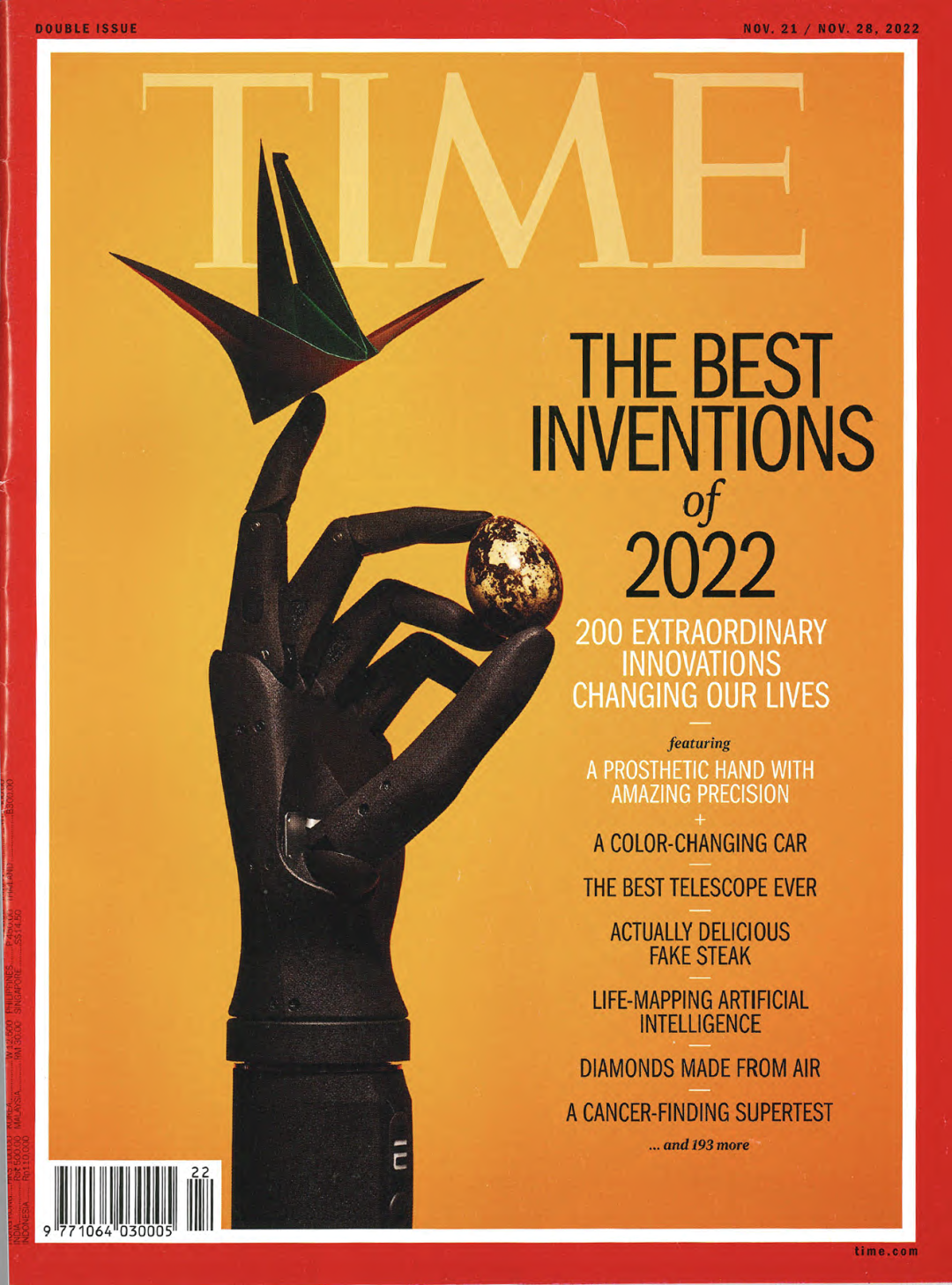
However, this technology still has some weaknesses, particularly when screening for multiple types of cancer, the early detection rate is relatively low. For stage I cancer, the detection rate is 24%, for stage II it's 57%, for stage III it's 85%, and for stage IV it's 95%. I believe this technology still needs further improvement so that after screening, the ultimate survival rate of patients increases, just as we did with nasopharyngeal cancer screening.
Over the past 20 years, we have also put in a lot of effort in the field of intellectual property rights. There is a ranking that lists the top 20 life sciences translational research teams in the world. In the most recent edition, I ranked 7th, and another colleague of mine ranked 13th. Among this list, there are only 3 from China. Therefore, we still have a lot of work to do
In conclusion, I want to emphasize that doctors and scientists are the bridge between medicine and science. I want to integrate the exploration of science into everyday life. For example, by cooking noodles, I can ultimately "cook" up such a breakthrough technology. Or take pregnancy and cancer, which seem to have no relationship at all, but as long as you carefully observe and find the similarities between seemingly unrelated phenomena, you may eventually make a breakthrough.
The synergy between academic research and commercialization is also crucial. Without commercialization, the discoveries of scientists would forever only be found in papers and could not serve patients. I am very grateful to my research team for their efforts alongside me over the past 20 years.

