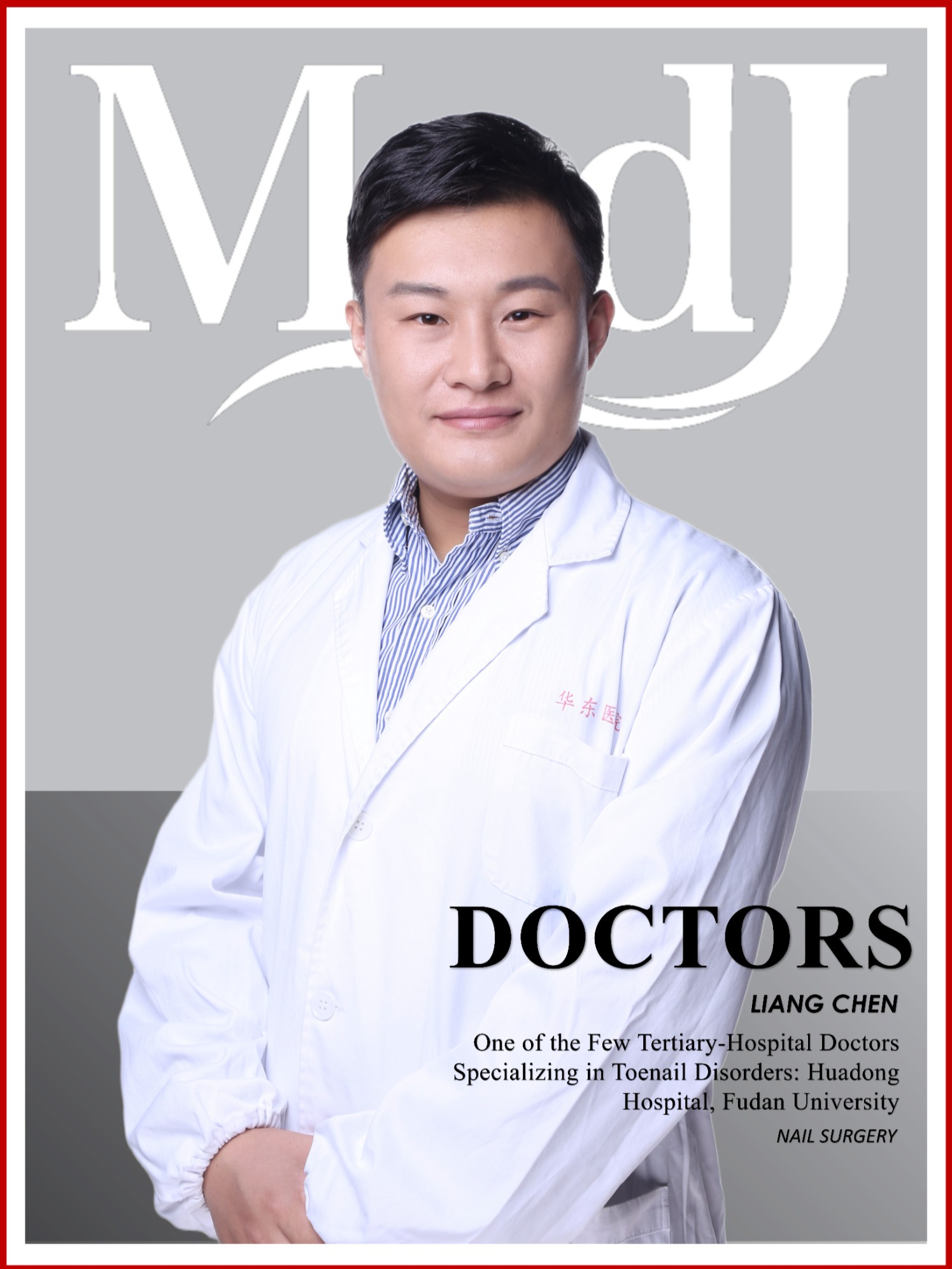
Dr. Liang Chen once hoped to become a fashionable plastic surgeon, yet today he spends his days treating toes and nails.
As an associate chief physician in plastic surgery at Huadong Hospital affiliated to Fudan University, he chose a direction that few people expected: nail disease, including paronychia, ingrown nails, and nail deformities.
The field is niche because almost no department or clinic in China is devoted specifically to nail disease, whether in top tertiary hospitals or private clinics. At the same time it is a highly common problem. Paronychia alone affects 1.7% to 27% of the population, meaning that more than 100 million people may be troubled by it.
All Kinds of Toe Problems
Over the years, Dr. Chen has seen every imaginable kind of toenail, from giant thickened great toenails left uncut for years to pincer nails rolled into tubes, nails bent up at ninety degrees, and deeply notched W-shaped nails.
He explained that nails can grow abnormally because of heredity, trauma, and daily habits. Many problems are actually caused by patients themselves. In paronychia, for example, some people cut their nails too short. The nail plate then sinks into the flesh, abrades the skin, causes pain, and leads to infection. The patient digs still deeper, driving a vicious cycle of ingrown nails and inflammation.
As disease worsens, infection can spread around the nail, produce pus and foul-smelling discharge, and in severe cases even damage bone. In people with diabetes, repeated paronychia and poor treatment may ultimately lead to amputation.
Many of Dr. Chen's patients can no longer wear normal shoes and arrive in sandals. Some have endured the condition for years or decades. He says the treatment demand is huge, but most people only come to hospital when they can no longer tolerate it.
In his view, nail-disease care in China resembles an hourglass. At one end are huge numbers of patients. At the other is a confusing mix of pedicure shops. Many patients assume a pedicure can cure them, but the condition is only delayed and becomes chronic. Cross-infection is also common because sterile technique is often absent.
Even in formal medical institutions, some doctors pay insufficient attention to nail disease and limit treatment to anti-infective measures and trimming. This repeated but incomplete care makes patients lose confidence in hospitals and turn toward nonmedical settings.
Dr. Chen therefore insists on detailed explanation. At each visit, he asks what treatment the patient has already received, what result the patient wants, and what follow-up care will be needed. He wants to use proper medical communication to dispel the myths spread by pedicure shops.
The Disease Must Be Cured, and It Must Also Look Good
Dr. Chen emphasizes that he is fundamentally a plastic and reconstructive surgeon. After entering clinical work in 2015, he initially also performed aesthetic medicine, but later felt that many cosmetic consultations involved a mismatch between the doctor's judgment and the patient's expectations.
Holding the belief that doctors should solve disease, he sought a new direction. In 2020, a colleague from dermatology casually suggested that, as a surgeon, he try treating paronychia. After reading the literature, he discovered a large unmet need.
At that time there were very few Chinese surgeons working on nail disease, and only one translated professional textbook existed. In contrast, the patient population was enormous. He then collected many foreign works on nail pathology, surgery, and embryology, translated them in his spare time, and even went back to study nail anatomy again.
This process convinced him that plastic surgery offers unique advantages in nail disease treatment. It brings techniques such as individualized debridement, tissue regeneration, flap repair, and meticulous wound care. Based on these principles, he designed a new boat-shaped excision that alters the angle of tissue regeneration, balances the space for nail, flesh, and bone, and reduces recurrence of ingrown nails and paronychia.
He also closes wounds according to plastic-surgical principles, using fine and dense suturing to make the result both functional and aesthetically better. In his words, nail surgery should solve two problems at once: it must remove pain, and it should also improve appearance.
Better Shared Than Kept to Oneself
The year 2025 is Dr. Chen's fifth year devoted full time to foot and nail disease. His surgical volume has exceeded one thousand cases, each clinic releases thirty slots, and appointments are often impossible to obtain. Patients come from distant provinces such as Xinjiang, Guangxi, and Heilongjiang, and some even choose to work in Shanghai so they can complete treatment.
At the same time, more and more fellow physicians have approached him for advice, including community general practitioners, surgeons, and dermatologists from general hospitals. In the past many doctors entered the field and left it again because they felt it lacked prestige or academic prospects. Dr. Chen says he once worried about that too, but has since changed his mind.
In 2024 he published two papers on nail disease. In one of them, he described a distinctly Chinese feature of retronychia: among his patients, about 90% had the habit of sleeping in socks. After following 107 cases, he found that in addition to treatment, changing that lifestyle habit could lead to gradual improvement.
Now that he has been promoted to associate chief physician, he hopes to train more doctors. In his view, more and more people will eventually realize that painful nails are a disease that deserves treatment, and he wants a larger clinical team to improve standards and develop new methods. As he puts it, treatment of nail disease has a great deal of potential.