


25-year-old Harvard University medical student Nicholas Norwitz (hereinafter referred to as Nick) decided to conduct an experiment on himself.
He consumed 720 eggs within a month, which is equivalent to eating 1 egg per hour. As a result, his daily average intake of cholesterol was 4800mg, which is 16 times the amount suggested by some international guidelines.
Nick did this in the hope of verifying a "health hypothesis" through this extreme diet: a large intake of cholesterol does not necessarily increase the level of "bad cholesterol."
In order to verify this conclusion, Nick recorded the process of this experiment with a camera and made it into a science popularization video. After uploading it to the internet, the video was widely shared and viewed over ten million times. Dozens of media outlets sought interviews with Nick, and even the term "Harvard medical student" was trending on social media.
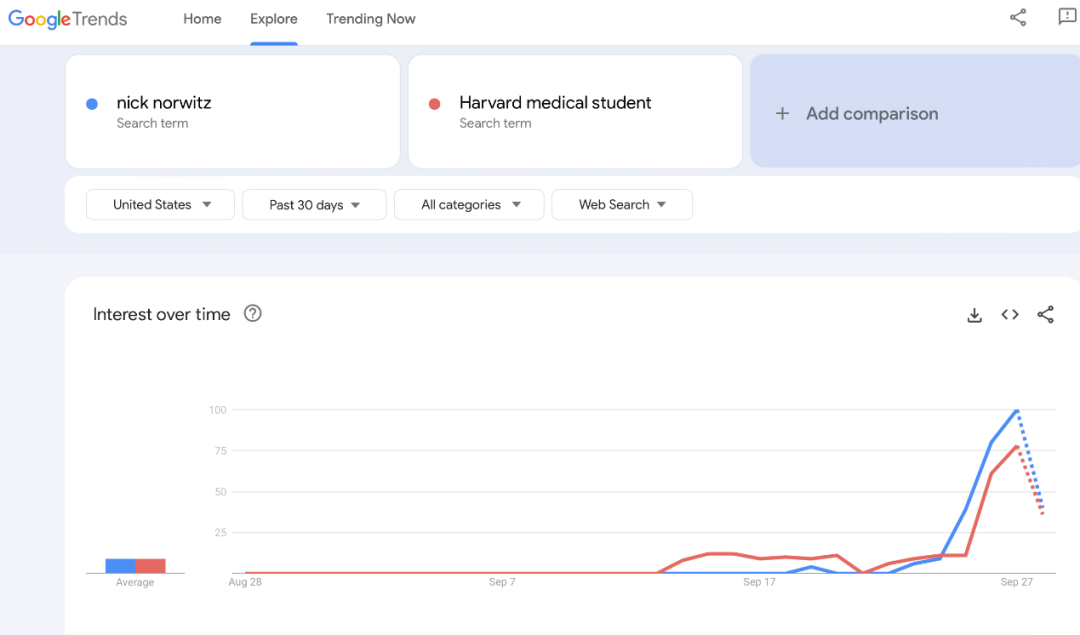
Search volume is climbing. Image source / Internet.
This study, with a sample size of 1, was divided into two parts. For the first 15 days, Nick increased his egg intake on top of his regular diet. For the next 15 days, on top of the previous amount, he added 60g of carbohydrates daily: sometimes two bananas, sometimes a handful of blueberries or frozen cherries, and sometimes dipping in some Hawaiian nut butter.
Up to now, Nick has not disclosed his daily diet or exercise routine. However, he has admitted that he has been adhering to a ketogenic diet for many years.
This is a dietary pattern that is high in fat, high in protein, and extremely low in carbohydrates. This means that before the egg experiment, Nick's average daily cholesterol intake might have already been 2-3 times that of an average person.

Image source Nick Norwitz@youtube
Family, friends, and classmates were all worried for Nick.
To this day, many people still believe that eating a large number of eggs is an "evil indulgence." This is because it leads to a high intake of cholesterol, which may cause the level of low-density lipoprotein (LDL) to rise. LDL is known as the "bad cholesterol," and if it accumulates within the blood vessel walls, it can trigger arteriosclerosis, increasing the risk of heart disease or stroke.
To keep track of his body's changes, Nick regularly gets medical check-ups, with a focus on monitoring his cholesterol levels.
Before the experiment started, his LDL level was 90mg/dL, which is within the normal range. After eating a large number of eggs for one week, his LDL decreased by 2%; by the fourth week, the LDL reduction reached 18%.
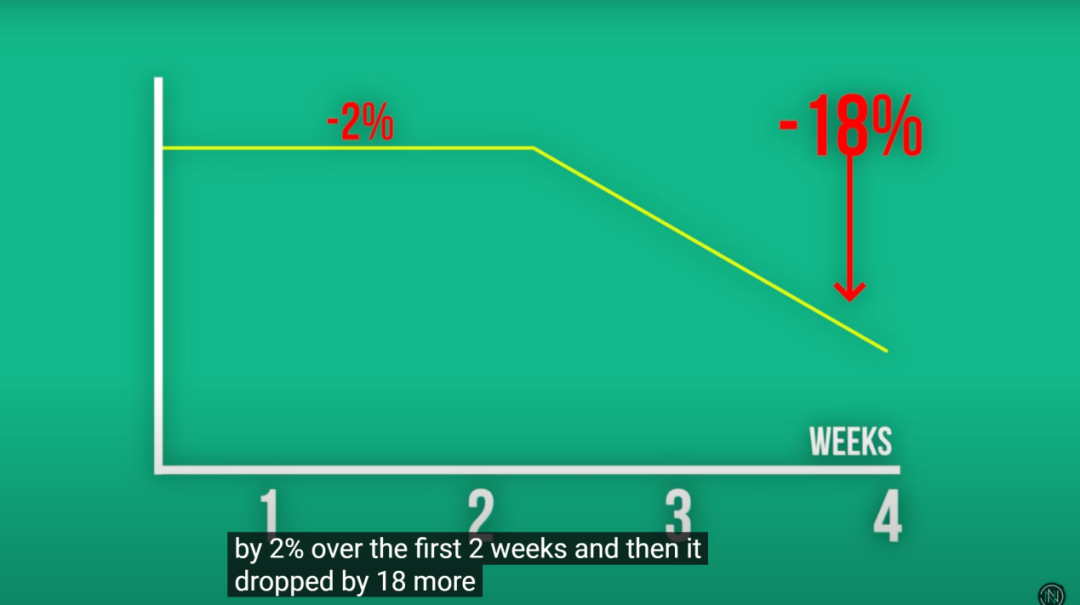
Image source Nick Norwitz@youtube
"The results were within expectations," Nick explained, saying that when a large amount of cholesterol is consumed, the body activates a "self-regulation" mechanism to maintain cholesterol balance. Among this, the hormone secreted by the intestines, "cholesin," plays a key role.
In animal experiments, after feeding mice a high-cholesterol diet, the cholesterol levels in the mice's intestines increased. It wasn't until four hours after feeding that changes were observed in the cholesterol levels in the liver and plasma, and the cholesterol synthesis marker Hmgcr was found to be downregulated.
This indicates that under conditions of high cholesterol intake from external sources, the hormone cholesin is secreted in a timely manner to reduce the cholesterol synthesized by the body.
It is worth mentioning that cholesin was first discovered, named, and its mechanism of action elucidated by a Chinese team. In March of this year, the journal Cell published related articles with the corresponding authors being Wang Yiguo from Tsinghua University and Zhang Huijie from the Southern Hospital of Southern Medical University. Some analyses suggest that cholesin may become a new target for lipid-lowering therapies.
Nick also wrote an article expressing gratitude for the outstanding contributions of Chinese scholars. "One of the reasons I conducted this experiment on myself is to respond to the Cell research, to illustrate why most people's LDL levels do not significantly increase after eating eggs."
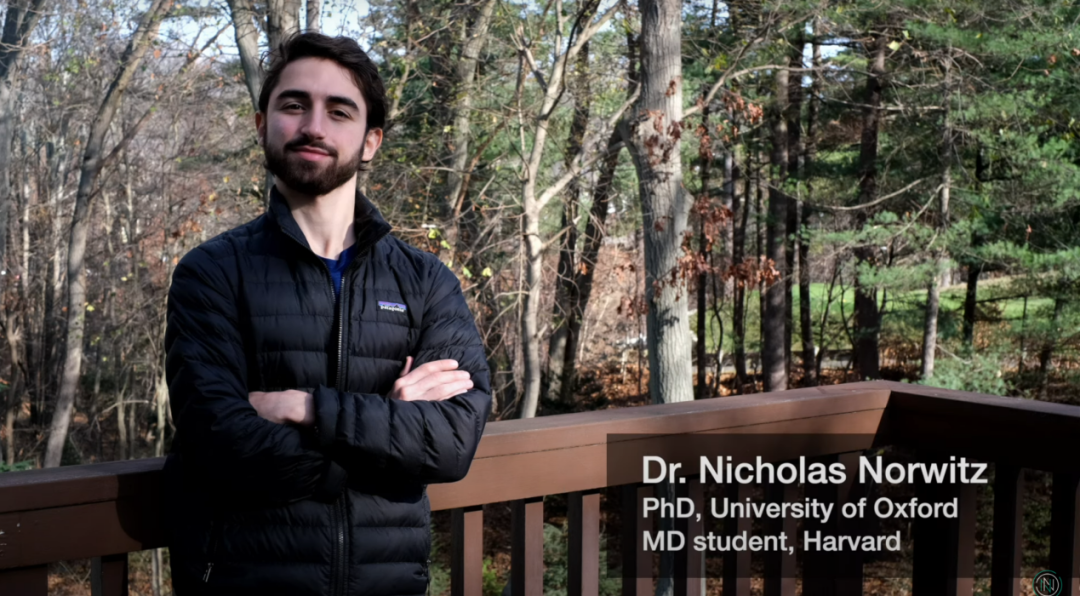
Image source/Internet
What pleased Nick even more was the 18% decrease in LDL, a tribute to his previous "Oreo cookie study," which once again confirmed that for lean individuals with a high response to LDL, the lipid-lowering effect of carbohydrates may surpass that of medication.
According to the results published in the Metabolites journal (2024 IF=4.1), this peculiar crossover study involved only one subject, Nick himself.
In the first phase of the study, he followed a ketogenic diet for 2 weeks, then for 16 consecutive days, ate 12 Oreo cookies daily, reducing his LDL-C from 384mg/dL to 111mg/dL, a decrease of 71%.
After a period of rest, he moved on to the second phase: resuming the ketogenic diet, followed by 6 weeks of lipid-lowering medication, reducing his LDL-C from 421mg/dL to the lowest of 284mg/dL, a decrease of 32.5%. During the crossover experiment, his daily routine and exercise were relatively standardized.
Nick believes that the lipid energy model can explain the lipid-lowering mechanism of Oreo cookies. "When carbohydrates are strictly limited, glycogen stores are depleted, body fat is low, and the level of circulating fatty acids increases, which are re-synthesized into triglycerides and exported in the form of very-low-density lipoproteins (VLDL). On the contrary, moderate carbohydrate supplementation and increased glycogen reserves lead to a decrease in the number of circulating VLDL particles, and LDL naturally decreases."
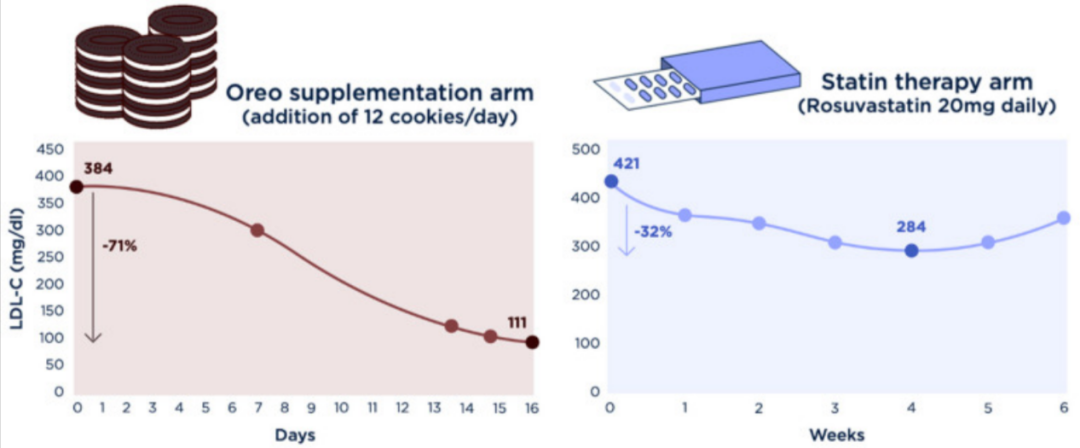
Image source/Metabolites
"Many people ask me why I did the egg and Oreo study, is it to grab attention? That's exactly what I thought, and it worked well!" Nick admitted that he has been criticized by some scholars. "They say my behavior is ridiculous, the research is not rigorous enough, and it will mislead the public and the academic community."
In March of this year, Lin QingShun, a retired professor from the University of California San Francisco School of Medicine, questioned Nick's Oreo study on his "science popularization and debunking" website. "Can you believe the conclusions of a study with an n=1? What's more, the single test subject is Nicholas Norwitz himself. Can you believe a game where the player is also the referee?
American cardiologist Elizabeth Klodas also raised doubts. She wrote at the end of "Why You Shouldn't Use Oreos for Lipid-Lowering": "We have a lot of data showing that consuming highly processed carbohydrates, such as Oreo cookies, can lead to insulin secretion disorders, increase chronic inflammation, and increase the burden of chronic diseases. At the same time, there is no example to support that people who follow a ketogenic diet will have a longer or healthier life."
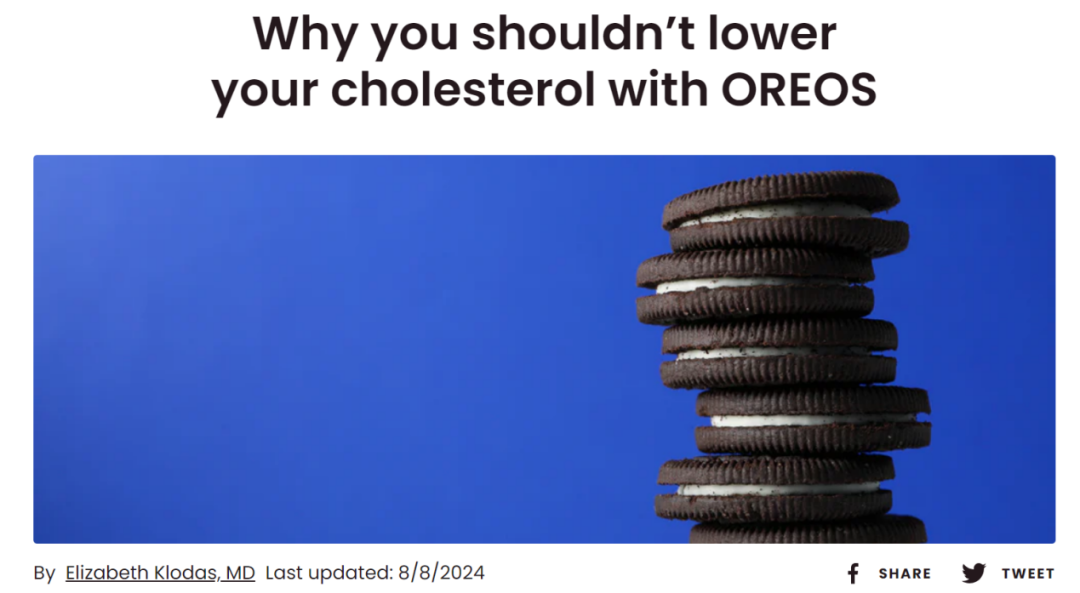
Image source/Internet
Nick, however, believes that extreme cases that can withstand verification are "legal bait," which can expand the path and scope of information dissemination.
"Oreos are traditionally considered 'junk food,' with their own topicality and sense of conflict, which can attract people's attention and emotions," Nick said, such content just meets the needs of algorithms. The conclusions drawn from the experiments by himself and his team have every reason to choose different forms of dissemination.
Based on Nick's social media information, before entering Harvard Medical School, he had already obtained a Ph.D. in Physiology from the University of Oxford in the UK and had published a series of papers on neuroscience, gastrointestinal health, genetics, and bone health.
He claims that since his youth, he has been passionate about exploring nutritional knowledge such as the medicinal uses of food. At the age of 18, he suffered from severe osteoporosis and was later diagnosed with ulcerative colitis. The latter is a serious inflammatory bowel disease that can cause symptoms such as abdominal pain, frequent bowel movements, and bloody diarrhea.
According to the results published in the Metabolites journal (2024 IF=4.1), this peculiar crossover study involved only one subject, Nick himself.
Nick read many books on gastrointestinal, nutritional, and metabolic topics, and began to adjust his diet, overcoming the disease. "The painful past has shaped who I am today. I know modern medicine cannot solve all problems. We may need to look for answers in nutrition."
Reference:
[1] Nick Norwitz@youtube
[2] Harvard medical student ate 720 eggs in a month, then shared the 'fascinating' results. fox news
[3] Nicholas's Substack
[4] Xiaoli Hu, et al. A gut-derived hormone regulates cholesterol metabolism. Cell. Volume 187, Issue 7p1685-1700.
[5] Norwitz, N.G.; Cromwell, W.C. Oreo Cookie Treatment Lowers LDL Cholesterol More Than High-Intensity Statin therapy in a Lean Mass Hyper-Responder on a Ketogenic Diet: A Curious Crossover Experiment. Metabolites. doi:10.3390/metabo14010073
[6] Robert H Eckel. Egg consumption in relation to cardiovascular disease and mortality: the story gets more complex. Ajcn. Volume 87, Issue 4, p799-800
[7] Djousse L, et al. Egg consumption and risk of heart failure in the Physicians’ Health Study. Circulation. 2008;117:512-6.

