


Outside Prof. Xiaofeng Zeng’s clinic, a line of patients is always forming—people who have traveled from across the country, thick, tangled medical records in hand. For many of them, Peking Union Medical College Hospital (PUMCH) is the last stop. Either they find an answer here, or there is no answer to be found.
Xiaofeng Zeng, 64, is a Professor of Rheumatology and Immunology at PUMCH and past Chair of the Chinese Medical Association Rheumatology Branch. He has been practicing medicine for forty years and still sees outpatients four half-days a week.
Four decades ago, rheumatology and immunology as a discipline barely existed in China. There was no dedicated department, no data, and no clinical standards. Prof. Zeng has, almost single-handedly, brought this “three-nothing” discipline to national scale.
He and his team established the Chinese Systemic Lupus Erythematosus Treatment and Research (CSTAR) collaborative group and the National Rheumatology Data Center (CRDC), built evidence-based diagnostic and treatment standards for rheumatic and immune diseases, and created a multi-center clinical research infrastructure in China that, for the first time, mapped the country’s rheumatic-disease landscape. Diagnostic and treatment levels improved measurably as a result.
For these and other contributions, Prof. Zeng received the 7th “Taishan Award” (Medical Innovation) in 2026. He attributes the journey to a single word: persistence. “As long as you are sure something is right, you must keep doing it.”
The Enemy Is Oneself
The immune system is a precision defense system refined over millions of years of evolution. Its mission is to distinguish “self” from “non-self.” Matt Richtel, the Pulitzer Prize-winning American journalist, wrote in An Elegant Defense: The Extraordinary New Science of the Immune System that the system is “precisely and subtly tailored to maintain balance, guard peace, and harm us and the world around us as little as possible.” It is closer to a peacekeeping force than a war machine.
Rheumatic and immune diseases, however, are an “internal war” waged inside the body: the peacekeeping force can no longer tell friend from foe and turns its guns on the joints, kidneys, skin, and blood vessels. The disease family includes more than 200 conditions. One of the most severe is systemic lupus erythematosus (SLE)—from the Latin “lupus,” or wolf—because early physicians thought the butterfly-shaped facial rash resembled a wolf bite.
Historically, rheumatic disease had no dedicated clinical home in China. Young women with SLE were sometimes told they had stubborn “chilblains,” with treatment delayed as a result. Patients with ankylosing spondylitis waited an average of six years for a correct diagnosis. Many lived with low back pain for years, treated as muscle strain, never knowing to consult a rheumatology clinic. Misdiagnosis meant mistreatment: in the 1950s, the five-year survival rate of lupus was around 50%; even after corticosteroids became available, patients were caught between dying without treatment and barely surviving with it.
The enemy is still expanding. A 2023 Lancet UK cohort study covering 22 million people found that the prevalence of 19 common autoimmune diseases had risen from 7.7% to 11.0% over the period studied—roughly 1 in 10 people. U.S. National Institutes of Health researchers, writing in Scientific American, warned bluntly: “Autoimmunity is an epidemic.” Smoking, solvent and pesticide exposure, ultraviolet radiation, chronic stress, and microbiome imbalances in over-sanitized environments are all pushing more people into this “war with oneself.”
This was the enemy Prof. Zeng faced when he walked into the rheumatology and immunology department in 1984: invisible, intangible, still not fully understood, and growing. The enemy was not an external pathogen, but the body’s own immune system.
Writing to the President Above His Rank
In 1979, Prof. Zeng was admitted to the basic medical sciences program at Shanghai First Medical College. After graduating in 1984, he was assigned to the Department of Laboratory Medicine at PUMCH. After only two months on the job, he could not sit still: he wanted to do immunology research, and PUMCH’s rheumatology and immunology department, established in 1980, was severely short-staffed.
The senior director of the laboratory department refused to release him—he was the first university graduate assigned to the lab. In the personnel system of that era, “personal interest”was not a recognized category for transfer. The 22-year-old made a bold decision: he would write directly to the hospital president. Prof. Zeng recalled the letter reaching then-president Chen Minzhang (later Minister of Health) with three clear reasons— “I am interested in immunology; I have learned many research methods and am also interested in clinical research; and the rheumatology department needs people, so this move would respect both individual initiative and the hospital’s needs.”
The letter was forwarded to Zhang Naizheng, the founder of Chinese rheumatology. Zhang had graduated from Shanghai St. John’s University Medical School in 1947, was sent to the Soviet Union to study rheumatology in 1959, and on returning to China opened the country’s first dedicated rheumatic-disease clinic. In those early days, even the sheep red blood cells needed for rheumatoid-factor testing had to be raised in-house. In 1985, Zhang traveled the country to help establish the Chinese Medical Association Rheumatology Branch. China’s rheumatology discipline was, in his words, “shouted into being.”
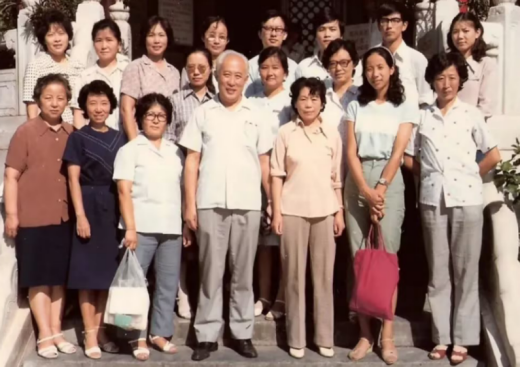
Fig.1.In 1985, the Department of Rheumatology and Immunology at PUMC Hospital Held the First National Training Program on Recent Advances in Rheumatology Laboratory Techniques
Zhang accepted Zeng—but attached strict conditions. PUMCH’s tradition required equal emphasis on clinical care, teaching, and research. Working only in the lab was not enough. Zeng would have to start over as an intern on the clinical side, abandoning his prior research and potentially jeopardizing promotion. Prof. Zeng did not hesitate and signed a written commitment: he was willing to be promoted strictly on the basis of demonstrated ability.
The rest of the story sounds almost legendary. Prof. Zeng was promoted to resident physician within six months, became chief medical resident in 1989, and—unusually for the era—was promoted to chief physician in 1999, before he turned 37.
The field of rheumatology and immunology at the time was like a tree few were willing to climb. “Other specialties had already had most of their fruit picked. Only the rheumatology tree still had plenty.” Prof. Zeng was the first in China to use high-dose intravenous immunoglobulin (IVIG) in SLE treatment, and the first to propose that ultrasound could be used in the diagnostic evaluation of rheumatic disease. He accumulated 50-60 papers—at the time the most prolific output in the entire hospital.
In 1995, a stint at the University of Hong Kong’s pathology department exposed him to electronic medical-record systems. In 1998, a training visit to Canada introduced him to Good Clinical Practice (GCP) and the power of cohort data collection.
Prof. Zeng recalls how, at international congresses, country after country presented its own epidemiological and cohort data, while the China column “remained a zero for a long time.” “We have so many patients in China, and yet we have no data of our own. That is deeply embarrassing,”he said.
In fact, China is home to the world’s largest population of patients with rheumatic and immune disease—but no one had ever truly “counted” them.
Prof. Zeng began early attempts. In the late 1990s, he proposed a project on osteoarthritis diagnosis and treatment as a way to collect national data and build a database. The peer-review response was dismissive: “How can rheumatology do this? Osteoarthritis is an orthopedic condition.” The proposal was not funded.
Building a Database for Chinese Patients
While most clinicians focused on the visible surface of disease, Prof. Zeng kept circling a different scientific question: what is the underlying mechanism, and how do we study and solve it?
In 2008, supported by the National 11th Five-Year Science and Technology Support Program, Prof. Zeng established CSTAR. The online lupus registration system went live the following year, with more than 100 hospitals joining the network. Year of onset, organs first involved, steroid taper trajectory, relapse history—tens of thousands of patient journeys were captured, one by one.
Before CSTAR, China’s rheumatic-disease epidemiology rested on three field surveys from the 1980s—cited for decades, but no longer representative of the actual Chinese population.
CSTAR made it possible to count Chinese patients at scale for the first time: prevalence, risk factors, causes of death, current treatment patterns, and the economic burden of lupus in China. In 2011, CSTAR was upgraded into the National Rheumatology Data Center (CRDC), expanding registration from lupus to rheumatoid arthritis, Sjögren’s syndrome, scleroderma, and other major conditions. The database now holds more than 460,000 patient records.
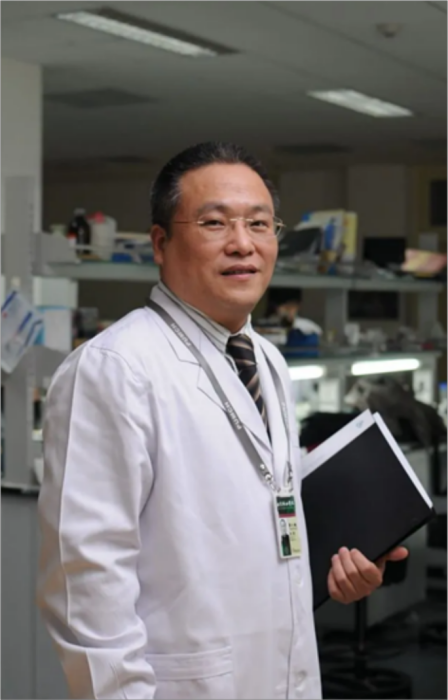 Fig.2.Xiaofeng Zeng is at the PUMC Hospital Laboratory.
The data ultimately produced standards. Prof. Zeng led the drafting of the 2020 and 2025 Chinese Guidelines for the Diagnosis and Treatment of Systemic Lupus Erythematosus, the first to establish a “treat-to-target” philosophy in China. The 2025 update defined “clinical remission”and “Lupus Low Disease Activity State (LLDAS)” as treatment targets, recommended a maintenance prednisolone-equivalent dose of ≤5 mg/day, and included biologic agents accessible to Chinese patients, such as telitacicept, alongside forward-looking discussion of emerging modalities such as CAR-T cell therapy. Increasingly, the evidence underpinning the guidelines comes from Chinese cohorts. “All the guidelines and consensus we develop now are based on our own data, layered on top of international guidelines with our own additions,” he said.
The change has reached patients. China’s 10-year SLE survival rate has risen from around 50% to 89%, with the 5-year rate exceeding 95%. Within the CSTAR-registered cohort, about 15.9% of patients have fully discontinued corticosteroids—no longer having to trade the risk of “moon face” and femoral-head osteonecrosis for survival.
On one domestic medical platform, a patient with systemic sclerosis who first consulted Prof. Zeng in December 2014 wrote five years later that her condition was controlled and improving— “an illness once considered incurable, and I am still living normally.” An adult-onset Still’s disease patient wrote that when she first came to see him in 2017 she was in a wheelchair, “felt life had no meaning, and had lost all hope.” After more than a year of treatment, “my body slowly recovered enough to walk. I am grateful for being given a second life.”
Built on this database, the team has published more than 100 SCI-indexed papers. Prof. Zeng has served as Vice President of the Asia Pacific League of Associations for Rheumatology (APLAR), and at international congresses around the world, leading foreign experts now frequently project CSTAR data onto the main screen.
From Telegraph Poles to Red-Header Documents
Beyond data, a more fundamental problem remained: even when a disease was recognized, patients did not know where to go for care.
“Forty years ago, independent rheumatology and immunology departments in China could be counted on one hand. Many patients lived with low back pain for years, misdiagnosed with muscle strain, never knowing to consult a rheumatology clinic.”Prof. Zeng recalled that China has more than 200 million patients with rheumatic and immune disease, but at one point fewer than 700 hospitals had an independent rheumatology and immunology department.
According to the Chinese Medical Association Rheumatology Branch and the Chinese Medical Doctor Association Rheumatology and Immunology Specialty Committee, the first national workforce survey in 2007 counted just 2,216 rheumatology and immunology physicians in China. By 2019, the number had grown to 12,728. The most recent survey, Prof. Zeng noted, is approaching 20,000.
Prof. Zeng has seen, firsthand, the chaos in primary care: some clinicians stray from evidence and prescribe “by gut feel”; experimental therapies that should be rigorously vetted in tertiary centers are used indiscriminately in ordinary clinics; therapies claiming to be “the latest” sometimes appear only on street-corner advertisements pasted to utility poles.
On a volunteer outreach trip to Ganzi, Sichuan, with a delegation of rheumatology department directors from across the country, a group of top specialists found themselves with nothing to offer: there were no drugs, and no diagnostic facilities. “At that point, the experts became nothing,” Prof. Zeng recalled. “We were less convincing than a handful of medicinal herbs in a herder’s hand.”
A single strong department cannot serve a country. In 2013, the Chinese Medical Association Rheumatology Branch proposed “one city, one department.” When Prof. Zeng became chair in 2014, he upgraded the goal to “one city, one department, one center”: every county-level city should have at least one independent rheumatology department and one center capable of performing rheumatology-related antibody testing. “Without laboratory indicators, diagnosis has no source. Even one center would let me send blood there for testing,”he said.
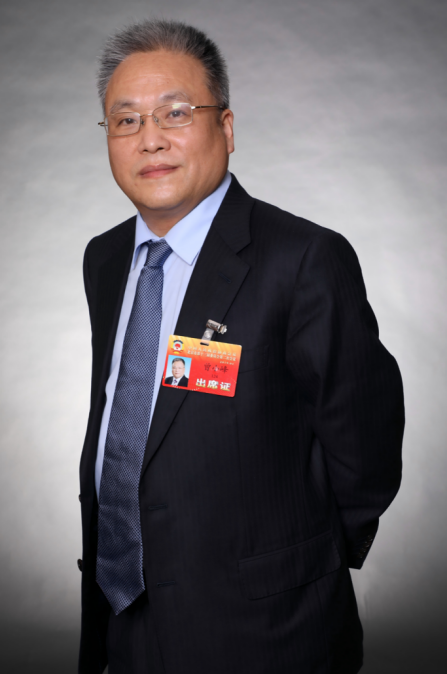 Fig.3.Xiaofeng Zeng Attended the 13th Beijing Municipal Committee of the Chinese People’s Political Consultative Conference
In October 2019, China’s National Health Commission released the Guidelines for the Establishment and Management of Rheumatology and Immunology Departments in General Hospitals (Trial), requiring tertiary hospitals to establish independent rheumatology departments and encouraging qualified secondary hospitals to do the same. For the first time, the long-marginalized discipline had an official national document. That same year, PUMCH's rheumatology and immunology department was approved as the National Clinical Medical Research Center for Skin and Immune Diseases.
Today, the grass-roots referral network finally extends downward. Patients whose cases exceed what county-level hospitals can handle are referred up to the prefectural level— “they don't have to come all the way to PUMCH.” National centers like PUMCH focus on refractory and severe cases, and on validating new drugs. A CCTV Focus Talk episode once carried the title “All of China Goes to PUMCH.” This, Prof. Zeng said, is precisely what he wants to change.
In four decades, Prof. Zeng has seen too many patients whose bodies were destroyed by their own immune systems. Once, rheumatology’s physicians and patients were powerless, with corticosteroids as their only weapon. Today, the armamentarium has expanded—from biologics and small-molecule targeted drugs to CAR-T cell therapy. Prof. Zeng has led or participated in more than 130 clinical studies. Yet he is careful not to overstate: these diseases still cannot be cured today.
In medicine, building a discipline “from nothing” and bringing it to widespread adoption usually takes several generations. In China, the major developments in rheumatology and immunology have run almost in parallel with Prof. Zeng’s own career: from no department, no data, no guideline, to patients being seen, the discipline being recognized, and standards being established.
After receiving the Taishan Award, he was back at PUMCH the next day. Nothing seemed to have changed. Yet Prof. Zeng, now 64, was more committed than ever to what he is doing now.
Past PUMCH’s century-old gray-brick walls, he remains the “Dr. Zeng” who, every week without fail, sees outpatients for four half-days. In the rheumatology and immunology laboratory on the seventh floor, he continues to dig into his research, searching for more answers for the development of Chinese rheumatology and immunology.

