


A well-known critical care physician who had spent his career treating critically ill patients in the intensive care unit (ICU) found himself one day as the patient on an ECMO circuit. Dr. Xin Rao, deputy director of the Department of Critical Care Medicine and leader of the mobile ECMO team at Zhongnan Hospital of Wuhan University, has long established life support for patients with respiratory failure and cardiac arrest. This time, the familiar equipment was used on him, operated and monitored by colleagues working alongside him.
What put him on the operating table was chronic thromboembolic pulmonary hypertension (CTEPH). On July 29, about 30 medical staff worked together to perform pulmonary endarterectomy on him. The operation lasted about 13 hours, with three periods of deep hypothermic circulatory arrest totalling 38 minutes. About 21 days after surgery he returned to the department, rehabilitating while handling daily work. On October 19 he described the illness to MedJ. Familiar as he was with critical care, he had also ignored the warning signs his body had given him, and hesitated because he understood the risks of surgery well. Looking back, he said plainly: “I delayed this myself.”
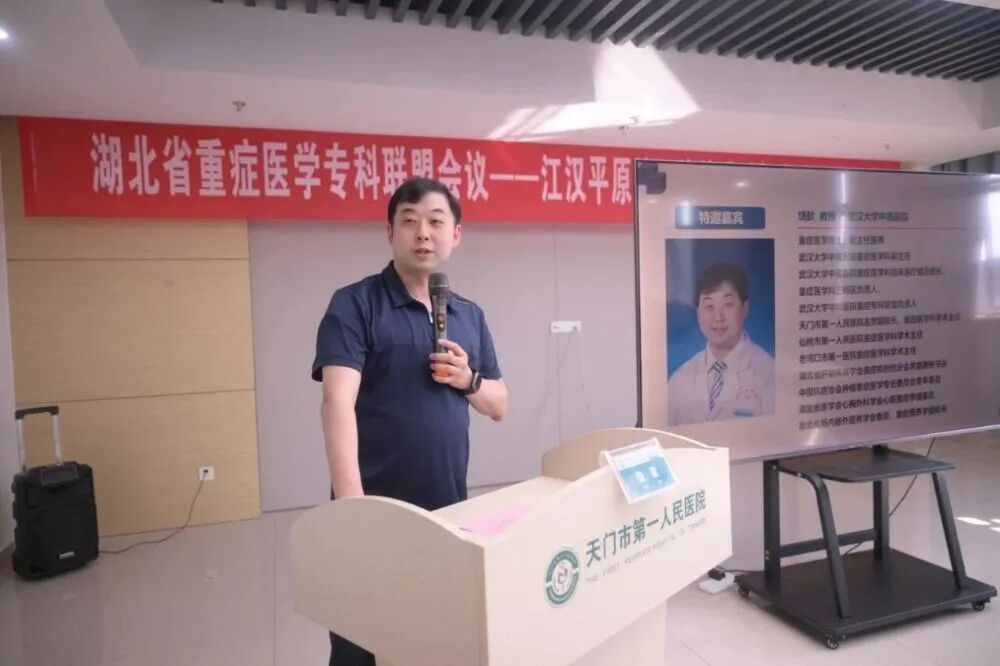 Fig. 1. Dr. Xin Rao Two Months after Surgery at an Academic Meeting
Source: Interviewee
Article Key Points
- Dr. Xin Rao, a critical care physician in Wuhan, underwent pulmonary endarterectomy for CTEPH
- On July 29, about 30 staff completed the 13-hour operation, with three circulatory arrest periods totalling 38 minutes
- In 2018 a thrombus from an immobilised leg embolised to his pulmonary artery, causing acute pulmonary embolism
- Residual thrombus scarred over, raising pulmonary vascular resistance until CTEPH was confirmed in March
- Prevalence is about 25 to 38 per million; early symptoms are often attributed to fatigue or lack of exercise
- The 2024 guideline requires multidisciplinary discussion of operability for every patient with CTEPH
- Two interventional procedures before surgery did not achieve the intended result
- Postoperative care included three days of oxygenation index near 100 mmHg, extubation on day 3, ambulation on day 5
When a Physician Hesitates in the Face of Disease
The first warning appeared in 2018. Dr. Rao injured his leg while exercising and, after a period of immobilisation, developed a thrombus in the lower limb. In October that year the thrombus detached and entered the pulmonary artery, and he suddenly became short of breath, could not walk, and developed hypotension. Work pressure was high at the time, and he was briefly worried that he had myocarditis. Rest did not improve his symptoms; subsequent investigation confirmed acute pulmonary embolism, and a filter was placed in his body and thrombolytic treatment was given. The thrombus was not fully eliminated.
As the acute symptoms settled, work and daily life seemed to resume. Dr. Rao knew that thrombus remained in his pulmonary artery, but with no obvious symptoms later on and with the pressure of work, he gradually set it aside. The symptoms were not obvious, but the lesion continued to progress. The unresolved thrombus organised and scarred over with fibrous tissue and, together with a thickened vascular intima, obstructed the pulmonary artery. Secondary pulmonary vascular remodelling raised pulmonary vascular resistance, the load on the right heart increased, and right heart failure could eventually develop.
By the beginning of this year, walking three or four hundred metres was already difficult and his feet were frequently swollen. Looking back, in the two or three years before that he had felt something was wrong but had not acted on it. This March he was diagnosed with CTEPH.
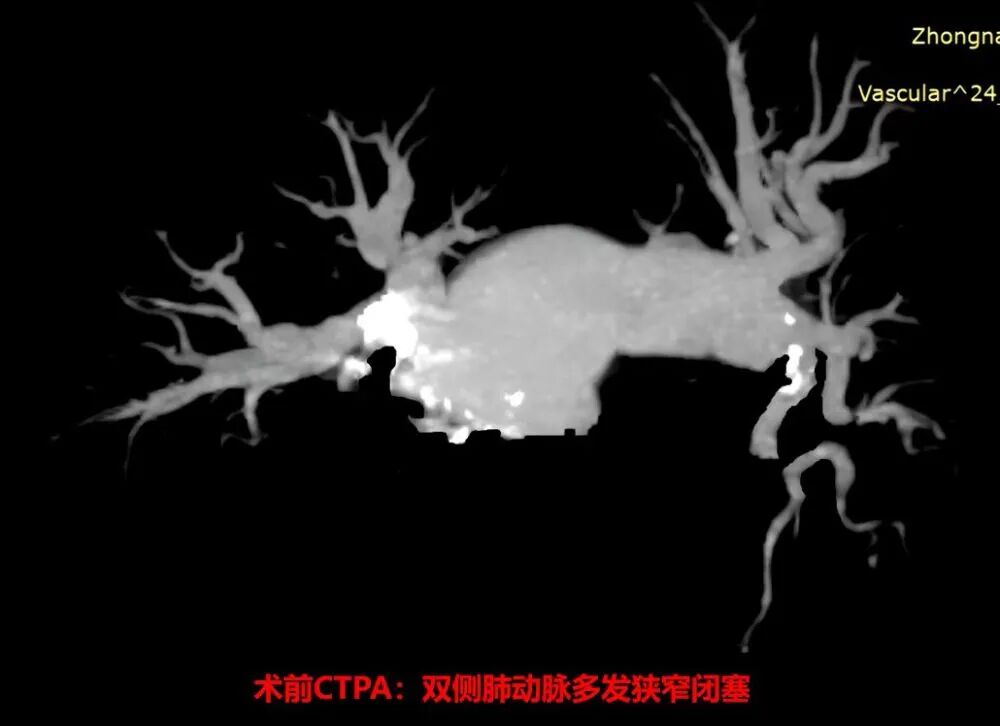 Fig. 2. Preoperative CTPA: Multiple Stenoses and Occlusions in the Bilateral Pulmonary Arteries
Source: Interviewee
This is a rare pulmonary vascular disease, with a population prevalence of about 25 to 38 per million, and it is a late complication of acute pulmonary embolism. Early presentation is often exertional dyspnoea and fatigue, which are easily attributed to tiredness or insufficient exercise. Dr. Rao, familiar with critical care, knew the disease was dangerous but did not proceed readily to surgery. Bleeding, infection, resuscitation: he knew these risks only too well, and was therefore somewhat deterred. After diagnosis he underwent two interventional procedures in the hope of opening the vessels, but neither achieved the intended result.
Whether to operate, and how to secure safety in the perioperative period, requires a multidisciplinary team decision. Dr. Rao chose at that point to withdraw from the discussion. He explained to MedJ that he did not want to put pressure on his colleagues, and that after the earlier attempts he was ready to accept surgery.
The Guideline for Chronic Thromboembolic Pulmonary Hypertension (2024) states that when a plan is being made for every patient with CTEPH, the first step should be a multidisciplinary discussion to establish whether pulmonary endarterectomy can be accepted. For suitable surgical candidates, clearing the obstructing lesion can improve haemodynamics and exercise tolerance, and some patients can achieve a clinical cure. The guideline emphasises that surgical feasibility depends not only on whether thrombus is present but also on assessment of lesion location, haemodynamics, cardiopulmonary function, and comorbidities; whether the lesion can be reached, and how much improvement clearing it will bring, all require judgement from an experienced team. This is why consultation needs multidisciplinary participation. Surgery, intervention, and drug therapy each have their own indications. Reflecting on his own hesitation, Dr. Rao said: “Thinking about it now, no one is spared by disease, and no one can tough it out alone.”
Thirteen Hours, More than 30 Specialists
At 7 am on July 29, Dr. Rao was wheeled into the operating room, with multidisciplinary teams from cardiac surgery, extracorporeal circulation, anaesthesia, and critical care taking part.
Recalling the procedure, Dr. Rao remembers only that the anaesthetist asked him to count to five, and by the third number he lost consciousness. Everything that happened afterwards was recounted to him, bit by bit, by colleagues holding intraoperative photographs once his condition had stabilised.
Through the dozen or more hours of his sleep, the operation had to restore flow through the pulmonary artery. Surgeons needed to clear away the old thrombus and thickened intima. These lesions are firmly adherent, and cannot be dealt with as simply as removing a free-floating clot; the correct plane has to be found and the vessel carefully dissected towards the distal branches. Dissecting too shallow may leave behind an obstruction; dissecting too deep risks damaging the vessel and causing bleeding. The operation also required a clear bloodless field so that the distal branches could be seen and the lesion removed as completely as possible.
Deep hypothermic circulatory arrest created the conditions for a bloodless operation. The extracorporeal circulation team first lowered the body temperature through the circuit, reducing metabolism and oxygen consumption, and then paused circulation in stages under close monitoring. “Core temperature down to 18°C, the heart not beating, blood not moving. Put plainly, during deep hypothermic circulatory arrest the body’s function is like being ‘dead’,” Dr. Rao said.
Pausing circulation has to be done against the clock. If cerebral oxygen saturation falls by more than 40% below the baseline level, circulation has to be restored immediately. Then the team cools down again and the operation continues. Throughout, the extracorporeal circulation team controls perfusion, cooling, and rewarming, while the anaesthesia team monitors blood pressure, cerebral oxygen, and other indices continuously; every pause and every resumption requires close coordination between specialties.
According to Dr. Rao, the operation lasted about 13 hours, with three circulatory arrest periods totalling 38 minutes, of which 8 minutes in the third period were used to repair the pulmonary artery intima. Those hours of which he was unaware under anaesthesia were monitored and recorded item by item by his colleagues until the operation ended.
Dr. Rao had previously used deep hypothermia for patients and knew the importance of lowering core temperature, monitoring cerebral oxygen, and restoring perfusion in time. This time, he needed to rely on colleagues to carry out the life support he knew well.
With the operation finished and pulmonary arterial flow restored, a new set of challenges awaited him in the ICU. Reperfusion-related lung injury, pulmonary oedema, bleeding, and circulatory instability could occur at any time. This is because re-establishing previously obstructed pulmonary blood flow does not mean the lungs can immediately resume normal function; respiratory and circulatory support is still required while the damaged tissue recovers.
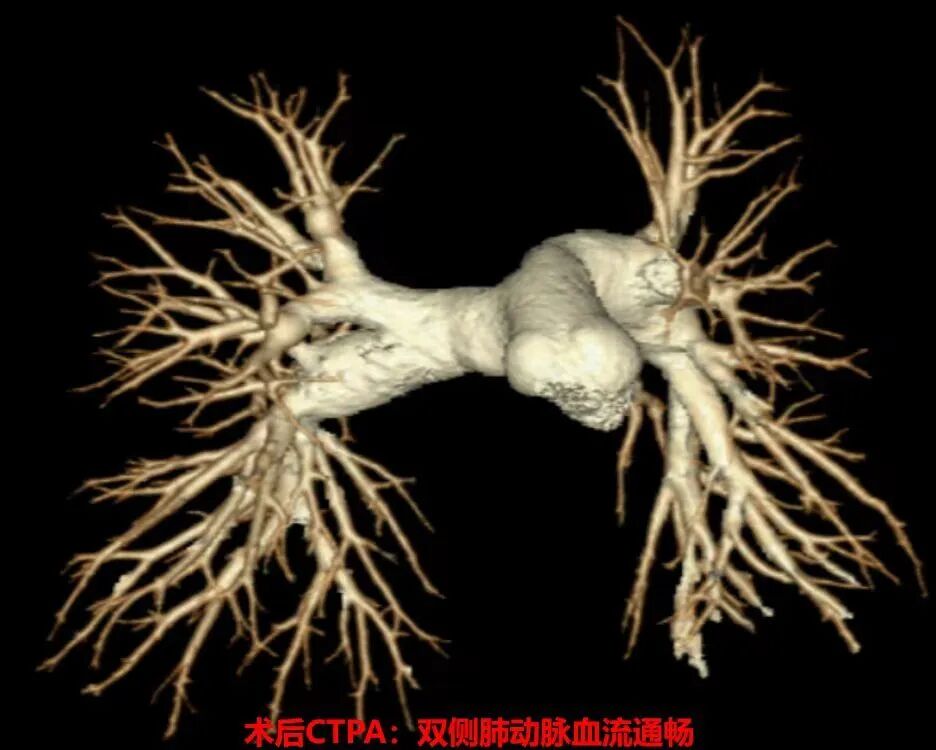 Fig. 3. Postoperative CTPA: Patent Bilateral Pulmonary Arteries
Source: Interviewee
Speaking from Experience to Colleagues, and Understanding Better
During the first 3 days after surgery, his oxygenation index fell to around 100 mmHg at one point, indicating markedly impaired oxygenation. The ICU team repeatedly assessed him using lung ultrasound, arterial blood gases, and circulatory indices, and adjusted fluid management, respiratory support, analgesia, and sedation. Dr. Jing Wang, deputy director of the ICU, stayed with him for 3 days, until he got through the pulmonary oedema and was successfully extubated. Doctors from the mobile ECMO team organised their own shifts to provide one-to-one care, with 6 nurses working in two shifts, each responsible for him alone.
There was a further twist during the recovery period. Some cerebral monitoring indices in Dr. Rao were low, and the team was concerned about possible neurological injury; after reducing the depth of sedation they found that only one hand could move. A little later, the other side gradually regained movement as well, and the tension eased.
On postoperative day 3, Dr. Rao woke from deep sedation and was extubated, and on day 5 he was out of bed. Of the treatment he had received, he said he had no painful memory of: “The analgesia and sedation were done well, extubation when it was time to extubate, the whole process was clean and tidy.”
Those caring for him were colleagues he had worked alongside for more than a decade. Dr. Rao was familiar with the way they handled critical illness and was willing to cooperate with every step. It was also after waking that he gradually learned that many people had quietly kept watch over him.
His doctoral supervisor, Prof. Jianguo Li, is in his seventies. On the morning of the operation, at 6:30 am, he was already at the operating room door, half an hour earlier than Dr. Rao. The old man waited until the operation ended and until his student was transferred to the ICU, and visited him many times afterwards. “He has always treated patients as family, and he treats me the same way,” Dr. Rao said.
His parents learned of the operation only on postoperative day 5, when they saw his message reporting that he was safe in his social media feed. In that long post he thanked those who had done so much for him, and wrote that he was “a doctor who is not even good enough.” Beyond humility, the remark carried another meaning: as a physician, he felt he had not done well, from learning that there was a thrombus in his pulmonary artery, through the onset of symptoms, to accepting surgery. He had taken detours and lost time.
Colleagues described his recovery as a “rehabilitation miracle”, and Dr. Rao attributed much of it to trust and cooperation. Once he became the patient, he acted on the instructions he was given as far as possible, so that the treatment and rehabilitation plans could be carried out.
The mobile ECMO team he leads was set up nearly 5 years ago and has repeatedly travelled with its equipment to primary care facilities to cannulate and establish life support for nearly 400 critically ill patients with respiratory failure or cardiac arrest on site. In an emergency this team has to respond quickly, buying time for patients locally. That work made him familiar with many of the details of life support. Yet even when his own treatment involved ECMO, the technique he was expert in, Dr. Rao did not join the discussions. He handed the decisions to his colleagues and took the role of the person cooperating with treatment.
On postoperative day 21 he returned to the department, started handling daily work, and continued rehabilitation training. Colleagues urged him to take it easy and not push himself.
While his sternum was still healing, Dr. Rao walked onto an academic podium wearing a support belt, and spoke about his own diagnostic and treatment experience.
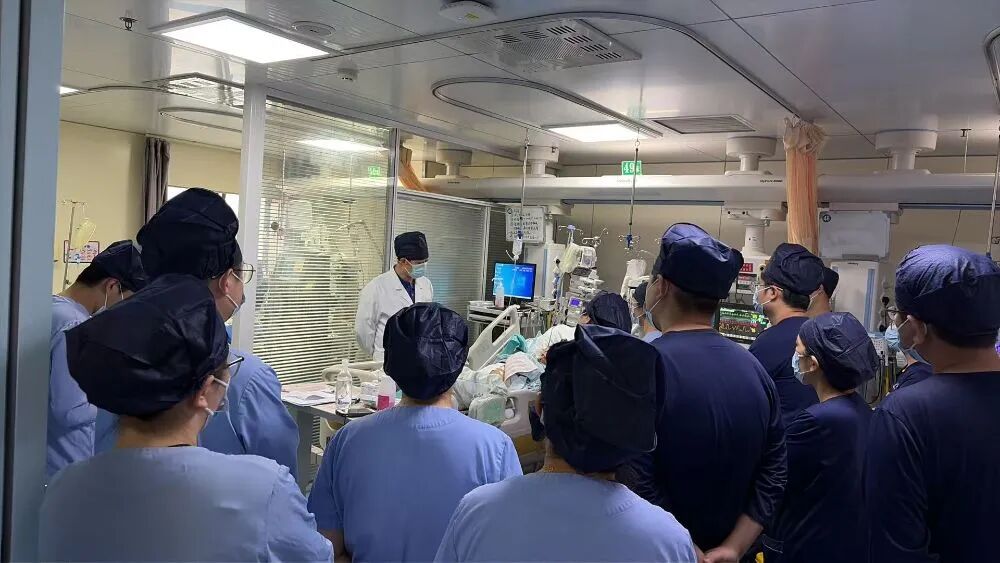 Fig.4.One month after surgery, Xin Rao(in a white coat) returns to work and conducts ward rounds
Source: Interviewee
Return to work does not mean recovery. When interviewed by MedJ he still had to limit the time and distance he walked each day, and to avoid movements that expand the chest and large emotional swings. Returning to work is a way to rebuild the rhythm of his former life while rehabilitation continues.
Rehabilitation in patients with CTEPH often continues after discharge. The 2024 guideline recommends lifelong anticoagulation for patients with CTEPH who have no contraindications; for patients whose condition is relatively stable, exercise should be carried out under the guidance of a physician or rehabilitation therapist, with monitoring of oxygen saturation and heart rate. Rehabilitation training should also be adjusted as recovery progresses.
Apart from not being able to exercise and not getting too excited, he said, “I am basically fine at the moment.” What he hopes colleagues will remember is not only this operation but what follows it. Early symptoms of CTEPH lack specificity; even patients who have survived the acute phase of pulmonary embolism should pay attention to dyspnoea that appears or persists on exertion.
The 2024 guideline recommends that patients with acute pulmonary embolism who have completed at least 3 months of standard anticoagulation, and who have relevant risk factors or exertional dyspnoea, should be screened for CTEPH. For Dr. Rao, telling his own medical history is a way of encouraging more people to think of this possibility earlier.
“It is not only the general public; even specialists may not have a complete picture,” he said, using his own case to remind colleagues. Nowadays, at academic meetings on analgesia and sedation, on extracorporeal life support, and elsewhere, he is willing to speak openly about this illness.
This has changed how he communicates with families. “I can better appreciate how desperate people are when a condition is critical,” Dr. Rao said. For families waiting outside the ICU, information about the condition can depend on brief daily conversations. The processes he found familiar may still hold many things they do not understand. He used to say that he was impatient and sometimes did not explain things in enough detail. Now he communicates with patients and families as much as possible, and tries to reassure them. Where he once said “leave the patient with us”, he now also tells them that he has himself lain in a bed in the Zhongnan Hospital ICU, has been through these treatments, and trusts the team there.

