


Lin Lin, born at 23 weeks and 2 days of gestation, was intubated immediately after birth.
The size of his palm, he weighed only 550 grams, his body was cyanotic, and under his semi-transparent skin, blood vessels as thin as hair were clearly visible.
As an "extremely premature infant at the limits of viability," Lin Lin had more than ten complications including severe neonatal asphyxia, intracranial hemorrhage, and neonatal sepsis, all of which could threaten his life at any time.
After 162 days of treatment at Hunan Provincial Children's Hospital, Lin Lin's weight increased to 3600 grams and he was discharged after recovery. During this period, he went through at least three surgeries and invasive procedures, surviving multiple life-threatening situations. The hospital initiated 14 expert consultations for him, and the recorded medical records spanned over 300 pages.
This is a successful rescue case of an extremely premature infant on the edge of survival. Zhuang Yan, the deputy director of the first neonatal unit of the hospital, participated in the rescue of Lin Lin throughout the process, and he told "Medical World" about the rescue process that lasted for more than five months.
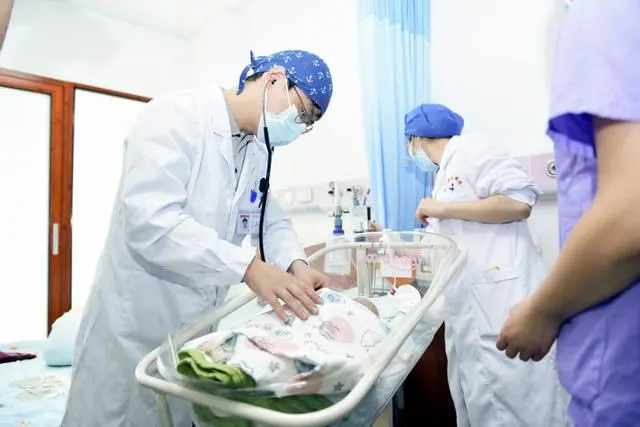
Dr. Zhuang Yan (first from the left) and others are treating Lin Lin / All images in this article are provided by the hospital
Two successful punctures, passing the first difficult hurdle
On May 17th, Zhuang Yan, who was studying abroad, suddenly received a call from the hospital: the neonatal department admitted an extremely premature and extremely low-birth-weight infant in critical condition, and he needed to rush back to the hospital for support immediately.
In clinical practice, fetuses with a gestational age of less than 28 weeks are called extremely premature infants, and those like Lin Lin, with a gestational age of less than 24 weeks, are considered "extremely premature infants at the limits of viability," with extremely immature development, great difficulty in rescue, low survival rates, and more sequelae in survivors.
In addition to the low gestational age, Lin Lin's weight at birth was only 550 grams, which added to the difficulty of the rescue. Generally, extremely low-birth-weight infants refer to fetuses with a birth weight of less than 1000 grams, which is more common in extremely premature infants. Lin Lin is a "very low among the very low," which is not often seen clinically.
Because of this, Lin Lin's lungs were extremely immature, and he was unable to breathe normally.
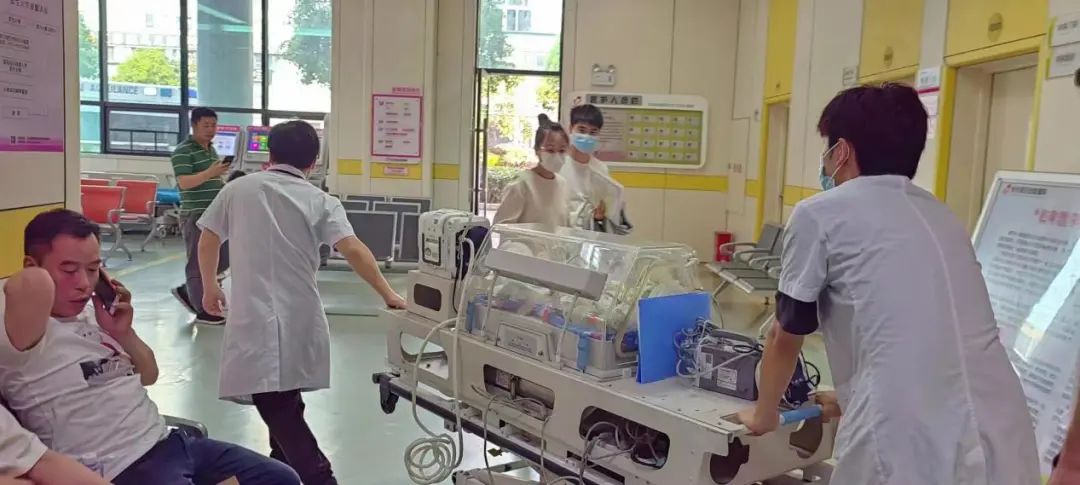
Doctors from Hunan Provincial Children's Hospital urgently transported Lin Lin to their hospital
Before being referred to Hunan Provincial Children's Hospital, the local hospital had already intubated Lin Lin with an invasive ventilator and injected pulmonary surfactant to buy time for treatment. Even so, Lin Lin developed severe neonatal respiratory distress syndrome and pneumothorax after being transferred.
Pneumothorax is a common complication of mechanical ventilation and is a fatal blow to Lin Lin, who already had poor lung development. Dr. Zhuang immediately performed a thoracentesis to release the excess gas, and Lin Lin's breathing temporarily returned to normal.
However, another more difficult condition appeared - tension pneumothorax. While the ventilator was delivering air to the child's lungs, air from the outside was continuously entering Lin Lin's body through the wound, causing his lung pressure to keep rising.
Tension pneumothorax, due to its rapid progression, often endangers life and must be handled quickly, with the principle of emergency treatment being to decompress by releasing air. But at this point, thoracentesis could no longer completely remove the excess air from Lin Lin's body. Zhuang urgently called for a cardiothoracic surgery consultation to prepare for closed thoracic drainage.
Simply put, the procedure involves inserting one end of the drainage tube into the chest cavity and the other end into a water seal bottle positioned lower than it, to expel air or collect fluid from the chest cavity, allowing the lung tissue to reopen and regain function.
The conventional closed thoracic drainage tube is about the thickness of a little finger. If inserted directly into Lin Lin's intercostal space, the trauma would be too great. After discussing with the cardiothoracic surgery expert, Zhuang decided to use an indwelling needle for scalp injection in infants and toddlers for puncture and fixation.
Performing this operation on a newborn weighing only 550 grams is extremely difficult because premature infants have thin and tender skin after birth, are prone to edema, have delicate blood vessels, poor peripheral circulation, and are prone to puncture failure. Fortunately, Zhuang's team has rich clinical experience, and the puncture operation was successful at once.
After nearly 24 hours of drainage, the excess gas in Lin Lin's chest cavity was expelled, and the lung rupture also gradually healed. "Without these two successful punctures, Lin Lin would not have been able to pass the respiratory hurdle, and the medical treatmentwould have been very difficult to continue," Zhuang told "Medical World."
After 14 expert consultations and 162 days of treatment, Lin Lin was discharged from the hospital
Breathing was only the first hurdle Lin Lin had to overcome; he still had to face complications such as retinopathy of prematurity that could be caused by mechanical ventilation, metabolic bone disease that could be caused by parenteral nutrition, systemic infections, cholestasis, and cerebral white matter softening, all of which could threaten his life at any time.
To treat the child, Hunan Provincial Children's Hospital gathered experts from multiple disciplines and initiated 14 expert consultations in total.
Ophthalmology experts participated in the consultations on multiple occasions. As an extremely premature infant, Lin Lin had immature retinal blood vessels, and prolonged oxygen exposure led to retinopathy of prematurity, which could lead to blindness without timely treatment. Ophthalmology experts performed a high-difficulty retinal surgery on Lin Lin, saving him from blindness.
Orthopedic experts also played a crucial role. Lin Lin had immature gastrointestinal development, was still on a ventilator, and had feeding intolerance, making it difficult for him to receive an adequate amount of breast milk for a long time. To address this, medical staff established a parenteral nutrition channel in his delicate blood vessels.
However, long-term parenteral nutrition support can easily lead to metabolic disorders and metabolic bone disease. Orthopedic experts, together with the neonatology team, monitored Lin Lin's condition throughout the process, dynamically adjusted his position, and cooperated with appropriate limb activities to promote skeletal health.
In addition, to prevent systemic infections and reduce the risk of death caused by conditions such as bronchopulmonary dysplasia, it is necessary to use antibiotics and corticosteroids for extremely premature infants. However, improper use may lead to necrotizing enterocolitis, severe neurological damage, and even death.
In the multidisciplinary treatment team, clinical pharmacists participated in Lin Lin's consultations and ward rounds multiple times and precisely controlled the dosage and timing of the aforementioned two types of drugs.
Zhuang always paid attention to Lin Lin's respiratory condition. One month after birth, the child's chest X-ray still showed almost "white lung." Zhuang used an invasive ventilator for Lin Lin, providing oxygen supplementation, nebulization, anti-inflammatory treatment, and active nutritional support. After nearly 100 days of using the invasive ventilator, Lin Lin's respiratory function improved significantly, and he was successfully weaned off the ventilator in one go.
Internationally, the success rate of weaning extremely premature infants off ventilators in one go is less than 50%. If it is not possible to wean off the ventilator in one go, reintubation may cause secondary trauma and infections to the fragile airways of newborns.
Zhuang told "MedJ" that successful weaning off the ventilator in one go relies not only on the professional treatment and assessment of medical staff but also on the support of parents' kangaroo care (having premature infants lie on their parents' chests to receive warmth and a sense of security) and breastfeeding.
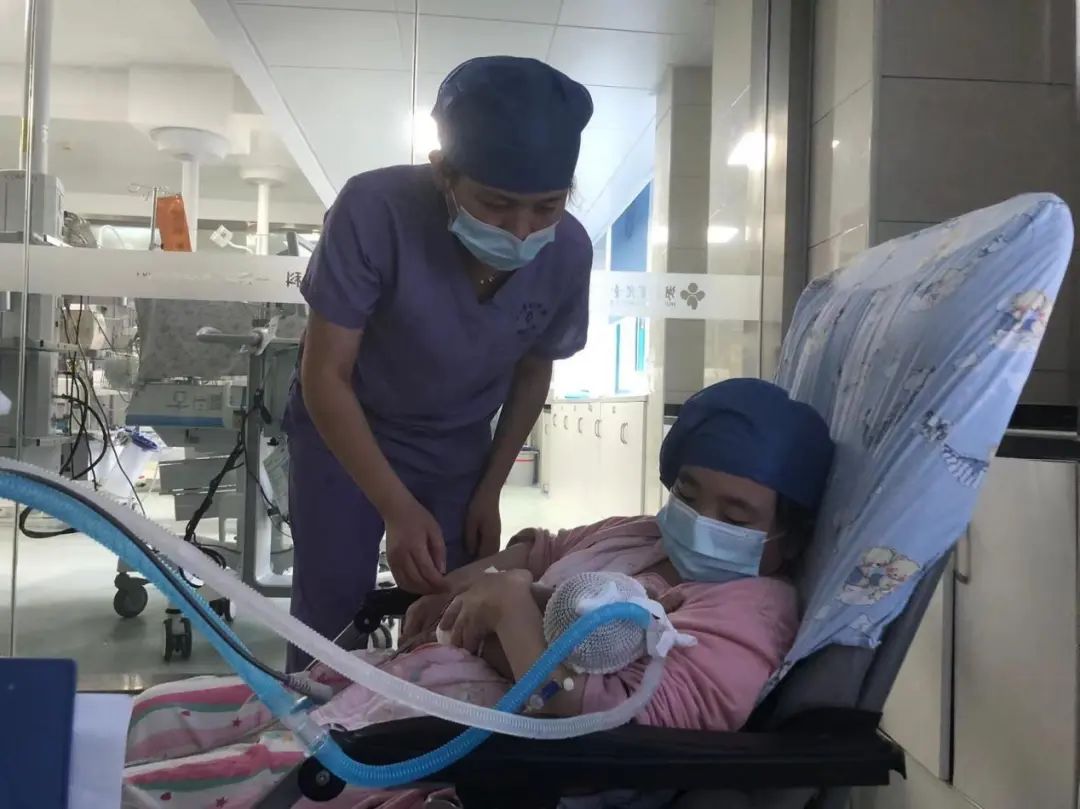
Lin Lin's parents provide kangaroo care for their child
After 162 days of treatment, upon examination, Lin Lin's brain structure showed no significant changes, his neurological development was acceptable, his overall health continued to improve, his weight increased to 3600 grams, and he was discharged from the hospital smoothly.
The survival rate of extremely premature infants has improved, but they still face challenges in treatment
As the Hunan Province Critical Newborn Treatment Center, Hunan Provincial Children's Hospital treats the most extremely premature and extremely low-birth-weight infants in the province. This year alone, the hospital has treated more than 120 cases of extremely low-birth-weight premature infants, with a survival rate of over 90%.
In recent years, due to improved medical conditions and other reasons, the survival rate of extremely premature infants in China has increased. An article in the 2023 issue of the "Chinese Journal of Neonatology (Chinese and English)" pointed out that a multicenter study in China reported that from 2010 to 2019, the survival rate of extremely premature infants in the country increased year by year, with an overall survival rate of 62.3%.
However, the aforementioned article also pointed out that there is still a gap between the quality of treatment for extremely premature infants in China and that of developed countries, especially in the occurrence of related premature complications.
Lin Lin faced the challenge of complications. Although he has met the discharge criteria, he still has bronchopulmonary dysplasia, a chronic lung disease, which requires continuous home oxygen therapy and respiratory rehabilitation treatment, resulting in a significant medical expense. In addition, he still needs to follow up on his neurological development and physical development, such as height, weight, and head circumference, with regular hospital visits.
In the past, due to high treatment costs and uncertain long-term prognosis for extremely premature infants, many families often gave up on treatment.
Zhuang stated that in recent years, with the support of national medical insurance policies and related social welfare funds, treatment costs are no longer the main point of conflict. For example, the total medical expenses for Lin Lin were close to 400,000 yuan, and the parents only had to pay less than 30,000 yuan, significantly reducing the financial burden.
He emphasized the value of teamwork in the clinical treatment of such special premature infants.
Taking Lin Lin's rescue as an example, before the transfer, the local hospital had already carried out standardized cardiopulmonary resuscitation, endotracheal intubation, and other medical support, which won valuable rescue time and transferred quickly through the green transfer channel. After entering Hunan Provincial Children's Hospital, a multidisciplinary team was quickly established to Lin Lin's subsequent treatment.
in the treatment of extremely premature infants. For pregnant women who may give birth prematurely, obstetrics should actively provide tocolytic treatment to extend the gestational period as much as possible under medical conditions.
For preterm infants who will deliver in a short period and are difficult to maintain in utero, obstetrics should apply corticosteroids to eligible mothers and fetuses in advance, which can greatly help improve the prognosis of extremely premature infants. At the same time, it is also important to administer magnesium sulfate to protect the fetal nervous system when indicated before birth, to reduce the risk of cerebral palsy and other cranial complications.
Due to reasons such as the increase in older pregnant women and work pressure during pregnancy, the number of premature infants has been increasing in recent years. Zhuang reminds pregnant women that regular prenatal check-ups, maintaining a healthy lifestyle, and prenatal interventions when necessary can reduce the risk of premature birth, which is beneficial to the health of the fetus and mother, as well as the happiness of the family.
References:
[1]夏磊,关豪,王文秀,等. 超早产儿生存现状及预后分析[J]. 中华新生儿科杂志(中英文),2023,38(06):344-348.
[2]陈雯雯,陈超. 生存极限超早产儿的救治进展[J]. 中华围产医学杂志,2022,25(06):443-449.

