


Xiangya Hospital has successfully performed an exceptionally difficult kidney transplant after overcoming numerous challenges, including the donor's advanced age of 80, underlying diseases, and ABO blood type incompatibility.
This achievement not only saved the patient's life but also accumulated valuable clinical evidence for expanding the upper age limit for living kidney donors.
In late September this year, 48-year-old Mr. Zheng and his 80-year-old father were discharged from Xiangya Hospital, Central South University, after recovery. Following a critical organ transplant surgery, Mr. Zheng now lives with a kidney from his father.
Preparations for this surgery at Xiangya Hospital's Organ Transplant Centre took nearly a year, as doctors overcame numerous challenges, including ABO blood type incompatibility and the donor's advanced age with underlying conditions.
"This is the oldest kidney transplant donor we have encountered. Combined with the ABO blood type incompatibility between father and son, this case is exceptionally rare globally," Dr. Xiang Ding, Deputy Chief Physician of the Organ Transplant Centre at Xiangya Hospital, told MedJ.
Against the current severe shortage of donor organs, living donor kidney transplantation (LDKT) from elderly donors is gradually increasing, but most donors are concentrated in the 60-70 age group. Among potential donors over 70, the proportion who actually complete living organ donation is relatively low, and systematic research on long-term prognosis and efficacy remains limited.
Therefore, the success of this surgery at Xiangya Hospital not only breaks through the age and blood type restrictions for living kidney donors but also provides valuable clinical evidence for systematically evaluating the clinical application of kidneys from advanced-age donors.

Father and son successfully underwent surgery / Image provided by the interviewee
80-Year-Old Father Insists on Donating a Kidney
Due to kidney disease secondary to long-term hypertension, Mr. Zheng was diagnosed with uremia in 2023 and began regular dialysis treatment.
However, dialysis severely impacted Mr. Zheng's daily life and work, not only drastically reducing his quality of life but also casting doubt on his long-term health prospects.
According to statistics from the Chinese Renal Data System (CNRDS) as of the end of 2024, the total number of patients with renal failure on dialysis in China exceeds 1.18 million, including approximately 1.027 million on hemodialysis. The 5-year survival rate for hemodialysis patients is only 33.4%.
Dr. Ding told MedJ that the long-term survival rate of dialysis patients is related to various factors such as their baseline health, treatment compliance, and regional medical standards. But for Mr. Zheng, then 48 years old, he hoped more to return to a normal life, free from the constraints of weekly hospital visits. The only way to achieve this wish was a kidney transplant.
So, in late 2024, Mr. Zheng and his father came to the Organ Transplant Centre at Xiangya Hospital to inquire about the possibility of a transplant.
Dr. Ding told MedJ that according to the team's initial assessment, "Mr. Zheng's condition met the criteria for a kidney transplant; the only problem was the shortage of kidney sources. Currently, over 1000 people are on the waiting list for a kidney at our centre, but we can only perform about 100 kidney transplants per year, of which about 40%-50% are living donor transplants from relatives."
During the matching process, Mr. Zheng's father expressed his desire to donate his own kidney if possible. At his strong request, the Organ Transplant Centre at Xiangya Hospital carefully assessed his feasibility as a donor.
Dr. Ding told MedJ that besides being 80 years old, Mr. Zheng's father also had a nearly 10-year history of hypertension and had undergone surgery for a cervical spine injury.
"After coming to our hospital, he was also diagnosed with an abdominal aortic aneurysm and an iliac artery aneurysm. More critically, the father's blood type was A, while Mr. Zheng's was O, creating ABO blood type incompatibility," Dr. Ding told MedJ. "Although with technological advancements, these are no longer absolute contraindications for kidney transplantation today, the combination of multiple factors significantly increased the difficulty and risk of the surgery."
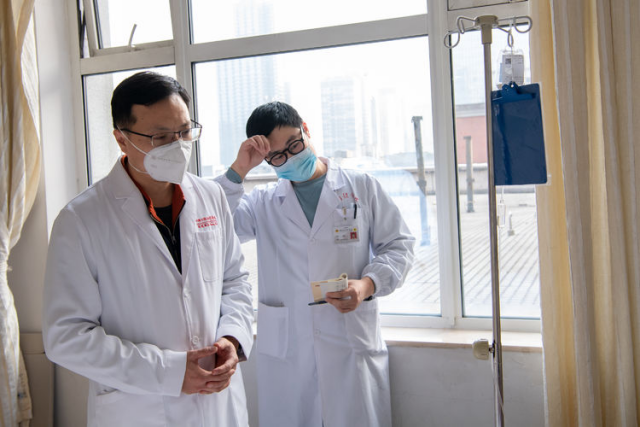
First from left in the photo: Dr. Xiang Ding.
After detailed communication with the father and son, clearly explaining the pros, cons, and surgical risks, the team first coordinated consultations with Cardiology and Vascular Surgery for the father to manage his hypertension and treat the aneurysms. The consultation opinion was that his blood pressure could be well controlled by adjusting his antihypertensive medication.
Furthermore, the abdominal aortic aneurysm did not yet require surgical intervention and did not currently affect the donation. Thus, the team preliminarily approved the donor's application. As preparing materials and obtaining ethical review approval would take some time, "we asked them to go home and wait, also giving them time to seriously reconsider the transplant decision," Dr. Ding said.
A Surgery Full of Twists and Turns
In May 2025, ethical approval was formally granted, and Mr. Zheng and his father returned to the Organ Transplant Centre at Xiangya Hospital. During the nearly half-year wait, the 80-year-old father's determination to save his son by donating his kidney never wavered.
Dr. Ding told MedJ, "In the evaluation of living kidney donors, based on ethical considerations balancing organ quality and the donor's long-term safety, healthy older donors are often prioritised for assessment over younger volunteers. This is mainly because older donors have a shorter life expectancy, so the potential health impact of donation on their remaining life is relatively limited."
But the father's advanced age was an unavoidable challenge. "Aged kidneys" experience physiological decline, are more prone to delayed graft function after transplantation, and it's also a challenge whether the remaining single kidney can adequately maintain the donor's own metabolic needs. Coupled with the patient's underlying conditions and ABO incompatibility, this case became extremely rare globally, with very few related reports.
To address these challenges, the Organ Transplant Centre at Xiangya Hospital quickly initiated a Multi-Disciplinary Team (MDT) consultation to discuss and formulate an individualised transplant plan. Dr. Ding explained that the first step for the MDT was a comprehensive imaging and functional assessment of the father's heart, lungs, liver, kidneys, and blood vessels.
"Due to advanced age, degenerative changes like glomerulosclerosis and vascular sclerosis are inevitable in an elderly person's kidneys, so the quality of the donor kidney would be somewhat inferior compared to a 'younger kidney source'," Dr. Ding said. "But even with these 'flaws', we assessed that it could still meet basic metabolic needs and, compared to dialysis, would significantly improve Mr. Zheng's life expectancy and quality of life."
A problem arose with the abdominal aortic aneurysm and iliac artery aneurysm. Vascular surgeons found that the aneurysms had enlarged compared to before and now required surgical intervention to prevent rupture and thrombus detachment.
Therefore, the team had to change plans temporarily. The Vascular Surgery department first performed stent placement for the abdominal aortic and iliac artery aneurysms. The father and son were then discharged again, advised to rest for three months while concurrently undergoing rehabilitation therapy and follow-up.
"After all these twists and turns and just having had surgery, we thought they might give up on the transplant, but the old gentleman's willingness remained very strong." In early September 2025, the pair returned to the hospital. The team reassessed the father, found his recovery satisfactory, and re-evaluated his kidney function as still meeting the donation requirements.
The transplant centre team then began "desensitisation therapy" for Mr. Zheng. This is the standard protocol to overcome ABO incompatibility in organ transplantation, rapidly clearing blood type antibodies from the recipient's plasma via plasmapheresis or immunoadsorption, combined with medication to eliminate immune cells producing blood type antibodies, thus avoiding acute rejection post-transplantation.
"In the field of 'desensitisation therapy', our centre has accumulated extensive clinical experience over the years. We can now achieve success rates comparable to those of ABO-compatible transplants," Dr. Ding said.
After thorough preoperative preparation, on September 17, Dr. Ding led the organ transplant centre team in performing the allogeneic renal transplantation surgery for the father and son.
The surgery lasted three hours and proceeded very smoothly. After blood flow was established, the kidney donated by the father immediately began producing clear urine in Mr. Zheng's body—a key signal indicating the successful initial function of the transplanted kidney.
It is reported that postoperatively, under the careful care of the Organ Transplant Centre nursing team, Mr. Zheng recovered rapidly, with his creatinine levels dropping quickly, soon freeing him from the dialysis treatment he had relied on for years. The father also recovered smoothly without complications, and his various physical indicators gradually returned to normal.
Setting a New Record
The father's wish to "donate a kidney to save his son" was fulfilled, and Mr. Zheng's life was saved. However, for the doctors, this was more of a "last resort" compelled by objective constraints.
Relevant statistics show that globally, 2 million people need organ transplants annually, but less than 10% of this demand is met. In China, about 300,000 dialysis patients are currently waiting for a kidney transplant, with an organ supply-demand ratio as high as 1:30.
Dr. Ding told MedJ that the shortage of donor organs has become a global challenge in the field of transplantation. As society ages, the proportion of "elderly donors" in organ transplantation is increasing. More "marginal donors" who are of advanced age or have comorbidities like hypertension or diabetes are being used to save the lives of patients with organ failure.
"In this context, exploring how to safely and effectively use organs from elderly donors has become an important way to expand the donor pool and alleviate organ shortage," Dr. Ding emphasised. "Advanced age is not an absolute contraindication for kidney donation."
He explained that for elderly donors, Xiangya Hospital has established a systematic and scientific kidney quality assessment process, covering precise testing of kidney function, prediction of postoperative recovery potential, and crucial pathological evaluation.
"Furthermore, facing the reality of increasingly complex baseline conditions in both donors and recipients, such as possible comorbidities like hypertension and diabetes, we rely on the MDT system to build a complete assessment and decision-making framework," Dr. Ding added. "Ultimately, a multidisciplinary panel of experts jointly determines whether the donor can proceed with organ donation to save another life."
It is understood that this living donor kidney transplant from an 80-year-old donor sets a new record for the hospital. As one of the early hospitals in China to perform organ transplants, Xiangya Hospital successfully performed the first allogeneic kidney transplant in Hunan Province as early as 1979.
In early 2020, Xiangya Hospital reorganised its structure, forming a multidisciplinary collaborative team led by the Organ Transplant Centre and encompassing Intensive Care, Anesthesiology, Operating Rooms, as well as departments for Respiratory, Cardiac, Hepatic, Renal, Digestive systems, Pediatrics, etc. The current transplant success rate and long-term post-transplant survival rate rank among the top nationally.
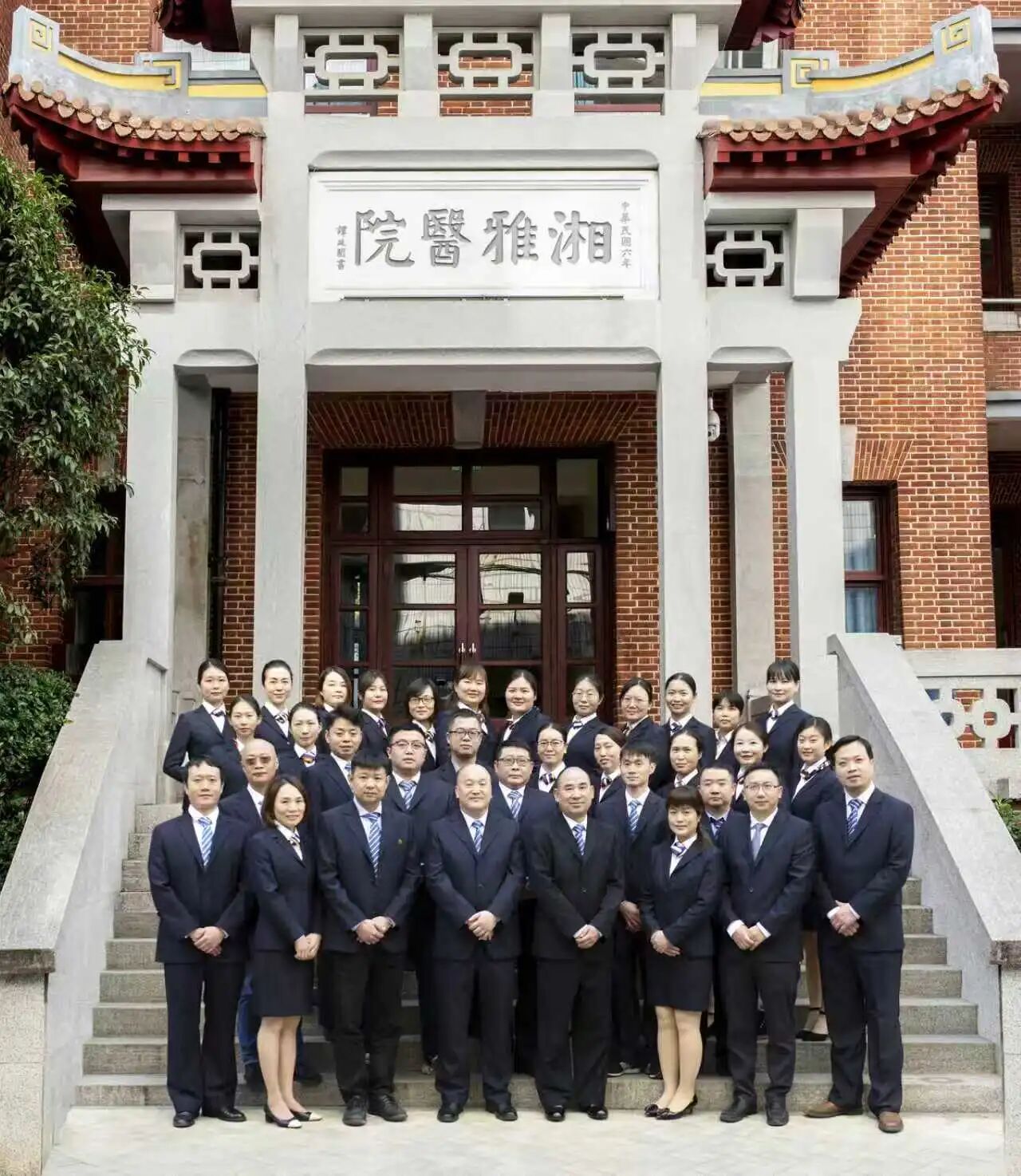
Dr. Zhijun He, Director of the Organ Transplant Centre at Xiangya Hospital, stated that the success of this surgery provides valuable experience for complex kidney transplant surgeries in China and brings hope for rebirth to more patients with end-stage renal disease.
"We have demonstrated that, as long as through strict scientific assessment and precise individualised treatment, even when facing complex situations like advanced donor age, multiple comorbidities, and ABO blood type incompatibility, kidney transplant surgery can still achieve successful outcomes," Dr. He said.

