


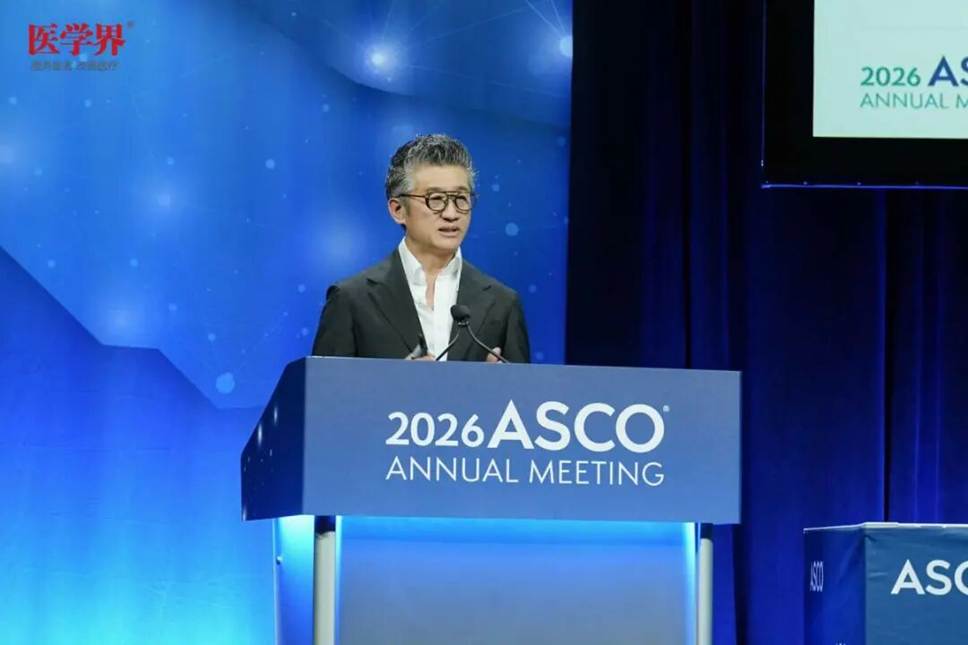
The 2026 American Society of Clinical Oncology (ASCO) Annual Meeting is being held from May 29 to June 2 in Chicago, bringing the latest cutting-edge clinical research advances and academic achievements to global oncology experts. On the afternoon of May 30 local time, the much-anticipated “long-distance runner” in lung cancer targeted therapy — the phase 3 CROWN study — released its 7-year long-term outcomes.
MedJ has compiled the latest study data and invited Prof. Tony Mok from the Faculty of Medicine, The Chinese University of Hong Kong, who presented the study, to provide an in-depth interpretation of the clinical significance of the 7-year CROWN data, the current first-line ALK treatment landscape, and future directions in the field.
55% of patients progression-free at 7 years! CROWN update supports chronic disease management in ALK+ lung cancer
Background
The phase 3 CROWN study aimed to head-to-head compare the third-generation ALK inhibitor lorlatinib with the first-generation standard agent crizotinib in previously untreated patients with advanced ALK-positive non-small cell lung cancer (NSCLC). At the 5-year follow-up, the median PFS in the lorlatinib arm had still not been reached, setting the longest PFS record for monotherapy in advanced NSCLC. Given the marked decline in event rates after the initial 24 months, this analysis aimed to quantify long-term outcomes at 7 years, including efficacy, safety, and potential “clinical cure” proportion.
Study Design and Methods
The CROWN study enrolled treatment-naïve patients with advanced ALK-positive NSCLC, randomly assigned 1:1 to lorlatinib (100 mg once daily, n=149) or crizotinib (250 mg twice daily, n=147). This is a prespecified 7-year follow-up post-hoc analysis, primarily assessing investigator-assessed PFS, time to intracranial progression, safety, and biomarkers.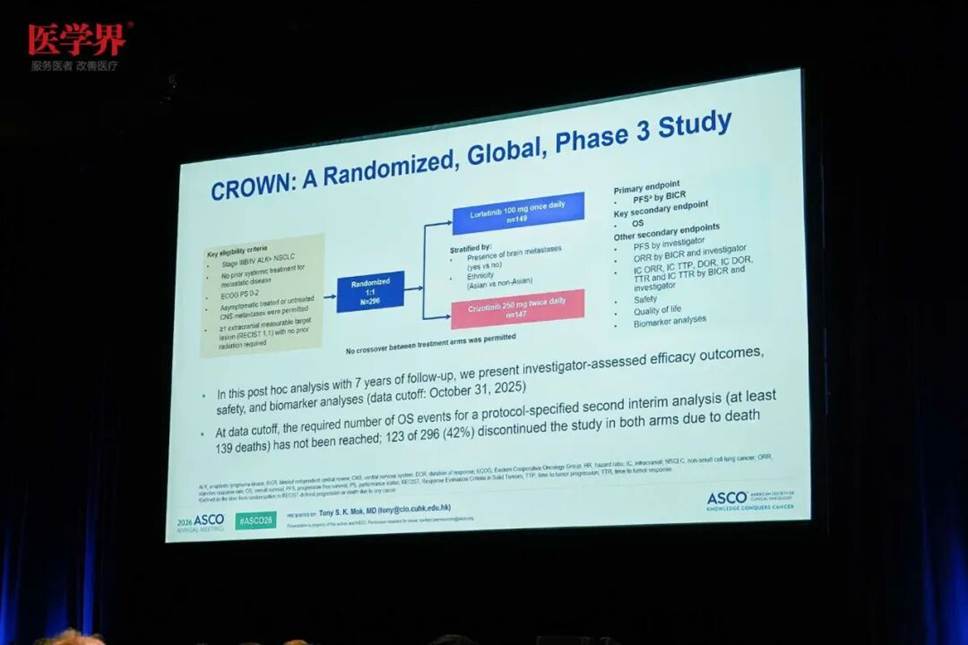
Core Results
➤ Long-term survival benefit: Lorlatinib maintains lead at 7 years; breakthrough PFS benefit
Regarding long-term treatment retention rate, the 7-year follow-up results showed that 66 patients (44%) in the lorlatinib arm remained on treatment, compared to only 4 patients (3%) in the crizotinib arm, demonstrating a significant difference in long-term treatment adherence and persistence.
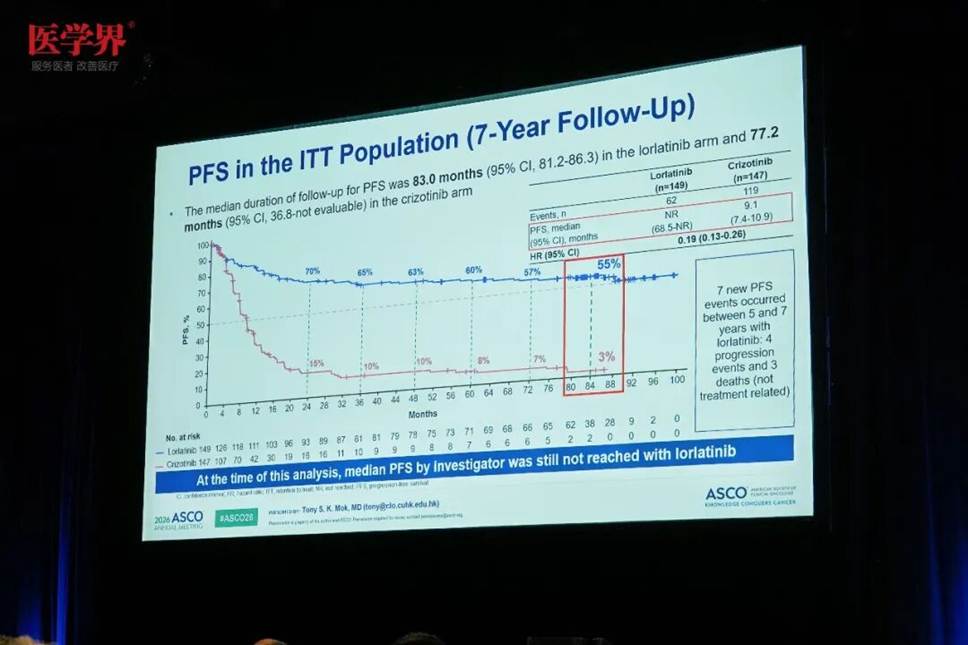
Follow-up duration data: median PFS follow-up was 83.0 months (95% CI: 81.2–86.3) in the lorlatinib arm and 77.2 months (95% CI: 36.8–not evaluable) in the crizotinib arm. For efficacy endpoints, median PFS in the lorlatinib arm was still not reached (95% CI: 68.5–not evaluable), while median PFS in the crizotinib arm was only 9.1 months (95% CI: 7.4–10.9). The risk of disease progression was substantially reduced, with a hazard ratio (HR) as low as 0.19 (95% CI: 0.13–0.26).
The long-term PFS rate data are highly clinically significant. The 7-year PFS rate in the lorlatinib arm was 55% (95% CI: 46–63), compared to only 3% (95% CI: 1–8) in the crizotinib arm. Subgroup analyses showed that all prespecified subgroups derived consistent PFS benefit from lorlatinib treatment.
Notably, among patients in the lorlatinib arm who had no PFS event at 24 months of treatment, the 7-year PFS rate was as high as 79%, confirming that patients achieving early disease stability gain excellent long-term survival benefits. The study also found that disease progression events on lorlatinib occurred primarily within the first 2 years of treatment; after 2 years, only 15% of patients experienced disease progression, highlighting outstanding long-term efficacy stability.
➤ Intracranial benefit: Long-term prevention of brain metastases, achieving zero new intracranial progressions long-term
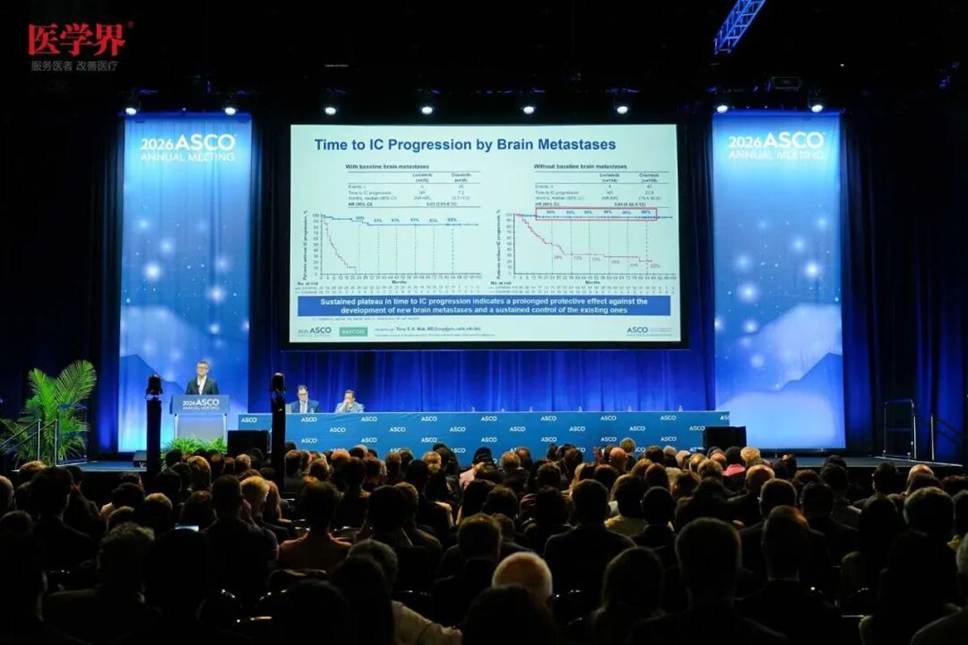
Follow-up showed that the lorlatinib arm had no new intracranial progression events after 30 months of treatment, demonstrating excellent long-term intracranial lesion control. For time to intracranial progression endpoint, median time to intracranial progression was not reached in the lorlatinib arm, compared to only 16.4 months (95% CI: 12.7–21.9) in the crizotinib arm. The HR for intracranial progression risk was 0.06 (95% CI: 0.03–0.12), achieving an order-of-magnitude risk reduction compared to the first-generation drug, providing patients with long-term protection against brain metastases.
➤ Safety: Long-term toxicity controllable, no new safety signals
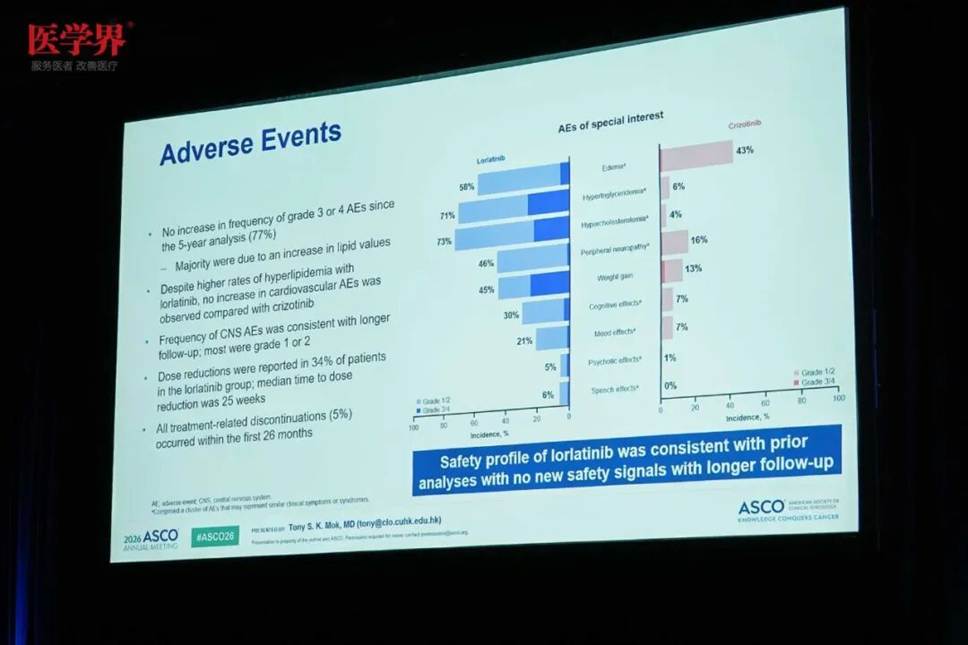
The 7-year follow-up safety data were consistent with the 5-year follow-up results, with no new or unexpected adverse events, and the overall safety profile remained stable and controllable. For adverse event grading, the incidence of all-cause grade 3/4 adverse events was 77% in the lorlatinib arm and 57% in the crizotinib arm.
Regarding treatment tolerability and discontinuation risk, the proportion of permanent discontinuation due to treatment-related adverse events (TRAEs) was similar between the two arms: 5% in the lorlatinib arm and 6% in the crizotinib arm. Moreover, all permanent discontinuations due to TRAEs in the lorlatinib arm occurred within the first 26 months of treatment, with no new treatment-related discontinuation cases during the subsequent extended follow-up period, further validating the long-term safety of treatment.
Prof. Tony Mok Provides In-Depth Interpretation of Research Value and Future Directions

After the ASCO presentation, Prof. Tony Mok provided an in-depth interpretation of the clinical significance of the 7-year CROWN study data, the current first-line treatment landscape for ALK-positive NSCLC, and future directions in the field.
Prof. Mok stated that the current first-line treatment for advanced ALK-positive NSCLC has evolved into a landscape where second-generation and third-generation inhibitors coexist. Previously, second-generation ALK inhibitors achieved a median PFS of approximately 34 months and a median OS of around 83 months. In contrast, the 7-year follow-up data for lorlatinib show that the median PFS has still not been reached, with over half of patients remaining progression-free at 7 years, which is expected to further extend overall survival. In clinical decision-making, the long-term efficacy benefits of lorlatinib must be weighed against its toxicity profile to individualize treatment plans that balance efficacy and safety for each patient.
Regarding the current state and future development of chronic disease management in ALK-positive lung cancer, Prof. Mok pointed out that chronic disease management in advanced lung cancer still faces core challenges. Unlike traditional chronic diseases such as hypertension or diabetes, targeted therapy for lung cancer involves issues such as long-term toxicity management and the development of resistance. The core clinical goal is to maximize efficacy while minimizing treatment-related toxicity, and individualized dose adjustment is an important strategy to achieve this goal.
Looking ahead, Prof. Mok believes that breakthroughs in ALK-positive lung cancer are no longer limited to iterative applications of existing targeted drugs. Overcoming resistance mechanisms and implementing novel therapeutic modalities will become core trends. Furthermore, more novel drugs will continue to propel the treatment of ALK-positive lung cancer toward a new stage of longer survival and higher quality of life.

