


According to the official subscription account of Jinan People's Hospital, on the morning of December 20th, a 60-year-old woman successfully delivered a baby in the hospital's obstetrics department, setting a new record for the hospital.
The hospital introduced that this very advanced-age pregnant woman had pregnancy-induced hypertension. Her blood pressure was monitored at 150/90 mmHg after admission, and the delivery process was risky. To this end, the obstetrics department held a full-department discussion, with participation from the anesthesiology department, operating room, and neonatology department. They prepared personnel, equipment, and medications in advance, with resuscitation equipment ready for immediate use.
Ultimately, through a cesarean section, the very advanced-age pregnant woman gave birth to a healthy baby boy. Both mother and child are safe. The newborn, being a high-risk infant, has been transferred to the neonatology department for inpatient observation. The hospital stated that the surgery lasted 50 minutes and was the oldest maternal age delivery since the hospital's establishment. However, the hospital's official subscription account has deleted this article, although reports from official media such as "Jinan Life Radio" still remain.
"Medical Community" has repeatedly contacted the hospital without success and is still unclear about more details of the pregnant woman. A report from "JiMu News" stated that the husband of the parturient is 55 years old this year. The couple already has a daughter, and the baby boy is their second child, for whom they can apply for a child-rearing subsidy. Public data shows that there are precedents for women in their sixties giving birth both domestically and internationally. However, in clinical practice, delivery by very advanced-age pregnant women is very tricky and may come at the cost of women's health and the life of the baby.
Several obstetricians from top-tier hospitals told "Medical Community" that the obstetrics department cannot refuse patients. After receiving them, they will definitely do their utmost to ensure the safety of both mother and child. However, doctors also emphasized that very advanced-age pregnant women are prone to miscarriages, preterm births, and fetal chromosomal abnormalities, which are important factors leading to pregnancy complications or adverse outcomes. Therefore, they do not encourage childbearing at an advanced age.
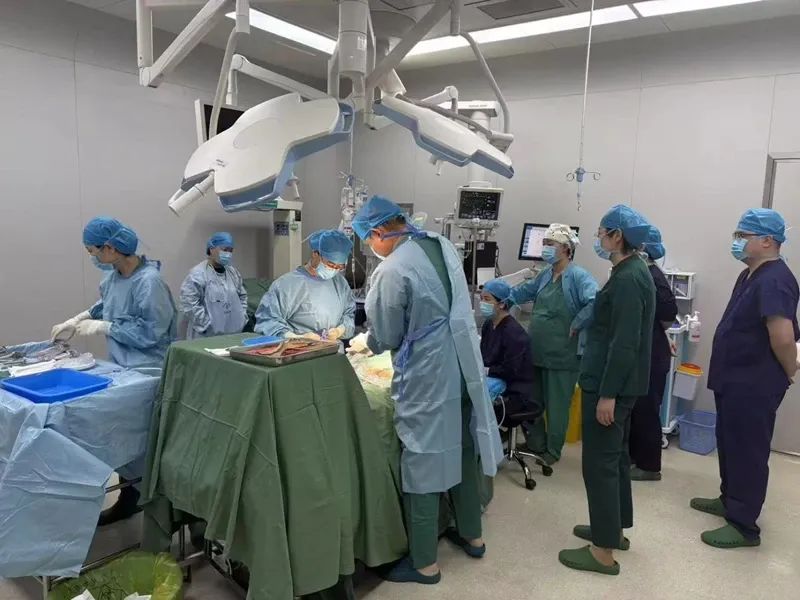
A 60-year-old very advanced-age pregnant woman delivered a healthy baby boy via cesarean section at the Obstetrics Department of Jinan People's Hospital / Photo credit: Jinan Life Radio
Advanced-age parturient women are not few, and the cost is huge.
Zhang Lin, the director of the obstetrics department at the International Peace Maternal and Child Health Hospital of China Welfare Institute, told "Medical Community" that with the continuous progress of modern medicine, many women can achieve fertility limits that were unimaginable two or three decades ago. A direct manifestation is the continuous increase in the upper limit of women's childbearing age.
In 2010, Ms. Sheng, who lost her only child, gave birth to twins at the age of 60 through assisted reproductive technology; in 2019, Ms. Tian from Zaozhuang, Shandong, who was 67 years old, conceived naturally and gave birth to a baby girl; in the same year, a 74-year-old Indian woman gave birth to twins through assisted reproductive technology. Hospitals in many places in China, such as Zhejiang, Shandong, Guangxi, and Anhui, have published such obstetric cases.
In recent years, Zhang Lin has seen many pregnant women over the age of 45 in her outpatient clinic, and those over 50 years old also appear from time to time. Some of them are late marriage and late childbearing, first pregnancy; others are mothers who have lost their adult children and hope to have another child due to overwhelming grief.
Zhang Lin told "Medical Community" that reproduction requires seeds and soil. The seed from men is sperm. Overall, male fertility declines with age, but reproductive cells do not run out. There are countless examples of men who have children in their old age.
The seed from women is the ovum. "After entering menopause, the ovarian follicle reserve in women gradually runs out, and the ovulation cycle becomes longer and irregular. Once menopause occurs, it means that the functionally normal follicles are exhausted, and women lose the ability to ovulate," said Zhang Lin. It was previously believed that the age of menopause is the upper limit of women's fertility.
Menopause also affects the soil for nurturing new life—the uterus. Lin Lin, the attending physician of obstetrics at the Sixth Affiliated Hospital of Sun Yat-sen University, told "Medical Community" that after menopause, ovarian function declines, and the level of sex hormones in women's bodies is very low. The uterus shrinks under the influence of hormones, showing a smaller size and extremely thin endometrium, making it impossible for the fertilized egg to implant and the embryo to develop.
"The average age of menopause for Chinese women is 49 years old. In theory, women who have not yet reached menopause still have the possibility of natural conception, but the older they are, the more remote the chance," said Lin Lin.
With the continuous development of assisted reproductive technology such as in vitro fertilization, some women who have reached menopause have regained hope for childbirth. At this time, there are several possible sources of ova. One is to use hormones to stimulate women to resume ovulation, but Lin Lin believes that this approach is almost impossible to achieve in theory.
The second is to use the woman's own ova that were frozen when she was young, and the third is to use ova donated by other women. In any case, women have to undergo high doses of estrogen, progesterone, and other stimuli and supplements to improve the endometrial condition as much as possible.
Therefore, the cost for advanced-age pregnant women to successfully deliver through assisted reproductive technology is huge. In addition to the high cost, if women want to use their own ova, ovulation-inducing drugs may induce ovarian hyperstimulation syndrome, causing ascites and abdominal distension. In severe cases, the embryo transfer plan must be canceled and hospital treatment is required.
Moreover, hormonal stimulation may lead to uneven endometrial thickness, affecting embryo implantation and implantation, and sometimes causing endometrial inflammation.
Generally speaking, the success rate of assisted reproduction decreases with age. Data from the US Centers for Disease Control and Prevention in 2020 showed that among women in the United States who underwent in vitro fertilization for the first time, the live birth rate for those under 35 years old was 55%, while for those over 40 years old, it was only 8.2%. That is to say, for every 100 embryo transfers in people over 40 years old, only eight can successfully give birth to children.
Professor Shen Huan, director of the Reproductive Medicine Center at Peking University People's Hospital, once told the media that the success rate of in vitro fertilization tends to zero after the age of 46.
How great is the reproductive risk for very advanced-age pregnant women?
Lin Lin warned that in the domestic legal and ethical environment, women who want to achieve their dream of childbirth through medical technology are "conditionally limited," mainly to women who have not naturally reached menopause, such as those with premature ovarian failure, ovarian disorders of ovum maturation, or those who have early menopause due to certain genetic diseases or systemic tumors.
In China, egg donation is also limited to this group of women. "In principle, for those who have naturally reached menopause but still wish to have children, assisted reproductive technology providers tend to dissuade them as much as possible," said Lin Lin.
This is a limitation, but also a protection for women. Zhang Lin explained, "Advanced-age pregnancy is like fighting monsters, step by step, and every step is difficult."
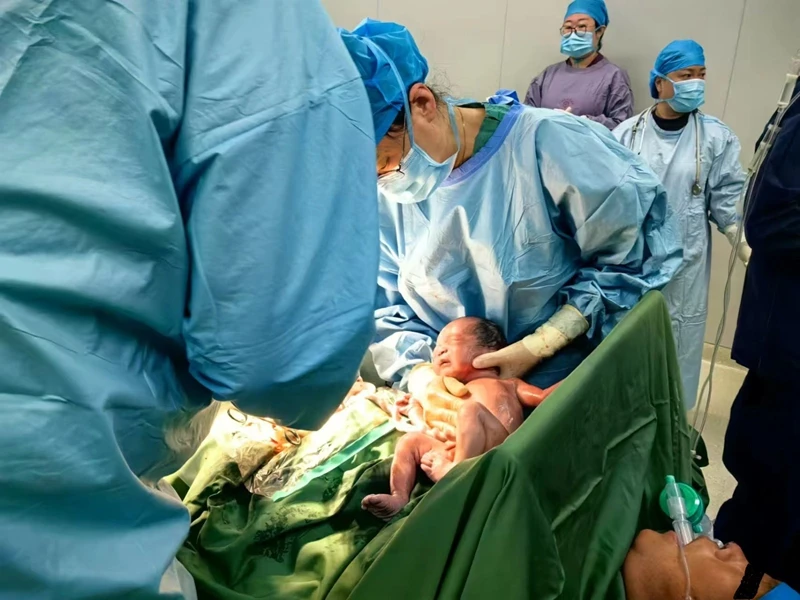
Obstetrics Department of Jinan People's Hospital / Photo credit: Jinan Life Radio
According to the definition of the International Federation of Gynecology and Obstetrics, pregnant women who are 35 years old or older at the expected date of delivery are classified as "advanced-age pregnant women." "If over 40 years old, they are ultra-high-age pregnant women; over 45 years old, they are very high-age pregnant women... Doctors will put a colored label 'high-risk pregnancy' on the medical record, which means old and dangerous," Duan Tao, former president of Shanghai First Maternity and Infant Hospital, once wrote, lamenting that this "old" refers to reproductive age, "ova do not spare people," and the risk of childbirth is very high.
Numerous studies have shown that advanced age is one of the key risk factors for adverse pregnancy outcomes in pregnant women, and they are more likely to suffer from pregnancy complications, such as gestational diabetes and gestational hypertension, premature rupture of membranes, perinatal death, and adverse clinical outcomes for fetuses.
Take the heart as an example. Pregnancy increases the cardiac load by 30-50%, and the impact of twin pregnancy is even greater. For ordinary women of childbearing age, this may lead to palpitations and shortness of breath. In very high-age pregnant women, due to their own vascular endothelial damage and hypercoagulable state of pregnancy, women may develop venous thrombosis and aggravated myocardial ischemia, and are very likely to suffer from heart failure.
The oldest parturient woman that Zhang Lin has ever treated was 56 years old. She was a mother who had lost her only child and gave birth to twins at 32 weeks of pregnancy through assisted reproductive technology.
Zhang Lin was deeply impressed by her, saying that she "had all the possible complications." These included hypothyroidism, gestational diabetes, gestational hypertension, severe edema, proteinuria, and impaired liver and kidney function... In addition, one of the babies had significantly delayed development.
From the outcome, this may already be a blessing in disguise. Some studies have shown that advanced age is an independent risk factor for fetal death in utero. Women over 42 years old still have a miscarriage rate of 36% even after seeing a fetal heartbeat on ultrasound, and the rates of preterm birth and low birth weight infants also increase significantly.
As a result, the cesarean section rate has increased significantly. Lin Lin's department has also treated parturient women over 50 years old. She introduced that compared with ordinary cesarean sections, the surgical difficulty for older women is greater.
"The risks come from two aspects. First, the physical quality of older women declines. The risk of postpartum hemorrhage due to uterine atony during surgery is higher. The recovery of the uterus after surgery and the systemic recovery speed of the whole body are significantly slower than that of women under 35 years old, and the incidence of surgical complications and sequelae is also significantly increased," said Lin Lin.
Secondly, for older women with scarred uteri, most of them have a history of pelvic and uterine surgery, and most have pelvic adhesions. There is a higher risk of organ damage and bleeding complications during surgery, and a higher risk of secondary infection and pelvic and abdominal adhesion after surgery. Some women even have to undergo more surgery due to long-term complications of cesarean section.
After encountering very high-age parturient women, Zhang Lin will contact experienced anesthesiologists in the first place, "reminding everyone to be prepared and that this parturient may give birth at any time. Sometimes more than two anesthesiologists have to cooperate in various ways to ensure the implementation of the surgery. The operating surgeon also has to be senior and do it very carefully."
Doctors can only do their best to help, but they do not encourage childbirth at very advanced ages.
In the outpatient clinic, every time Zhang Lin encounters an advanced-age pregnant woman, she will comprehensively assess the pregnancy risks in the first place and give a clear answer: whether to continue the pregnancy or terminate it as soon as possible.
What she worries about most is the safety of the pregnant woman and whether the fetus can develop safely to the viable gestational week. At the same time, she will inform the other party in detail that some pregnancy complications may gradually improve after pregnancy, while some will continue to develop.
Even so, some ultra-high-age and very high-age women are still willing to take a chance. "I saw in that 56-year-old mother that a child means hope," she said.
Zhang Lin told "Medical Community" that if a comprehensive assessment excludes absolute contraindications such as chronic cardiovascular diseases or diabetes complications, there is no irreversible organ damage, the woman herself has a strong desire to have children, and she is mentally and physically prepared, no matter how difficult it is, the obstetrician will never refuse and will do their utmost to help them. "This is the duty of a doctor."
However, she does not support ultra-high-age parturient women to preserve the fetus for a long time. This is because the fetal preservation drugs will increase abnormalities in the breast and cardiovascular system, and will also increase the risk of thrombosis and infection for those who are bedridden for a long time, which can easily lead to infectious shock.
Lin Lin introduced that there are now detailed guidelines and consensus on the risk assessment of advanced-age pregnancy and the indications for terminating pregnancy, which standardize the diagnosis and treatment behavior of medical institutions.
According to the document of the National Health Commission, pregnant women who are 40 years old or older are classified as "severe high-risk" cases and are included in the orange high-risk management. If complications occur, a red (high-risk) label will be attached. For these two types of pregnant women, the document requires medical institutions to manage them as key populations in special cases, ensuring that "every case is discovered, registered, reported, managed, and treated," and to quickly formulate personalized management plans, treatment plans, and emergency plans.
Lin Lin believes that due to the lifting of birth restrictions and the progress of assisted reproductive technology, some women who had little or no hope of childbirth under natural conditions have been able to give birth smoothly. However, this does not mean that women are encouraged to take the risk of becoming pregnant at an advanced or very advanced age.
"From the perspective of ensuring the health of mothers and babies, family harmony, and eugenics and eugenics, we advocate childbearing within the appropriate age range. Every couple has the right to obtain a customized birth plan and supporting medical measures. Not stigmatizing family planning is also the duty of medical workers," said Lin Lin.
In fact, giving birth and raising a child is a long-term process. When very high-age parturient women become pregnant and give birth, they are already in the perimenopausal period. After delivery, some women are unable to take care of their children due to physical and mental reasons. This may have a negative impact on the physical and mental health of minors and family relationships.
In addition, very high-age parturient women also have to consider whether their children can face the surrounding environment calmly after birth, and the intergenerational relationship between mother and child and social public opinion pressure. This is an even more severe challenge.
Internationally, some countries or regions have already lifted various restrictions on assisted reproduction. For example, since 2020, the Ministry of Health of Singapore has lifted the age limit of 45 years old and no longer restricts the number of times women can undergo assisted reproductive technology.
However, the 2016 ethical opinion of the American Society for Reproductive Medicine believed that, given clinical data and concerns about women's life expectancy and the psychological and social support needed to raise children to adulthood, even women over 55 years old without underlying health problems should be discouraged from undergoing assisted reproduction.

