


A 5-Year-Old Girl in a Coma After Contracting "Brain-Eating Amoeba" Sparks Widespread Concern
Recently, the case of a 5-year-old girl falling into a coma after being infected with a “brain-eating amoeba” has garnered widespread attention.
According to her parents, who sought help on social media, the girl went swimming and to a hot spring on June 7 and 14 this year. On June 22, she began experiencing headaches, mild fever, and vomiting. By June 23, she was hospitalized due to seizures, subsequently fell into a coma, and was transferred to the intensive care unit for treatment.
On June 27, she was diagnosed with an infection caused by Naegleria fowleri, commonly known as the “brain-eating amoeba.” Her parents said they had contacted hospitals nationwide, and with the help of netizens, managed to obtain some treatment medications via air transport.
Today (June 30), the girl’s parents posted an update, saying her condition had changed: "In the past two days, her creatine kinase level has exceeded 1000 U/L, and her blood pressure dropped yesterday. After over two days on the new medication, the only indicator showing improvement is her C-reactive protein."
Mortality Rate as High as 97%
The so-called “brain-eating amoeba” refers to free-living amoebae — extremely rare and deadly pathogens including Naegleria fowleri, Balamuthia mandrillaris, and Acanthamoeba. These infections cause primary amoebic meningoencephalitis (PAM), which has a fatality rate of up to 97% and is considered as deadly as rabies.
According to the patient’s family, after the child was hospitalized on June 23, she was treated with the highest level of antibiotics but continued to deteriorate rapidly — suffering from high fever, repeated seizures, and severe brain damage.
In the following days, the hospital treating the child coordinated multiple multidisciplinary consultations, and invited several of China’s top pediatric hospitals to participate. On June 27, she was confirmed to be infected with Naegleria fowleri. “I believe the infectious disease department has done their best to consult with the top experts in the country,” wrote the parent.
Rapid Disease Progression and Limited Treatment Options
Dr. Huang Lisu, Chief Physician of the Infectious Diseases Department at the Children’s Hospital, Zhejiang University School of Medicine, participated in the joint consultation. She told Medical Community that the child’s condition progressed rapidly and that all parties were doing their utmost to save her. Due to patient privacy, the expert did not disclose further details.
This is not Dr. Huang’s first time treating Naegleria fowleri infections in children. “In the past year, we’ve received over a dozen consultation requests from across the country. In 2023 and 2024, we successfully treated two cases in our hospital.”
According to Dr. Huang, amoebae mainly reside in freshwater sources containing soil. Over the past year, cases have been reported for consultation from Inner Mongolia, Shanxi, Hainan, Zhejiang, and Beijing.
“For Naegleria fowleri specifically, common infection routes include water entering the nose — the pathogen invades through the nasal cavity and reaches the brain via the olfactory nerve and cribriform plate. Amoebae are larger than viruses and reproduce quickly, rapidly increasing intracranial pressure, causing brain herniation, and continuously damaging brain tissue.”
Currently, there are no specific drugs approved for treating such infections. Depending on the individual case, treatment often includes early surgical removal of infected tissue and the combined use of multiple antimicrobial agents, such as Amphotericin B, Trimethoprim-sulfamethoxazole, and Fluconazole.
In the two successful cases treated at Dr. Huang’s hospital, the infection caused granulomatous lesions in the brain. “Initially, we strongly suspected tumors and performed a biopsy. Pathological testing and high-throughput sequencing revealed it was a Naegleria infection.”
“Fortunately, removing the lesion prevented further spread. We then used multiple antibiotics, eventually gaining control of the disease,” said Dr. Huang.But not all patients are so lucky. Dr. Huang recounted a case where a patient was transferred to their hospital from a distant region already in a coma.
“The brain’s ventricles were filled with cerebrospinal fluid, essentially providing the amoeba with a breeding ground and nutrients. The entire ventricle was filled with lesions — it was like the brain was being devoured. There was nothing more we could do. It was a tragic loss.”
Difficult to Diagnose Quickly
The first globally reported case of “brain-eating amoeba” infection was in Australia in 1965. Autopsy showed the patient’s brain — particularly the olfactory bulb and frontal lobe — was severely damaged and filled with amoeba trophozoites. The brain appeared to have been “eaten,” hence the nickname “brain-eating amoeba.”
The danger of Naegleria fowleri lies in its rapid lethality and the difficulty of early diagnosis.
According to the Guangdong Provincial Center for Disease Control and Prevention, the incubation period for Naegleria fowleri is short — usually 3–5 days, up to 7–15 days. Once symptoms appear, patients typically survive only 3–7 days.
Dr. Huang told Medical Community that diagnosis relies on genetic testing of cerebrospinal fluid or infected tissue.
“But first, these tests take time and cost money. Moreover, symptoms such as fever, nausea, headache, and seizures resemble viral or bacterial meningitis, making it hard for doctors to pinpoint the right direction — especially since cases are so rare,” said Dr. Huang. Statistics show that 75% of cases worldwide are only confirmed via autopsy after death.
In fact, most successful treatments reported globally — including the two at Zhejiang University Children’s Hospital — involve subacute or chronic granulomatous infections, which progress more slowly.
Even if treatment is initiated early, medication use is still limited. On one hand, most drugs cannot easily cross the blood-brain barrier, requiring invasive procedures to deliver drugs directly into the cerebrospinal fluid. On the other hand, combining multiple potent antimicrobials results in high drug concentrations in the brain, which can be highly toxic. Whether a patient can tolerate this also determines treatment success.
“How many drugs should be used together? How should dosages be adjusted in real time? How should complications be handled? Treatment not only depends on the patient’s condition, but also on the doctor’s experience and clinical judgment. Most doctors have never encountered such cases before,” said Dr. Huang, adding that successful treatment requires coordination between infectious diseases, neurology, neurosurgery, and intensive care units.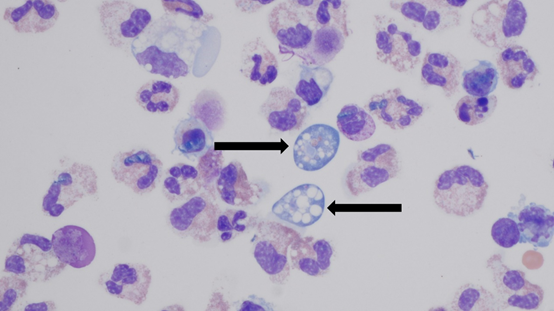
Photo credit:CDC
A Global Public Health Concern
In April this year, the Journal of Infection and Public Health reported that since 1962, a total of 488 cases of PAM have been reported worldwide, with the U.S., Pakistan, and Australia having the highest numbers. “This rare but deadly pathogen has become a significant global public health concern.”
Summer is the Peak Season — Experts Urge Caution
In 2017, the U.S. Food and Drug Administration approved the use of the anti-cancer drug miltefosine for treating PAM. Two Naegleria patients in the U.S. survived after taking the drug. However, due to limited sample size, its efficacy remains unproven.
In China, a bladder cancer drug in development, APL-1202 (nitroxoline), has shown promise in treating amoeba infections.
According to Science (2023), researchers at the University of California, San Francisco screened thousands of compounds and found that nitroxoline was particularly effective against Balamuthia mandrillaris.
Following this, a Chinese pharmaceutical company was contacted to provide emergency aid under a “compassionate use” program. The patient showed significant recovery after treatment.According to Kechuangban Daily earlier this year, the company has provided similar emergency treatment to eight patients globally — two in the U.S., one in South Africa, and five in China. Of these, half are still alive, including one adult and one child in the U.S.
Among the five Chinese patients, two are still undergoing treatment, while three have unfortunately died. The project leader said, “The fatal cases typically involved severe illness and very short treatment windows — in some cases, the patient was already in a coma when we were contacted.”
The family of the current child patient has already contacted the APL-1202 developer. In a post last night, the parents stated that the drug is still in clinical trials in China and is only approved for adult use. “We want to pursue a compassionate use application but are unsure how to proceed. If anyone has experience, we would appreciate guidance.”
Dr. Huang reminds the public that summer is the peak season for Naegleria fowleri infections due to increased swimming and favorable temperatures for amoeba growth. “Preventive measures include swimming in properly disinfected, chlorinated pools, and avoiding natural bodies of water like lakes and streams.”
The U.S. CDC website states that Naegleria fowleri is found in all warm freshwater sources — lakes, ponds, rivers, hot springs — and advises against swimming in these waters. If swimming, one should keep the head above water and wear nose clips. Avoid stirring up sediment in lakes or ponds, as they may harbor large numbers of amoebae.
Since Naegleria fowleri cannot survive in saltwater, there is no known infection risk from swimming in the ocean. The CDC confirms that no cases have ever been reported from seawater exposure.

