


Snatched from the Hands of Death: How Doctors Saved a 3-Year-Old Boy Who Fell from the 18th Floor
If saving lives from the hands of death defines the work of doctors, then nothing better embodies that phrase than rescuing a child who has fallen from the 18th floor.On July 24, the medical team at Zhejiang University School of Medicine’s Children’s Hospital (ZUCH) accomplished a true medical miracle.
After nine days of intensive treatment by a multidisciplinary trauma team, a 3-year-old boy who had suffered a high-altitude fall successfully passed through the critical early phase and was transferred to a general ward.
Dr. Tan Linhua, Chief Physician of the Surgical Intensive Care Unit (SICU) at ZUCH, told The Medical Community that in general, falls from the 7th floor (about 21 meters) result in a 90% fatality rate.
"Let alone a fall from the 18th floor—such intense impact causes what we call high-energy trauma, with devastating injury potential," said Dr. Tan. "When the child was admitted, he was lethargic, pale, and had multiple injuries to various parts and organs of the body."
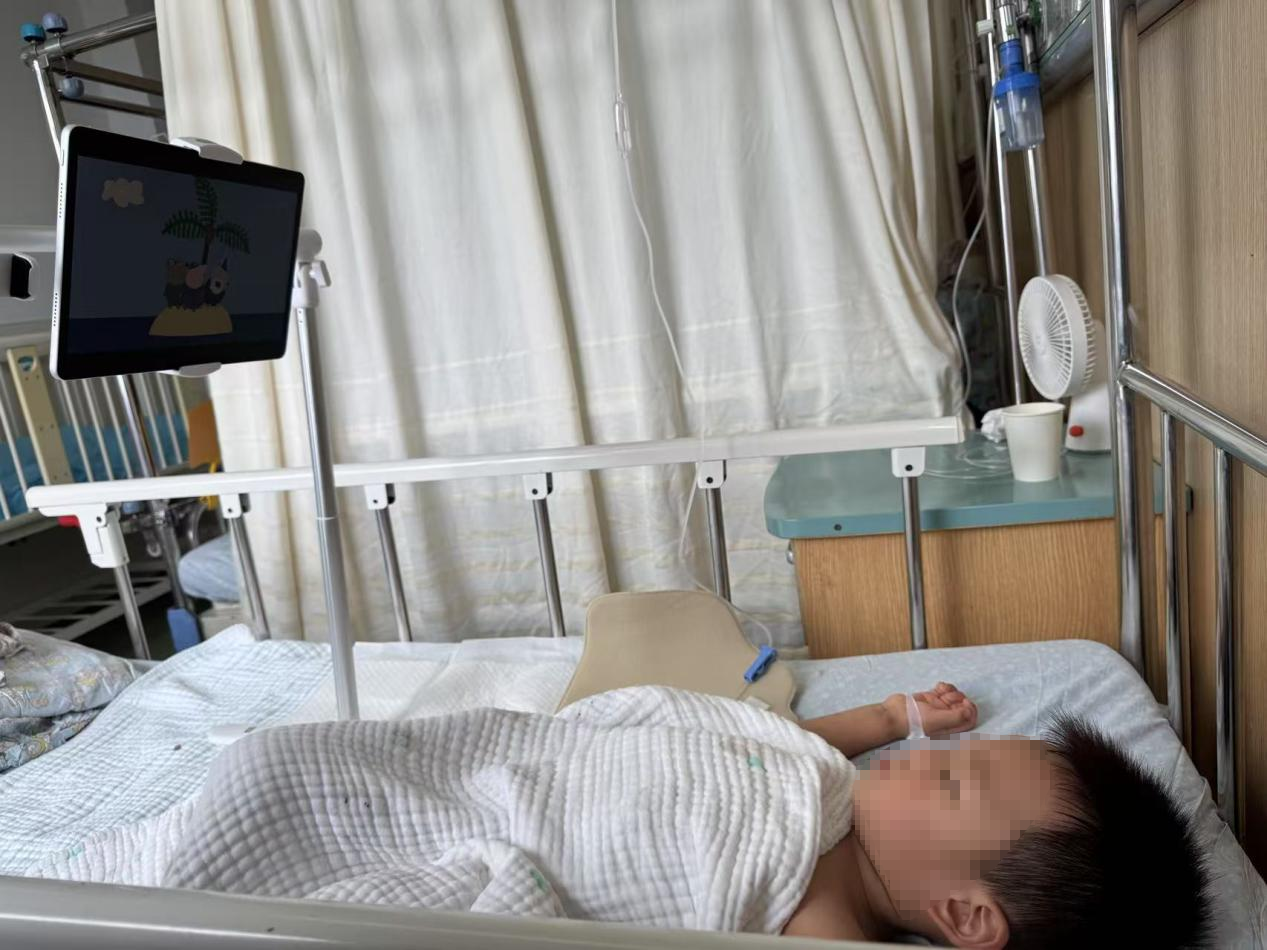
Remarkably, by July 28—just two weeks later—the child had regained full consciousness and could communicate normally. When The Medical Community visited the trauma ward at ZUCH, the boy was calmly watching animated videos in bed. Except for a plaster cast on his hand, he appeared no different from other young inpatients.
A Sudden Call and a Fall from the 18th Floor
Around 4 PM on July 15, Mr. Wang received a phone call at work informing him that his son had been "injured in a fall" and was being rushed to a nearby hospital for emergency care.
"From the caller’s tone, I sensed it was serious—but I had no idea how serious until I arrived and saw the security footage from our building’s management," Mr. Wang told The Medical Community. The video showed that his son had accidentally climbed out of the bathroom window and fallen from the 18th floor.
Due to the severity of the child’s condition, he was transferred immediately to the Binjiang Campus of ZUCH. He arrived around 6 PM, and the hospital activated its emergency trauma protocol, admitting him directly into SICU and issuing a critical condition notice.
Dr. Tan explained that the SICU team swiftly began life-saving interventions, including:
Rapid assessment of the airway and elimination of deadly chest injuries
Oxygen support to improve breathing
Bleeding control, emergency transfusion and fluid resuscitation
Organ function protection
Comprehensive imaging and lab tests to determine the extent of damage
The findings revealed multiple, severe injuries across the liver, spleen, lungs, pancreas, kidneys, and adrenal glands, along with rib, limb, and spinal fractures. Intracranial injury couldn’t be ruled out, and widespread soft tissue contusions were present.
"Every one of his injuries was potentially fatal," Dr. Tan said. "Brain hemorrhage and swelling could cause acute herniation and coma; spinal cord damage could impair circulation and breathing. There was also substantial fluid in the abdomen, raising concerns of ruptured liver or spleen and ongoing internal bleeding."
Emergency surgery was on standby. However, for a child already suffering from massive trauma, surgery could further destabilize his fragile physiology. So in parallel, the SICU team conducted minute-by-minute monitoring, ready to adjust the treatment plan instantly.
Dr. Tan said that emergency transfusions brought his blood pressure and other vitals back to a relatively stable range, indicating that internal bleeding might be temporarily under control. Measures to correct trauma-induced coagulopathy, acidosis, and hypothermia helped stabilize him further.
Multidisciplinary experts from surgery, neurosurgery, orthopedics, thoracic surgery, radiology, and other specialties convened to assess the boy’s injuries and strategize a path forward. Based on his presentation, urgent surgery was deferred in favor of aggressive supportive care.
"We truly didn’t know if he would make it," said Dr. Tan. "His injuries were just that severe. At any moment, things could have deteriorated."
A 7-Day Relay for Life: Creating a Medical Miracle
In the following days, the team conducted blanket monitoring of the child’s condition.
Intracranial injuries were particularly tricky. Brain trauma can evolve slowly, and peaks in cerebral edema or new bleeds often occur 3–5 days post-trauma. MRI was not feasible due to his unstable condition, and CT couldn't fully capture brain injury. Instead, the team monitored him hourly—checking pupil reaction, consciousness, and vital signs—to catch early signs of neurological decline.
He also had spinal compression fractures that, if worsened, could result in permanent paralysis. Fortunately, external bracing stabilized the injuries, and alignment of the fractured bones was acceptable, allowing the team to avoid surgery for now.
A bigger concern was pancreatic trauma. The damage was severe and carried a high risk of early complications—pancreatic fistula, bleeding, pancreatitis, necrosis, sepsis, and multi-organ failure.
After multiple deliberations, the team opted against surgery and pursued intensive medical therapy—antibiotics, anti-inflammatory medication, and close monitoring of abdominal fluid and blood markers.
"Even minor fluctuations could have caused a sudden crash in his condition," Dr. Tan emphasized. "That didn’t happen—thankfully."
After more than a week of around-the-clock care, the boy’s vitals stabilized. His organ function steadily improved, and pancreatic indicators showed signs of recovery.
Stable, But Not Out of the Woods
On July 24, the medical team determined that the boy had passed the critical danger period and could be moved to a general ward. Still, full recovery was far from guaranteed.
"His organs haven’t fully healed, and internal hematomas remain," said Dr. Tan. "Young children are hard to keep still, and frequent movement increases the risk of re-bleeding or further injury."
To support emotional recovery and minimize stress, the staff worked closely with his parents, using toys and games to keep him calm.
“We had almost no hope—18 floors...” Mr. Wang recalled. “We thought that even if he survived, he’d be in a vegetative state or paralyzed. To see him like this now—it’s a miracle.”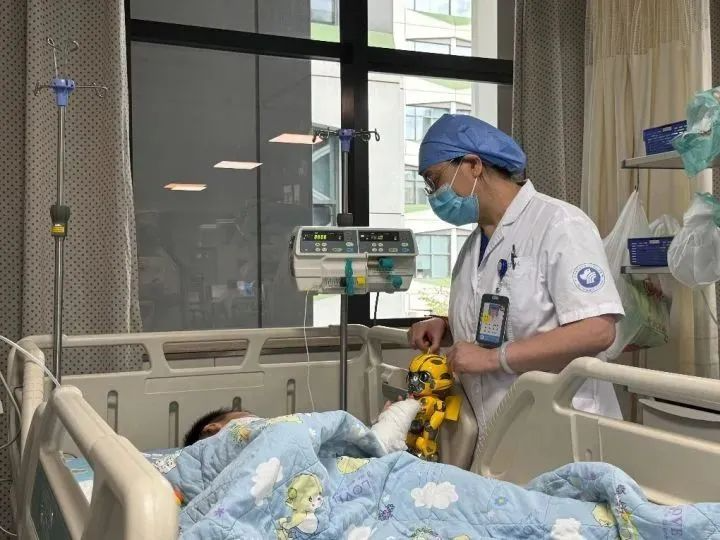
Photo: Dr. Tan Linhua speaking with the young patient.
Not Just Survival, But Quality of Life
This is not the first miracle achieved by ZUCH’s multidisciplinary trauma team.
In 2018, the SICU helped save a 5-year-old boy who also fell from the 18th floor. He had brain injuries, spinal fractures, and organ trauma but made a full recovery.
In 2022, a 3-year-old girl survived a fall from the 14th floor, despite being in a coma and coughing up bloody secretions on arrival. After 24 days of intensive care, she was discharged with good recovery.
Since its founding in 2001, the SICU admits over 2,500 pediatric trauma cases each year, including falls and traffic accidents. ZUCH has developed a comprehensive trauma response system integrating emergency surgery, resuscitation units, trauma care wards, ECMO, radiology, rehab, and nursing.
“Our goal is not just to keep children alive, but to restore them to a normal or near-normal life,” Dr. Tan emphasized.
Looking back, Mr. Wang’s family was lucky in one key respect: the boy hit a tree before reaching the ground, which absorbed part of the impact and altered his landing position—possibly saving his life.
“Surviving a fall from such a height is extraordinarily rare,” said Dr. Tan. “Most would not make it.”
He added, “That’s why prevention is far more important than treatment. Families with young children must not take safety for granted. It’s critical to inspect and secure your home environment thoroughly.”

