


When a young patient presents with myocardial infarction (MI), the first thought is usually familial hypercholesterolemia. In this case, the patient had no family history of relevant genetic disease, yet he suddenly developed chest tightness, chest pain, and other symptoms and was diagnosed with MI. The true cause is discussed below.
Case Summary
A 27-year-old lean male presented to the emergency department with 5 hours of chest tightness, chest pain, and shortness of breath. Detailed history-taking revealed that the patient had experienced intermittent exertional chest tightness for the past 6 months, without chest pain, that resolved with rest and was not taken seriously.
Five hours before presentation, the patient had sudden crushing chest pain without obvious trigger, accompanied by shortness of breath, with no radiation to the shoulder or back. Physical examination showed no obvious abnormality. The emergency physician first considered acute MI.
Urgent troponin T was positive. Electrocardiogram showed sinus rhythm with V4-V6 ST depression, leading to a diagnosis of non-ST-elevation MI (NSTEMI) of coronary origin. Dual antiplatelet therapy and anticoagulation were initiated. With family consent, the catheterization laboratory was contacted for emergency intervention.
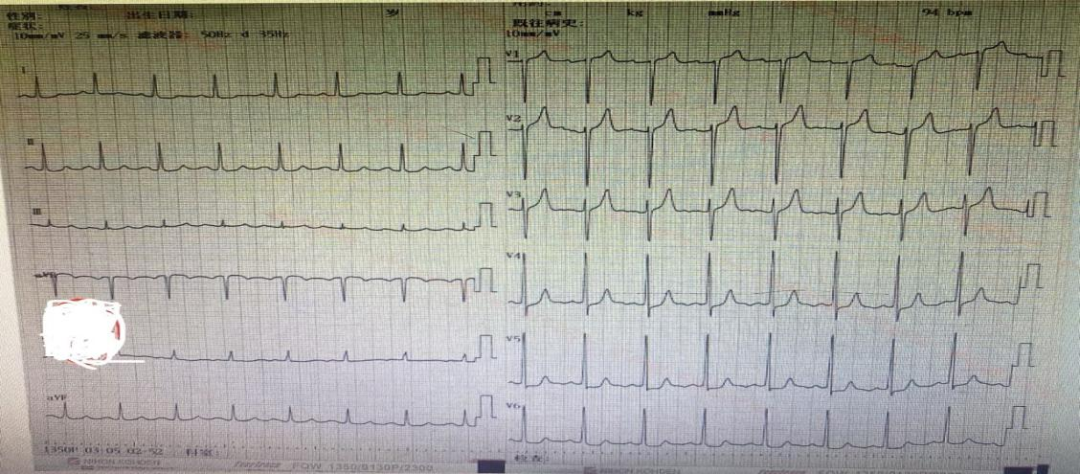
Further history revealed that the patient was an occasional smoker, with no other drug use, no family history of relevant genetic disease, and no familial hypercholesterolemia or coronary heart disease. His grandmother had hypertension.
When asked about other past illnesses, the patient and family were initially hesitant to disclose. The experienced emergency physician suspected a sensitive issue, asked the patient privately, and learned that the patient had been infected with HIV for 10 months and was currently taking elvitegravir/cobicistat/emtricitabine/tenofovir alafenamide (E/C/F/TAF).
Article Key Points
- 27-year-old lean male, 5-hour chest pain, diagnosed with NSTEMI (V4-V6 ST depression, troponin T positive)
- Patient disclosed 10-month HIV infection on E/C/F/TAF regimen
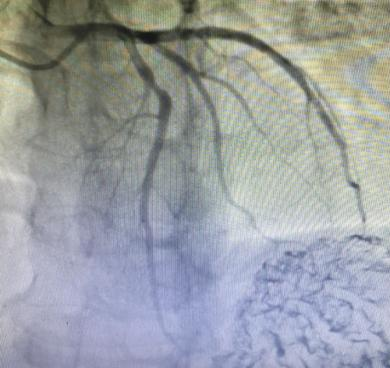
- Coronary angiography: borderline LAD stenosis 60-70%, FFR 0.91, no stent implanted
- Lipids: LDL and triglycerides elevated; albumin slightly low; liver enzymes mildly elevated
- HIV can drive atherosclerosis via lipid metabolism, endothelial dysfunction, hypercoagulability, and ART effects
- HIV-ACS angiographic lesions often less extensive; PCI outcomes comparable to general population
- Evidence status: single case report; discussion cites literature review on HIV and coronary disease
With disease progression in mind, the interventional team was informed that the patient had HIV, with appropriate safety precautions, and the patient was taken to the catheterization laboratory for emergency angiography.
Angiography results: coronary artery origin and course were normal; coronary distribution was right-dominant; the left main (LM) showed no significant stenosis, with TIMI 3 distal flow; the left anterior descending (LAD) had 60-70% stenosis with TIMI 3 distal flow; the left circumflex (LCX) showed clear stenosis, distal flow TIMI 3; the right coronary artery (RCA) showed no significant stenosis, with TIMI 3 distal flow; LAD was considered a borderline lesion.
Coronary flow reserve fraction (FFR) measurement was 0.91, and no stent was implanted.
Postoperatively, the patient received aspirin and clopidogrel dual antiplatelet therapy, atorvastatin for lipid control, and metoprolol for heart rate and myocardial oxygen demand control.
On day 2, biochemistry and coagulation testing showed slightly low albumin, elevated cardiac enzymes, and elevated alanine aminotransferase, aspartate aminotransferase, triglycerides, and LDL; electrolytes, uric acid, and coagulation were unremarkable.
Discussion
Beyond traditional risk factors such as smoking and dyslipidemia, MI in young patients is also associated with newer risk factors including coagulation-related genetic polymorphisms, fibrinogen, homocysteine, and uric acid. In this patient, aside from untested genetic factors, all other markers were largely unremarkable, pointing to an association between MI and HIV infection.
The main mechanisms by which HIV infection promotes coronary heart disease include: (1) HIV can affect lipid metabolism, increasing LDL cholesterol and triglycerides, leading to atherosclerosis; (2) HIV can activate protein kinases that drive vascular endothelial cell apoptosis, producing endothelial dysfunction; (3) HIV-infected individuals are in a long-term hypercoagulable state, increasing the risk of coronary thrombosis; and (4) long-term antiretroviral therapy can also increase coronary risk.
Clinical Features of HIV-Associated Coronary Heart Disease
HIV-infected patients often have a history of smoking and dyslipidemia. The clinical features of coronary heart disease in HIV-infected patients are similar to those in the general population and may present as silent myocardial ischemia, stable angina, or acute coronary syndrome (ACS). Many patients present with ACS as the first manifestation. Coronary angiography in HIV-infected patients generally shows a less extensive disease distribution than in the general population. Single-vessel disease accounts for 35-56% of cases, two-vessel disease 18-28%, and three-vessel disease 13-76%. After ACS, 25-76% of HIV-infected patients undergo percutaneous coronary intervention (PCI), 4-18% receive coronary artery bypass grafting, and 10-20% receive medical therapy. In-hospital mortality for ACS in HIV-infected patients is 0-8%; in-hospital heart failure and reinfarction rates are not different from the general population. Long-term follow-up shows higher rates of recurrent ischemic events in HIV-infected patients than in the general population, but cardiovascular mortality and overall mortality are not different.
The efficacy of PCI after ACS in HIV-infected patients is similar to that in the general population. Rates of early and late stent thrombosis are low and comparable to the general population; in-stent restenosis rates are 9-52%, not very different from the general population. Drug-eluting stents similarly reduce in-stent restenosis in this population. HIV-infected patients have high rates of post-ACS coronary revascularization and reinfarction.
Prevention and Treatment of Coronary Heart Disease in HIV Patients
When treating HIV-infected patients, the risk of coronary heart disease and MI must be considered as part of an integrated plan. First, patients should be counseled to change their lifestyle: stop drug use, quit smoking, increase physical activity, control blood pressure, improve dietary habits, and control blood glucose, with lipid-lowering therapy as needed, including aspirin. When selecting antiretroviral therapy, the adverse impact of drugs on coronary risk should be fully considered. When efficacy permits, protease inhibitors should be avoided whenever possible; if a protease inhibitor must be used, those with lower coronary impact, such as saquinavir, are preferred.
References
[1] Liu X, Luo Y. Research progress on risk factors for acute myocardial infarction in patients under 35 years of age. Journal of Central South University (Medical Science), 2020; 45(07): 856-861.
[2] Huang ZH. Human immunodeficiency virus infection and coronary heart disease. Chinese Journal of New Drugs and Clinical Remedies, 2015; 34(04): 245-248.
[3] Demir OM, Candilio L, Fuster D, et al. Cardiovascular disease burden among human immunodeficiency virus-infected individuals. Int J Cardiol, 2018; 265: 195-203.
[4] Fiala M, Popik W, Qiao JH, et al. HIV-1 induces cardiomyopathy by cardiomyocyte invasion and gp120, Tat, and cytokine apoptotic signaling. Cardiovasc Toxicol, 2004; 4(2): 97-107.
[5] Lijfering WM, ten Kate MK, Sprenger HG, et al. Absolute risk of venous and arterial thrombosis in HIV-infected patients and effects of combination antiretroviral therapy. J Thromb Haemost, 2006; 4(9): 1928-1930.
[6] He XQ, Shen YZ. Research progress on acquired immunodeficiency syndrome complicated by coronary atherosclerotic heart disease. World Clinical Drugs, 2018; 39(11): 737-742.

