


From July 3 to 4, 2026, the “2026 Annual Progress Symposium of the Chinese Society of Clinical Oncology (CSCO) – BOC” and “Best of ASCO 2026 China” concluded in Hohhot, Inner Mongolia. Professor Luo Ting from West China Hospital, Sichuan University, delivered a special presentation on “Advances in HER2-Positive Breast Cancer Research”.
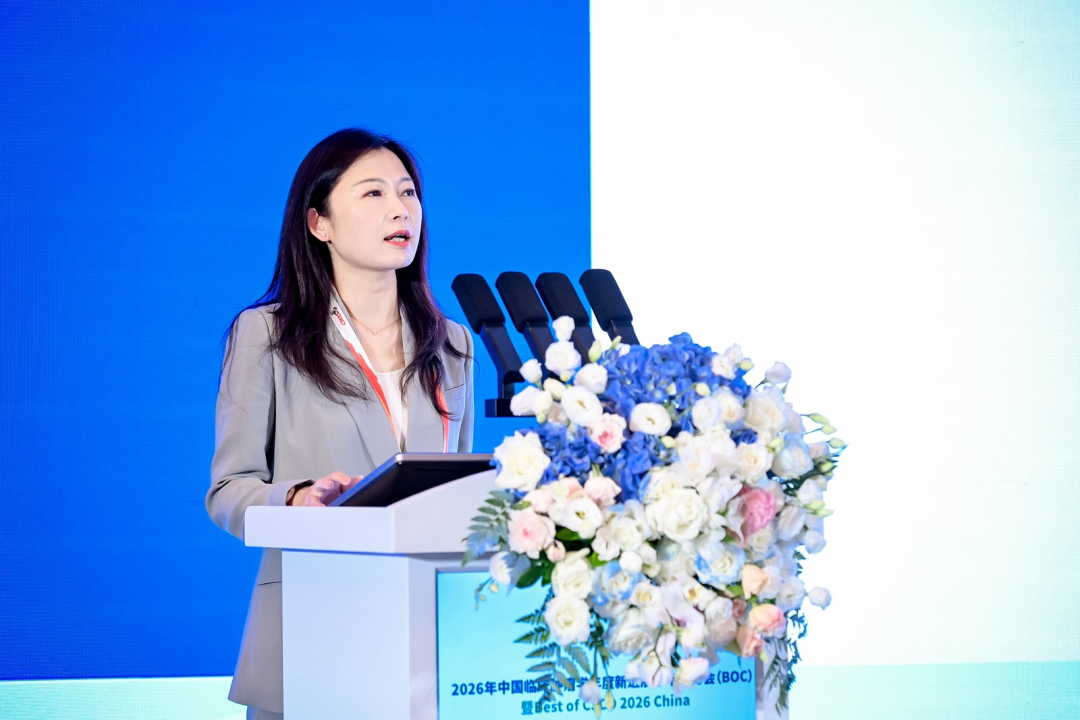
Fig. 1. Prof. Ting Luo speaking at the conference
The report not only focused on the major updates to the 2026 CSCO Breast Cancer Guidelines but also explored the paradigm shift in whole-course management—from early neoadjuvant to advanced salvage therapy. With antibody-drug conjugates (ADCs) entering the perioperative setting and moving earlier in treatment, alongside the collective rise of domestic innovative drugs, the treatment landscape for HER2-positive breast cancer is entering a new era defined by precision, individualization, and high efficacy.
Building on China’s Evidence Base — The 2026 CSCO Guidelines as the Cornerstone
(I) Early Neoadjuvant Therapy: T-DXd Establishes a New Standard for High-Risk Populations
In recent years, neoadjuvant strategies for HER2-positive early breast cancer have undergone profound changes, centered on more precise intensified treatment for high-risk patients. Based on the 2026 CSCO BC guidelines, for high-risk patients with clinical stage ≥cT2 or axillary lymph node-positive (cN+), the new guidelines add the "T-DXd sequential THP" regimen as a Level III recommendation.
This update is primarily driven by the breakthrough results of the DESTINY-Breast11 (DB11) Phase III trial (Fig. 2). The study showed that in the same high-risk population, the T-DXd-THP regimen achieved a pathologic complete response (pCR) rate of 67.3%, significantly superior to the conventional ddAC-THP regimen at 56.3%. In subgroup populations such as lymph node-positive (LN+) and stage IIIB/C, pCR rates reached 68%–72%, confirming its potent tumor-shrinking effect.
Meanwhile, with the release of data from HELEN-006 and NeoCARHP (Fig. 3), the previous "THP × 4" short-course regimen was downgraded from Level II to Level III due to failure to demonstrate non-inferior efficacy and safety concerns. These adjustments mark the transition of HER2-positive early breast cancer treatment into a new era of refined, risk-stratified management.
(II) Full Upgrade in Advanced Therapy: Balancing Continuous Treatment vs. Individualized Maintenance
- Adjuvant Therapy Post-Neoadjuvant: T-DXd Added for non-pCR Patients
The 2026 CSCO guidelines made important adjustments in the post-neoadjuvant adjuvant setting. Unlike the 2025 version, the new guidelines no longer distinguish whether neoadjuvant therapy used trastuzumab (H) single-target or HP (trastuzumab + pertuzumab) dual-target. Instead, they uniformly use "whether the patient has received HP therapy" as the starting point for subsequent adjuvant decisions, better reflecting the current clinical reality where HP dual-target neoadjuvant therapy is increasingly prevalent.
For patients who do not achieve pCR after neoadjuvant therapy (non-pCR), the 2026 guidelines add T-DXd as a Level II recommendation. This update is primarily based on the DESTINY-Breast05 (DB05) results (Fig. 4). In high-risk HER2-positive early breast cancer patients with residual disease after neoadjuvant therapy, the T-DXd group achieved a 3-year invasive disease-free survival (iDFS) rate of 92.4%, compared with 83.7% for the T-DM1 group—an absolute improvement of 8.7 percentage points, with a 53% reduction in disease recurrence or death risk. T-DXd also demonstrated advantages in delaying brain metastasis and reducing distant metastasis risk.
- Advanced Salvage Therapy: Refined Stratification, Diverse Options
Table 1. 2026 CSCO Guidelines Updates for Advanced Salvage Therapy in HER2+ Breast Cancer
|
|Stratification |
Recommendation |
|
H treatment sensitive |
Added T-DXd+P as Grade I recommendation (Category 1A) |
|
H treatment failure |
Retained T-DXd as Grade I recommendation; added RC48 (1B), Dato-DXd (2A), Vidisutimab (liver metastasis, 2A), and Pyrotinib+Cape (1B) as Grade II recommendations |
|
TKI treatment failure |
T-DXd is a Grade I recommendation; added HP+chemotherapy and Dato-DXd as Grade II recommendations; T-DM1 adjusted from Grade II to Grade III |
(III) Advanced Second-Line and Beyond: Domestic ADCs Flourish, Breaking Import Monopoly
Following T-DXd, domestic HER2 ADCs experienced a comprehensive breakthrough in 2026, reshaping the landscape of later-line treatment. Between 2025 and 2026, Disitamab Vedotin (RC48), Botutrastuzumab (A166), and Ruikang Trastuzumab (SHR-A1811) were successively approved or achieved key milestones.
Comparative data show that domestic ADCs now possess efficacy comparable to their international counterparts. SHR-A1811 demonstrated impressive potential in the HORIZON-Breast01 study, with an objective response rate (ORR) of 81.7%, a complete response (CR) rate of 4.2%, a median duration of response (DoR) of 27.8 months, and activity observed in patients with brain metastases.
RC48 and A166 also confirmed their efficacy in pretreated HER2-positive breast cancer in their respective registration studies, with ORRs of 58.5% and 76.9%, respectively. These data mean that in cases where T-DXd has failed or is unavailable, Chinese patients now have access to more high-quality, accessible domestic treatment options—truly achieving a "flourishing of diverse alternatives”.
Integrating Global Advances — Highlights from ESMO/ASCO
(I) First-Line Advanced: Two Major Treatment Models Compared — Continuous ADC vs. Induction Followed by Individualized Maintenance
Currently, two distinct treatment pathways have emerged for first-line HER2-positive advanced breast cancer, each with different efficacy profiles and suitable populations:
T-DXd + Pertuzumab Continuous Therapy: Deep Remission, Robust Long-Term Survival Evidence
DESTINY-Breast09 (DB09) is one of the most anticipated Phase III trials in first-line HER2-positive advanced breast cancer in recent years. Updated data presented at ASCO 2026 further solidified T-DXd + P as a candidate regimen for continuous first-line therapy: the ORR reached 85.1%, with a CR rate of 15.1% and a partial response (PR) rate of 70%. The combined CR + deep PR population accounted for approximately 53%, suggesting that more than half of patients can achieve deep and durable tumor regression. The median duration of response (mDOR) was extended to 39.2 months, significantly outperforming the 20.2–22.3 months seen with classic regimens such as CLEOPATRA and PHILA.
head-to-head comparison of three treatment models
While T-DXd + P continuous therapy has made significant progress, the "induction followed by maintenance" strategy has also matured. PATINA and HER2CLIMB-05 represent two important explorations in this direction, while DB09 exemplifies the continuous treatment model. The three form a clear contrast in design, population, and maintenance regimen.
DB09 uses T-DXd + P continuously until disease progression, with a median progression-free survival (mPFS) of 40.7 months. Its advantage lies in a simplified pathway that avoids regimen switching after induction and achieves long-term control through sustained deep HER2 signal inhibition and bystander effects.
PATINA administers CDK4/6 inhibitors + HP + endocrine maintenance after 6–8 cycles of THP induction in non-progressing patients (excluding approximately 10% with rapid progression), achieving an mPFS of 44.3 months. The study enrolled exclusively HR-positive patients, suggesting that endocrine-sensitive subgroups may derive additional benefit from "chemotherapy-free maintenance."
HER2CLIMB-05 also uses THP induction (4–8 cycles) followed by maintenance with tucatinib + HP, achieving an mPFS of 24.9 months. Although the numerical value is lower, the study included approximately 12% of patients with brain metastases, providing important reference for the central nervous system-involved population.
These three models are not mutually exclusive but complementary: DB09 is suitable for patients seeking a simplified pathway without repeated regimen switches; PATINA is better suited for HR-positive, endocrine-sensitive patients who need to reduce long-term chemotherapy toxicity; and HER2CLIMB-05 offers a new individualized option for complex cases such as brain metastases.
(II) 2026: Domestic HER2-Targeted Novel Drugs Gain Full Momentum, Covering the Entire Disease Course
At ASCO 2026, three Chinese-developed drugs—KN026 combined with HB1801 (Neo-Healer regimen), T-Bren, and ZN-A-1041—demonstrated diversified Chinese approaches in HER2-positive breast cancer, each targeting different treatment stages and mechanisms of action.
Neo-Healer is a Phase III neoadjuvant study enrolling 521 patients, comparing KN026 (a bispecific HER2 antibody) combined with HB1801 (a novel albumin-bound docetaxel) ± carboplatin versus THP ± carboplatin. Results showed a total pathologic complete response (tpCR) rate of 62.4% in the experimental group versus 51.2% in the control group, providing a new Chinese option for early neoadjuvant therapy.
In the advanced setting, T-Bren, a novel HER2 ADC, was evaluated in a Phase II study of 83 patients with previously untreated unresectable locally advanced or metastatic disease. The ORR for monotherapy and in combination with pertuzumab was 93% and 87.5%, respectively, suggesting potential in first-line or early advanced treatment.
ZN-A-1041 is a selective, orally available small-molecule HER2 TKI with demonstrated blood-brain barrier penetration. In a Phase Ib dose-expansion study in HER2-positive breast cancer patients with brain metastases, intracranial ORR across different combination regimens reached 50%–60%, opening a new avenue for this challenging clinical problem.
Summary
Reviewing the 2026 advances in HER2-positive breast cancer, the precise stratification of treatment paradigms and the comprehensive rise of domestic innovative drugs constitute the dual engines driving the field forward. Encouragingly, Chinese scholars, while building on the CSCO guideline foundation, have made a strong showing on the international stage with Neo-Healer, T-Bren, and multiple novel ADCs—not only breaking the import monopoly but also contributing valuable Chinese evidence and Chinese solutions to the global whole-course management of breast cancer.

