


From July 3 to 4, 2026, the "2026 Chinese Society of Clinical Oncology (CSCO) Annual Progress Symposium (BOC) & Best of ASCO 2026 China" was held in Hohhot, Inner Mongolia.
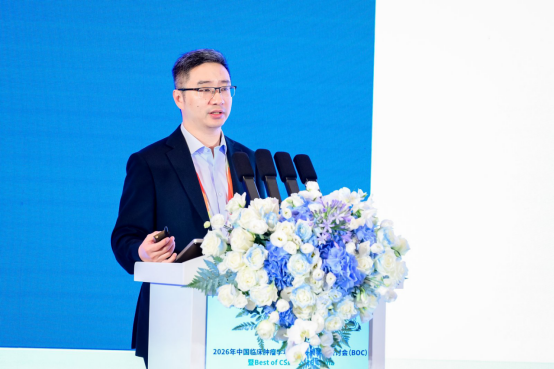
On July 4, at the Annual Research Progress "Breast Cancer" session, Prof. Rui Ge from Huadong Hospital Affiliated to Fudan University delivered a special report titled "Chinese Clinical Oncology Annual Research Progress 2025 – Breast Cancer," systematically reviewing and interpreting representative studies in China’s breast cancer field from 2025.
Continuous Breakthroughs in Chinese Original Innovation
Three Annual Landmark Studies Stand Out
Prof. Ge stated that in selecting the "2025 Annual Important Research Progress Recommendations (Significant Clinical Importance)," the expert panel adhered to three core criteria: whether the study could drive updates to Chinese diagnosis and treatment guidelines, whether it could change clinical practice, and whether it had international academic influence. Based on these principles, three most representative annual landmark studies were ultimately selected.
CULMINATE-1: Culmerciclib Ushers in a New Era of Chinese Original CDK2/4/6 Inhibitors
The CULMINATE-1 study was selected first. This is a randomized, double-blind Phase III clinical trial evaluating the novel Chinese original CDK2/4/6 inhibitor culmerciclib in combination with fulvestrant for endocrine-pretreated HR+/HER2- advanced breast cancer, led by Prof. Zefei Jiang and Prof. Yongmei Yin’s teams—an important milestone in China’s CDK2/4/6 inhibitor development.
In recent years, CDK4/6 inhibitors have become a standard component of HR+/HER2- advanced breast cancer treatment, but challenges such as resistance due to compensatory CDK2 activation and myelosuppression during long-term use have consistently affected long-term benefits. CULMINATE-1 was designed to address this clinical need.
Prof. Ge introduced that culmerciclib achieves a better balance between efficacy and safety through innovative molecular design. Results showed that the culmerciclib plus fulvestrant group achieved a median progression-free survival (PFS) of 16.6 months, significantly superior to the 7.5 months in the fulvestrant monotherapy group, with a 64% reduction in the risk of disease progression or death (HR=0.36, 95% CI: 0.26–0.51; P<0.0001); overall survival (OS) also showed a positive benefit trend. Meanwhile, treatment-related adverse events were generally manageable, with particularly lower myelosuppression risk compared to conventional CDK4/6 inhibitors, demonstrating a favorable balance of efficacy and safety.
Based on CULMINATE-1 results, culmerciclib received approval from the National Medical Products Administration (NMPA) in December 2025 for HR+/HER2- locally advanced or metastatic breast cancer patients after prior endocrine therapy. Prof. Ge expressed hope that future real-world studies will further identify the optimal beneficiary population and explore biomarkers for precision therapy, providing more individualized treatment strategies for Chinese patients.
OptiTROP-Breast01: Chinese Original TROP2 ADC Fills a New Treatment Option for Advanced TNBC
The second annual landmark study is OptiTROP-Breast01. Led by Prof. Binghe Xu’s team, this study evaluated the efficacy and safety of the Chinese-developed TROP2 antibody-drug conjugate (ADC) sacituzumab tirumotecan in treating metastatic triple-negative breast cancer (TNBC)—a milestone achievement in the domestic ADC field.
Prof. Ge pointed out that metastatic TNBC has long lacked effective treatment modalities, with chemotherapy remaining the primary option. In recent years, TROP2 ADCs have made continuous breakthroughs, bringing new hope to patients, and there has been significant interest in whether Chinese original ADCs can achieve comparable or even superior efficacy. OptiTROP-Breast01 provided encouraging answers.
Results showed that as assessed by the Blinded Independent Central Review (BICR), the sacituzumab tirumotecan group achieved a median PFS of 6.7 months, significantly superior to the chemotherapy group’s 2.5 months, with a 68% reduction in the risk of disease progression or death (HR=0.32, 95% CI: 0.24–0.44; P<0.00001). Although OS data were not yet fully mature, the sacituzumab tirumotecan group already showed a clear benefit trend, with a 47% reduction in the risk of death (HR=0.53, 95% CI: 0.36–0.78; P=0.0005). No new safety signals were identified, further validating the favorable benefit-risk profile of sacituzumab tirumotecan.
Based on the positive results of OptiTROP-Breast01, sacituzumab tirumotecan received NMPA approval in November 2024 for adult patients with unresectable locally advanced or metastatic TNBC who have received at least 2 prior systemic therapies (at least one for advanced or metastatic disease). Subsequently, the regimen was incorporated into the recommendations of the "CSCO Breast Cancer Diagnosis and Treatment Guidelines (2025 Edition)" and the 2026 edition of the "CBCS & CSOBO Breast Cancer Diagnosis and Treatment Guidelines," and was officially included in the national medical insurance catalog this year, further improving drug accessibility for advanced TNBC patients in China.
FABULOUS Study: Domestic PARP Inhibitor Further Expands the Boundaries of Precision Therapy
The third annual landmark study is the FABULOUS study. Led by Academician Erwei Song and Prof. Huiping Li’s teams, this study aimed to evaluate the efficacy and safety of the Chinese original PARP inhibitor (PARPi) fuzuloparib as monotherapy and in combination with apatinib for HER2-negative, germline BRCA1/2 (gBRCA1/2)-mutated metastatic breast cancer.
Results showed that the fuzuloparib plus apatinib group achieved a median PFS of 11.0 months, significantly superior to 6.7 months in the monotherapy group and 3.0 months in the chemotherapy group, representing a 73% reduction in the risk of disease progression compared to chemotherapy (HR=0.27, 95% CI: 0.17–0.43; P<0.0001).
Based on the FABULOUS study, the new indications for fuzuloparib as monotherapy or in combination with apatinib mesylate for adult patients with germline BRCA-mutated (gBRCAm) HER2-negative metastatic breast cancer who have received chemotherapy in the neoadjuvant, adjuvant, or metastatic setting received NMPA approval in December 2024, and were subsequently incorporated into the 2025 CSCO Breast Cancer Diagnosis and Treatment Guidelines and the 2026 China Anti-Cancer Association (CACA-CBCS) Breast Cancer Diagnosis and Treatment Guidelines. In January 2026, this indication was officially included in the national medical insurance catalog, providing more accessible domestic precision therapy options for Chinese breast cancer patients with BRCA mutations.
Prof. Ge noted that the three annual representative studies share distinctive common features: all were led by Chinese investigators, supported by Chinese original drugs, and completed with Chinese patient participation. They not only generated high-quality evidence-based medical data with international impact but also drove updates to diagnosis and treatment guidelines and changes in clinical practice, fully demonstrating the continued enhancement of independent innovation capability in China’s breast cancer field.
More Original Achievements Continue to Emerge
Multiple Studies Drive Continuous Updates in China’s Breast Cancer Diagnosis and Treatment Practice
Prof. Ge stated that during the compilation of "Chinese Clinical Oncology Annual Research Progress 2025 – Breast Cancer," the expert panel faced an "embarrassment of riches"——over the past year, high-quality original research achievements in China’s breast cancer field have continued to emerge, with many studies carrying significant importance in terms of both innovation and clinical value.
Therefore, in addition to the three annual representative studies, the expert panel systematically reviewed a series of representative original achievements across dimensions such as "whether they change clinical practice" and "whether they drive guideline updates." These studies cover not only innovative drug development but also treatment strategy optimization, HER2-targeted therapy, supportive care, and clinical management—together painting a picture of China’s breast cancer research continuing to deepen and expand.
CITRINE Study: Adjuvant Carboplatin Intensification Provides New Evidence for High-Risk Early TNBC
Whether to add carboplatin to adjuvant therapy for early TNBC has been a hotly debated international question. The Phase III CITRINE study led by Prof. Zhimin Shao’s team at Fudan University Shanghai Cancer Center provided important evidence-based data from the Chinese population to address this controversy.
The CITRINE study added carboplatin intensification to the epirubicin + cyclophosphamide (EC) regimen followed by paclitaxel. Results showed that carboplatin significantly improved disease-free survival (DFS), with a 3-year DFS rate of 92.3% in the carboplatin group, significantly superior to 85.8% in the standard treatment group, representing a 36% reduction in the risk of disease recurrence or death (HR=0.64, 95% CI: 0.43–0.95; P=0.026). Although hematologic toxicities (such as neutropenia) were increased in the carboplatin group, they were generally manageable with no increase in treatment-related mortality.
Prof. Ge believes that the CITRINE study further enriches adjuvant treatment strategies for high-risk early TNBC in China and has driven the inclusion of this regimen in the 2026 CACA-CBCS guidelines, providing new evidence-based support for clinical practice.
Domestic CDK4/6 Inhibitors Flourish, Continuously Enriching Treatment Options for HR+/HER2- Advanced Breast Cancer
Beyond CULMINATE-1, the domestic CDK4/6 inhibitor field also saw intensive breakthroughs over the past year, with multiple Phase III clinical trials achieving positive results, further completing the treatment landscape for HR+/HER2- advanced breast cancer.
The TIFFANY study, led by Prof. Xichun Hu of Fudan University Shanghai Cancer Center and Prof. Shusen Wang of Sun Yat-sen University Cancer Center, showed that the Chinese-origin next-generation CDK4/6 inhibitor tibremciclib combined with fulvestrant significantly extended PFS compared to fulvestrant alone, with median PFS of 16.5 months and 5.6 months, respectively, and a 63% reduction in the risk of disease progression or death (HR=0.37, 95% CI: 0.27–0.52; P<0.0001). Based on this study, tibremciclib received NMPA approval for marketing in 2025.
Meanwhile, the LEONARDA-1 study led by Academician Binghe Xu’s team at the Chinese Academy of Medical Sciences Cancer Hospital confirmed that the novel CDK4/6 inhibitor lerociclib combined with fulvestrant also significantly improved prognosis in patients with prior endocrine therapy failure, extending median PFS to 11.07 months with a 55% reduction in the risk of disease progression or death (HR=0.451, 95% CI: 0.311–0.656, P=0.000016), with benefits observed in both primary and secondary resistant patients. Lerociclib has now been approved for first-line and second-line treatment of adult patients with HR+/HER2- locally advanced or metastatic breast cancer.
Additionally, the BRIGHT-2 study also achieved positive results. Interim analysis showed that bireociclib combined with fulvestrant extended median PFS to 12.94 months, significantly superior to the control group; final analysis results were even more encouraging, with the combination group achieving a median PFS of 14.7 months and a significant 46% reduction in the risk of disease progression or death (14.7 months vs 7.3 months; HR=0.54, 95% CI: 0.40–0.74, P<0.001). Based on this study, bireociclib received additional approval for new indications in first-line endocrine therapy and patients progressing after adjuvant endocrine therapy.
Prof. Ge noted that from culmerciclib to lerociclib to bireociclib, Chinese original CDK4/6 inhibitors have formed a diversified development landscape. As more original drugs are approved and enter the national medical insurance catalog, patients with HR+/HER2- advanced breast cancer in China now have richer and more accessible treatment options, marking the gradual formation of an internationally competitive original innovation system in this field.
HER2 ADC Continues to Break Through, Bringing More Possibilities for Later-Line Therapy
ADC has become one of the most active areas of innovative therapy in breast cancer in recent years, and domestic HER2 ADCs continue to achieve breakthroughs.
The ACE-Breast-02 study, led by Prof. Xichun Hu’s team at Fudan University Shanghai Cancer Center, used the then-standard second-line regimen lapatinib + capecitabine (LC) as control to evaluate the efficacy and safety of the next-generation domestic HER2 ADC drug ARX788 in HER2-positive advanced breast cancer.
Results showed that as assessed by BICR, the ARX788 group achieved a median PFS of 11.3 months, significantly superior to 8.2 months in the control group, with consistent benefit trends observed across all key subgroups. Prof. Ge stated that although long-term management of ADC-related toxicities still requires further experience accumulation, ACE-Breast-02 fully demonstrates the clinical potential of domestic HER2 ADCs and provides more options for later-line therapy in HER2-positive breast cancer.
Supportive Care Continues to Innovate, Domestic Drugs Enhance Overall Patient Benefit
Prof. Ge pointed out that progress in breast cancer diagnosis and treatment is reflected not only in the continuous innovation of anti-tumor drugs but also in the ongoing improvement of the supportive care system. As patient survival continues to extend, reducing treatment-related adverse events and ensuring the completion of standard treatment have become important components of improving long-term patient benefit.
Over the past year, Chinese scholars have also achieved a series of clinically valuable original achievements in the supportive care field.
Among them, the Phase III clinical study of aldesleukin alfa (8MW0511), conducted by Prof. Xichun Hu and Prof. Biyun Wang’s teams at Fudan University Shanghai Cancer Center, provided high-quality evidence for the clinical application of the domestic fourth-generation long-acting granulocyte colony-stimulating factor (G-CSF). Results showed that compared with traditional long-acting G-CSF, aldesleukin alfa further reduced the incidence and duration of grade 4 neutropenia in cycles 2–4; across all chemotherapy cycles, the incidence of grade 3/4 neutropenia was reduced by up to 42.4% compared to the control group, helping to reduce chemotherapy-related risks and improve the likelihood of patients completing standard treatment.
Prof. Ge stated that this study not only advanced the development of domestic supportive care drugs but also further demonstrated that oncology treatment in China is transitioning from a focus solely on anti-tumor efficacy to a comprehensive management philosophy that balances efficacy, safety, and treatment continuity. Based on this study, aldesleukin alfa received NMPA approval for marketing in May 2025, adding another domestic innovative option for cancer supportive care in China.
Focusing on Clinical Pain Points, "Small-Niche" Studies Can Also Change Practice
Beyond innovative drug development, Prof. Ge particularly emphasized that a truly valuable clinical study does not necessarily stem from entirely new therapeutic agents—it can also focus on specific issues in clinical practice and provide physicians and patients with practical, implementable solutions.
A Phase III study published in BMJ by Prof. Chang Gong’s team at Sun Yat-sen Memorial Hospital, Sun Yat-sen University, is a representative example of this approach. The study focused on HER2-negative early breast cancer patients receiving capecitabine adjuvant intensification therapy, exploring the clinical value of oral methylcobalamin for preventing capecitabine-related hand-foot syndrome.
Hand-foot syndrome is one of the most common adverse reactions during capecitabine treatment, affecting not only patients’ quality of life but also potentially leading to dose reduction or even treatment discontinuation. Results showed that compared with placebo, oral methylcobalamin significantly reduced the incidence of grade 2/3 hand-foot syndrome during capecitabine adjuvant intensification therapy in HER2-negative early breast cancer patients, without adding new safety risks—providing a simple, economical, and easily promotable intervention strategy for this long-standing clinical challenge.
Prof. Ge believes that the value of clinical research lies not only in original drug development but also in whether it is grounded in clinical needs, focuses on the issues that physicians and patients care about most, and drives continuous optimization of diagnosis and treatment practice through evidence-based medicine. Many seemingly "small-niche" studies, as long as they address real clinical pain points, can generate profound practical value.
Conclusion
Reviewing the important research achievements in China’s breast cancer field in 2025, it is clear that domestic original innovation continues to achieve breakthroughs. From innovative drug development to treatment strategy optimization, from precision therapy to supportive care and comprehensive management, China’s breast cancer research has formed an innovation landscape covering multiple areas, continuously providing high-quality evidence-based medical evidence for clinical practice.
Prof. Ge stated that the multiple representative studies selected for the "Chinese Clinical Oncology Annual Research Progress 2025 – Breast Cancer" are all grounded in clinical needs and aimed at improving patient benefit, not only driving updates to diagnosis and treatment guidelines but also accelerating the translation of research findings into clinical practice. An increasing number of high-quality studies led by Chinese investigators, with Chinese patient participation and supported by Chinese original drugs, are continuously enhancing the international influence of China’s breast cancer research.
References:
[1] Yin Y, Zhang Q, Sun T, et al. Novel CDK2/4/6 inhibitor culmerciclib (TQB3616) plus fulvestrant in previously treated, HR-positive, HER2-negative advanced breast cancer: a randomized, double-blind, phase 3 trial. Signal Transduct Target Ther. 2025;10(1):414.
[2] Yin Y, et al. Sacituzumab tirumotecan in previously treated metastatic triple-negative breast cancer: a randomized phase 3 trial. Nat Med. 2025 Jun;31(6):1969-1975.
[3] Chinese Society of Clinical Oncology Guidelines Working Committee. Chinese Society of Clinical Oncology (CSCO) Breast Cancer Diagnosis and Treatment Guidelines 2025 [M]. Beijing: People’s Medical Publishing House, 2025.
[4] China Anti-Cancer Association Breast Cancer Professional Committee (CBCS) & Chinese Medical Association Oncology Branch Breast Tumor Group (CSOBO). Breast Cancer Diagnosis and Treatment Guidelines and Standards Essentials (2026 Essentials).
[5] Li H, Liu J, Ouyang Q, et al. Fuzuloparib with or without apatinib in patients with HER2-negative metastatic breast cancer with germline BRCA1/2 mutations (FABULOUS): interim analysis of a multicentre, three-arm, open-label, randomised, phase 3 trial. Lancet Oncol. 2025;26(12):1563-1574. doi:10.1016/S1470-2045(25)00523-6
[6] Liu Y, Gong Y, Zhu XZ, et al. Effect of adjuvant carboplatin intensified chemotherapy versus standard chemotherapy on survival in women with high risk, early stage, triple negative breast cancer (CITRINE): randomised, open label phase 3 trial. BMJ. 2025 Dec 23;391:e085457. doi: 10.1136/bmj-2025-085457.
[7] Tao Z, Zhang J, Zheng Q, et al. Tibremciclib or Placebo Plus Fulvestrant in Hormone Receptor-Positive and ERBB2-Negative Advanced Breast Cancer After Endocrine Therapy: A Randomized Clinical Trial. JAMA Oncol. 2025;11(9):1055-1063. doi:10.1001/jamaoncol.2025.2092
[8] Xu B, Zhang Q, Luo Y, et al. Lerociclib plus fulvestrant in patients with HR+/HER2- locally advanced or metastatic breast cancer who have progressed on prior endocrine therapy: LEONARDA-1 a phase III randomized trial. Nat Commun. 2025;16(1):716. Published 2025 Jan 16. doi:10.1038/s41467-025-56096-2
[9] Wang J, Zhang Q, Li H, et al. Bireociclib Plus Fulvestrant in Advanced Breast Cancer After Endocrine Progression: The BRIGHT-2 Phase 3 Randomized Clinical Trial. JAMA Oncol. 2026;12(5):488-496. doi:10.1001/jamaoncol.2026.0318
[10] Chen XC, Jiao DC, Qiao JH, et al. De-escalated neoadjuvant weekly nab-paclitaxel with trastuzumab and pertuzumab versus docetaxel, carboplatin, trastuzumab, and pertuzumab in patients with HER2-positive early breast cancer (HELEN-006): a multicentre, randomised, phase 3 trial. Lancet Oncol. 2025;26(1):27-36. doi:10.1016/S1470-2045(24)00581-3
[11] Hu X, Zhang Q, Wang L, et al. ACE-Breast-02: a randomized phase III trial of ARX788 versus lapatinib plus capecitabine for HER2-positive advanced breast cancer. Signal Transduct Target Ther. 2025;10(1):56. Published 2025 Feb 17. doi:10.1038/s41392-025-02149-3
[12] Wang B, Chen X, Li H, et al. 8MW0511, a novel, long-acting granulocyte-colony stimulating factor fusion protein for the prevention of chemotherapy-induced neutropenia: final results from the phase III clinical trial. Breast Cancer Res. 2025;27(1):71. Published 2025 May 6. doi:10.1186/s13058-025-02010-z
[13] Xia Y, Zhu Y, Ling L, et al. Effect of methylcobalamin on capecitabine induced hand-foot syndrome in patients with HER2 negative early breast cancer: multicentre, double blind, randomised, placebo controlled, phase 3 trial. BMJ. 2025;390:e084290. Published 2025 Sep 11. doi:10.1136/bmj-2025-084290

