


From October 24 to 29, 2025, the annual flagship event in rheumatology – the American College of Rheumatology Annual Meeting (2025 ACR) – was held at the McCormick Place Convention Center in Chicago, USA. This year’s meeting continued to showcase global breakthroughs in basic and clinical research in rheumatic and immune-mediated diseases.
At this ACR meeting, early-phase clinical studies of three distinct chimeric antigen receptor T cell (CAR-T) therapies and related cell therapies in refractory autoimmune diseases were presented, covering systemic lupus erythematosus (SLE), multiple sclerosis (MS), lupus nephritis (LN), idiopathic inflammatory myopathies (IIM), and rheumatoid arthritis (RA). Below, we provide a first look at the latest results from these three cutting-edge cell therapies.
I. Dual-Target CAR-T Therapy: Promoting “Immune Reset” to Achieve Sustained Remission Without Continuous Medication
For patients with refractory autoimmune diseases and progressive organ damage, effective treatments remain lacking. C-CAR168 is an autologous, bispecific CAR-T cell therapy targeting both CD20 and BCMA, designed to achieve a complete “immune reset” by simultaneously eliminating autoantibody-producing plasma cells and their B-cell precursors. This first-in-human phase I trial (NCT06249438) aimed to evaluate the safety and preliminary efficacy of C-CAR168 in patients with refractory autoimmune diseases [1].
This study enrolled patients with refractory SLE (with or without LN), immune-mediated necrotizing myopathy (IMNM), neuromyelitis optica spectrum disorder (NMOSD), and MS who had failed at least two standard immunosuppressive therapies. After lymphodepletion, patients received a single infusion of C-CAR168 at doses of 0.75×10⁶ or 1.5×10⁶ CAR-T cells/kg.
Key Data:
- Controllable safety: Nearly 70% of patients experienced mild cytokine release syndrome (CRS), with no cases of severe neurotoxicity. The main adverse events were transient hematologic toxicities (Table 1).
- Achieving immunosuppression-free status: All patients successfully discontinued immunosuppressants, and 75% discontinued glucocorticoids.
- Significant preliminary efficacy: Among the most refractory patients with proliferative LN, 77.8% achieved renal response, including 3 who achieved complete remission (CR) (Table 1). Proteinuria decreased rapidly within 1 month (Figure 1b). The first patient with secondary progressive MS (SPMS) also showed marked neurological improvement.
- Mechanistic confirmation: Expansion of C-CAR168 was observed to be accompanied by rapid clearance of peripheral blood CD20+ B cells and plasma cells, followed by B-cell reconstitution dominated by naïve B cells at 2–3 months. Post-treatment, clonally expanded B cell receptors (BCRs) disappeared, and a naïve BCR repertoire emerged (Figure 2).
Table 1: Safety Summary for All Treated Patients, Baseline Characteristics, and Clinical Responses for the Entire Cohort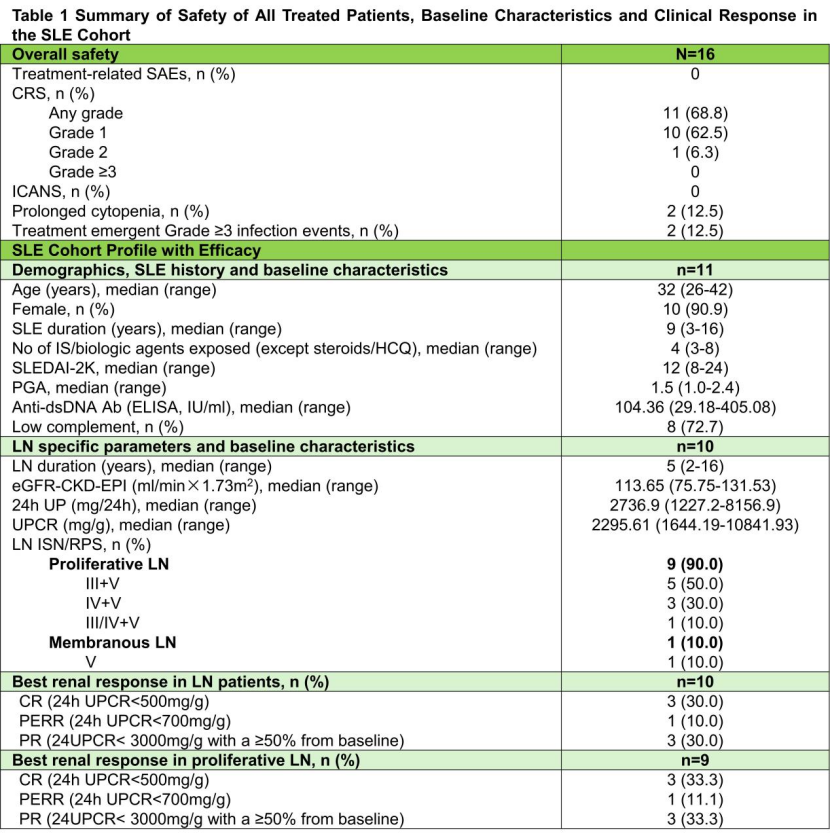
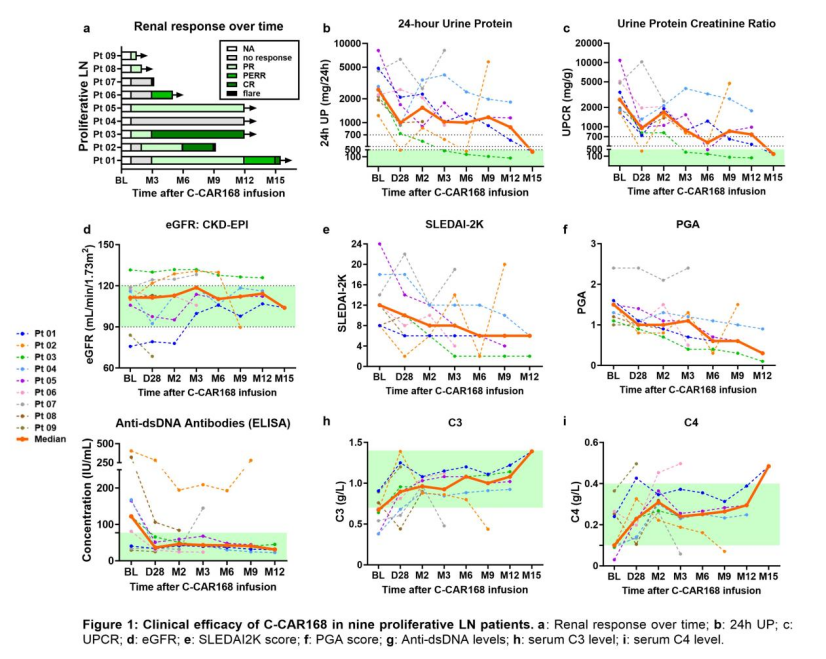
Figure 1: Clinical Efficacy of C-CAR168 in 9 Patients with Proliferative LN. a: Renal response over time; b: 24-hour urine protein (24h UP); c: Urine protein-to-creatinine ratio (UPCR); d: Estimated glomerular filtration rate (eGFR); e: SLE Disease Activity Index 2k (SLEDAI-2K); f: Prednisone equivalent dose (PGA); g: Anti-dsDNA antibody levels; h: Serum complement C3 levels; i: Serum complement C4 levels.
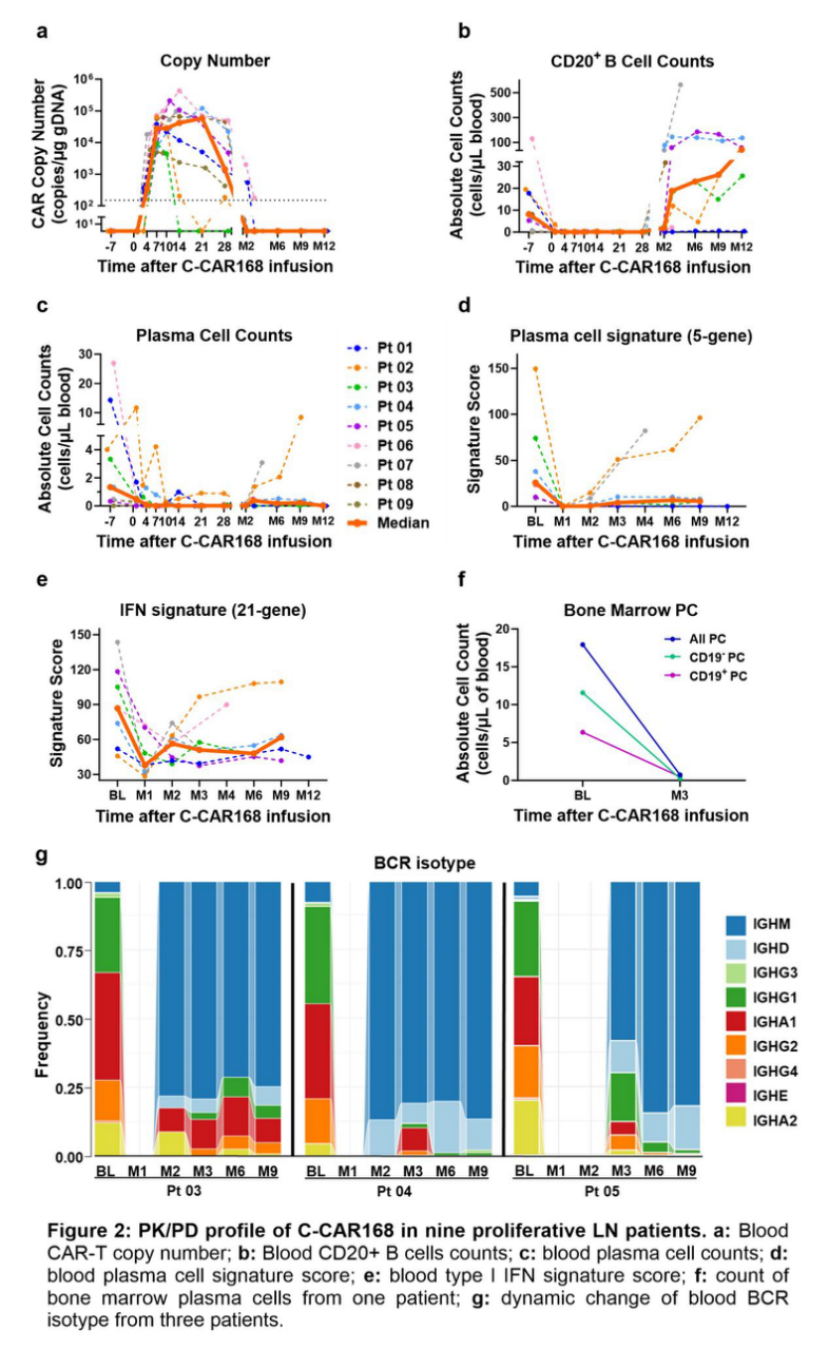
Figure 2: Pharmacokinetic/Pharmacodynamic (PK/PD) Profile of C-CAR168 in 9 Patients with Proliferative LN. a: Peripheral blood CAR-T copy number; b: Peripheral blood CD20+ B cell count; c: Peripheral blood plasma cell count; d: Peripheral blood plasma cell signature score; e: Type I interferon (IFN) peripheral blood signature score; f: Bone marrow plasma cell count in one patient; g: Dynamic changes in peripheral blood BCR clonotypes in three patients.
This study demonstrated that C-CAR168 therapy provides durable disease control without the need for continuous medication in refractory autoimmune diseases. Its favorable safety profile, high renal response rate in refractory proliferative LN, rapid neurological improvement in SPMS, together with mechanistic evidence of “immune reset,” provide strong support for further clinical evaluation of C-CAR168.
II. CD19-CAR-T Therapy BMS-986353: Promising Potential in Refractory IIM
IIM comprises a group of autoimmune diseases affecting muscle, skin, lung, joints, and other systems; many patients respond poorly to existing therapies and urgently need new treatments. BMS-986353 is an investigational, autologous CD19-directed CAR-T cell therapy. This study reports the first tolerability and efficacy data from the Breakfree-1 study (NCT05869955) in patients with severe refractory IIM [2].
Enrolled patients received a single infusion of BMS-986353 (dose: 10×10⁶ CAR-T cells) after lymphodepletion. All patients had discontinued IIM-specific therapies and corticosteroids prior to lymphodepletion. The primary endpoint was safety.
Key Data:
- Favorable safety: Among 13 patients, 46.2% experienced low-grade CRS; one patient developed grade 3 immune effector cell-associated neurotoxicity syndrome (ICANS) (Table 2), which resolved within 3 days with dexamethasone treatment. No persistent cytopenias or treatment-related serious infections occurred.
- Significant clinical efficacy: Among 11 evaluable patients, 63.6% achieved major response as defined by the Myositis Response Criteria–Total Improvement Score (MRC-TIS). All patients showed rapid and marked improvement in muscle strength: median Manual Muscle Testing-8 (MMT-8) score increased from baseline of 121 by 22 points at day 85 and 27 points at day 169 post-treatment (Figure 3).
- Freedom from conventional therapy: At last follow-up, 10 of 11 evaluable patients had not resumed IIM-directed therapy.
- Pharmacodynamic confirmation: Robust CAR-T cell expansion and complete peripheral blood B-cell depletion were observed in all patients (Figure 4), accompanied by a decline in IIM-associated autoantibody levels post-infusion.
Table 2: CRS and ICANS. Note: No grade 4 or 5 events were observed. Multiple events occurring within 7 days of each other were considered as one episode.
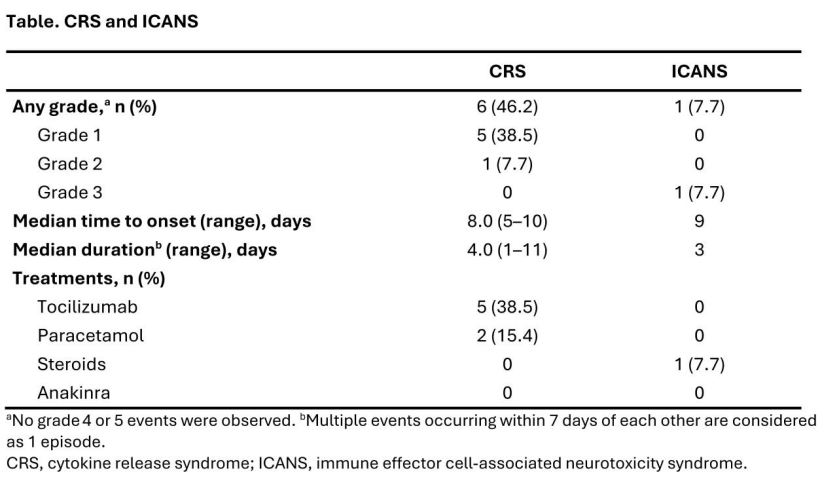
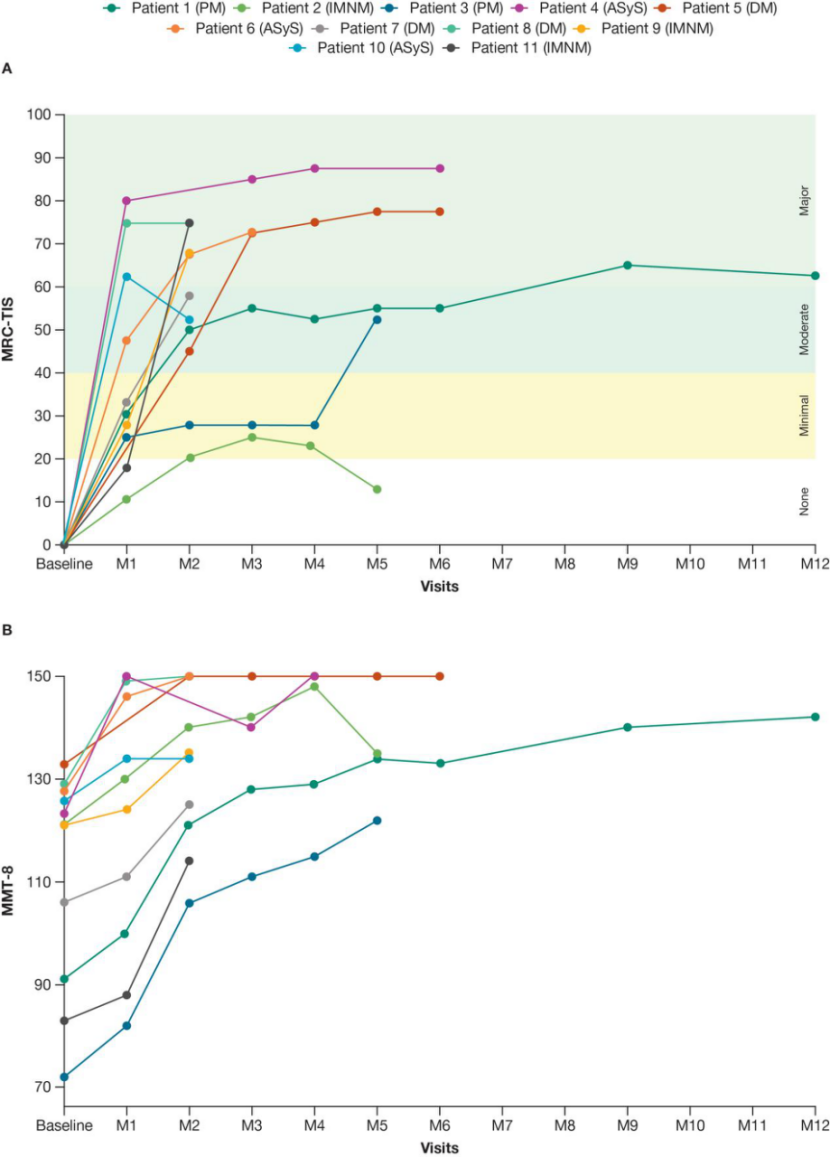
Figure 3: MRC-TIS (A) and MMT-8 Score (B) in the Efficacy-Evaluable IIM Population Following BMS-986353 Infusion. Abbreviations: ASyS: anti-synthetase syndrome; IMNM: immune-mediated necrotizing myopathy; M: month.
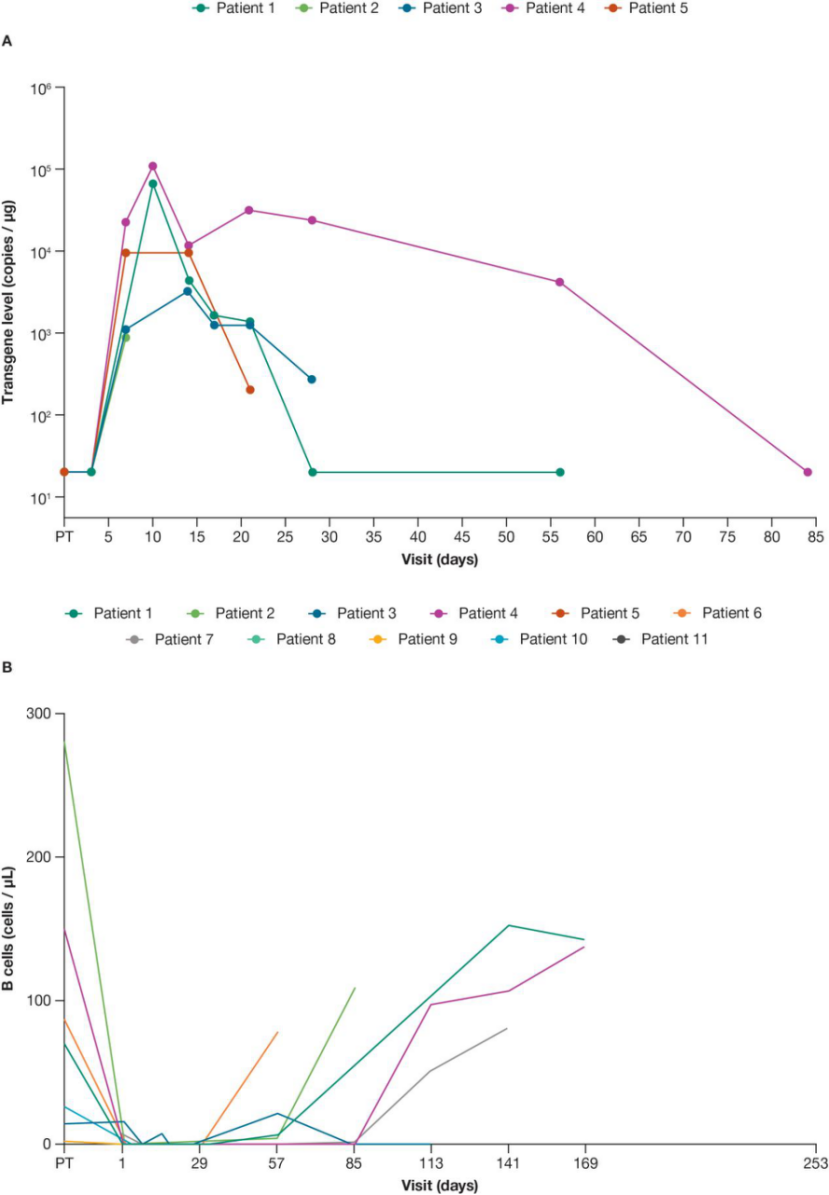
Figure 4: CAR Transgene Levels (A) and Peripheral Blood B-Cell Depletion/Reconstitution (B) in the Evaluable IIM Population. Note: Transgene level refers to the gene copy number of the engineered CAR construct in patient blood measured by droplet digital PCR. PT: pre-treatment.
The results from the Breakfree-1 study indicate that BMS-986353 has a manageable safety profile, robust biological activity, and encouraging clinical efficacy in patients with severe refractory IIM, with the majority of patients not requiring concomitant IIM-directed therapy.
III. CAR-Treg Therapy SBT777101: A Novel Safety Strategy for Refractory RA
Regulatory T cells (Tregs) modulate inflammation, maintain autoimmune tolerance, and promote tissue repair, making them promising therapeutic tools. Autologous polyclonal Tregs have a favorable safety profile but limited efficacy in autoimmune diseases.
SBT777101 is an engineered autologous Treg product transduced with a CAR directed against citrullinated proteins (CitP), which are present in the inflamed synovium of RA patients. It aims to restore immune system balance without destroying target cells. Its proposed mechanisms of action include direct and bystander suppression of antigen-presenting cells and effector T cells, IL-2 consumption, and production of immunomodulatory cytokines, thereby promoting immune homeostasis and tissue repair.
Regulate-RA is an ongoing first-in-human phase I study evaluating the safety and tolerability of SBT777101 in patients with refractory RA.
The study enrolled patients aged 18–70 years with active RA who had failed ≥3 classes of biologic or targeted synthetic disease-modifying antirheumatic drugs (DMARDs). SBT777101 is manufactured by transducing autologous Tregs, using a 3+3 dose-escalation design, administered as a single intravenous infusion without lymphodepletion preconditioning [3].
Key Data:
- Safety data: Six treated patients with refractory RA tolerated SBT777101 infusion well. No CRS, neurotoxicity, or dose-limiting toxicity events were observed (Table 3).
- Preliminary efficacy: At two dose levels, 4/6 subjects (67%) achieved a ≥50% reduction from baseline in swollen and tender joint counts at week 4, and 4/6 subjects (67%) had a ≥2-point decrease in DAS28-CRP score. Subjects receiving the higher dose (Cohort 2) showed more rapid onset and more consistent joint count reductions compared to Cohort 1 (Figure 5).
- Histologic evidence: All post-infusion synovial biopsies collected to date showed reduced inflammation scores (Figure 6).
Table 3: (A) Demographic and Disease Activity Profiles at Screening for Subjects in Cohorts 1 and 2; (B) Summary of Safety Events to Date. Abbreviations: AI or AN: American Indian or Alaska Native; TEAE: treatment-emergent adverse event; MSK: musculoskeletal; ICANS: immune effector cell-associated neurotoxicity syndrome; N: number of subjects in safety-evaluable set; n: number of subjects in each category. Data cut-off: August 15, 2025.
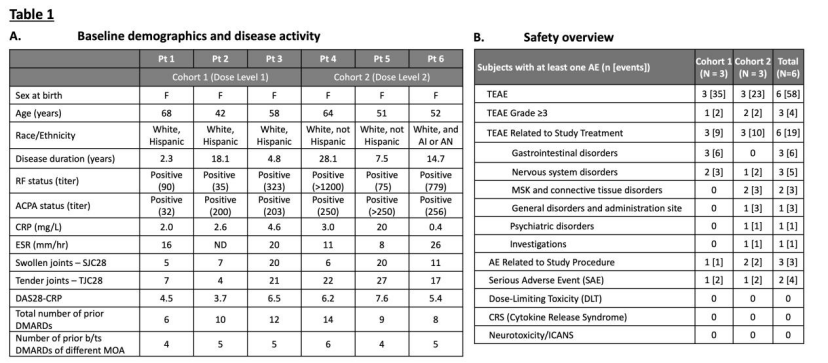
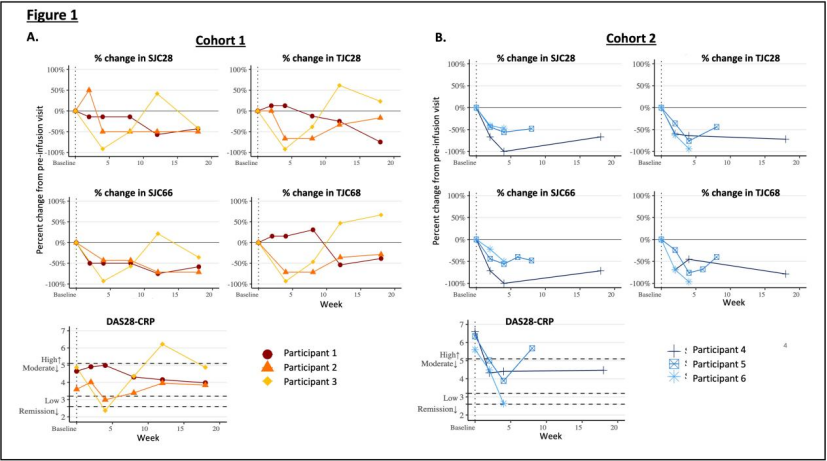
Figure 5: Preliminary Efficacy of SBT777101. (A) Cohort 1 showed modest improvements in disease activity within 4 weeks post-infusion, but the duration of improvement was variable. (B) By week 4, Cohort 2 showed more consistent improvements in tender joint count, swollen joint count, and DAS28-CRP score. Abbreviations: SJC: swollen joint count; TJC: tender joint count; DAS: disease activity score.
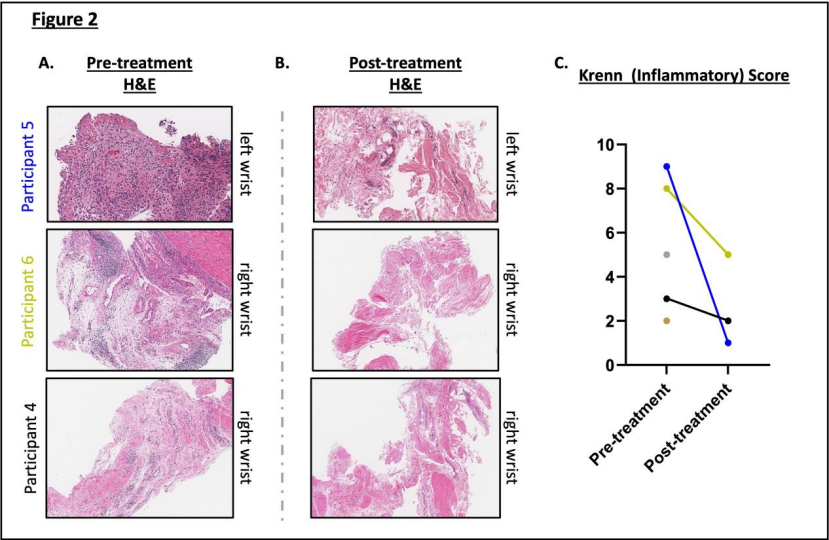
Figure 6: Post-Treatment Synovial Biopsies Show Reduced Inflammation. A (pre-treatment) and B (post-treatment) show biopsy images of indicated joints at 20× magnification (patient numbers are labeled, with colors corresponding to those in C); C: Krenn inflammation score. Two subjects provided only pre-treatment biopsy samples and are therefore shown only in the dot plot.
This study provides preliminary evidence for the favorable safety profile of CitP-targeted CAR-Treg therapy in highly refractory RA, along with initial clinical and mechanistic evidence of therapeutic activity.
References:
[1] Ding H, Li W, Shen Y, Zhang C, Ye Y, Wang R, Yang S, Wu C, Dai D, Zheng C, Qian Y, Luo X, Trinh T, Zhu J, Huang J, Hao Y, Yao X, Ling Z, Yao Y, Shen N. Anti-CD20/BCMA Bispecific CAR-T Cell Therapy Promotes Immune Reset and Sustained Drug Free Remission in Refractory Autoimmune Diseases [abstract]. Arthritis Rheumatol. 2025; 77 (suppl 9). https://acrabstracts.org/abstract/anti-cd20-bcma-bispecific-car-t-cell-therapy-promotes-immune-reset-and-sustained-drug-free-remission-in-refractory-autoimmune-diseases/. Accessed October 28, 2025.
[2] Aggarwal R, Korman D, Wiesendanger M, Majithia V, De Langhe E, Schmalzing M, Griffith M, Koehler P, Schiller J, Mougiakakos D, Cherry M, Nash R, Azzi J, Ayala E, Vandenberghe P, Topp M, Gutman J, Feist E, Desai A, Melton A, Wozniak A, Ou S, Harnois M, Thorpe J, Jarugula P, Ide T, Koegel A, Kramer N. Promising Early Outcomes With BMS-986353, a CD19-directed Chimeric Antigen Receptor T Cell Therapy in Severe Refractory Idiopathic Inflammatory Myopathies: Safety and Efficacy Findings From the Ongoing Phase 1 Trial [abstract]. Arthritis Rheumatol. 2025; 77 (suppl 9). https://acrabstracts.org/abstract/promising-early-outcomes-with-bms-986353-a-cd19-directed-chimeric-antigen-receptor-t-cell-therapy-in-severe-refractory-idiopathic-inflammatory-myopathies-safety-and-efficacy-findings-from-the-ongoin/. Accessed October 28, 2025.
[3] Kohler M, Arai S, Aslam F, Challener G, Frigault M, Griffith M, Katsumoto T, Massarotti E, Moreland L, Rosenthal A, Sparks J, Yinh J, Baxter S, Bitton A, Dubovsky J, Yuan V, Jensen M, Clauw A, Furman G, Gyurko R, Hall M, McIntyre A, Seifert J, Stainton E, Blake M, Fox-Bosetti S, Lebrec H, Pace A, Xiao Y, Wang M, Arron J, Bluestone J. A Phase 1 Study of Autologous CAR-Treg Cells in Refractory Rheumatoid Arthritis: Interim Report of Safety and Efficacy [abstract]. Arthritis Rheumatol. 2025; 77 (suppl 9). https://acrabstracts.org/abstract/a-phase-1-study-of-autologous-car-treg-cells-in-refractory-rheumatoid-arthritis-interim-report-of-safety-and-efficacy/. Accessed October 28, 2025.

